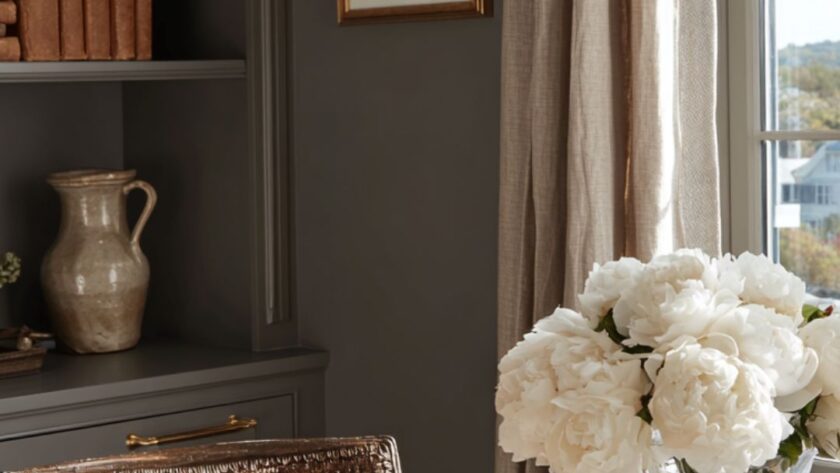
A desk sits beneath a window where morning light falls across a linen notebook and a copper cup of sharpened pencils. The shelves above hold leather-bound books and a single ironstone pitcher with dried eucalyptus. Nothing on the surface is there by accident.
That is the Martha Stewart office aesthetic. It is a workspace where function and beauty share the same desk. The organization is visible. The materials are real. The room looks like someone works here every day and cares about every object within arm’s reach.
Martha designed a modular office in the carriage house at her Bedford farm using the California Closets Everyday System. She chose Perry St. White Woodgrain paired with white metal for a clean, timeless look. Her Manhattan apartment holds a different version: walnut shelves that flow into a compact desk, a woven rattan chair, and the kind of warm wood saturation that designers now call “wood drenching.” Both workspaces share the same principle. Every item earns its place.
These 17 ideas will help you build an office with that same discipline. Each one treats the workspace as a room worth designing, not just a desk shoved into a corner.
1. Bedford Gray Walls With White Trim
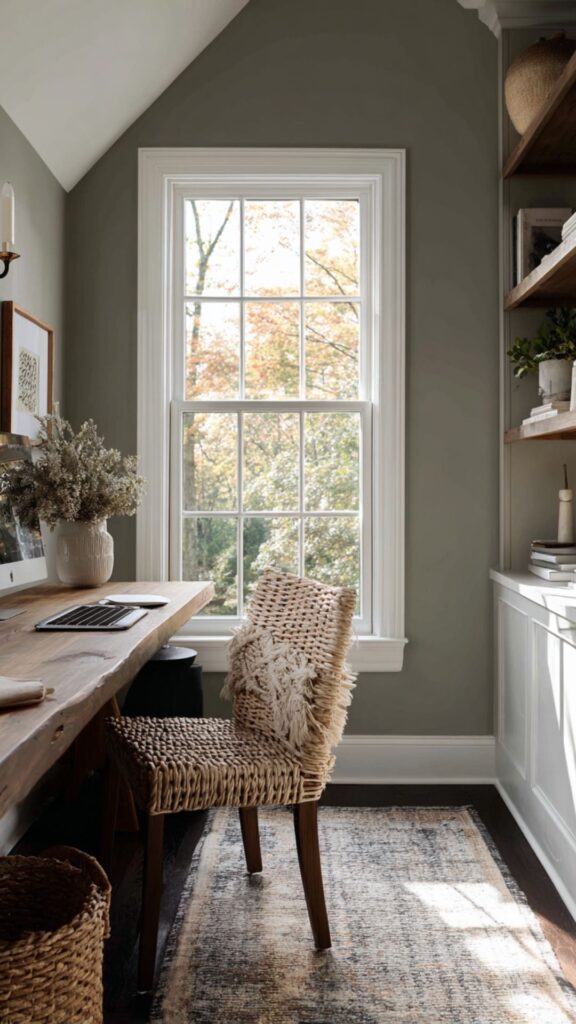
The colour on the walls sets the tone for every hour you spend at the desk. Bedford Gray, Martha’s signature warm gray with brown undertones, creates a backdrop that is calm without being cold. White trim around windows and doorframes sharpens the room and makes the wall colour read as intentional.
Bedford Gray works with walnut furniture, brass hardware, cream linen, and copper accents. It also photographs well on video calls, which matters for a workspace in 2026. The colour absorbs harsh light instead of bouncing it back. A room painted in Bedford Gray at noon feels the same temperature as a room painted in Bedford Gray at dusk.
2. A Walnut Desk With Brass Hardware
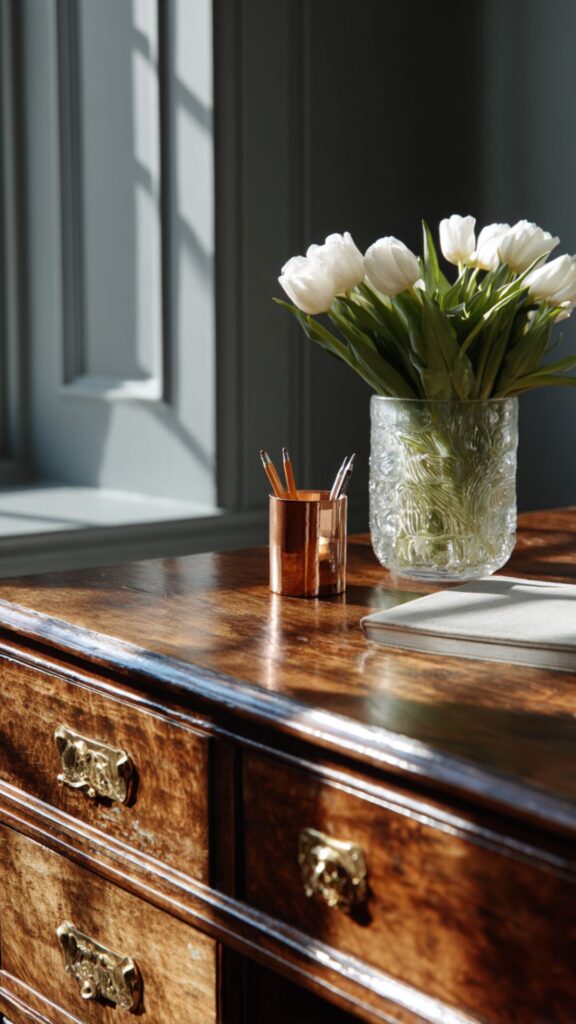
Martha’s desks are real wood, not laminate. Her Manhattan office features walnut, a dark, warm wood with tight grain that ages well. Her Ollie desk pairs walnut with polished brass hardware. The combination of dark wood and warm metal creates a surface you want to sit down at.
Choose a desk with clean lines and visible drawers. Avoid anything with a glass top or chrome legs. The desk should look like it belongs in a library, not a tech startup. A walnut surface holds coffee stains with more grace than white lacquer. It also warms the entire room by anchoring the colour palette in natural wood tones.
3. A Woven Rattan Chair With Real Cushion
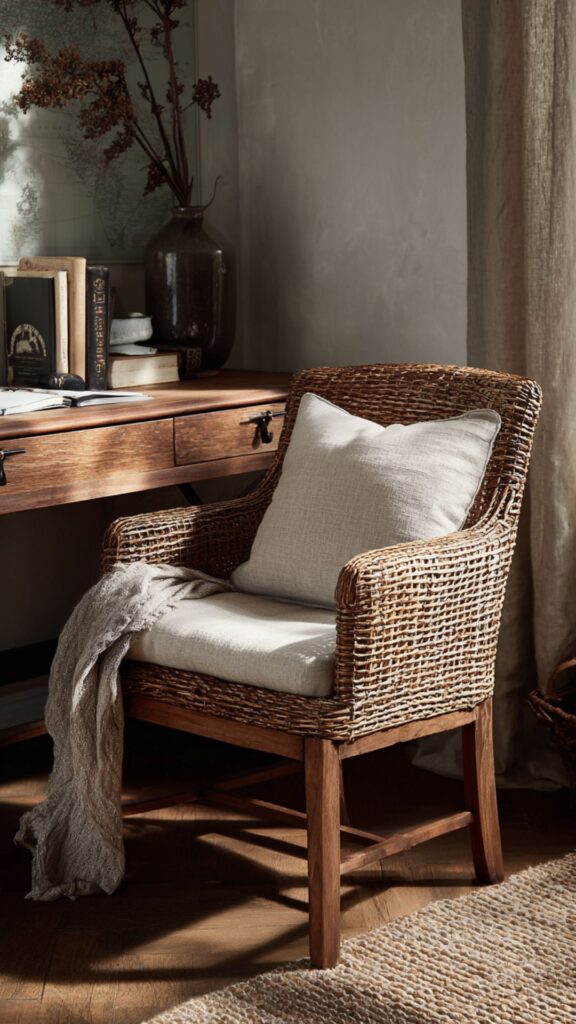
Martha’s Manhattan office pairs walnut with a woven rattan chair. The natural fibre adds texture and warmth without the bulk of an upholstered office chair. Rattan reads as collected and residential rather than corporate. It belongs in a home, not a cubicle.
Choose a chair with a wide seat and a supportive back. Add a linen cushion in cream or putty for comfort during long hours. Avoid anything on plastic casters. A rattan chair on a wooden floor reads as intentional. If you need to move, lift it. The slight inconvenience is the cost of having a chair that looks like furniture.
4. Open Wooden Shelves Above the Desk
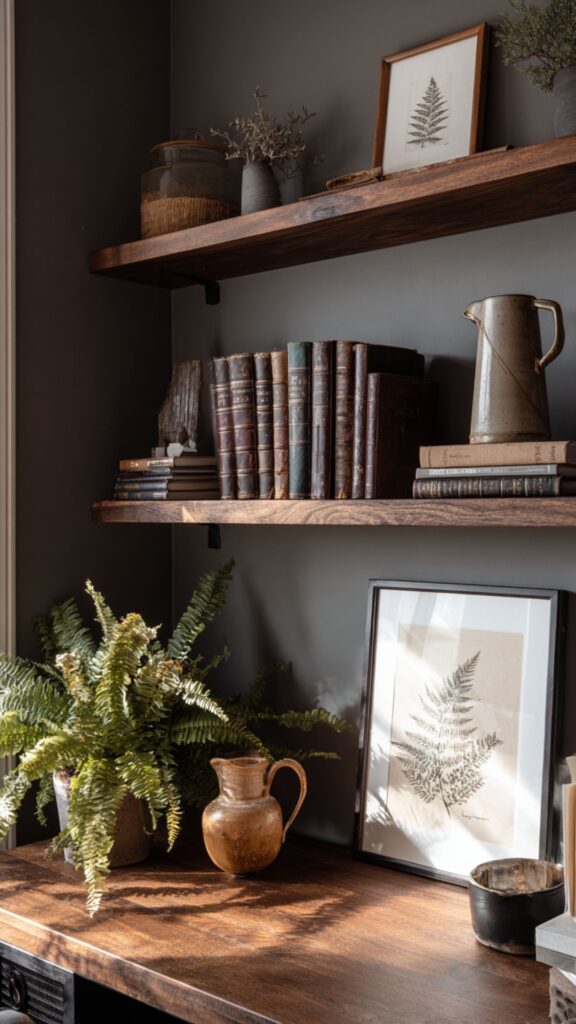
Martha’s offices use open shelving instead of closed cabinets. The shelves hold objects that are both useful and beautiful: leather-bound books, an ironstone pitcher, a framed botanical print, a small copper pot holding scissors. The visible contents turn storage into display.
Install walnut or oak shelves on simple brass brackets. Space the shelves far enough apart to hold tall books and small plants. Leave breathing room between objects. A shelf crammed full reads as cluttered. A shelf with five well-spaced objects reads as curated. The open shelving is where the living room aesthetic meets the office.
Those four elements, the walls, the desk, the chair, and the shelves, form the bones of the office. They are the decisions that shape how the room looks and feels for years. Everything that follows layers the workspace with materials, light, and the kind of organisation that makes productivity feel quiet.
5. Copper Accents That Warm the Room
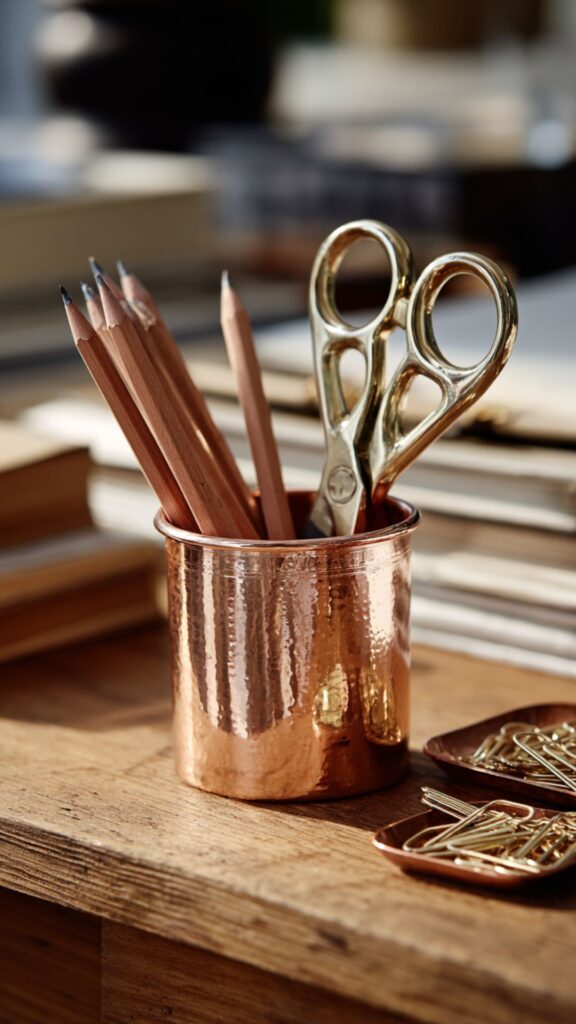
Copper in an office does what it does in a kitchen: it catches light, adds warmth, and tells the eye the room was designed, not assembled. A copper pencil cup, a copper desk lamp, a copper tray holding paper clips. These small accents tie the workspace to the rest of a Martha home.
Choose copper pieces that will develop patina with handling. A copper cup that darkens where your fingers grip it has more character than one kept polished. Pair copper with the brass hardware on the desk and the walnut shelves. The metals should be warm-toned and consistent throughout the room.
6. Linen-Bound Notebooks Instead of Plastic
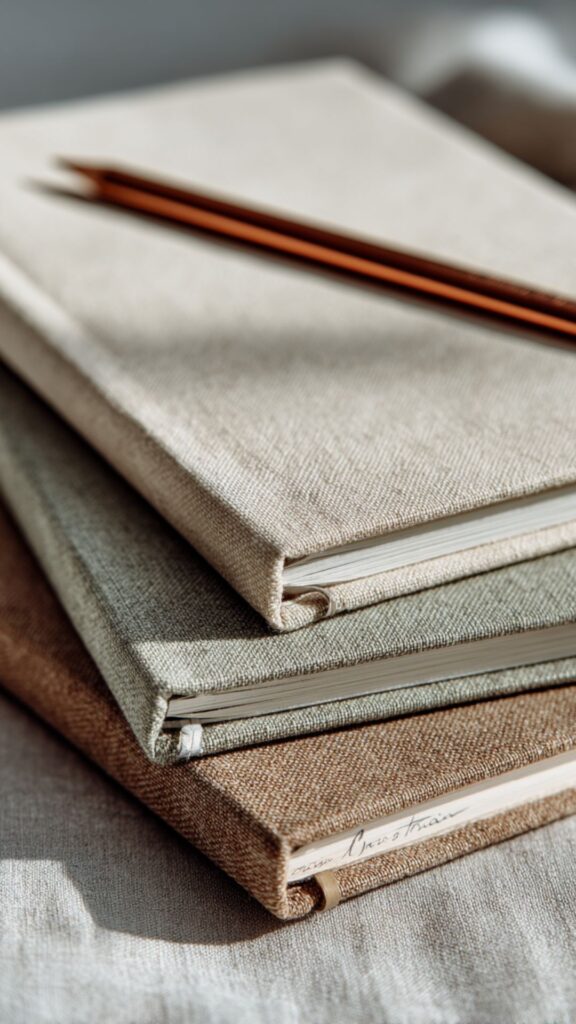
Martha’s desk surfaces hold notebooks bound in linen or cloth, not spiral-bound plastic. The tactile quality of a linen cover under your hand signals that the notes inside matter. A stack of linen notebooks in cream, sage, and putty looks like a shelf of collected objects.
Use one notebook per project or per month. Write the contents on the spine in pencil. Line them up on the shelf when full. Over time, the row of notebooks becomes an archive you can see and touch. This is Martha’s approach to every object: visible, functional, and worth keeping for years.
7. A Filing Cabinet Hidden Under the Desk
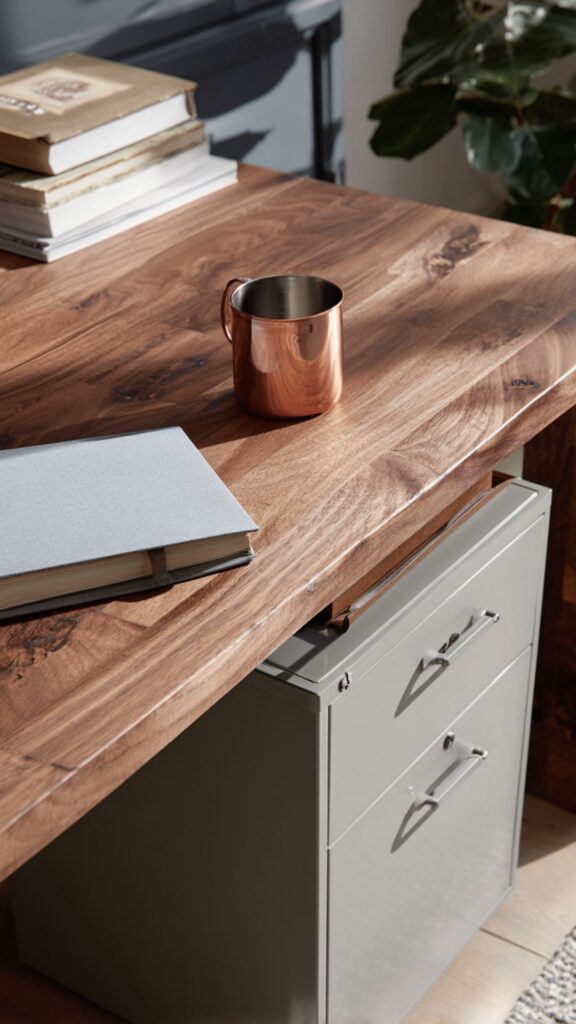
Martha’s Bedford craft room tucks the filing cabinet beneath the desk where it takes up no visible floor space. The cabinet holds paper, documents, and supplies. Its position under the desk keeps the room’s sightlines clean while keeping everything within arm’s reach.
Choose a metal filing cabinet in a muted tone: grey, navy, or cream. Avoid black. The cabinet should blend with the desk rather than announce itself. A filing cabinet is a tool, not a feature. Hiding it under the desk is the kind of practical decision that lets the rest of the room look beautiful without sacrificing function.
8. Glass Jars for Small Supplies
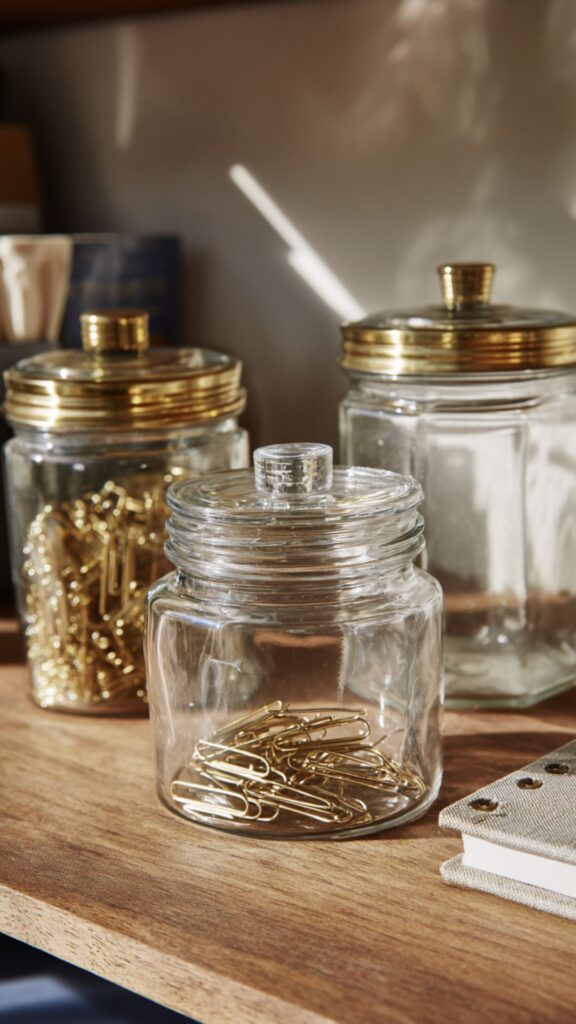
Martha organises small office supplies in glass jars with simple lids. Push pins in one jar. Paper clips in another. Binder clips in a third. The supplies are visible through the glass, which means you never open the wrong container. The jars turn a messy drawer into a countertop display.
Choose clear glass with gold or brass lids. Line up three jars on the desk or on a shelf. Martha’s own office line includes gold push pins and brass paper clips, which look better than standard silver. The small upgrade in material changes how the jar reads. It shifts from “storage” to “object.”
9. A Silver Tray for the Coffee Ritual
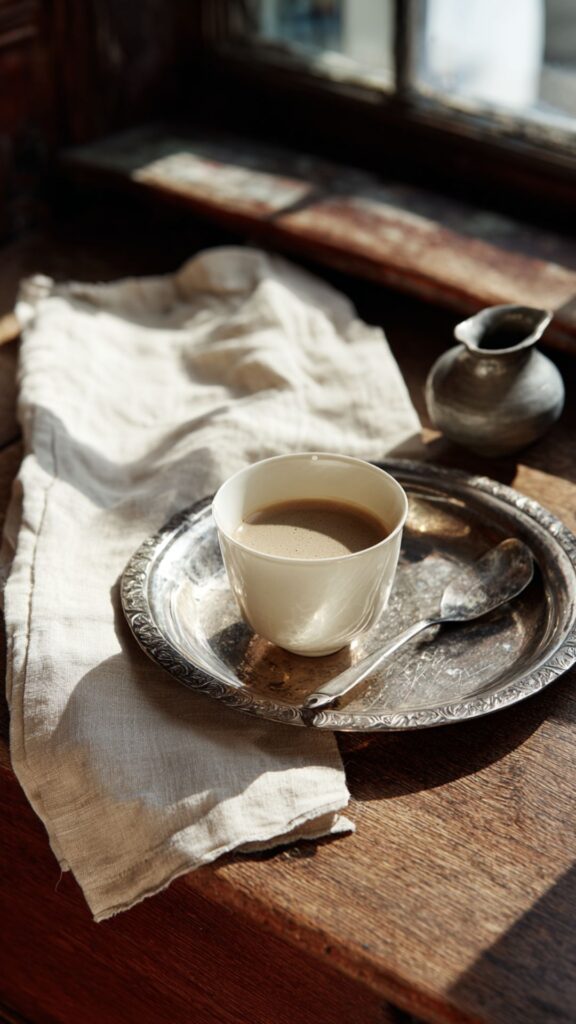
Martha serves coffee on a silver tray throughout her house. The office is no exception. A small tarnished silver tray on the corner of the desk holds a coffee cup, a small cream pitcher, and a spoon. The tray elevates a five-minute break into a ritual.
The tray keeps coffee away from papers and notebooks. It also creates a composed vignette on the desk. When the coffee is finished, the tray stays. It holds the space and reminds you that the next cup is coming. This small daily ceremony is the “elevated everyday” applied to a workspace: an ordinary moment treated with care because you decided it mattered.
The desk is warm, the shelves are curated, and the supplies are visible. The room has function and character. What follows refines the atmosphere with light, greenery, scent, and the personal touches that make a home office feel like a room worth spending eight hours in.
10. Natural Light From One Good Window
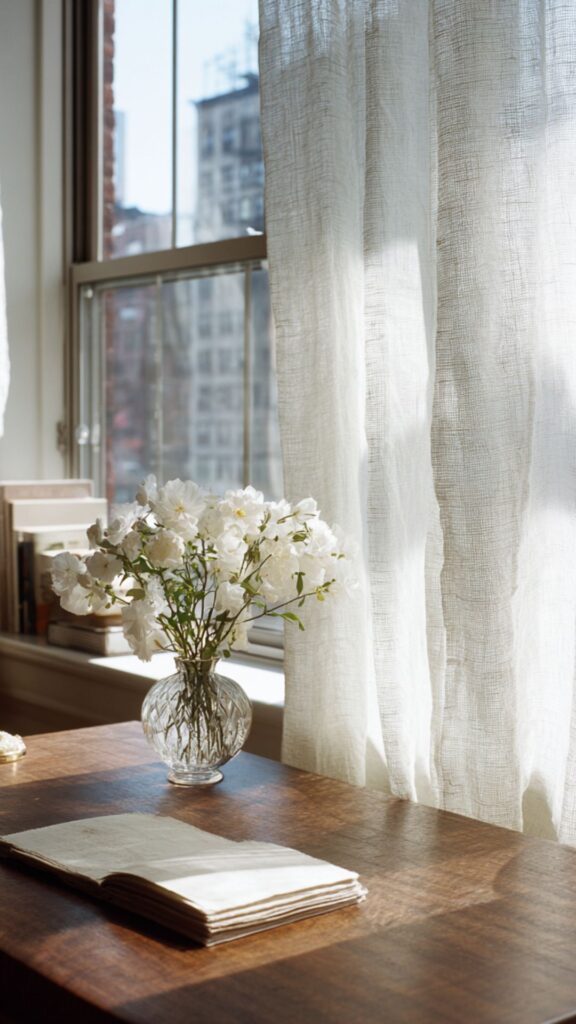
Martha positions her desks beneath windows. Natural light reduces eye strain, improves mood, and makes every surface in the room look richer. A desk facing a window with a linen curtain filtering the glare is the simplest way to make a home office feel professional and human at the same time.
If the window faces direct sun, hang a sheer linen panel. The fabric diffuses the light into an even wash. If the window faces north, leave it bare. The cool, indirect light from a north-facing window is the best working light you can get. Position the desk so the light falls from the side, not from behind. Side light reduces screen glare and illuminates papers evenly.
11. One Living Plant in a Proper Pot
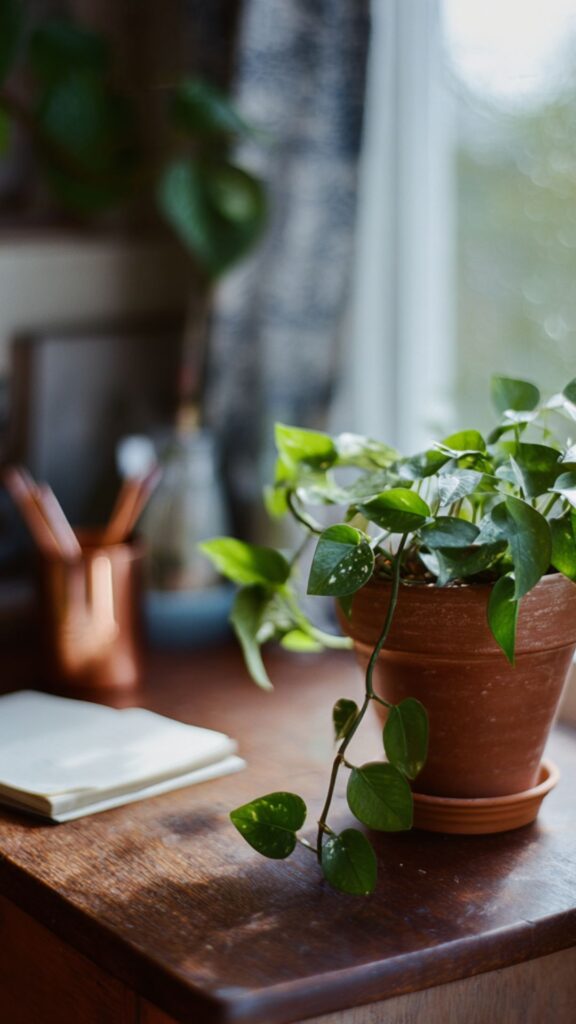
A single plant on the desk or on a shelf brings life into a room of wood and paper. Martha uses plants in every room at Bedford. A potted fern, a small orchid in white, or a trailing pothos on a high shelf all work in an office. The plant should thrive in indoor light.
Choose a terracotta pot, a simple white ceramic, or a small copper cachepot. Avoid plastic nursery pots left visible. The plant does the same work in the office that fresh flowers do on the dining table: it proves the room is tended and alive. Water it on Monday. That weekly rhythm becomes part of the workspace.
12. Labeled Containers for Everything
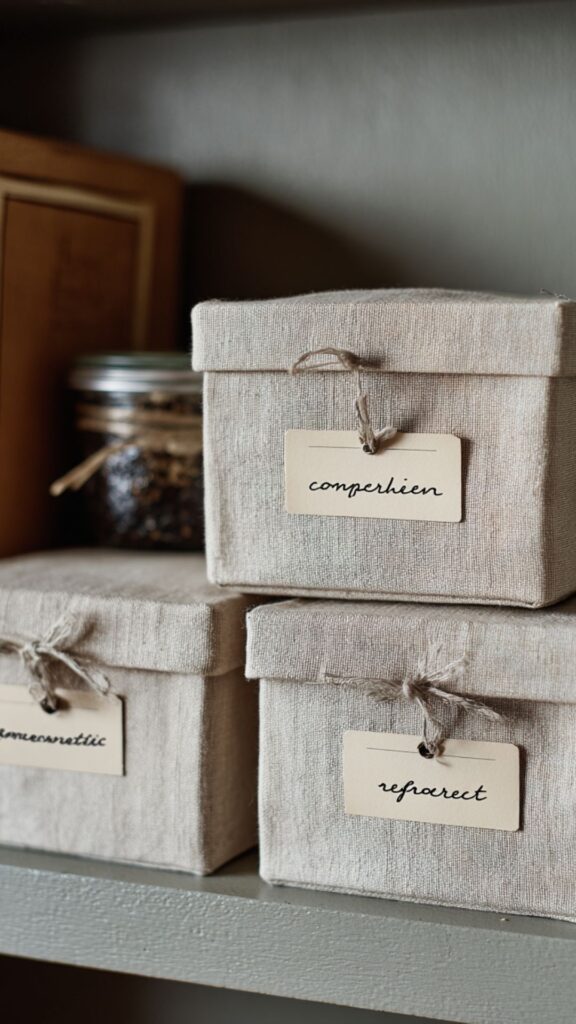
Martha labels every container. Drawer organisers, file folders, storage boxes. The label tells you what is inside without opening the lid. More importantly, it tells you where to put something back. Labels enforce the kind of discipline that keeps a workspace tidy past the first week.
Use handwritten labels on cream card stock or printed labels in a simple serif font. Attach them with brass tacks or cotton string. The labels should look like they belong in an apothecary or a library. Avoid a label maker with plastic tape. The material of the label matters as much as what it says.
13. A Framed Botanical Print Above the Desk
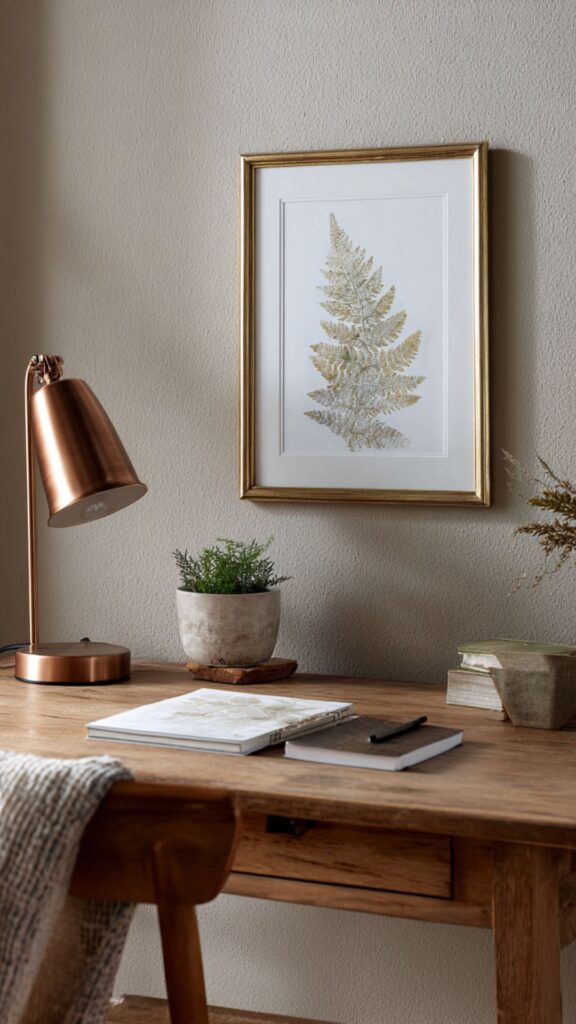
One framed piece of art above the desk anchors the wall without cluttering it. Martha’s offices and living rooms favour botanical prints: hand-drawn ferns, pressed flowers, or seed catalogue illustrations framed in thin walnut or brass.
Choose one print and hang it centred above the desk. Leave plenty of wall space around the frame. The empty space is the composition. A single botanical print in a quiet room reads as confidence. It says: this one thing was chosen, and everything else was left out on purpose. That is disciplined editing applied to a wall.
14. A Desk Lamp in Brass or Copper
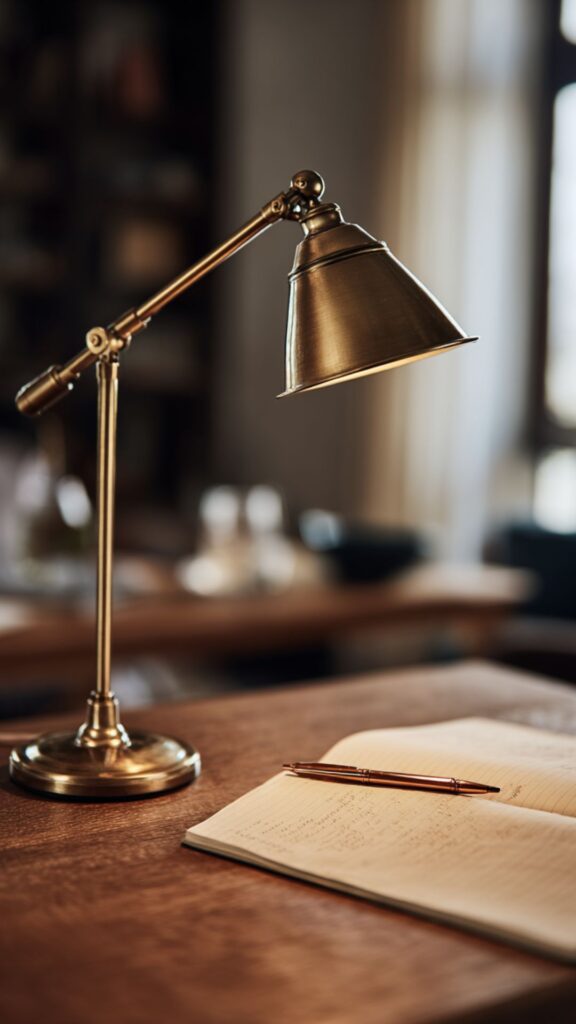
The desk needs a dedicated light source for evening work and overcast days. Martha’s offices use lamps in brass or copper with warm-toned bulbs. The lamp casts a pool of focused light on the work surface while the rest of the room stays softer.
Choose a lamp with an adjustable arm and a metal shade. The shade directs light downward onto papers and screens. Avoid anything with a white plastic shade or a chrome finish. Brass and copper complement the walnut desk and the warm wall colour. A lit desk lamp in a dim room makes the workspace glow like a lantern.
The atmosphere is set. Light, greenery, labels, art, and a warm lamp. Every detail earns its place. The final three ideas address the invisible qualities that make an office feel like a room you want to spend time in, not just a place you sit because your work requires it.
15. Dried Lavender in the Desk Drawer
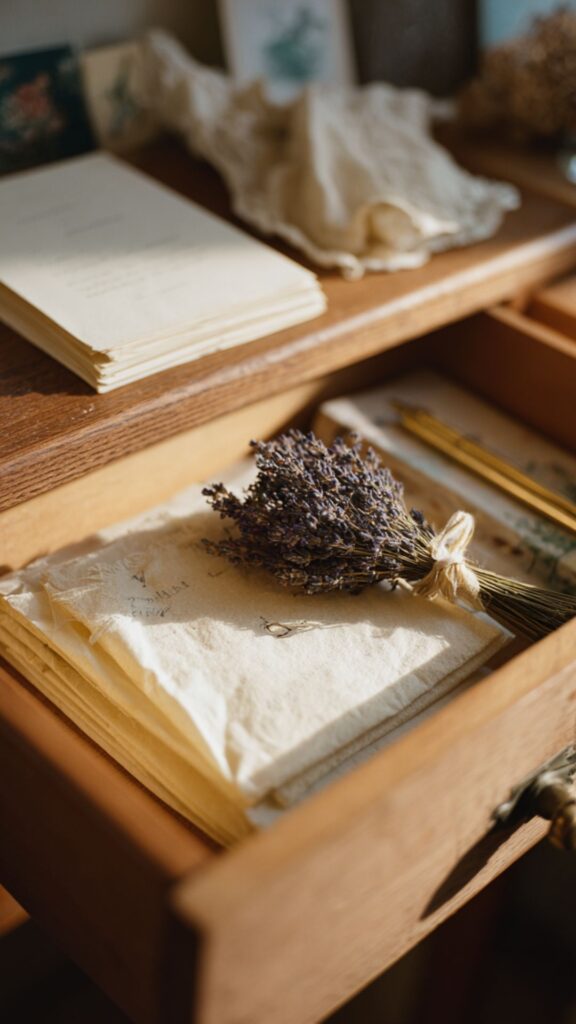
Martha tucks lavender sachets into drawers throughout her home. The desk drawer is no exception. A small bundle of dried lavender tied with cotton string, placed beneath the stationery, releases a faint herbal scent every time you open the drawer.
The scent is subtle. You notice it for the first half-second, and then it fades into the background. That fleeting moment is the point. It marks the transition from reaching for a pen to sitting down to work. A desk drawer that smells like lavender instead of plastic and paper changes the feeling of the room in a way no one else will notice but you.
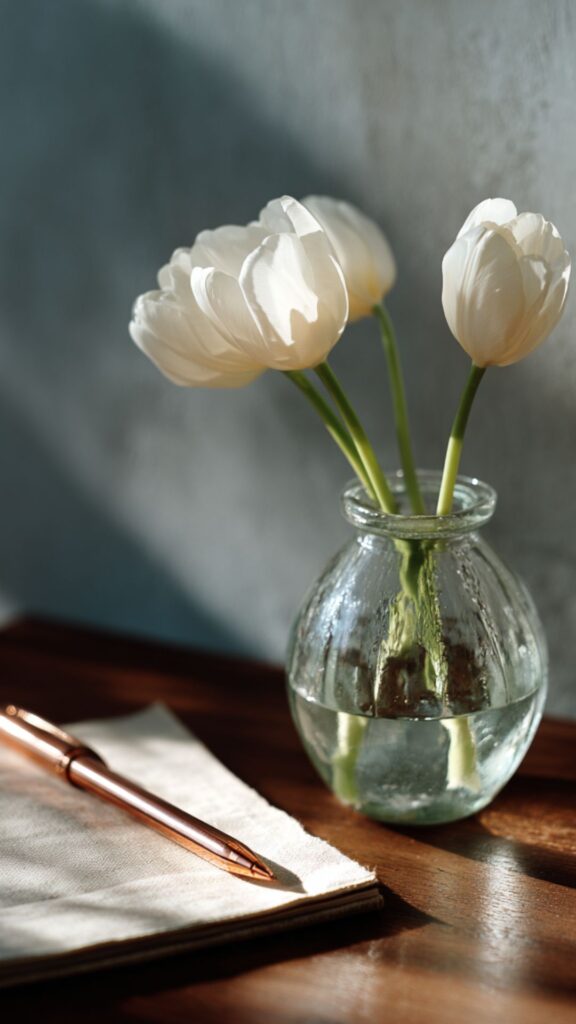
16. A Pressed Glass Vase With One Week’s Flowers
A small pressed glass vase holding seasonal flowers belongs on every desk. Tulips in spring. A single white peony in early summer. A dahlia in fall. Dried eucalyptus in winter. The arrangement is never large. Three stems are plenty. The point is life and colour, not a centrepiece.
Change the flowers weekly. The ritual of cutting stems, filling the vase, and placing it back on the desk is a small act that resets the workspace. The flowers also remind you that the desk sits inside a home, not a corporate office. A vase of fresh flowers is the cheapest way to make a workspace feel cared for.
17. The Desk at the End of the Day
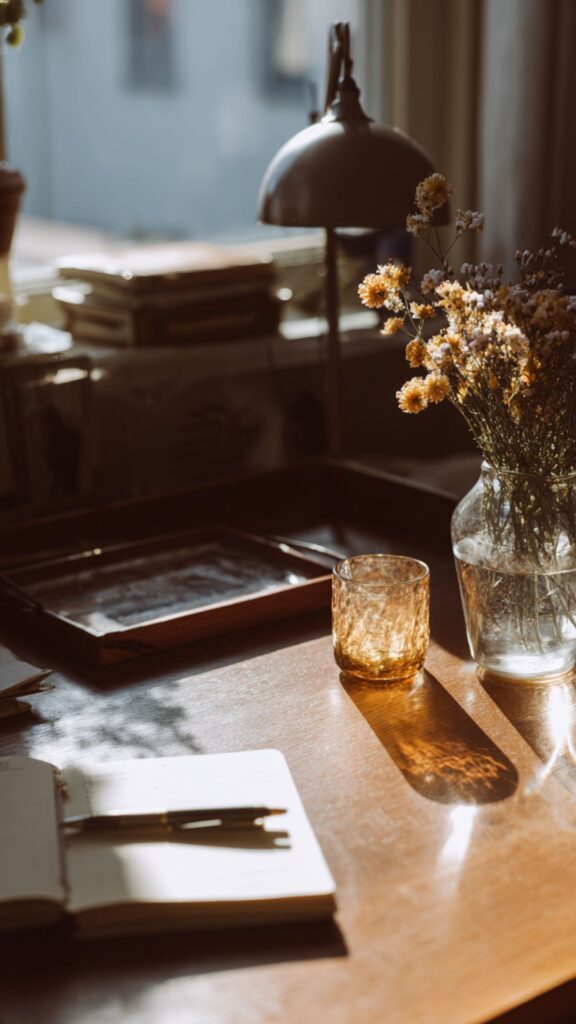
The most Martha image of an office is the desk at five o’clock. The notebook is closed. The pen rests beside it. The coffee tray is empty. The flowers still stand. The lamp is off, and the last light from the window falls across the surface in a long, golden stripe.
Close the notebook. Cap the pen. Return the coffee cup to the tray. Push the chair in. This two-minute ritual is the bookend to the day. It resets the desk for tomorrow morning, when the light comes back through the window and the workspace is ready to begin again. A desk that ends the day clean starts the next one with calm.
The Martha Stewart office aesthetic is not about buying matching desk accessories from one store. It is about choosing real materials, giving every object a place, and treating the workspace as a room worth designing with the same care you would give a kitchen or a dining room.
Start with one change. Put your pencils in a copper cup. Swap one plastic bin for a glass jar. Place a single stem in a pressed glass vase beside your notebook. Each small replacement compounds until the desk no longer feels like a workstation. It feels like a place you chose to be.
The best offices are not the biggest ones. They are the ones that make you want to sit down and begin.
You might also like: