
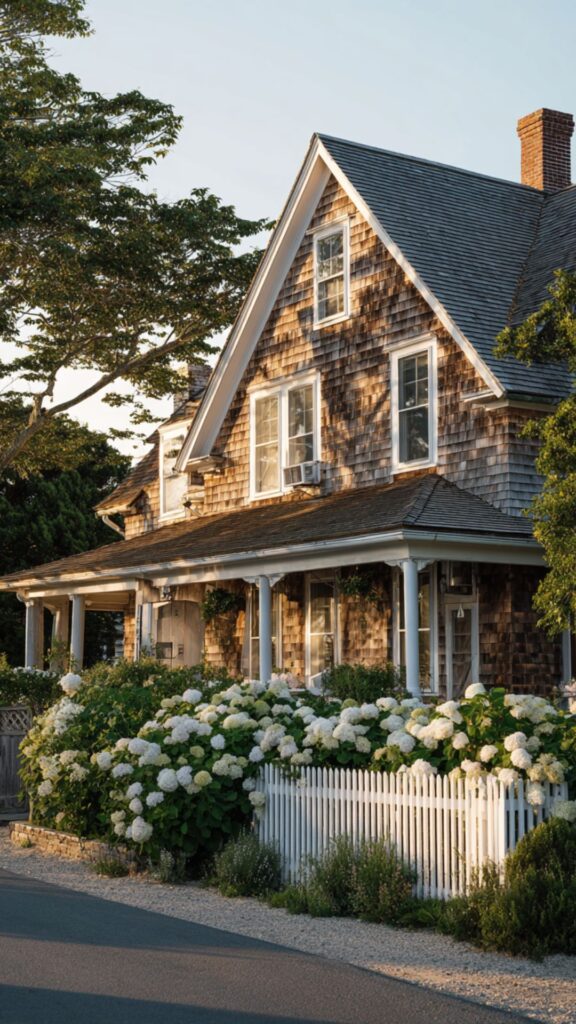
In 1991, Martha’s daughter Alexis told her: “The place to go, Mother, as a single woman in the summertime, is the Hamptons.” They looked at five houses in East Hampton. Alexis pointed at the last one, an 1873 shingled cottage on Lily Pond Lane, and said, “This is it.” Martha bought it the next day for $1.7 million.
1. The Oldest House on the Block
The Lily Pond Lane house was built in 1873, making it the oldest on the street. It once belonged to Reverend DeWitt Talmage. When Martha found it, she called it “a total wreck.” Alexis saw something else. Martha trusted her daughter’s eye and never regretted it.
2. Ben Krupinski Built It Back
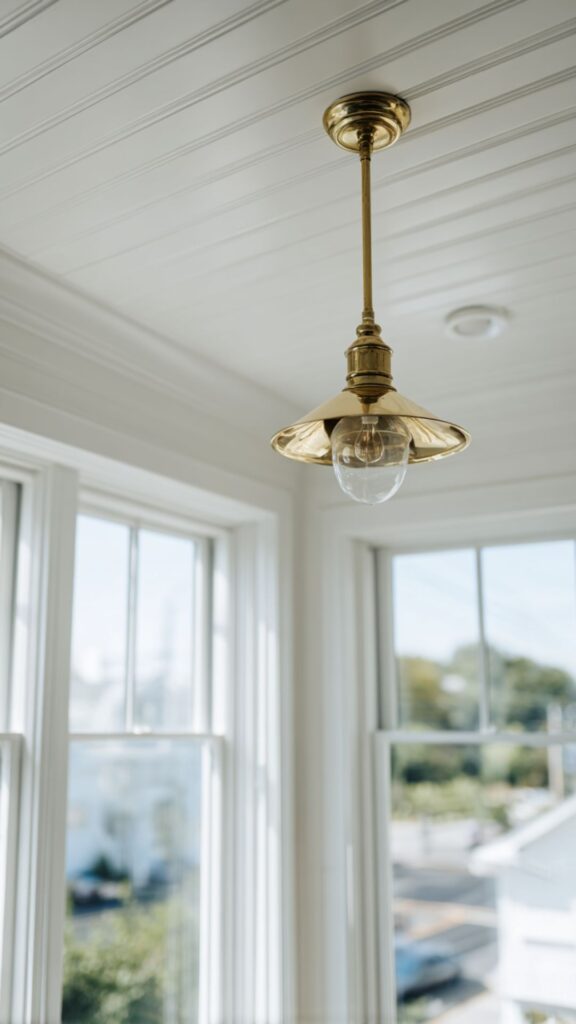
Martha interviewed five contractors. The last was Ben Krupinski, legendary Hamptons builder. He had polished the floors of that same house as a high school boy. He got the job. They replaced cracked plaster ceilings with beadboard, knocked down walls, added windows, and installed a pool.
3. The 50th Birthday Party Before It Was Finished
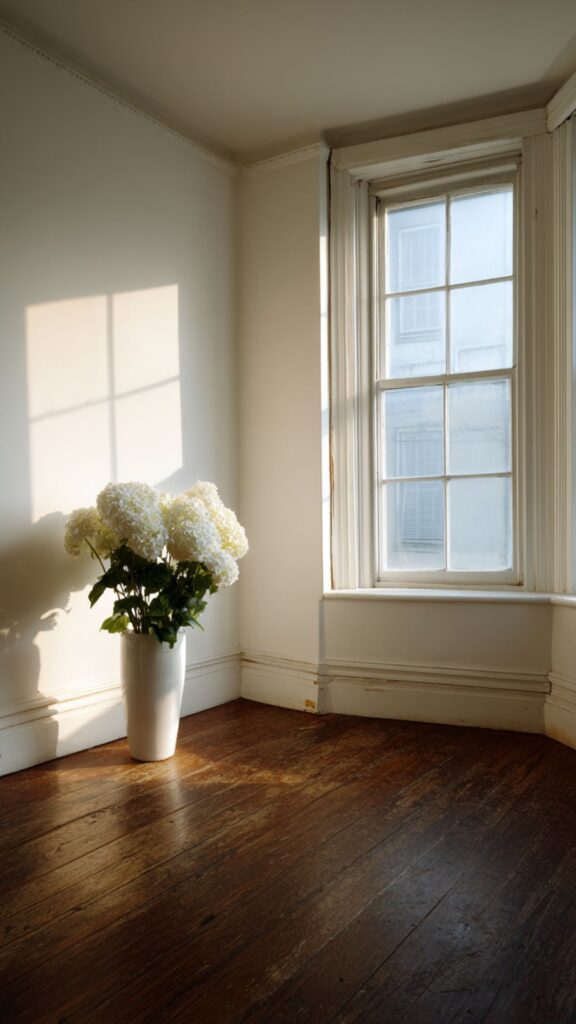
Martha threw her 50th birthday party at the house before the renovation was complete. “No one imagined it was my house,” she said. “All white walls, barely any furniture. We served barbecue chicken from the Cutchogue Fire Department and blue margaritas from the Blue Parrot.”
4. Colors Inspired by Chicken Eggs
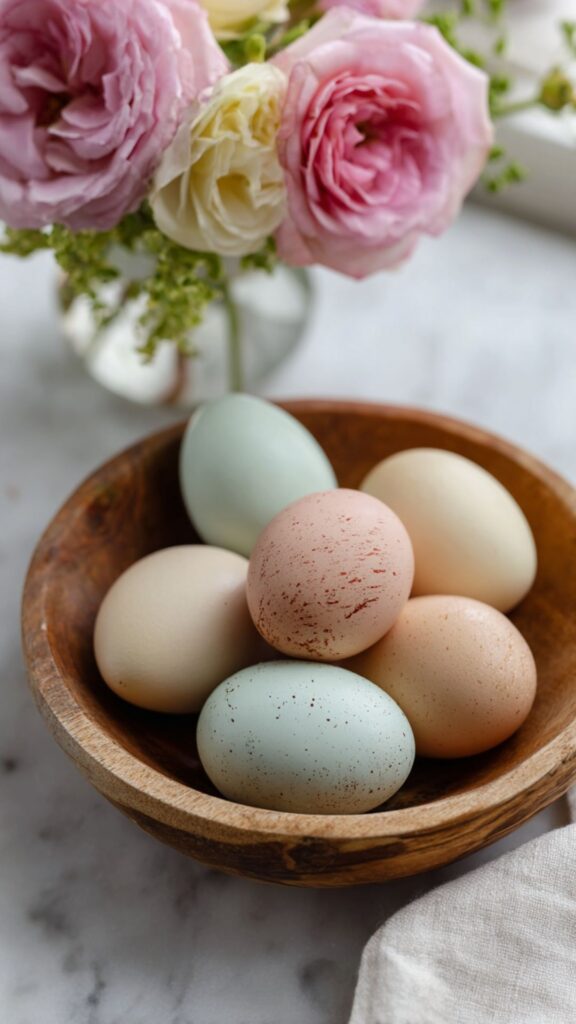
Martha’s first color palette for Lily Pond Lane came from the eggs of her Araucana chickens: soft blues, greens, pinks, and creams. The pastel scheme defined the house through the 1990s and directly inspired the Martha Stewart Everyday paint line sold at Kmart.
5. The Daring Orange Room
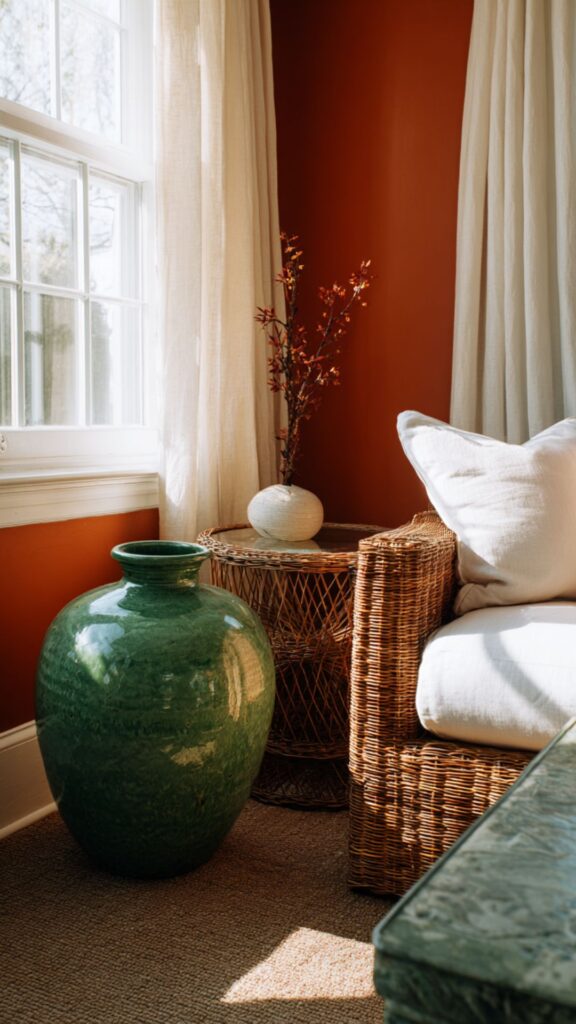
Lily Pond Lane featured a three-season room with burnt orange walls paired with jadeite green accents. The combination was bold and grounded at the same time. Thirty years later, burnt orange and jade green are trending again as a pairing. Martha did it first.
6. Beadboard Ceilings in Every Room
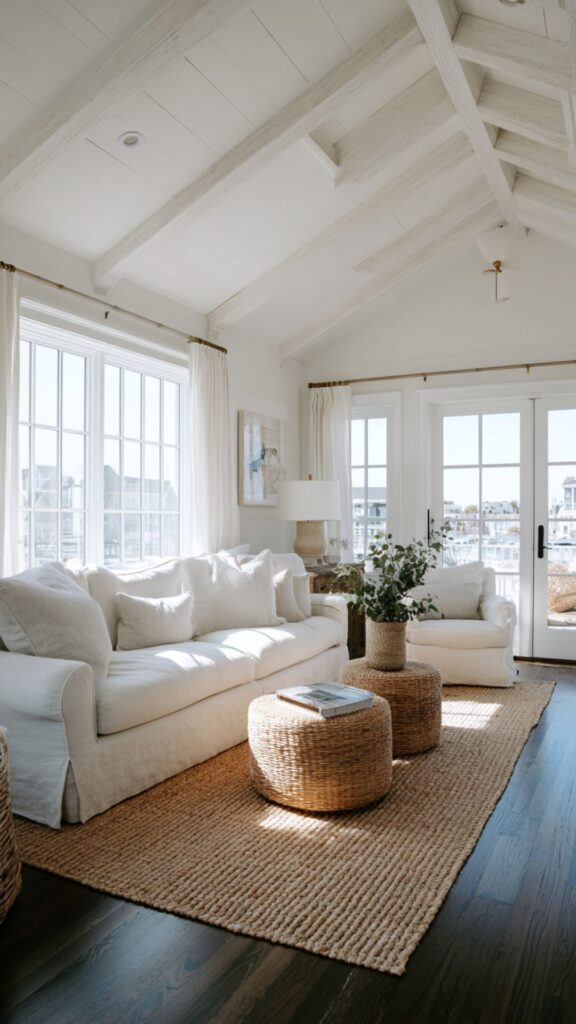
Martha replaced every cracked plaster ceiling with white painted beadboard. The material looks appropriate in a cottage from 1873 and still looks fresh decades later. Beadboard adds texture overhead without competing with anything below it.
7. Mercury Glass and Jadeite from Yard Sales
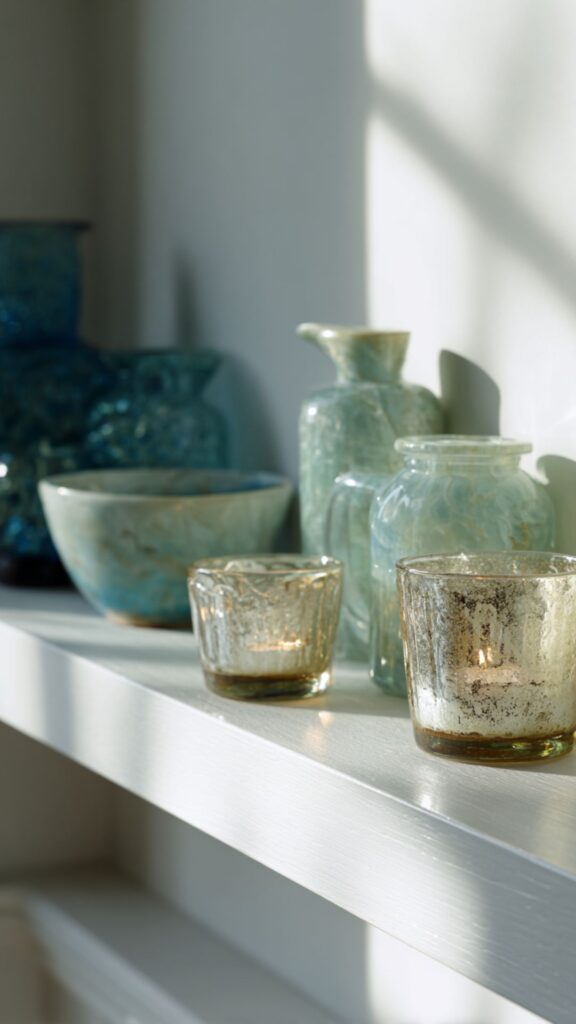
Martha filled Lily Pond Lane with mercury glass votives and jadeite dishes found at yard sales and antique stores across the Hamptons. The collections grew over thirty years. Yard sale hunting on summer weekends became part of the ritual of living there.
The house is renovated and furnished. What follows shows how Lily Pond Lane became a design laboratory that shaped products millions of people bought.
8. The Enclosed Porch Off the Kitchen
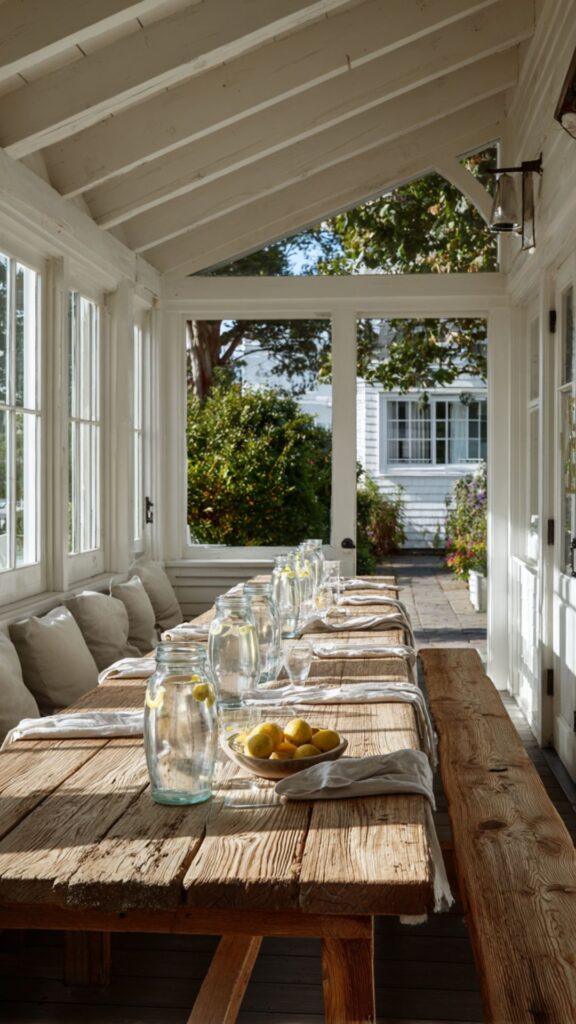
Martha added an enclosed porch off the kitchen that served as a casual dining and entertaining space. The porch looked out onto the garden and could seat dinner parties of sixty people on summer evenings. It became one of the most photographed rooms in her portfolio.
9. Gleaming Dark Hardwood Floors
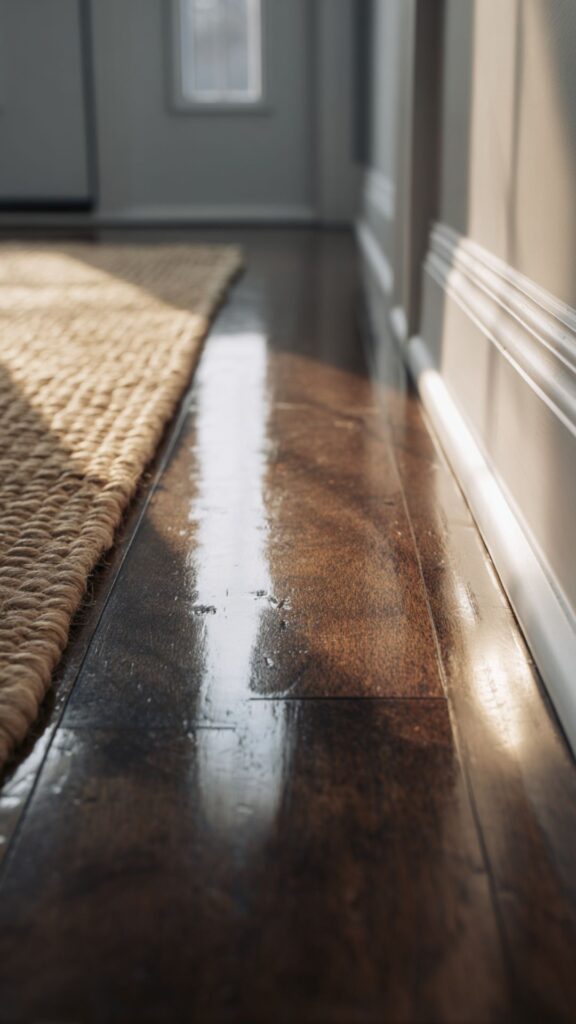
The original dark hardwood floors were restored and kept bare, no carpet, no paint. The dark wood against white walls and beadboard ceilings created the contrast that defined the Lily Pond Lane look: light above, warm below, natural light everywhere.
10. The Palette Evolved to Khaki and Cream
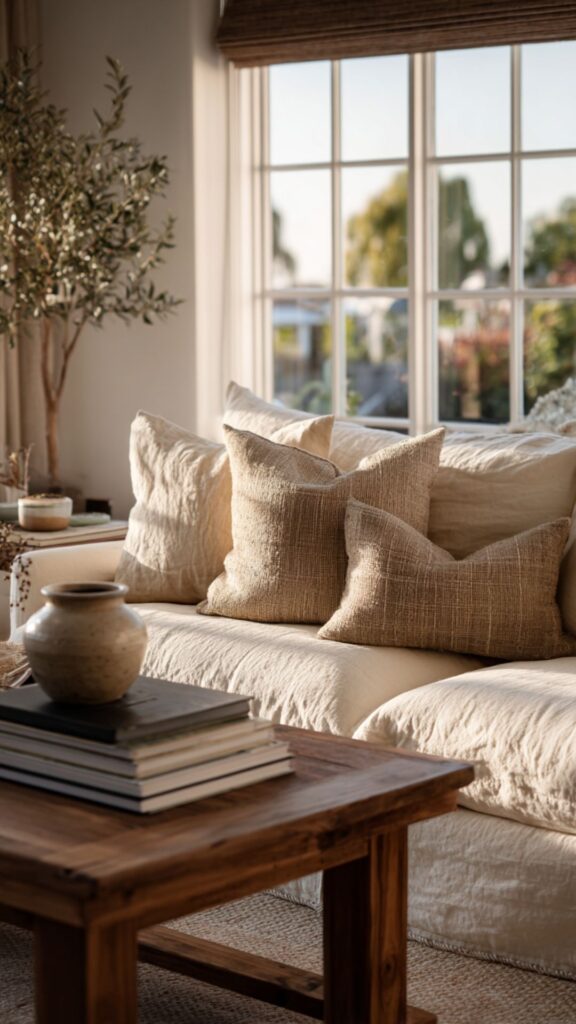
Over time, Martha moved away from the egg-inspired pastels toward a quieter palette: khakis, buttercreams, beiges, and greiges. The softer scheme amplified the lush garden visible through every window. The house grew quieter as the gardens grew louder.
11. The Garden That Grew for Thirty Years
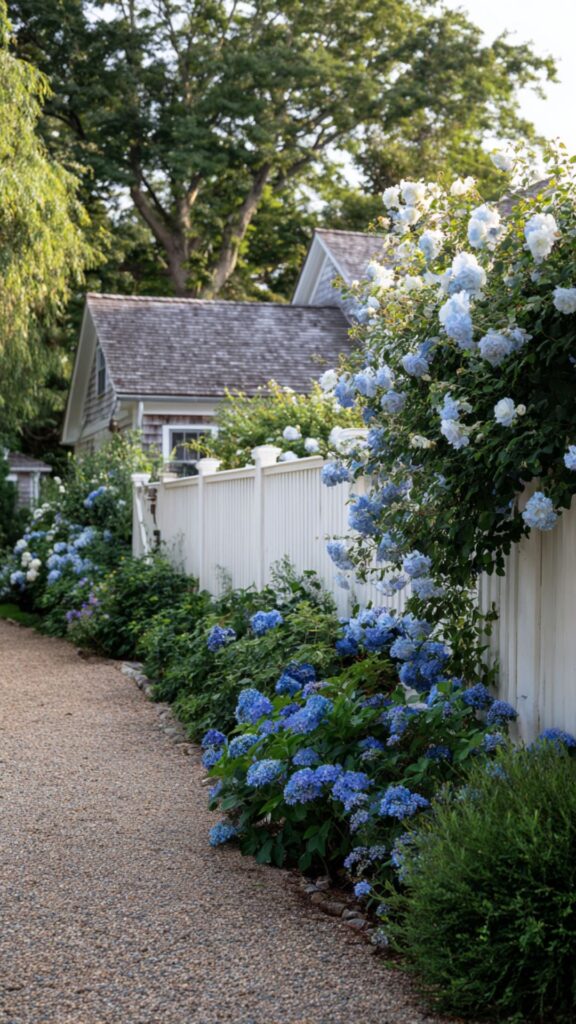
Martha’s garden at Lily Pond Lane matured over three decades. Roses climbed the fences. Hydrangeas lined the paths. Cutting gardens supplied the house with flowers all summer. When she sold the house, the garden was worth more than any renovation.
12. A Path to Georgica Beach
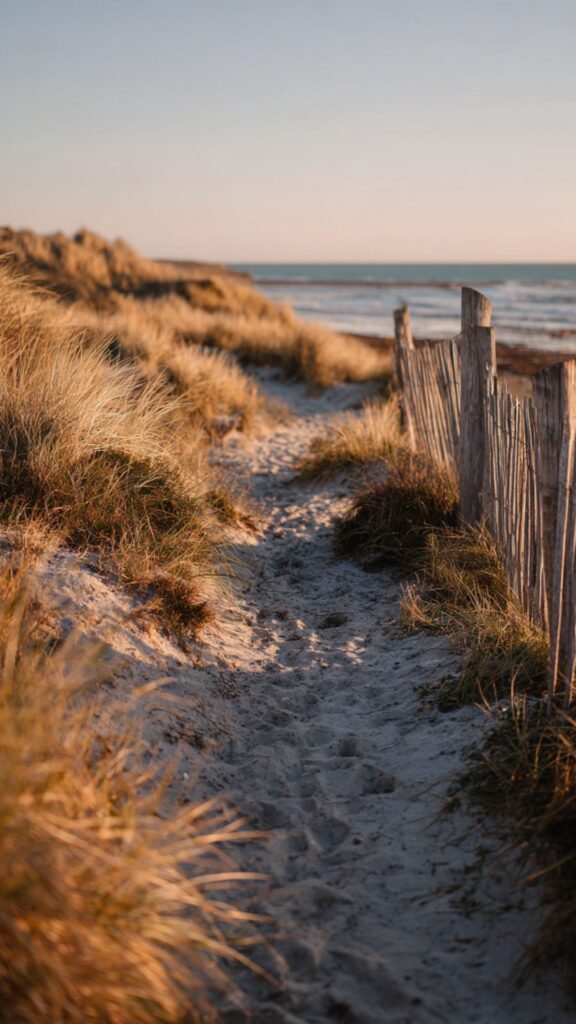
Lily Pond Lane connects directly to Georgica Beach, one of the most pristine stretches of sand in the Hamptons. Martha could walk from her kitchen to the ocean. The proximity shaped how she entertained: dinners started with beach walks and ended with candlelight on the porch.
13. TV Show and Magazine Photoshoots
Season five of Martha Stewart Living was filmed extensively at Lily Pond Lane. The house appeared in countless magazine features, cookbook photoshoots, and product campaigns. More people recognized this kitchen than most restaurant kitchens in America.
14. The Bernhardt Furniture Collection
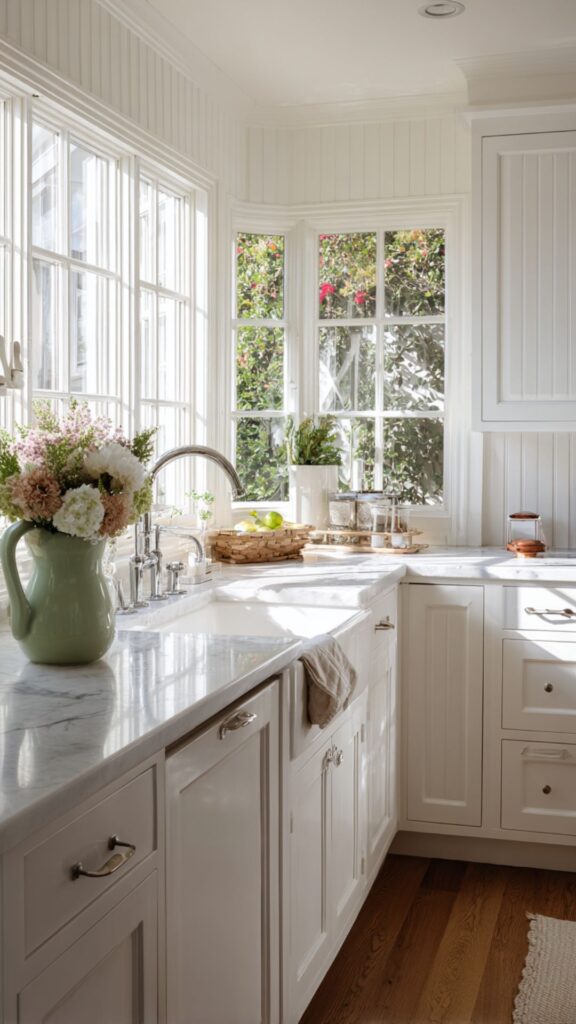
In 2001, Martha partnered with Bernhardt Furniture to create the Lily Pond Lane collection, a full line of coastal furniture based on the look of the house. The home was not just where she lived. It was a prototype for products millions of people could buy.
15. Sold for $16.5 Million in 2021
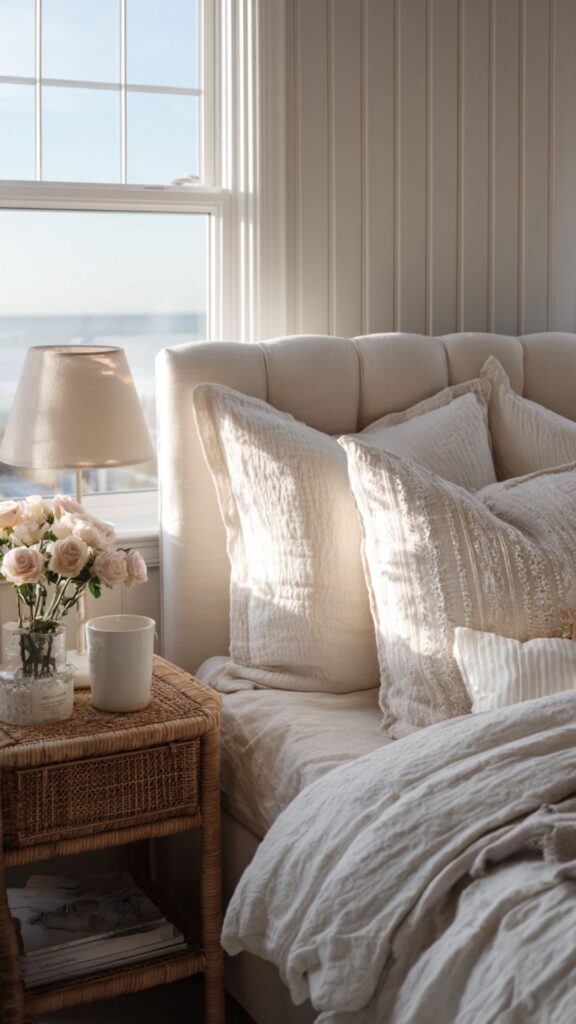
Martha sold Lily Pond Lane in August 2021 for $16.5 million, nearly ten times what she paid. The buyer was Kenneth Lerer, co-founder of Huffington Post. She had owned the house for thirty years. “It was the beginning of the best era of the Hamptons,” she said of the day she moved in.
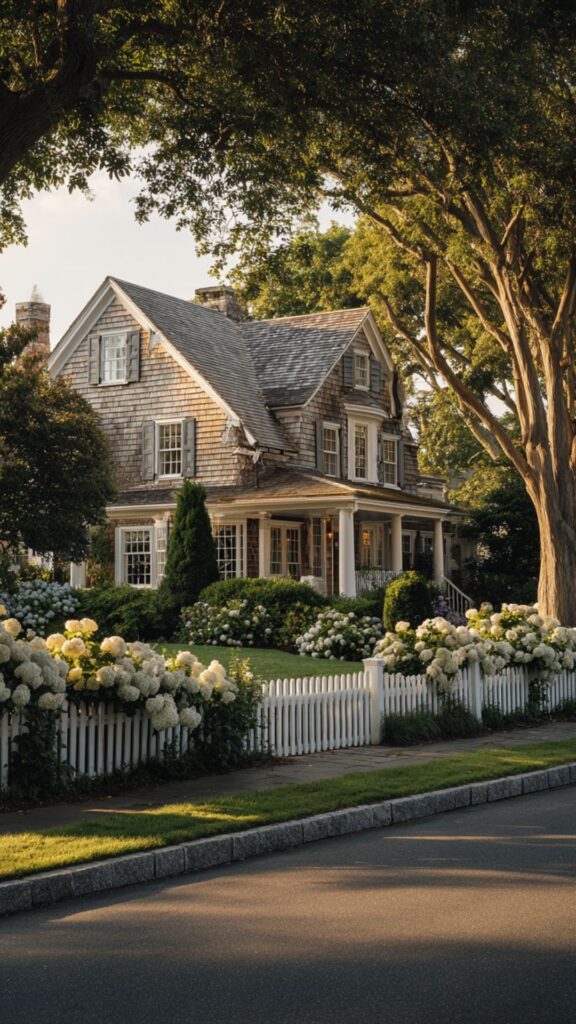
Martha Stewart’s Hamptons home was never just a house. It was a thirty-year design experiment that became paint colors, furniture lines, television sets, and magazine covers. Alexis saw it in one glance. Martha spent three decades proving her daughter right.