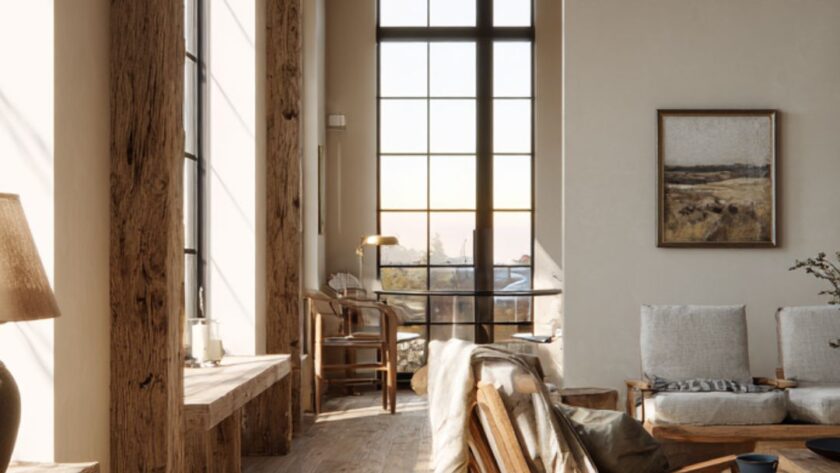
A room can be filled with beautiful objects and still feel wrong. The furniture faces the wrong wall. The rug is too small. The windows are covered when they should be bare.
Martha Stewart home interiors follow a logic that begins with the architecture and ends with the lampshade. She matches the design to the building, not the trend. Her Bedford farmhouse feels like a farmhouse. Her Skylands estate in Maine feels like a granite lodge above the sea. Each home is different because the building told her what it wanted.
Here are 15 interior design decisions Martha makes in every home she owns.
1. Let the Building Tell You Its Style
Martha never imposes one look across her properties. Bedford gets Shaker cabinets. Skylands gets leather sofas and sisal. Lily Pond Lane gets linen and pale blue. Her Manhattan apartment has laboratory-grade cabinetry from a Brooklyn supplier called Duralab.
The building’s age, materials, and setting dictate the direction. The interior serves the architecture, not the other way around.

2. Remove the Curtains
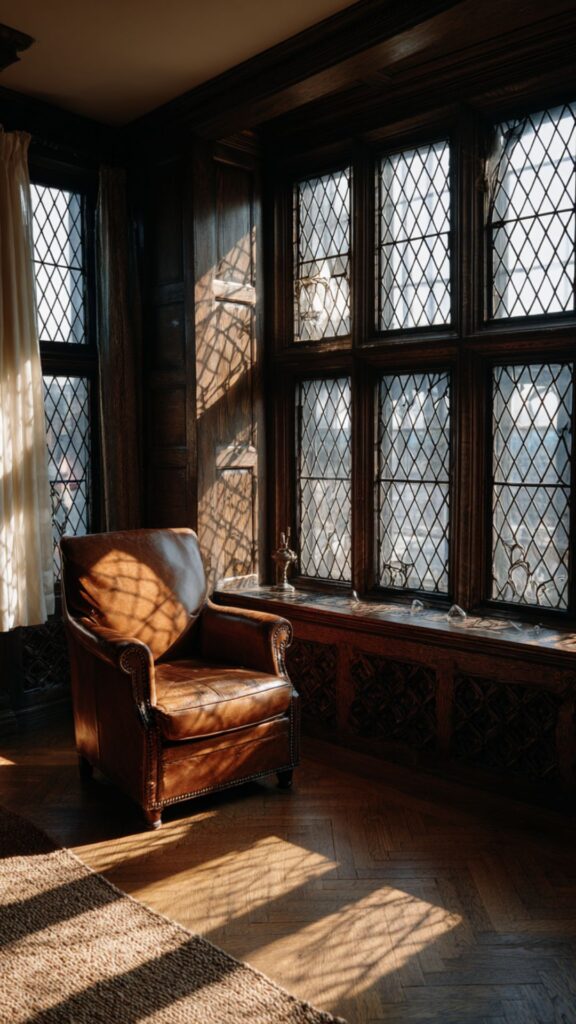
Martha does not use curtains at Bedford. At Skylands, she removed the previous owner’s drapes and left the leaded windows bare. “I wake up really, really early,” she has said. “There are no curtains, so I let the sun come in.”
Bare windows let natural light define the room from sunrise to sunset. If privacy is needed, she uses simple roller shades that disappear when raised.
3. Sisal on Every Floor
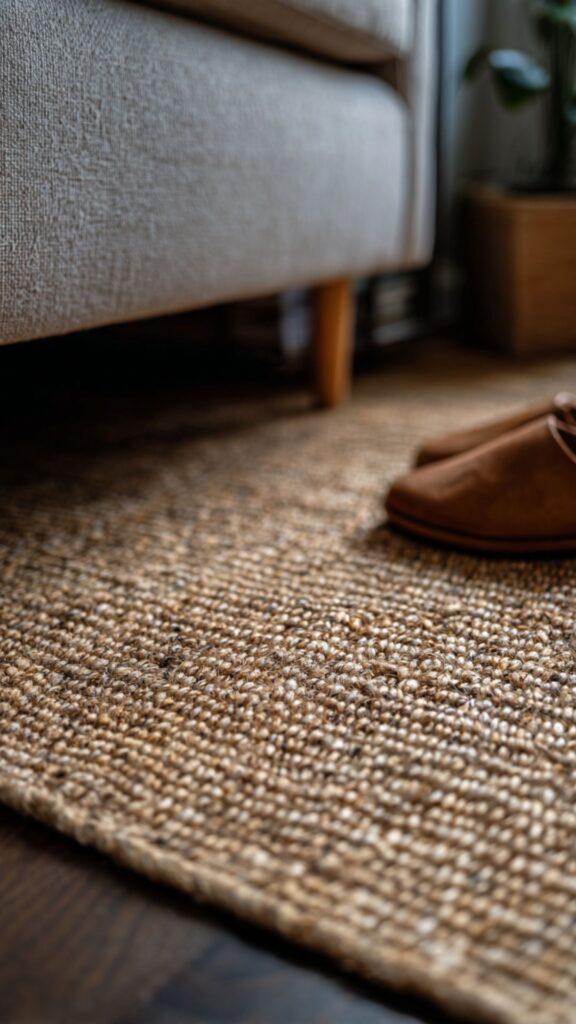
Martha replaced wall-to-wall carpet at Skylands with sisal rugs. At Bedford, sisal covers the floors beneath furniture groupings. The natural fiber is quiet, durable, and disappears visually so the furniture and objects above it can speak.
Sisal is to flooring what linen is to the table: a neutral, textured foundation that makes everything placed on top of it look more intentional.
4. Furniture That Moves Between Rooms
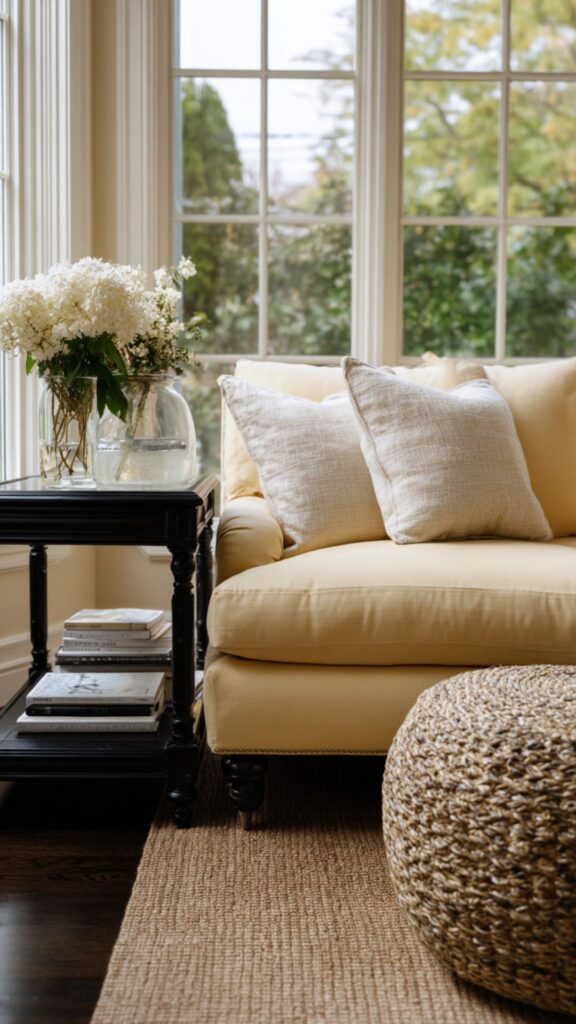
In fall 2024, Martha rearranged three living rooms at Skylands in a single day. She swapped gray-blue upholstery for creamy pale yellow, moved the faux bois table to become a card table, and shifted furniture between rooms until each one felt right.
Good furniture is not fixed to its first position. A piece chosen for quality and proportion can live in a bedroom this year and a study next year. Martha buys for the piece, not the room.
5. Silk Lampshades Lined in Gold
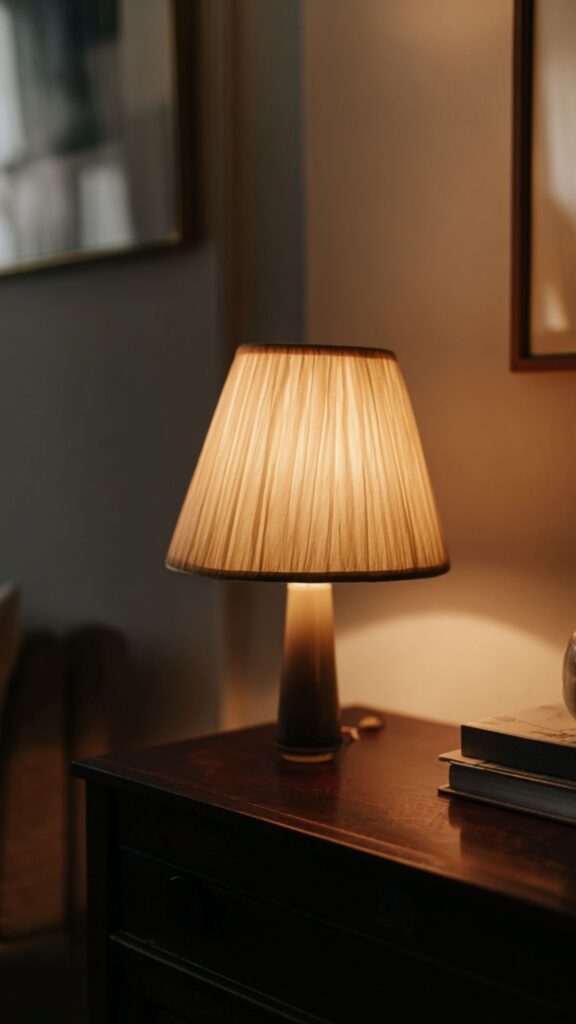
At Skylands, Martha replaced standard lampshades with silk shades lined in gold fabric. The gold lining reflects warm light downward and outward, turning every lamp into a source of amber glow rather than harsh white.
This single change transforms the feeling of a room after dark. A white-lined shade produces cool, flat light. A gold-lined shade produces the warmth of candlelight from an electric source.
6. Reupholster, Do Not Replace
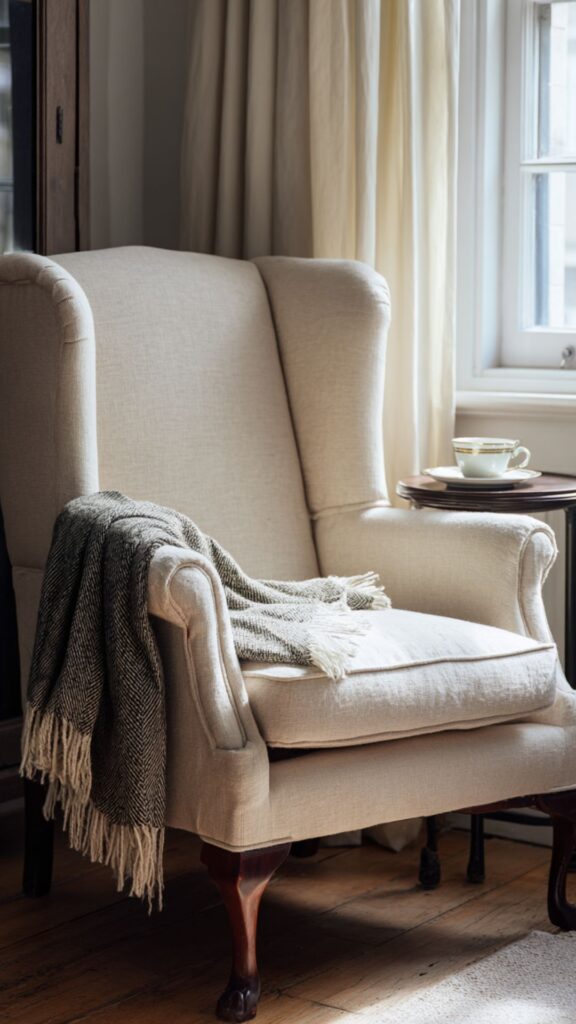
Martha reupholsters furniture rather than buying new. She kept the original furnishings at Skylands from the Ford era and had them recovered. At Bedford, pieces are reupholstered when the fabric wears but the frame stays because the frame was built to last.
A well-made frame with hand-turned legs and solid joinery lasts a century. The fabric on top lasts a decade. Recovering a great chair costs less than replacing it with something worse.
7. One Large Rug, Not Several Small Ones
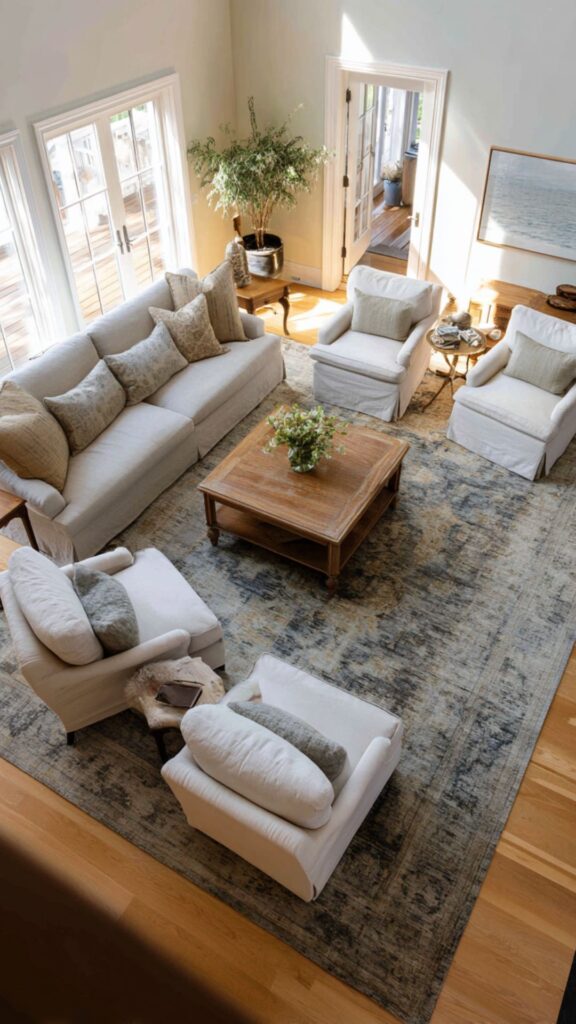
Martha insists on rugs large enough to anchor the full furniture grouping. “A new carpet can alter a room’s look completely,” she wrote on her blog. A rug that stops short of the sofa makes the room feel fragmented. A rug that extends beneath every piece ties the arrangement together.
Small accent rugs scattered across a room create visual noise. One large rug creates a floor within a floor and gives the furniture a stage.
8. Gallery Walls with a Subject
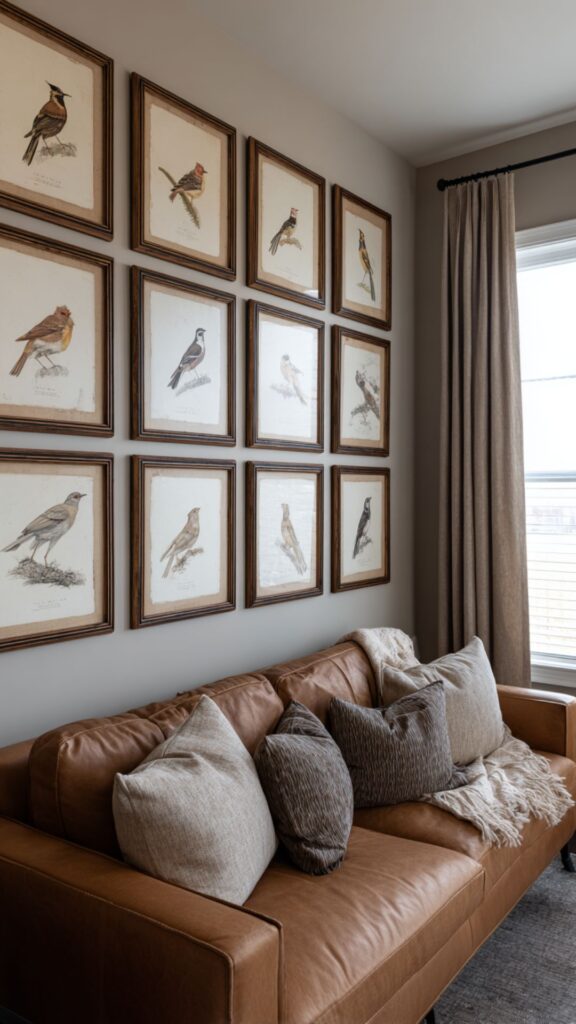
Martha’s gallery wall at Skylands is not a random collection of frames. It is a curated set of chromolithograph bird prints by Carroll Tyson, known as the “Audubon of Maine.” Every piece belongs to one subject, and the wall reads as a collection rather than a collage.
A gallery wall works when it has a theme: all botanicals, all black and white photography, all maps. Without a subject, it is just frames on a wall.
9. Hang Art After Everything Else
Martha’s rule: choose paint, furniture, window treatments, lighting, and accessories first. Hang art last. By the time the walls are ready for pictures, the color palette is established and the available wall space is clear.
Most people hang art first and decorate around it. Martha builds the room and lets the walls tell her what they need.
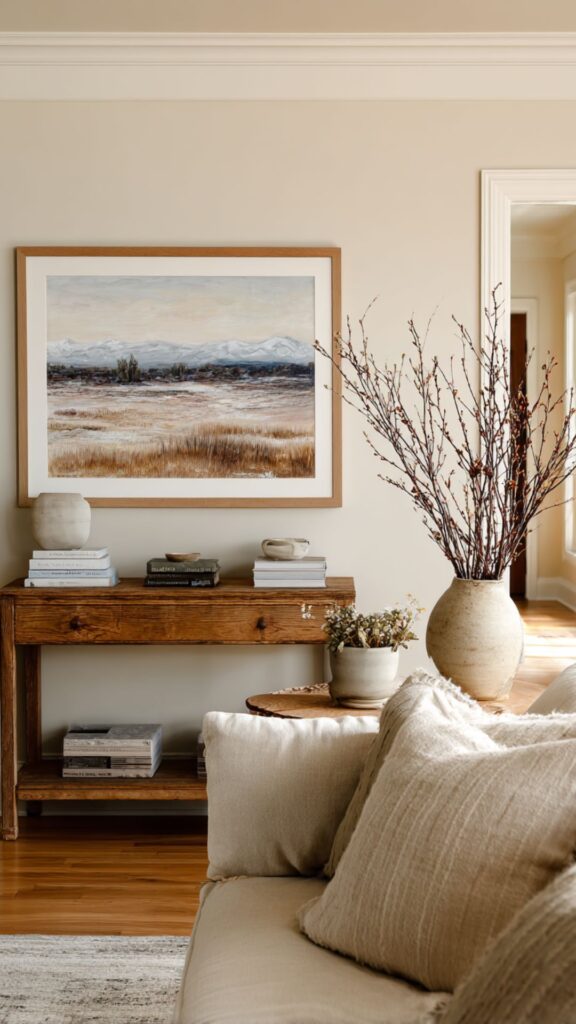
The structure of the room is set. What follows adds the details that make an interior feel personal and lived in.
10. Style in Groups of Three
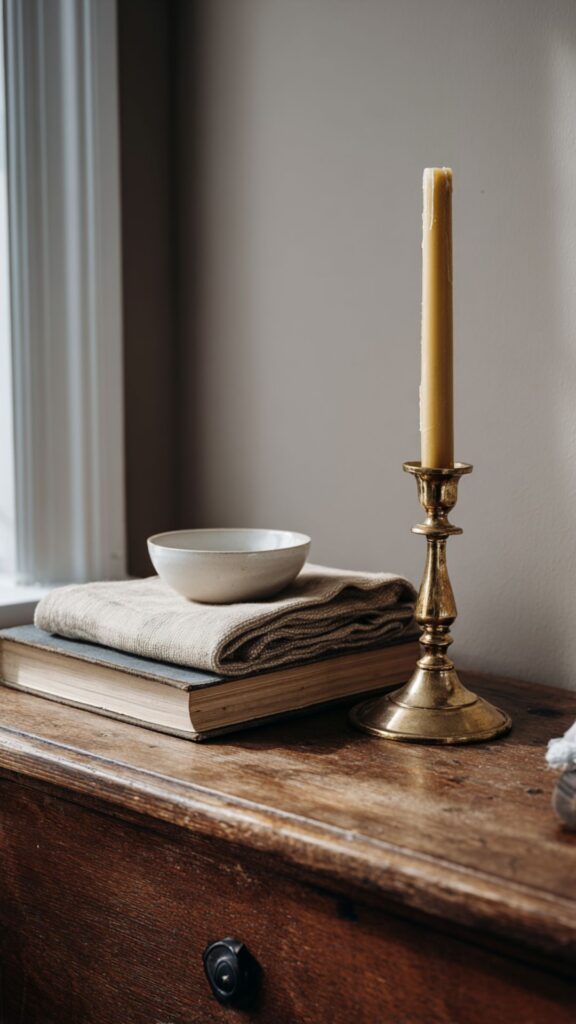
Martha arranges objects on surfaces in groups of three with varied heights and textures. A tall candlestick, a medium stack of books, and a small ceramic bowl. A tall vase, a framed photo, and a low plant.
Three objects create a triangle the eye can follow. Two looks sparse. Four looks crowded. Three is the number where arrangement becomes composition.
11. Use Antiques as Furniture, Not Display
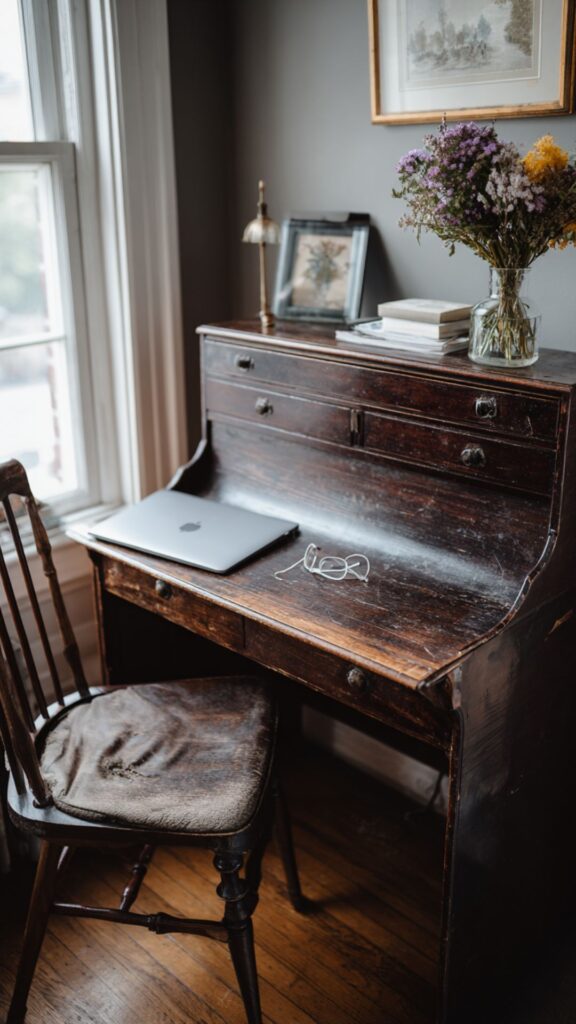
Martha’s antique English desk at Bedford is not a showpiece. It is where she sits and works with her laptop on it. The rare 19th-century papier-mache chairs in her converted porch room are sat in daily. Antiques in a Martha interior are used, not admired from across the room.
A piece of furniture earns its place by being useful. An antique that nobody sits in is just an expensive obstacle.
12. Paint Colors from Nature, Not from Trends
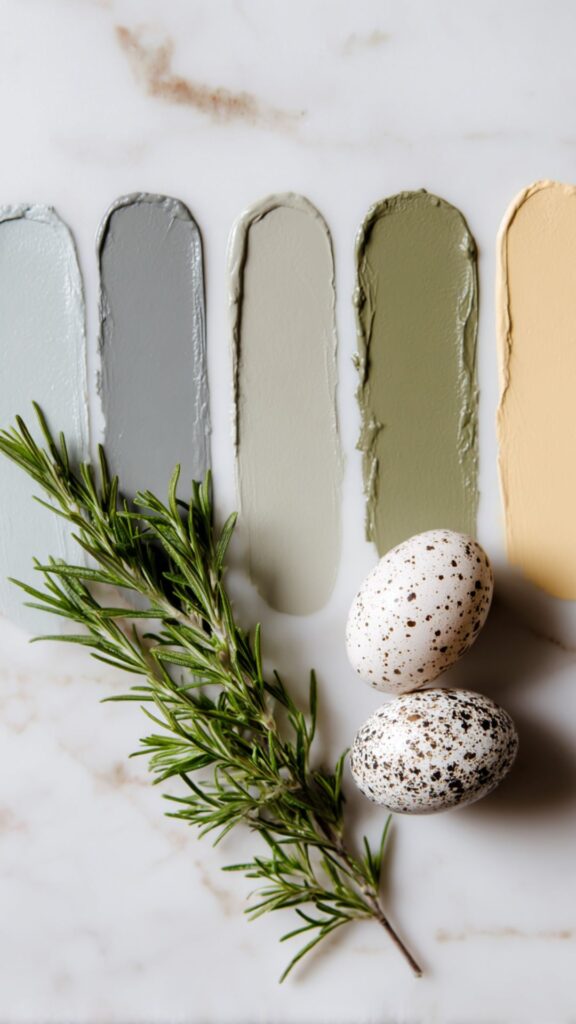
Martha’s original paint line drew colors from the eggs of her Araucana chickens. The Skylands palette echoed the greens and grays of the Maine forest. Bedford Gray came from the fog that settled over her farm on a January morning.
Every color in a Martha interior has a source in the natural world. Egg blue. Fog gray. Fern green. Ochre from dry autumn grass. Colors drawn from nature never clash because nature already resolved them.
13. Extend Cabinets to the Ceiling
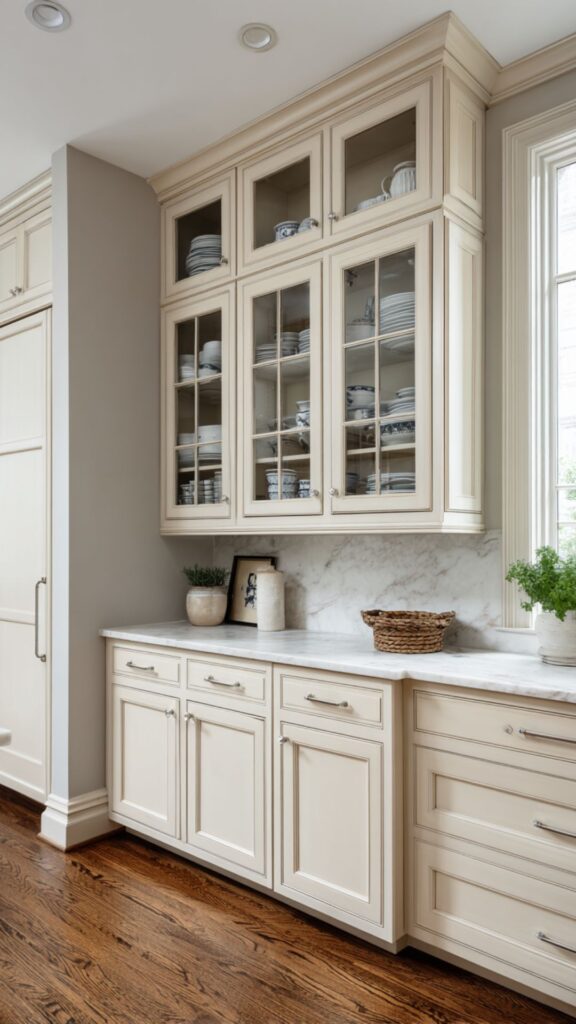
In her Maple Avenue guest kitchen at Bedford, Martha extended upper cabinets all the way to the ceiling and finished them with simple crown moulding. No gap between cabinet and ceiling. No dust shelf. No dead space.
The gap above kitchen cabinets collects dust and wastes visual height. Closing it makes the room feel taller and the cabinetry feel built-in rather than installed.
14. Every Room Needs a Place to Sit and Think
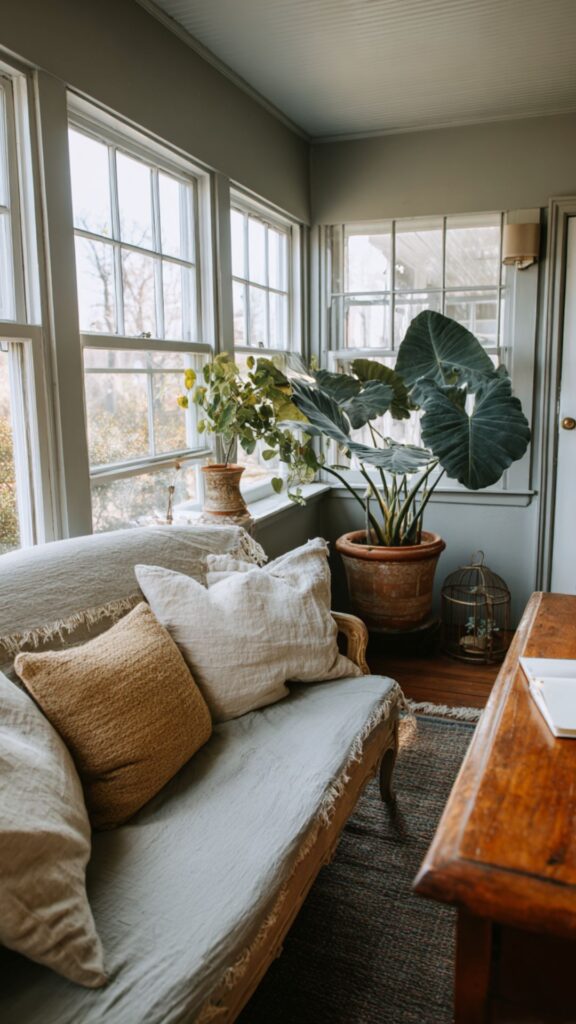
Martha’s converted porch at Bedford was designed as “a peaceful area for writing, meeting and enjoying the beautiful views.” She placed an antique desk near the window, added vintage settees, and brought in her canaries so she could hear them sing while she worked.
A room without a quiet seat near natural light is a room that only serves tasks. Every home needs at least one corner built for sitting still.
15. Try the Furniture in a Different Direction
Martha’s approach to room layout is physical, not theoretical. She and her crew spend hours moving pieces, trying different formations, and testing which direction a sofa faces before committing. “Don’t be afraid to try different formations or directions in which a piece faces,” she wrote on her blog. “You can always change it back.”
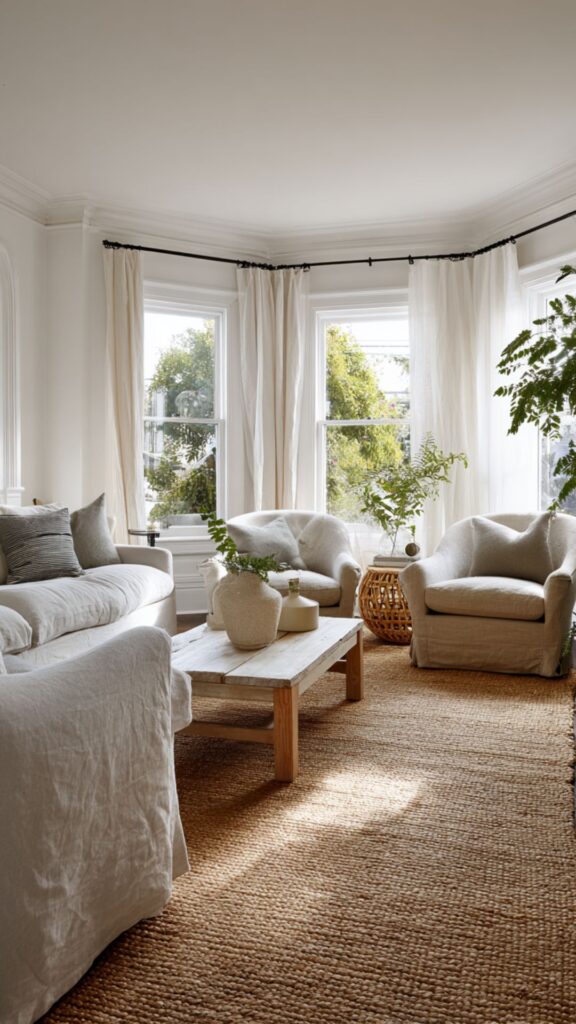
The best arrangement is rarely the first one. Push the sofa away from the wall. Turn the desk to face the window. Angle the reading chair toward the light. A room that felt wrong for months might need nothing more than a quarter turn.
Martha Stewart home interiors are not about filling rooms with beautiful things. They are about making decisions that let beautiful things work. Remove the curtains. Extend the cabinets. Line the lampshade in gold. Move the sofa until the room makes sense.
Start with the room that bothers you most. Stand in the doorway and ask what the building wants. The answer is usually simpler than you think: more light, fewer things, and one good chair facing the right direction.