
Martha bought two parcels of land in Katonah, New York in 2000 for a combined $15.2 million. The property was first settled in 1784. She named it Cantitoe Corners after the wife of a local Indian chief and wrote a mission statement for the farm before the first renovation began.
1. Five Houses on One Property
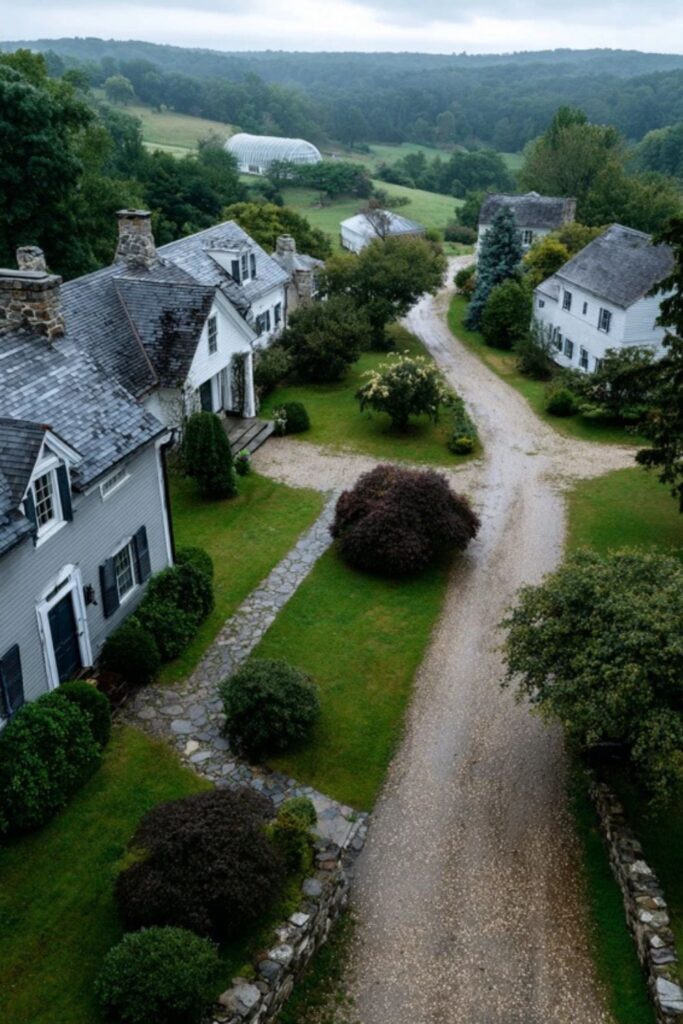
Cantitoe Corners has five restored homes: the Summer House built in 1770, the Winter House built in 1925, the Tenant’s Cottage from 1884, the Maple Avenue Guest House, and a contemporary home. Each building sits on its original foundation. Martha lives in the three-story Winter House.
2. Every Building Painted Bedford Gray
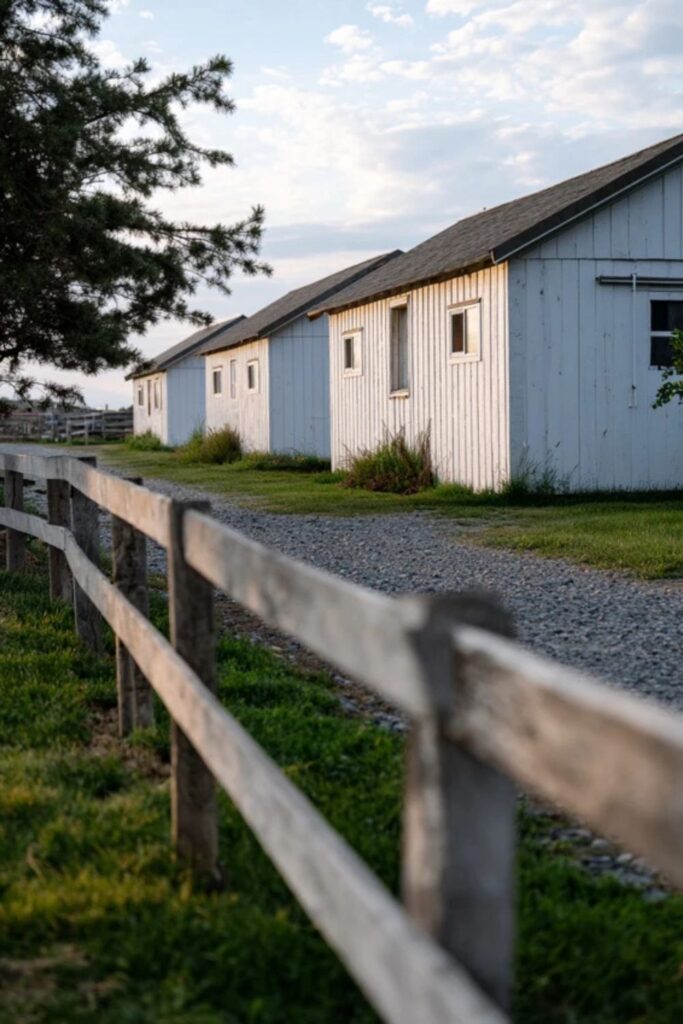
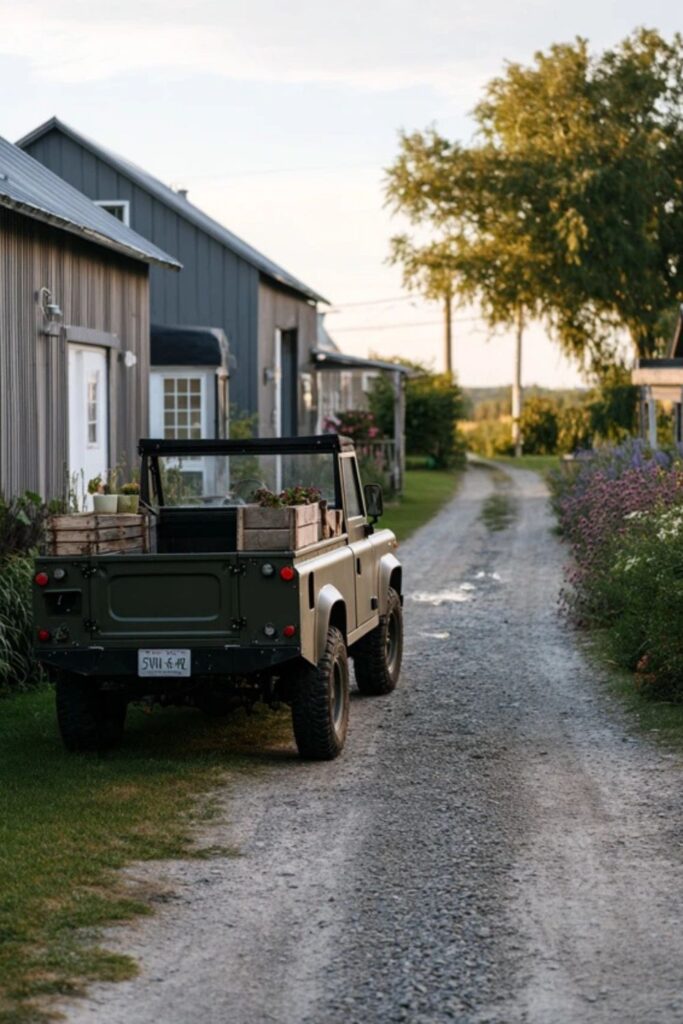
Every structure on the property wears the same warm gray: houses, barns, stables, equipment sheds, fences, and planters. Martha based the color on a piece of old Italian stationery she kept in her collection. The gray ties the entire 153-acre property into one visual statement.
3. The Winter House Faces Backwards
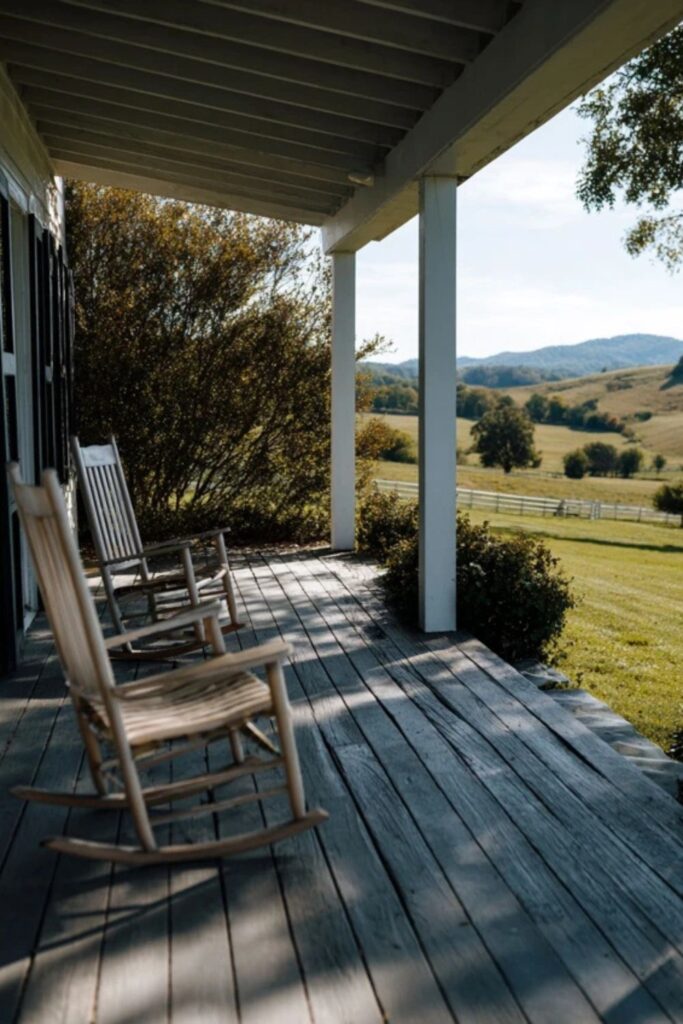
Martha reconfigured the layout of the Winter House so its front porch faces the acreage rather than the road. Visitors approach what was once the back of the house. The view from the porch is 153 acres of gardens, paddocks, and woodland instead of a street.
4. The Kitchen with Seven Counterparts
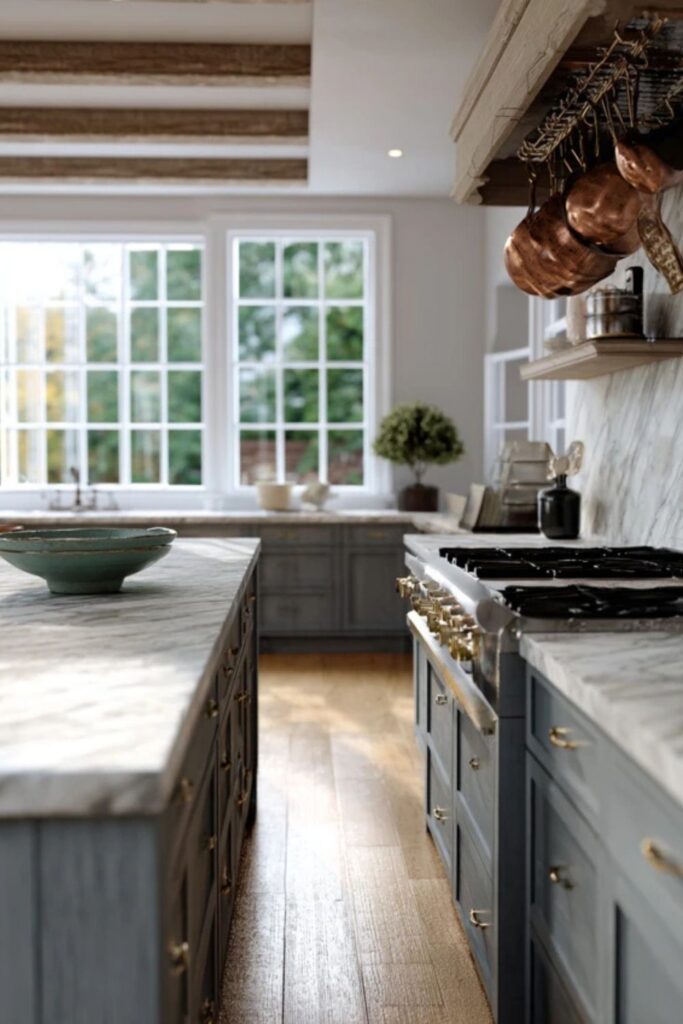
Martha oversees at least seven kitchens across the Bedford property. The main kitchen in the Winter House has gray sycamore veneer cabinets, white marble countertops, and copper pots hanging from a rack above the island. Each kitchen on the estate serves a different function.
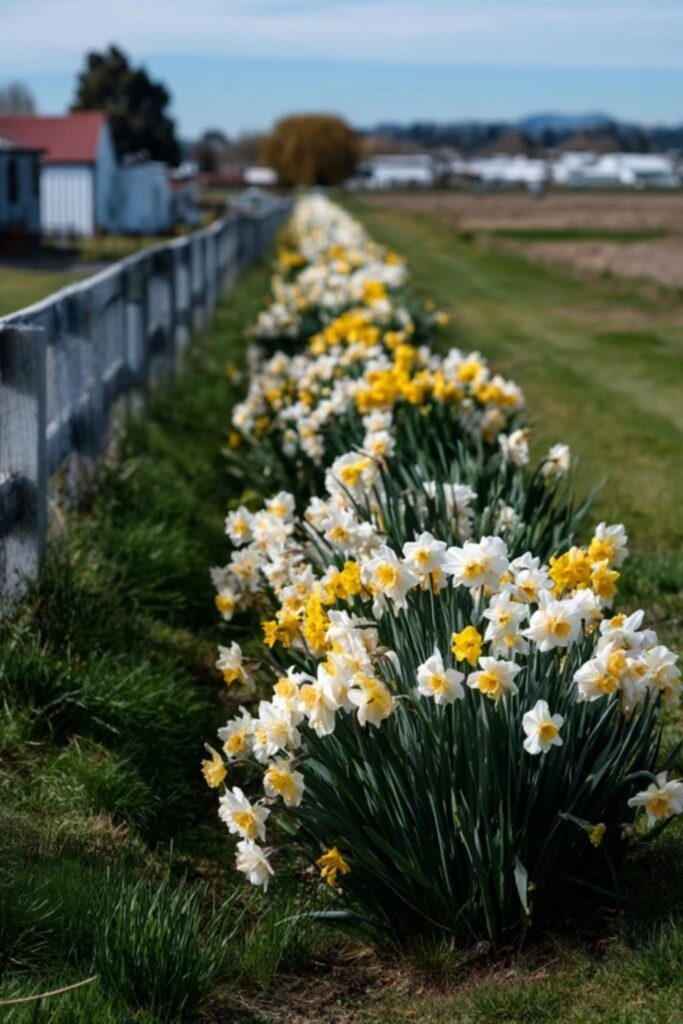
5. 45,000 Daffodil Bulbs in the Long Border
Martha’s daffodil border stretches the length of one side of the property. She plants thousands of new bulbs every autumn to fill gaps she identifies each spring. The border erupts in yellow and white each April, visible from nearly every building on the farm.
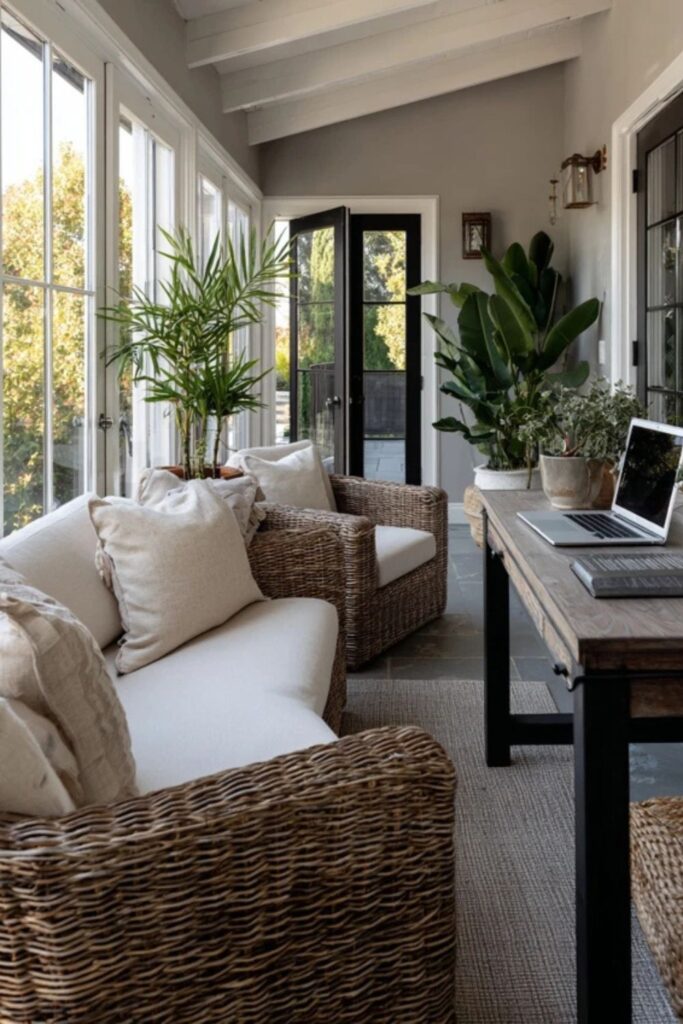
6. The Enclosed Porch for Writing
Martha converted her open porch into an enclosed room with six sliding glass doors, painted Bedford Gray. She filled it with an antique English desk, vintage Lloyd Loom settees, and her red factor canaries. This is where she writes, works, and watches the farm from behind glass.
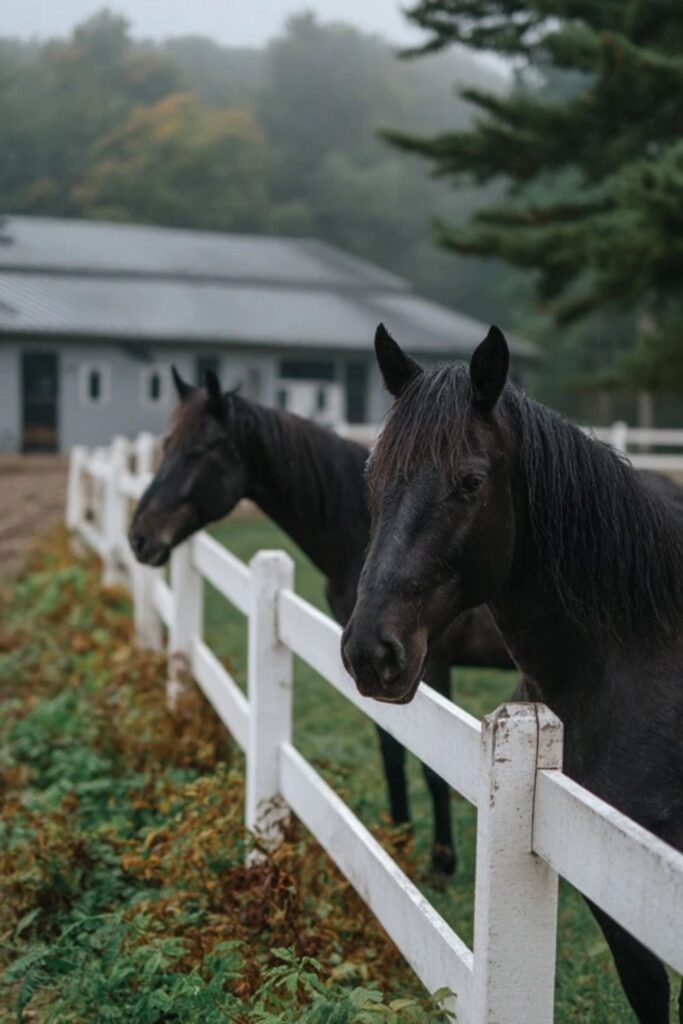
7. Canadian Friesian Horses in Custom Paddocks
Martha keeps Friesian horses in paddocks fenced with 100-year-old white cedar imported from Canada. She rarely lets them out during peak sun because sunlight can turn their black coats reddish. Four miles of carriage roadways wind through the property.
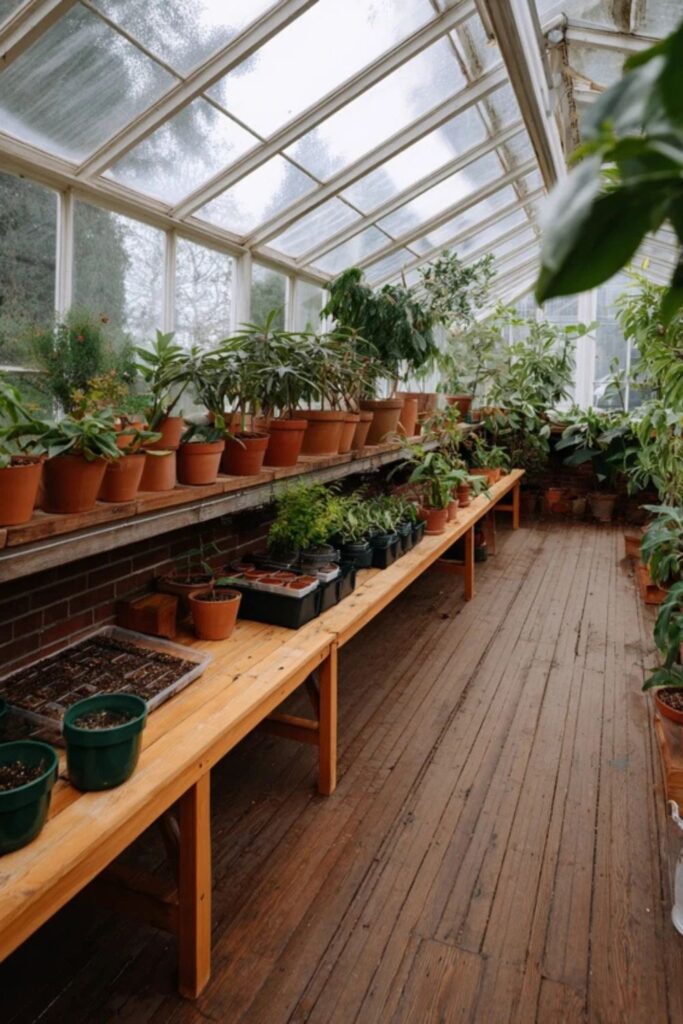
8. The Greenhouse Complex
Martha’s aluminum and glass greenhouse at Bedford houses tropical specimens in winter, forces bulbs for holiday displays, and starts thousands of seedlings each spring. It is not decorative. It is the engine that supplies every room and garden on the property with living plants year round.
The buildings and grounds are mapped. What follows covers the details that make Cantitoe Corners feel like a working farm, not a country estate.
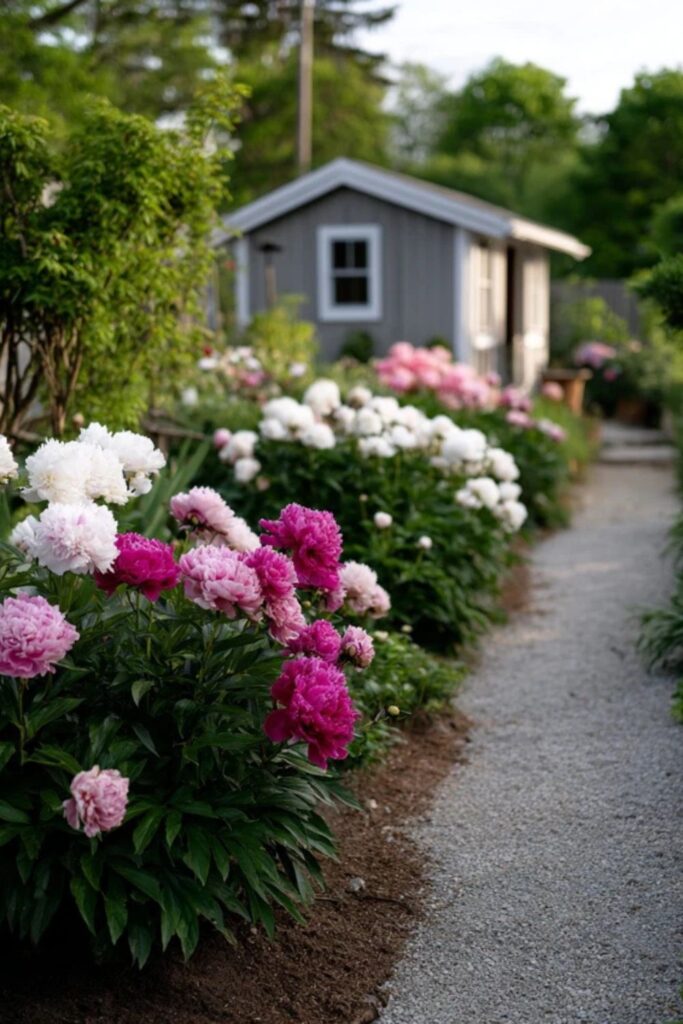
9. 200 Varieties of Peonies
Martha’s peony garden contains 200 different plant varieties. When they bloom in late spring, she cuts armfuls and fills ironstone pitchers throughout the house. The peony garden alone is worth a dedicated visit each June.
10. The Vegetable Garden Behind the Greenhouse
Martha’s vegetable garden produces enough for her kitchen and her staff. Heritage tomatoes, lettuces, herbs, peppers, squash, and root vegetables grow in raised beds. Tulip bulbs occupy the same beds in spring before the summer crops go in.
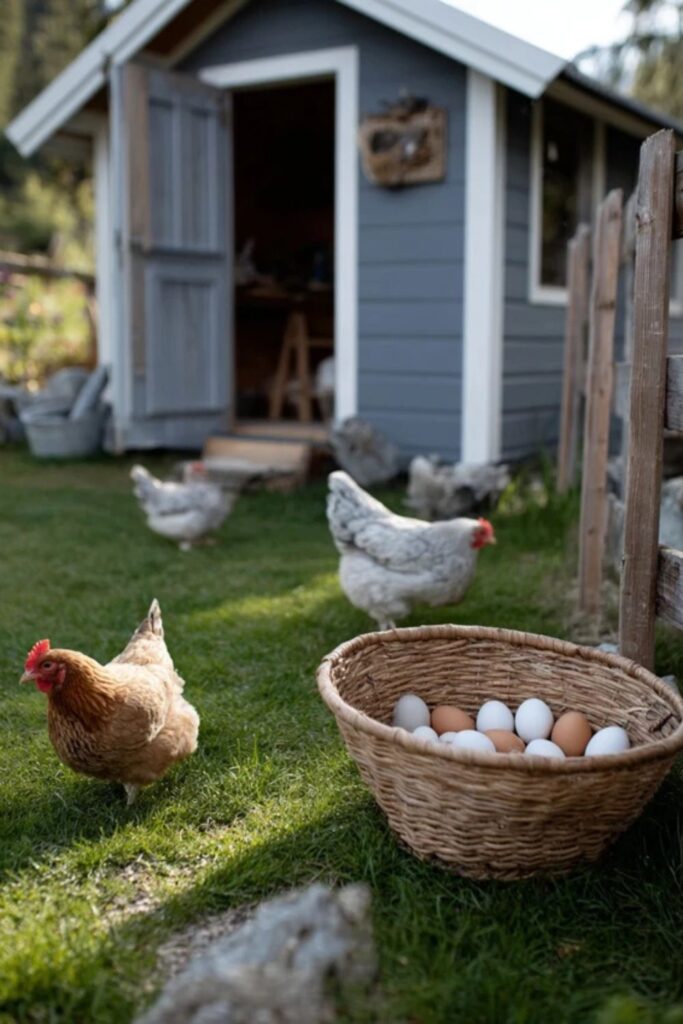
11. 150 Chickens and the Coop
Martha keeps around 150 chickens at Bedford, including Araucana hens that lay blue and green eggs. The chicken coops are painted Bedford Gray to match everything else. The eggs appear in her cooking, her Easter decorating, and even inspired her original paint color line.
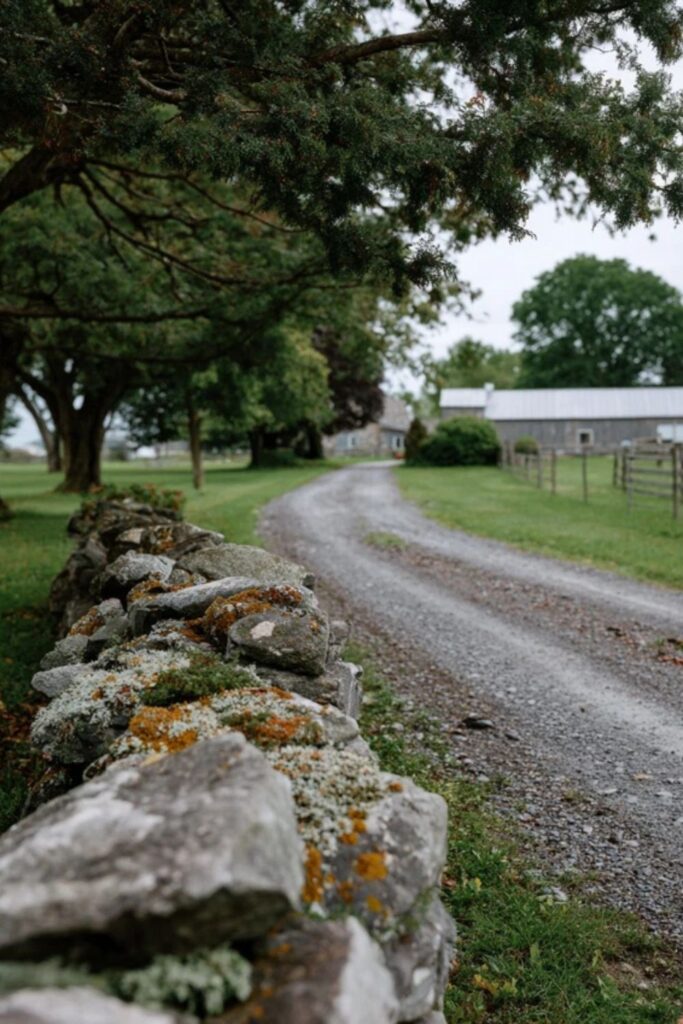
12. Stone Walls and Gravel Everywhere
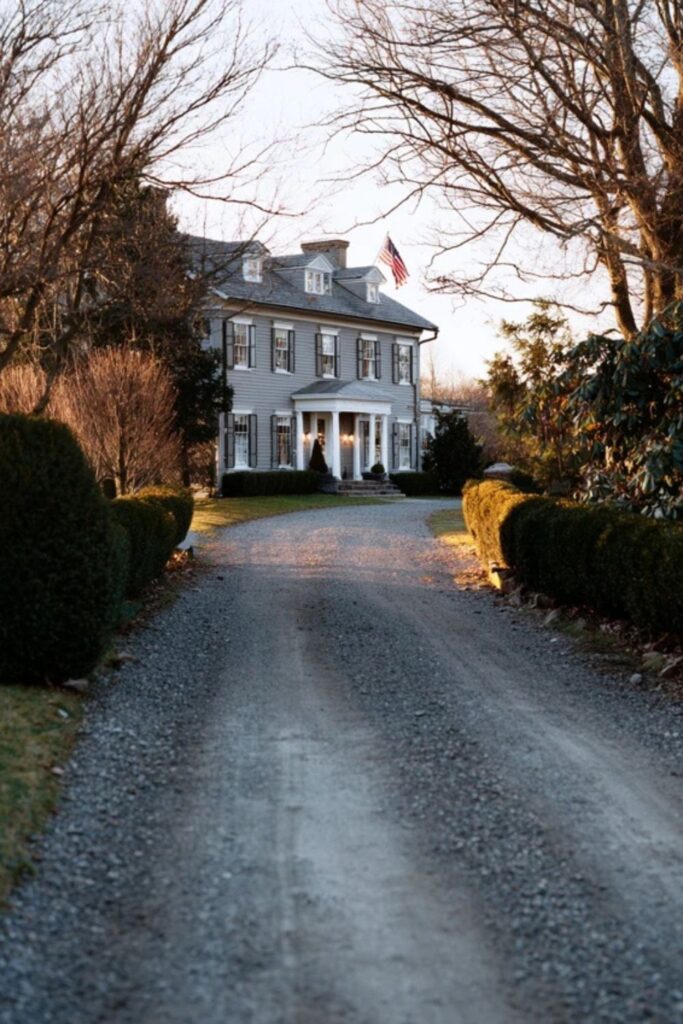
The property boundaries and garden rooms are defined by dry-stacked stone walls using local stone. Every path and driveway is gravel, raked smooth and refreshed each spring. No asphalt touches the property.
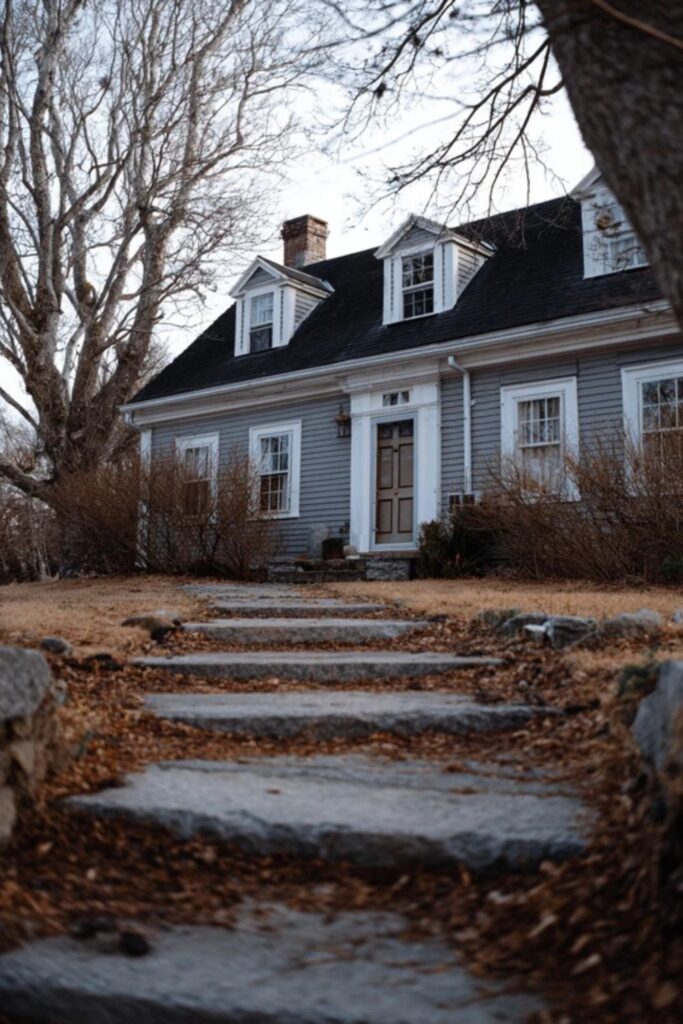
13. The Summer House from 1770
The oldest building on the property is the Summer House, originally built in 1770. Martha uses it as a library for her vast book collection. During holiday parties, it becomes the “Caroling and Champagne” room, filled with gold tabletop trees and candles.
14. The Polaris Ranger as Transportation
Martha gets around the 153-acre property in a Polaris Ranger utility vehicle. The distance between buildings, gardens, greenhouses, stables, and chicken coops is too far to walk efficiently. The Ranger is as essential to the farm as any tractor.
15. A Mission Statement Before the First Renovation
Before touching a wall, Martha wrote a mission statement for the property. She told Vanity Fair: “I want to have a new kind of house, a smart house. This is going to be the future.” Every decision since, from the gray paint to the gravel paths to the greenhouse, follows that original document.
Martha Stewart’s Bedford home is not a house. It is a 153-acre argument that a farm can be as considered as a gallery, as organized as a kitchen drawer, and as beautiful as the best room in the house. Every building, every path, and every garden follows a plan she wrote before the first nail was driven.