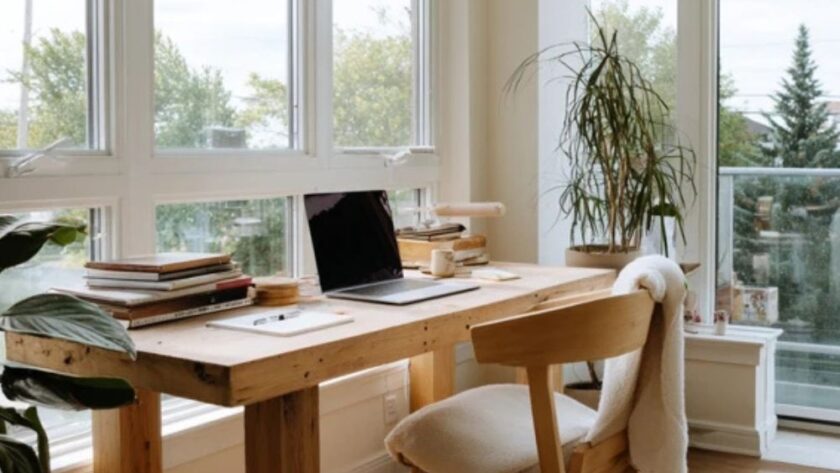
Martha’s office at Bedford is a converted porch with six sliding glass doors, an antique English desk, and a cage of red factor canaries singing while she works. She did not build a room for an office. She turned an underused space into the best seat on the farm.
1. Find the Corner, Not the Room
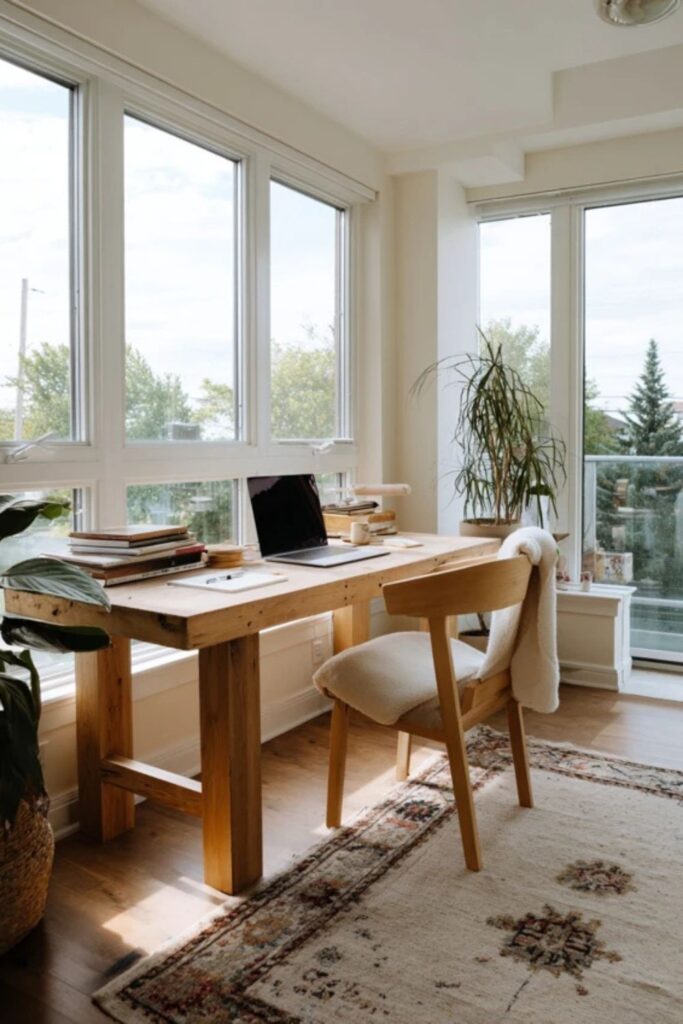
Martha says a home office does not need a dedicated room. It needs a desk, a filing system, and a light source near a window. A corner of the bedroom, a section of the kitchen, or a closet with a shelf and a chair will work if the space is treated with intention.
2. An Antique Desk Over a Modern One
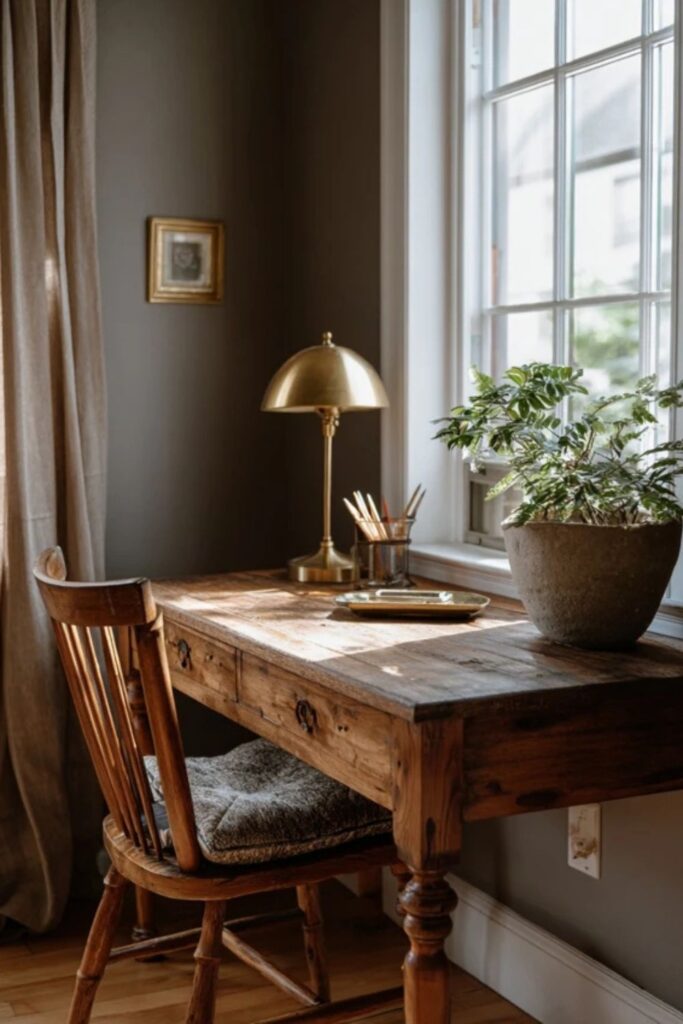
Martha’s Bedford office uses an antique English desk she already owned. She tried it in different positions before settling on its final spot. An antique with real wood and real drawers will outlast any flat-pack desk and improve with use rather than deteriorate.
3. The Desk Faces the View
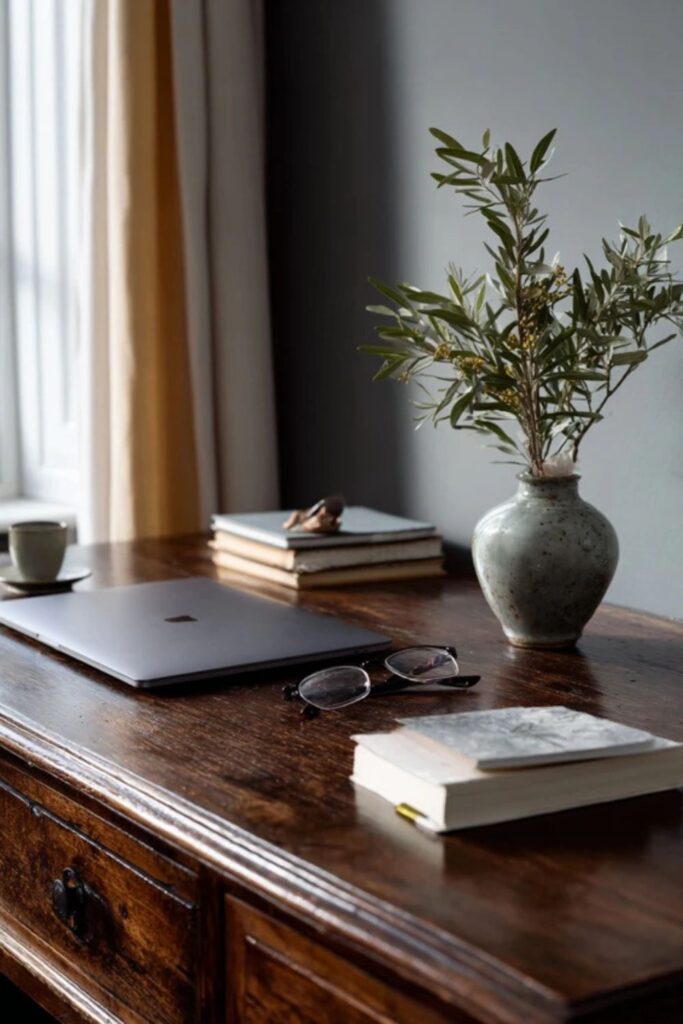
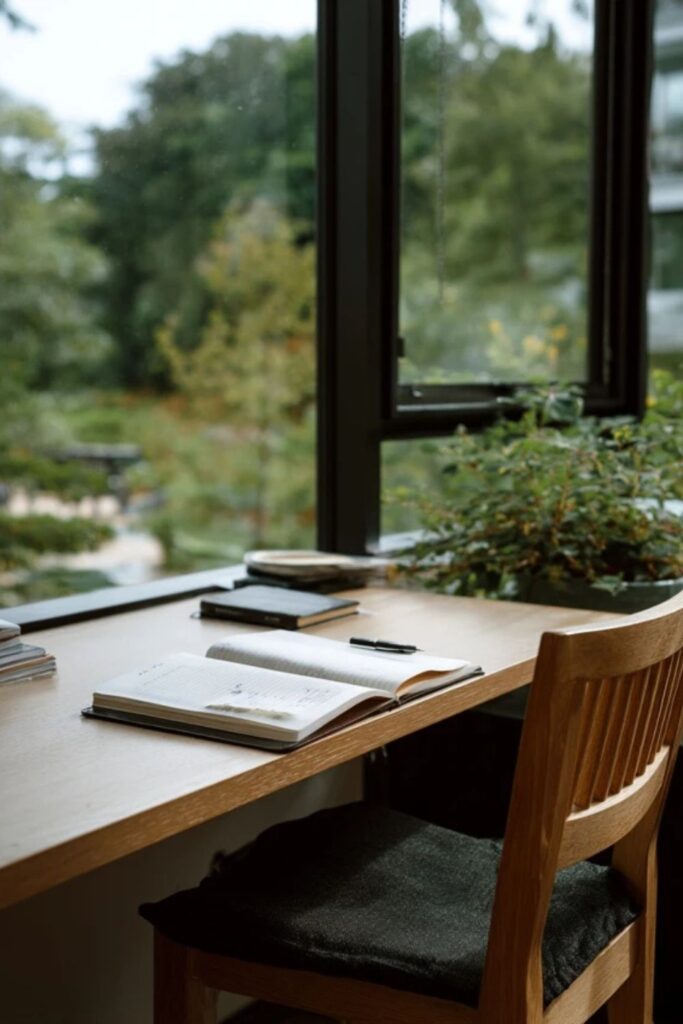
Martha positioned her desk to face the view of her 153-acre farm through the glass doors. A desk facing a wall wastes the room’s best asset. Turn it toward the window, the garden, or whatever the room offers that is worth looking at while thinking.
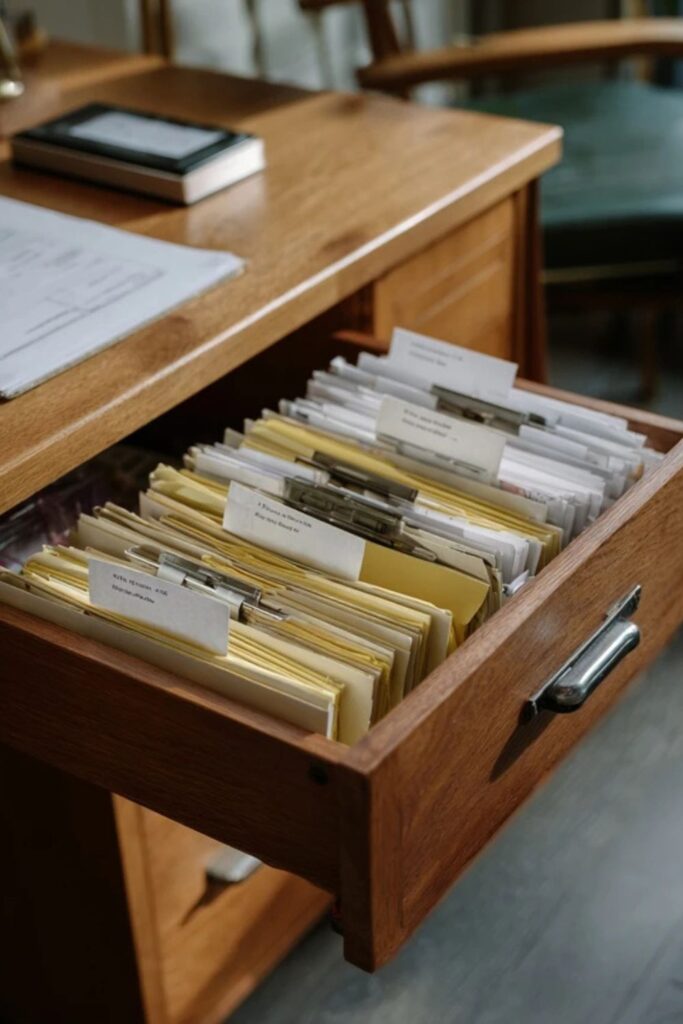
4. Label Every Drawer and File
Martha uses a label maker on everything: file folders, storage boxes, desk drawers, supply containers. Her organizing book recommends creating a filing system by category, not by date, so every piece of paper has a permanent home it returns to.
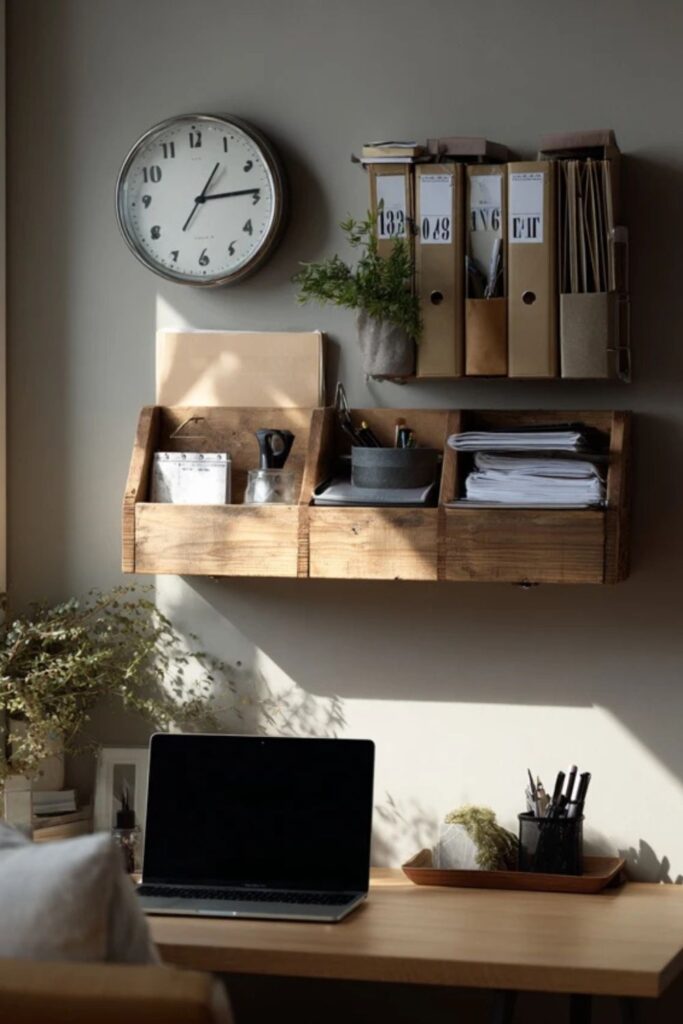
5. A Wall System Instead of a Filing Cabinet
Martha designed a modular wall manager system: boards, shelves, caddies, and clips that mount above the desk and hold files, supplies, and notes vertically. Wall storage frees the desk surface entirely. Everything is visible, accessible, and off the table.
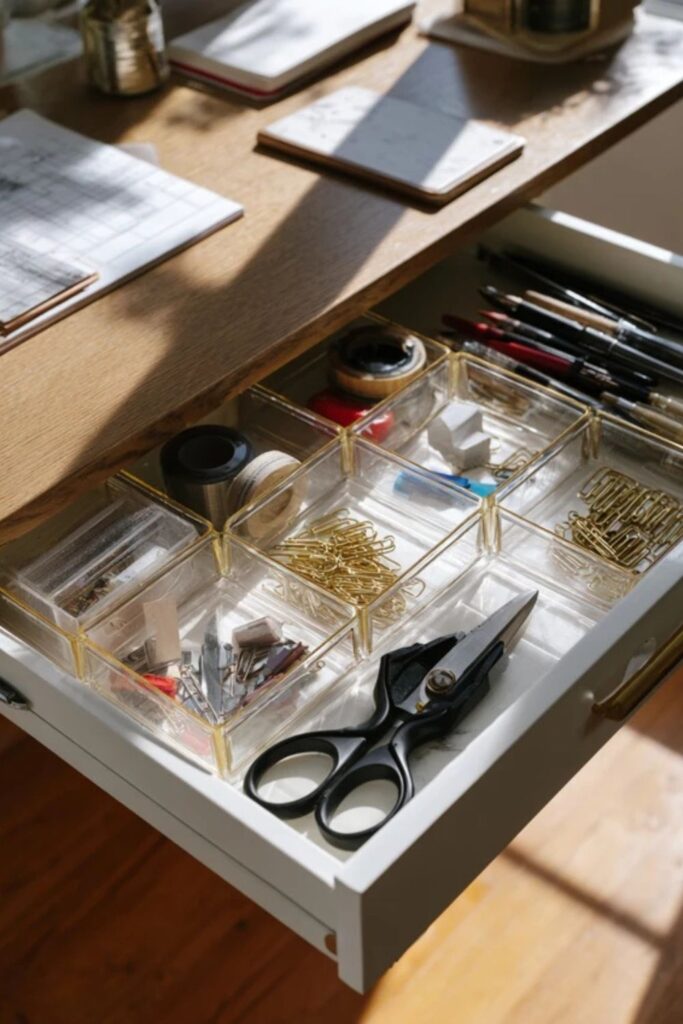
6. Acrylic Drawer Organizers with Gold Trim
Martha’s office supply line includes clear acrylic organizers with gold trim for desk drawers. Paper clips in one compartment, stamps in another, scissors in a third. The clear material lets you see the contents. The gold trim makes a utility object look considered.
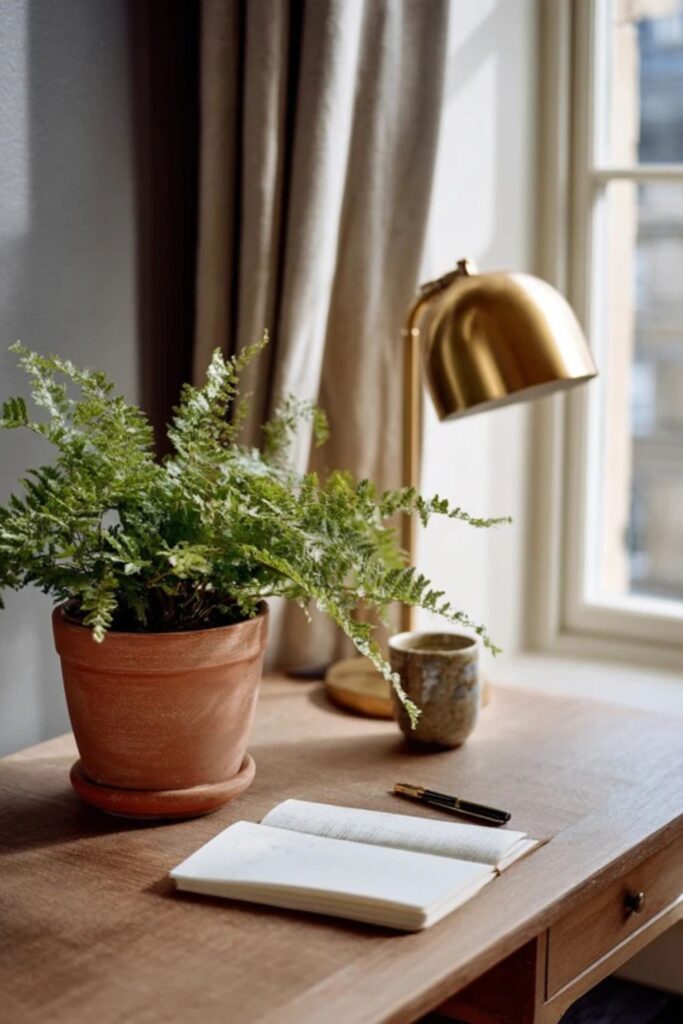
7. A Plant on the Desk, Always
Martha keeps houseplants in every room, including her office. At Bedford, large-leaf alocasias sit in the corners of her converted porch. Even a single potted herb or small fern on a desk changes the feeling of a workspace from sterile to alive.
8. Natural Light as the Primary Light Source
Martha’s office has six glass sliding doors. She removed drapes from every home she owns. The primary light source for any workspace should be a window. A desk lamp supplements after dark, but daylight is the only light that does not fatigue the eyes.
The desk is placed and the storage is set. What follows adds the details that make a home office feel personal and calm.
9. A Brass Lamp for Evening Work
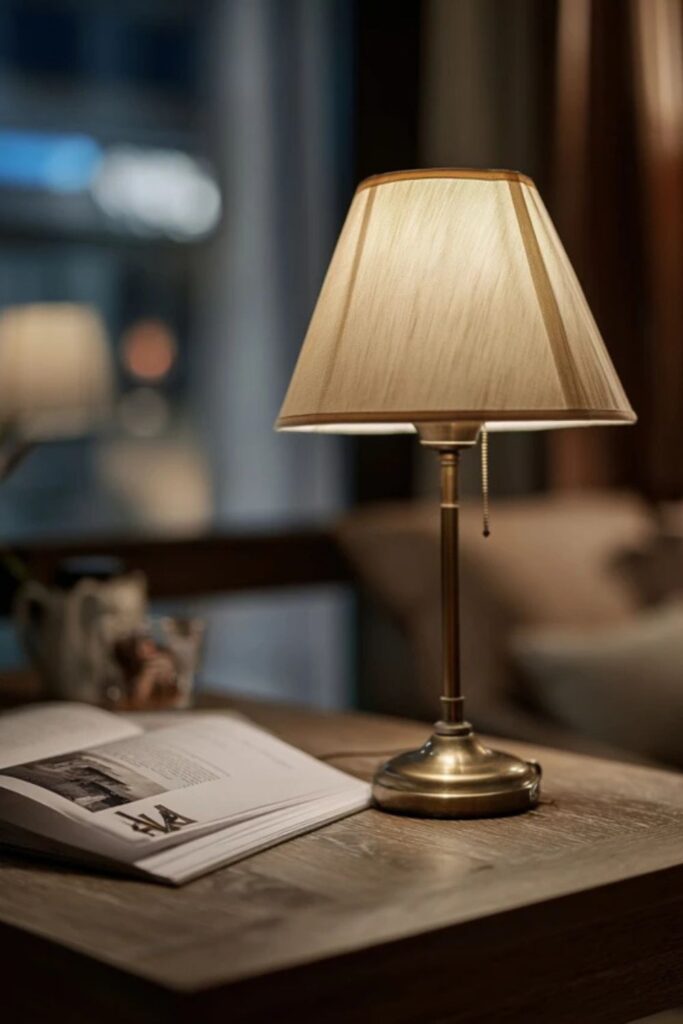
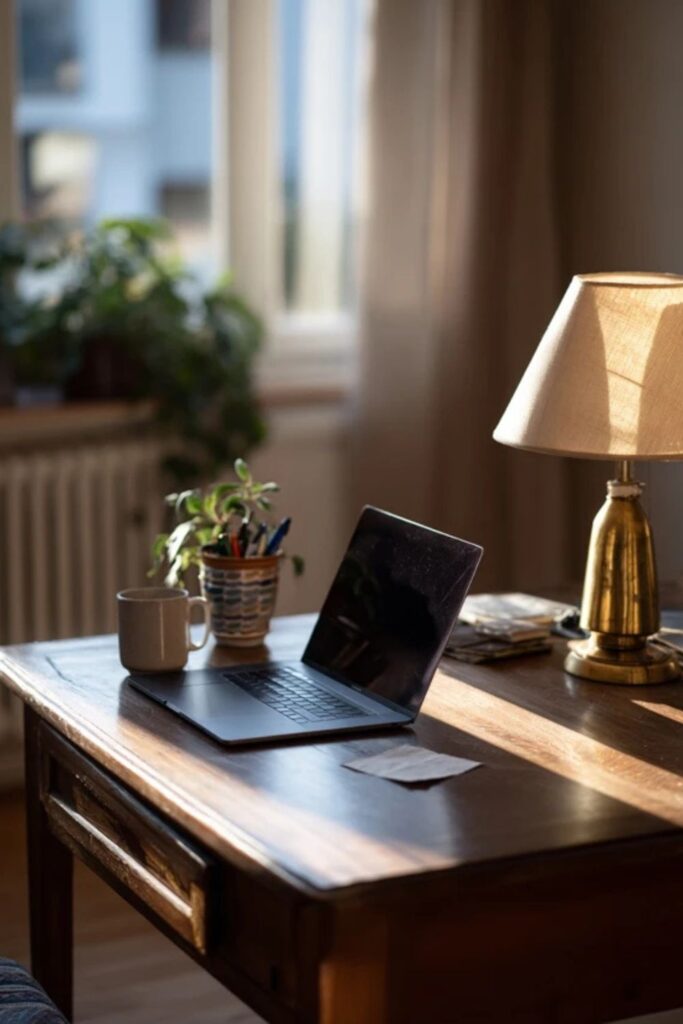
When the sun goes down, Martha switches to lamplight, not overhead light. A brass desk lamp with a warm-toned shade creates a pool of focused light on the work surface without flooding the room. Overhead fluorescent light belongs in a hospital, not a home.
10. Books as Reference and Decoration
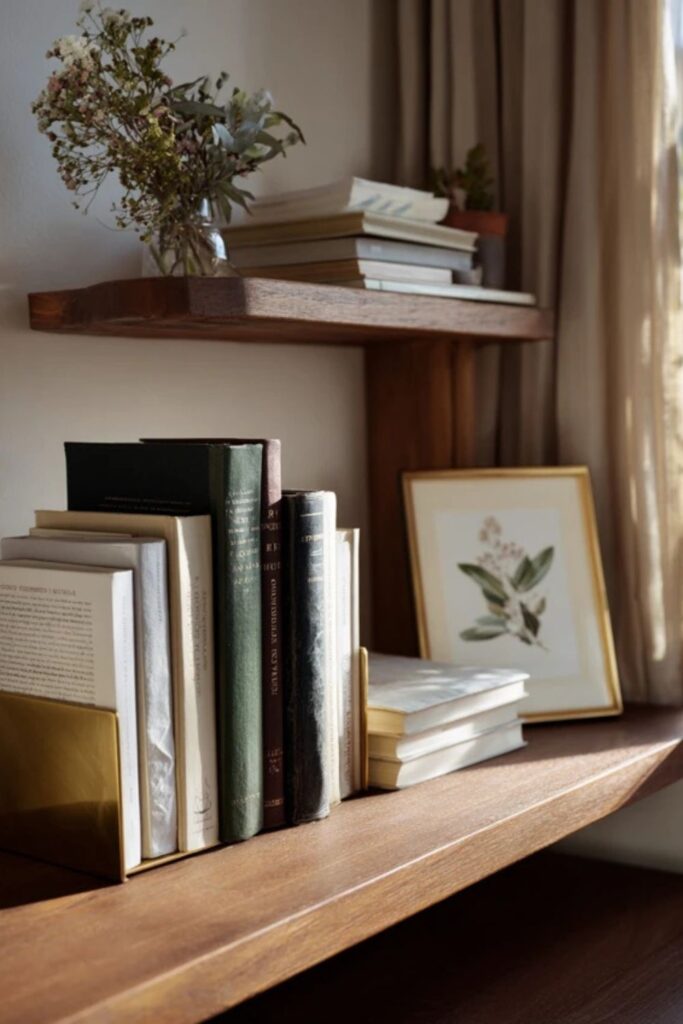
Martha stacks reference books on her desk and nearby shelves. Gardening handbooks, cookbooks, design books. They are not decorative. They are the tools she reaches for mid-thought. A home office without books nearby is a room without resources.
11. The Canaries That Sing While You Work
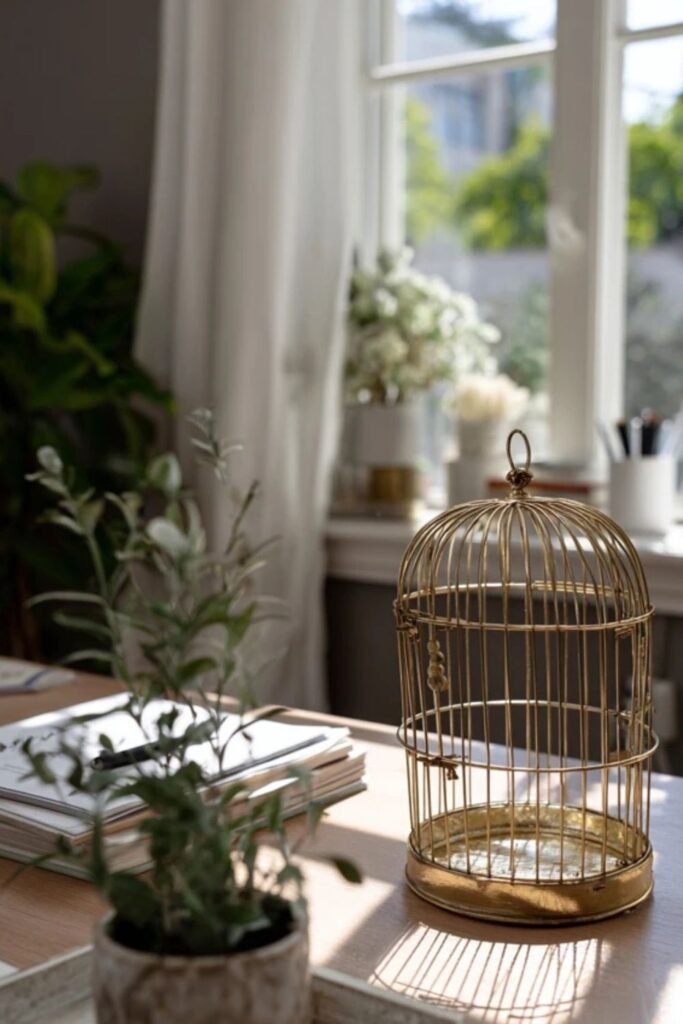
Martha moved her red factor canaries to her office so she could hear them sing while she worked. A living sound, birdsong, water, wind through open windows, changes the atmosphere of a workspace more than any playlist. The office is not silent. It is alive.
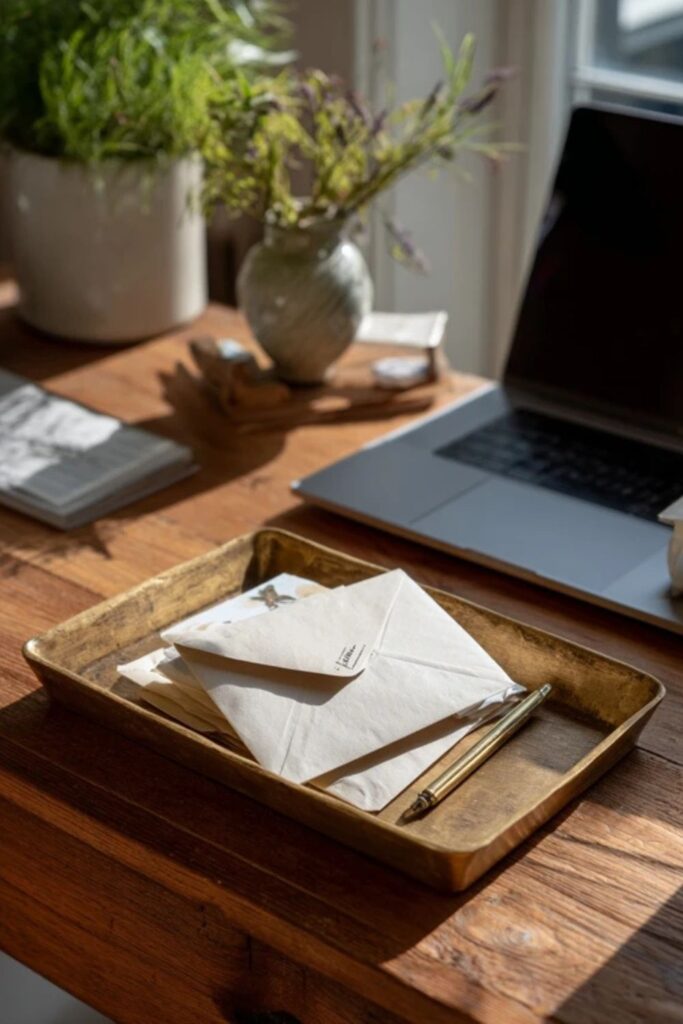
12. One Tray for Everything That Arrives
Martha uses a single tray on her desk as an inbox. Mail, notes, receipts, and documents land in one place. Once a week, the tray is sorted: file, act on, or discard. The tray prevents paper from spreading across the entire surface.
13. Vintage Chairs That Get Used
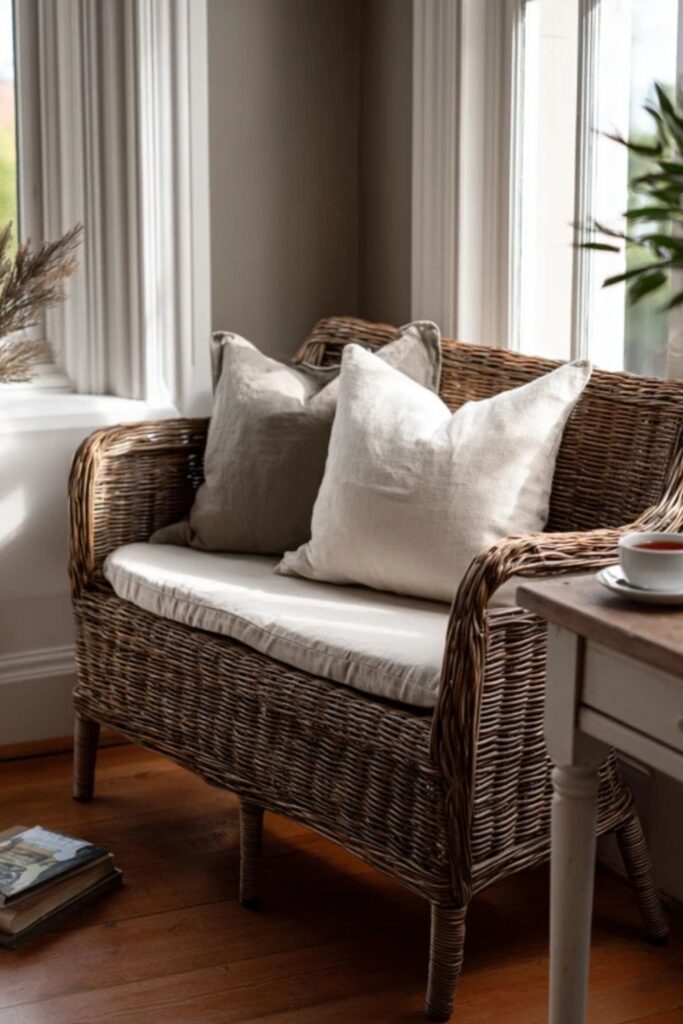
Martha’s office at Bedford includes rare 19th-century papier-mache chairs and vintage Lloyd Loom settees. These are not museum pieces. They are sat in daily. A beautiful chair that nobody uses is a waste of a room’s best invitation: sit down and think.
14. A Calendar You Can See from the Desk
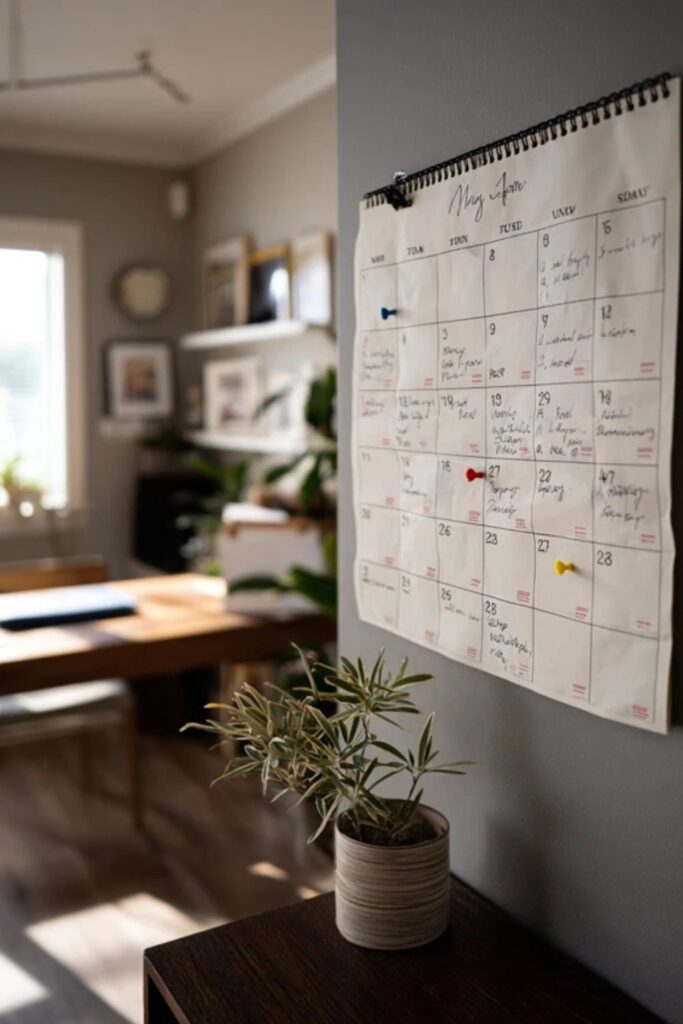
Martha’s organizing book includes her personal calendar system as a template. She keeps a visible calendar near her workspace, not buried in a phone app. The calendar shows the week and the month at a glance. Scheduling is spatial, not digital.
15. The Desk Cleared at the End of Every Day
Martha’s principle: the desk is cleared and reset before you leave the room. Pens back in the caddy. Papers in the tray. Laptop closed. The workspace starts fresh every morning. An office left in disarray on Friday is an office you dread on Monday.
Martha Stewart’s home office is not about the perfect desk or the right shelving unit. It is about choosing a corner with good light, placing a real desk in front of a real view, and keeping the surface clear enough to think. The canaries are optional. The intention is not.