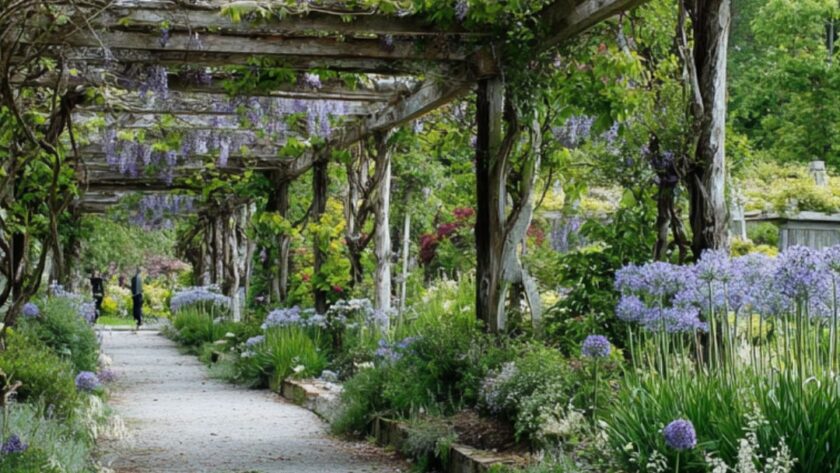
Early morning light falls across a row of white oak raised beds where lettuce is already six inches tall. Beyond the vegetable garden, a long pergola drips with wisteria, and masses of camassia bloom in blue and purple along the gravel path beneath it.
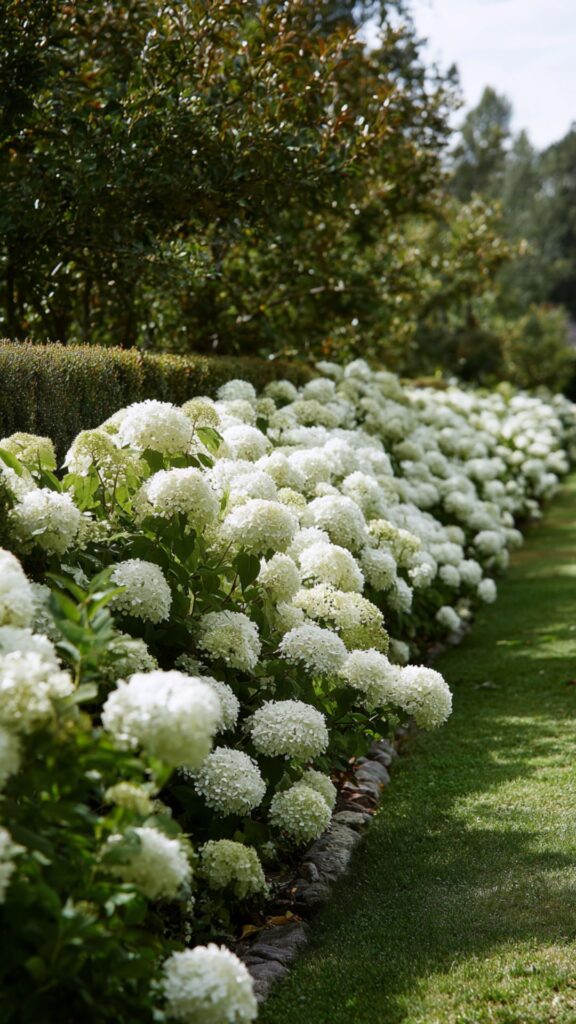
The Martha Stewart aesthetic garden is not a weekend project. It is a way of thinking about land, soil, and seasons that Martha has practiced for over eighty years, starting at age three in her father’s garden in Nutley, New Jersey.
What separates her approach from a catalog garden is patience and specificity. She tests her soil every year or two. She names every cultivar. She plans the garden in winter and watches it change across decades, not just across a single summer.
Here are 17 principles from her Bedford farm that apply to any garden, whether you have a hundred acres or three pots on a balcony. Start with the soil and build from there.
1. Mass Planting, Never One of Anything
Martha never plants a single specimen of anything. Twenty paperwhites, not two. A full border of the same dahlia variety, not a mixed row. A hundred tulips in one color, not ten in ten colors.
Mass planting creates visual impact that scattered variety cannot match. A sweep of one bloom in one color stops you in your tracks. A mix of everything becomes wallpaper. Choose your favorite and commit to abundance.
2. Boxwood as the Bones of Every Bed
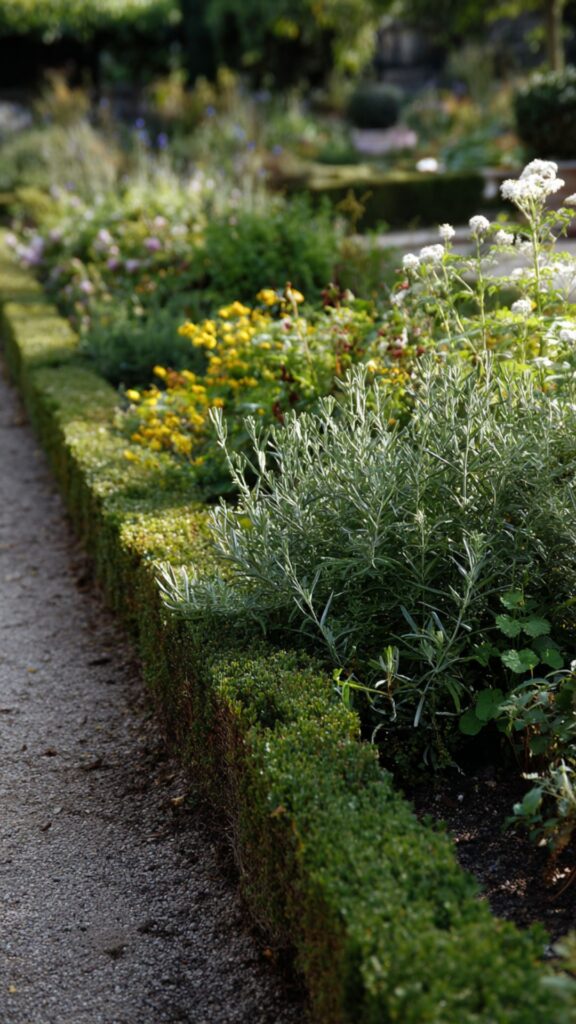
Martha uses boxwood hedging to define, border, and structure every garden bed on her property. The tight evergreen leaves hold their shape year-round and give the garden architecture even in the dead of winter.
Boxwood creates the frame that seasonal flowers fill. Without it, a garden looks shapeless by November. With it, the bones remain visible through every season, and the garden reads as designed rather than scattered.
3. White Oak Raised Beds for Vegetables
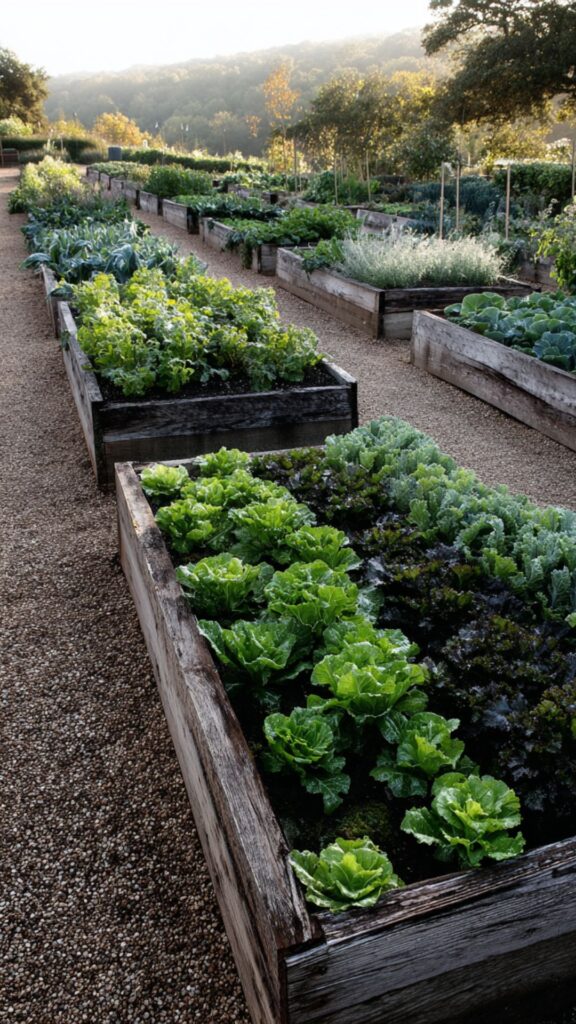
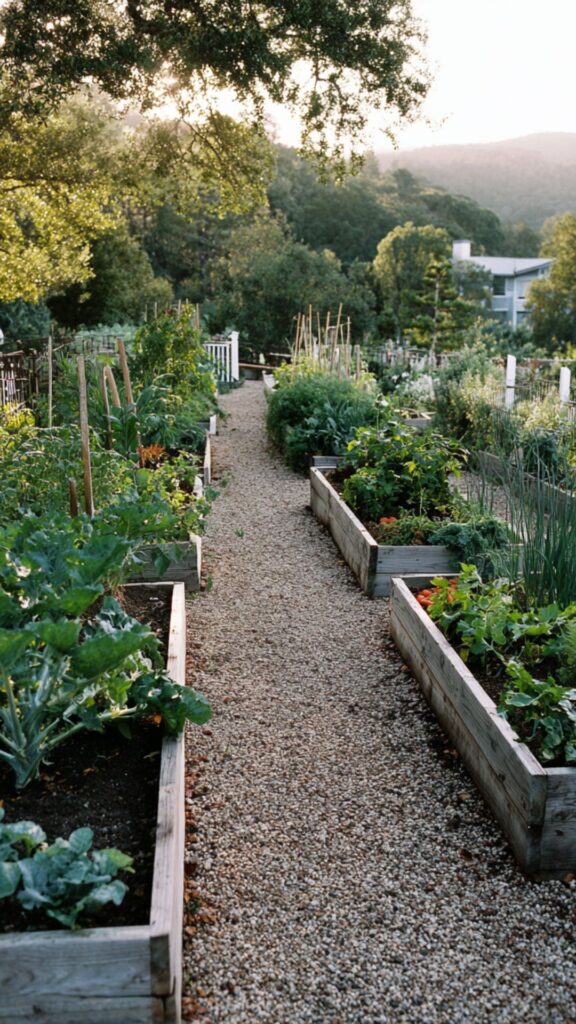
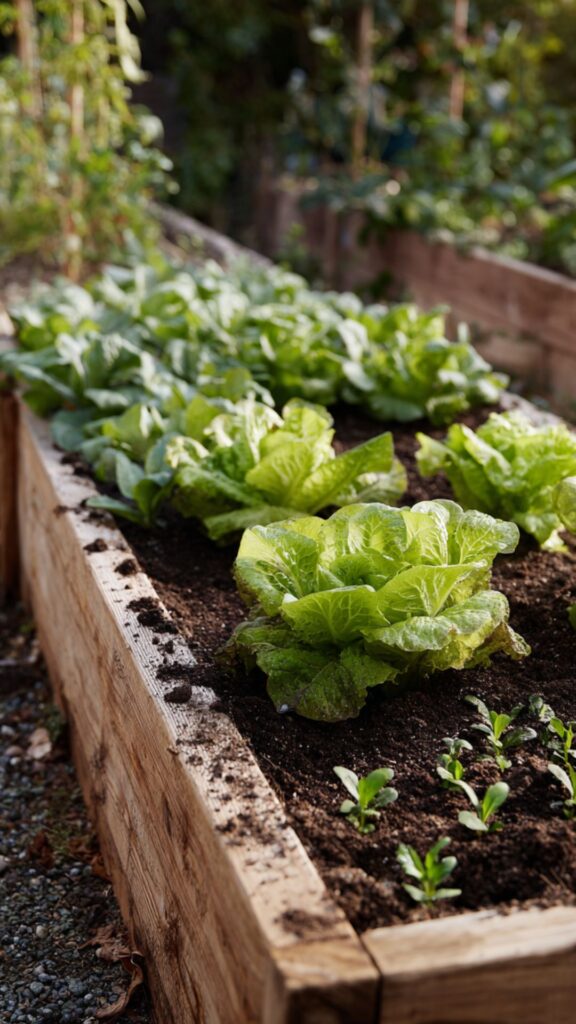
In 2023, Martha built a half-acre vegetable garden near her Winter House at Bedford. About fifty raised beds were constructed from white oak planks. The beds range from five-by-ten feet to eight-by-seventy feet.
White oak resists rot and weathers to a silver gray that looks beautiful against green foliage. Raised beds keep soil warm, drainage controlled, and planting organized. Draw a precise map before you build, as Martha did, so every bed earns its space.
4. Soil Testing Before Every Season
Martha tests her soil every year or two to check nutrient balance. Tomatoes, peppers, and other heavy feeders need specific conditions that guessing cannot provide. The test takes minutes and saves an entire season.
This is the least visible detail of her garden and the most important one. No amount of beautiful design can compensate for soil that lacks the right balance of nitrogen, phosphorus, and potassium. Start with the ground beneath your feet.

The structure is set. What follows fills the beds and borders with the plants and rhythms that make a Martha garden feel alive across every season.
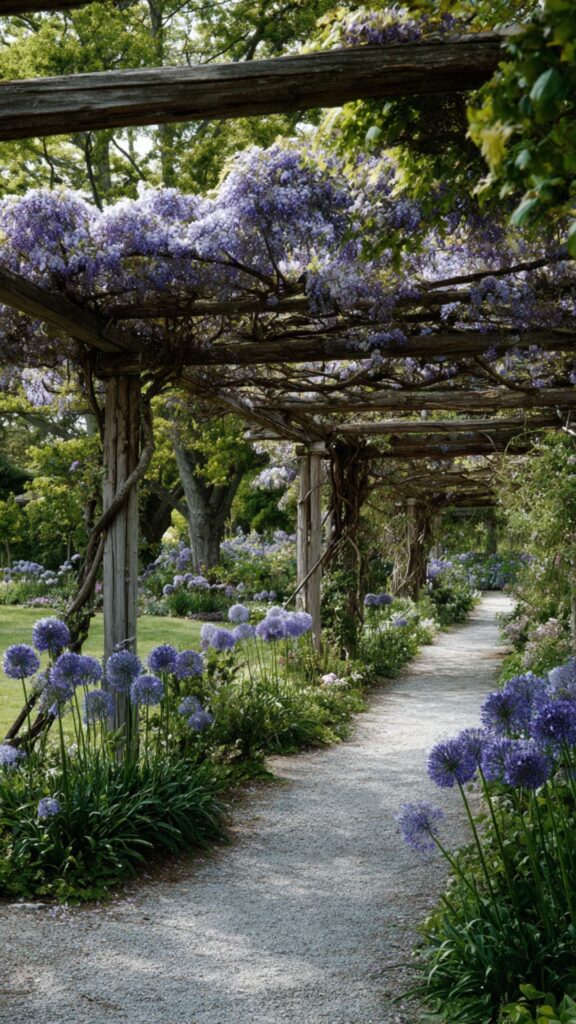
5. The Pergola as Garden Architecture
Martha built a long pergola along the carriage road leading to her Bedford home soon after she purchased the property. Over the years, she added wisteria, climbing roses, and bulbs beneath it. Camassia and alliums now cover the ground in blue and purple each spring.
A pergola creates vertical structure that flat beds cannot achieve. It frames a view, defines a path, and gives climbing plants a place to reach. Even a small pergola over a garden gate changes the scale of a backyard.
6. Peonies Transplanted and Treasured
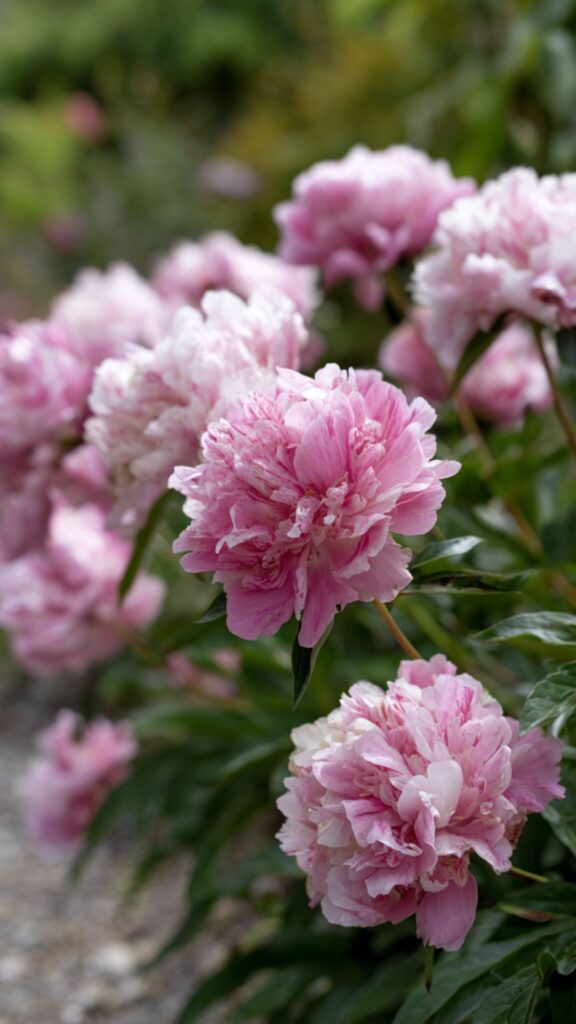
Martha’s tree peony border at Bedford was transplanted from her original Turkey Hill garden in Connecticut. The specimens traveled with her and continue to thrive decades later. Some plants carry fifty years of history in their roots.
Peonies are long-lived perennials that reward patience. A plant that blooms modestly in its first year will produce armfuls of flowers by its fifth. Treat peonies as heirlooms, not annuals. They outlast furniture, renovations, and sometimes entire decades.
7. Dahlias for Late Summer and Autumn
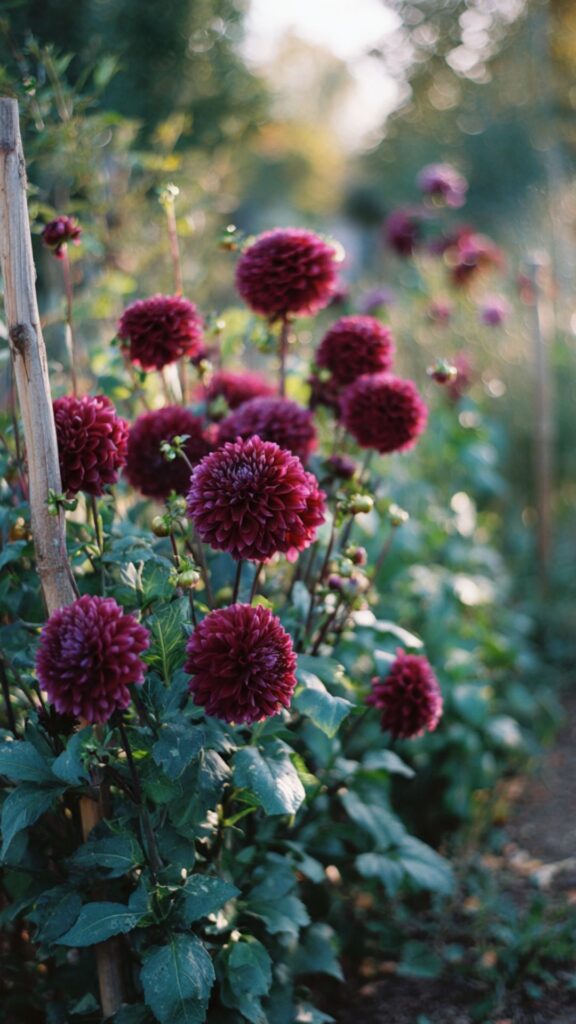
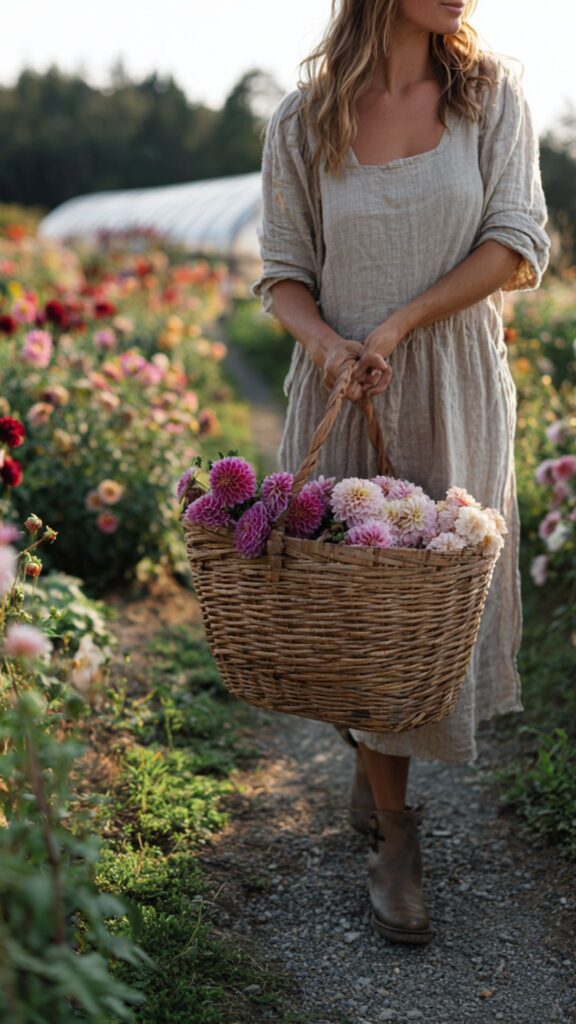
Martha grows dinner-plate dahlias in dedicated beds and cuts them by the bucket for indoor arrangements. The blooms appear in late summer and last until the first frost. Their size and color range make them the anchor of the fall garden.
Plant tubers in spring after the last frost. Stake each plant early because the stems grow tall and heavy with bloom. A row of ten dahlias in one color, burgundy or cream or deep coral, creates a wall of texture that carries the garden through October.
8. The Four-Season Greenhouse
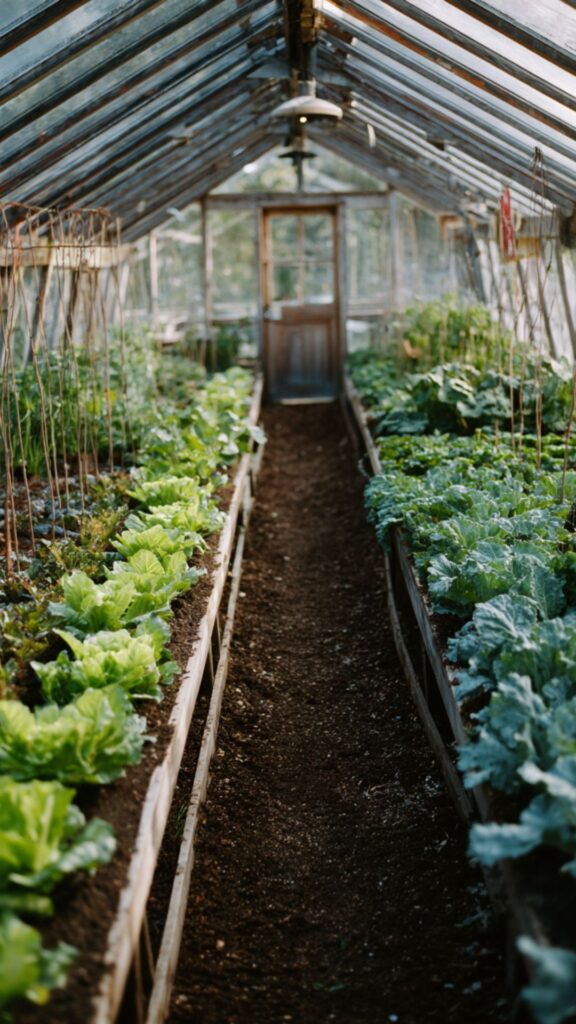
Martha’s vegetable greenhouse at Bedford was inspired by Eliot Coleman, an expert in four-season farming. It uses minimal artificial heat and relies mostly on the sun to grow cold-hardy crops through winter.
A greenhouse extends the growing season and ensures fresh produce year-round. Martha’s head gardener Ryan McCallister plants seeds for the next growing period while the current harvest is still underway. Even a small cold frame against a south-facing wall achieves the same principle on a smaller scale.
9. Cutting Flowers Grown for the House
Martha maintains dedicated cutting beds separate from her ornamental borders. These beds exist solely to supply the house with fresh flowers. Roses, dahlias, zinnias, and cosmos are grown in rows like vegetables and harvested weekly.
A cutting garden means never buying flowers for the dining table. Walk outside with shears and a basket each morning. Cut stems at an angle, strip the lower leaves, and place them in water within minutes. The freshness is visible in every petal.
The beds are planted and the greenhouse is producing. What comes next adds the texture and detail that make a Martha garden feel intentional in every corner.
10. Gravel Paths Between Every Bed
Martha uses gravel paths between raised beds and along garden borders. Gravel drains well, suppresses weeds, and creates a clean visual line between planting areas. The crunch underfoot is part of the garden’s sensory experience.
Keep path widths consistent throughout the garden. Wide enough for a wheelbarrow, narrow enough to feel intimate. The gravel should be a warm, neutral tone: cream, putty, or pale gray. The paths frame the green beds the way mats frame a painting.
11. Herbs Near the Kitchen Door
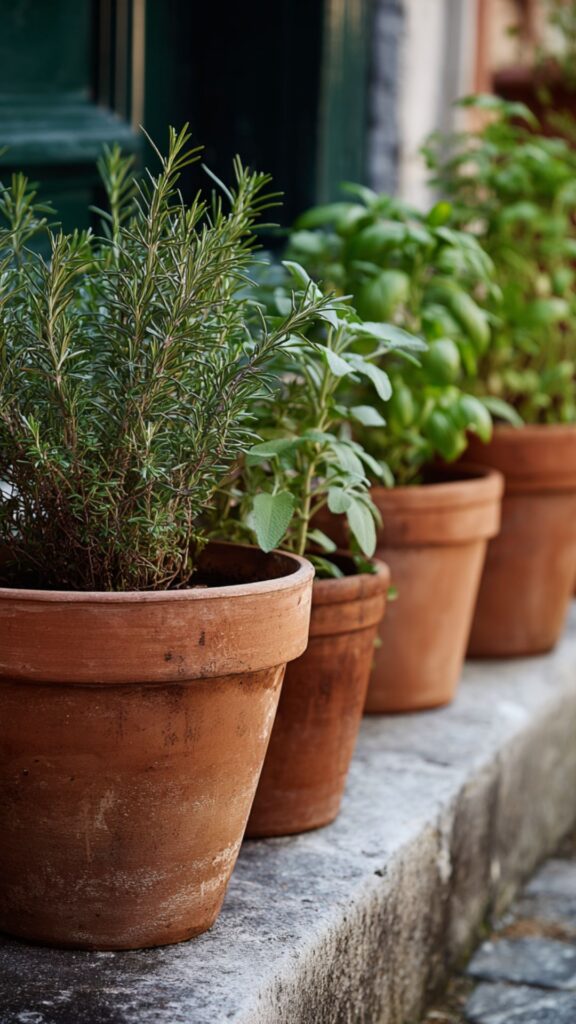
Martha plants herbs within steps of the kitchen so they travel from garden to cutting board in under a minute. Rosemary, thyme, basil, sage, and mint grow in pots or in a dedicated bed near the back entrance.
Herbs used within seconds of cutting retain oils and fragrance that dried herbs cannot match. A terracotta pot of rosemary beside the kitchen door serves as both a garden element and a cooking ingredient. It bridges the indoors and outdoors in a single step.
12. Chickens as Part of the Garden
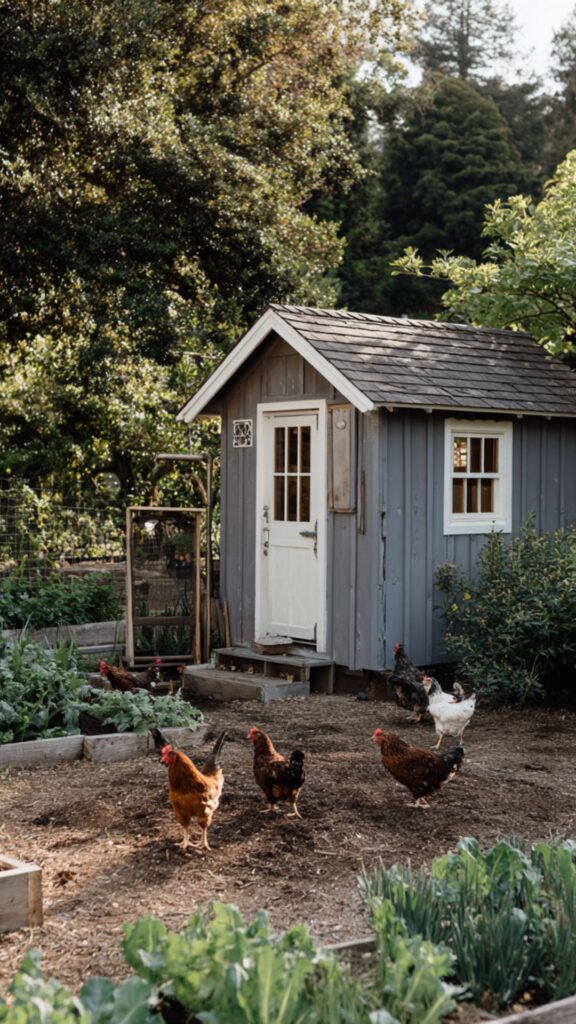
Martha keeps hundreds of egg-laying chickens on her Bedford property. The coops are handsome structures painted Bedford Gray with white trim, matching the house. The chickens provide eggs, composting material, and a living energy that no garden ornament replicates.
Even a small backyard coop with three or four hens connects you to the land in a way that planting alone does not. The eggs arrive warm each morning. The shells go back into the compost. The cycle is visible, practical, and deeply satisfying.
13. Bulbs Planted by the Hundreds
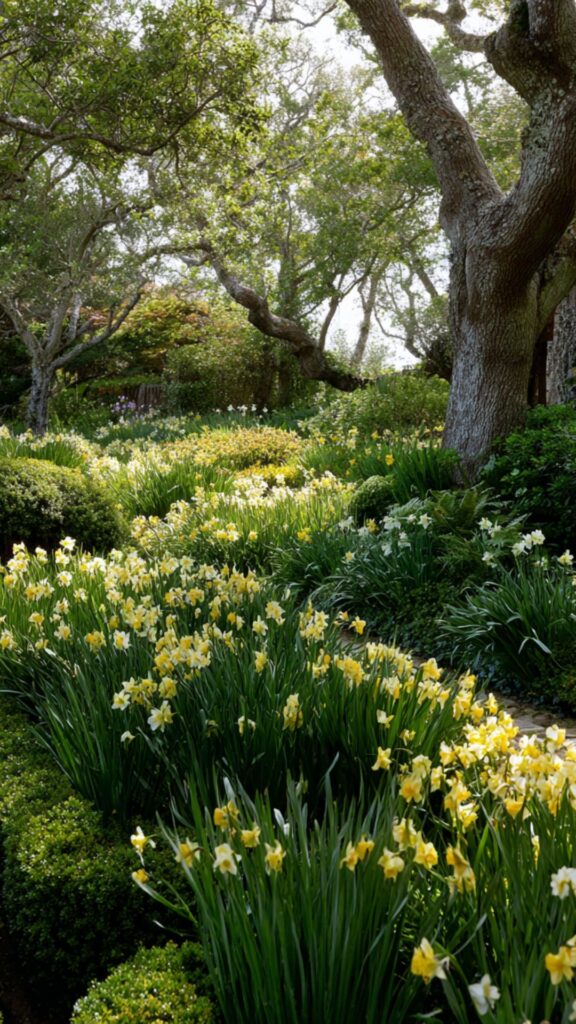
Martha plants tulips, daffodils, alliums, and camassia by the hundred each autumn. When they bloom in spring, they create sweeps of color that look like they have been there forever. The investment is one afternoon; the reward lasts for weeks each year.
Plant bulbs in drifts, not rows. Scatter them across a bed and plant them where they fall for a natural pattern. Choose two or three colors at most. A hundred yellow daffodils under a tree is a scene. Ten mixed bulbs in a pot is a compromise.
14. Symmetry at Every Garden Entrance
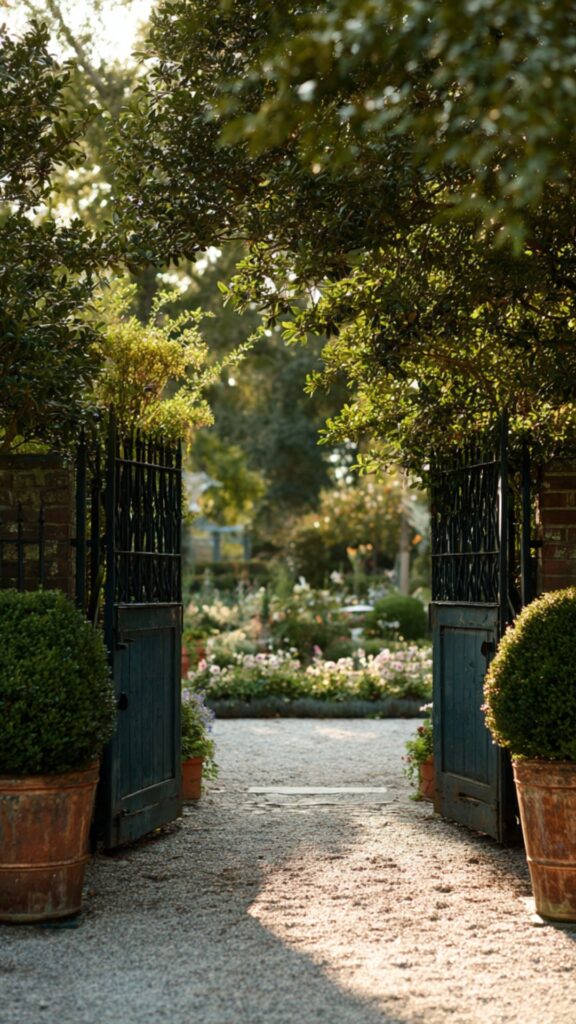
Martha places matching urns, topiaries, or planters at every garden entrance and doorway. Two boxwood topiaries flanking a gate. Two copper planters on either side of a garden bench. The symmetry signals intention and frames the view beyond.
Symmetry at an entrance tells the visitor that the garden ahead was planned. Even a simple pair of terracotta pots with matching plants on either side of a path creates a sense of arrival. The garden begins the moment you notice the frame.
The garden is blooming. These final principles are the ones that sustain it across years, not just across a single season.
15. Compost as the Foundation of Everything
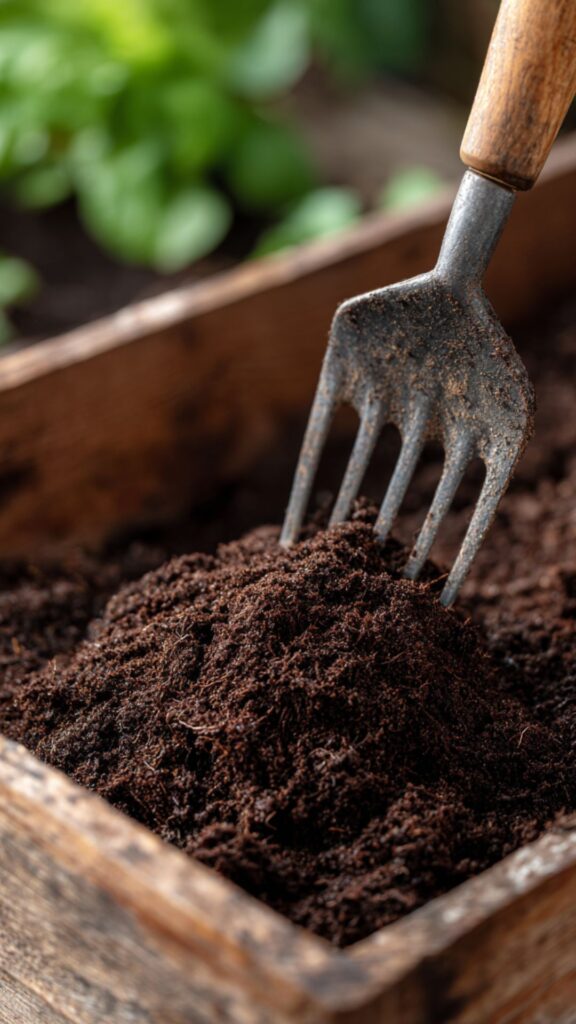
Martha composts on a large scale at Bedford. Kitchen scraps, garden waste, eggshells, and fallen leaves all return to the soil. The compost feeds next year’s garden, closing the cycle between table and earth.
Start a compost bin with kitchen scraps and garden trimmings. Within months, you have rich, dark soil amendment that replaces any store-bought fertilizer. Martha’s gardens thrive because the soil is fed by the garden itself, year after year.
16. Seasonal Rotation in Every Bed
Martha’s vegetable beds are replanted multiple times per season. Spring tulips give way to summer tomatoes. Autumn brassicas follow the summer harvest. The greenhouse carries production through winter. No bed sits empty for long.
This rotation keeps the soil active and the garden productive. Plan your plantings in three waves: spring, summer, and autumn. A bed that grows lettuce in April can grow beans in July and kale in October. The garden never sleeps.
17. A Garden Planned in Winter
Martha plans her garden during the coldest months. She draws maps, orders seeds from catalogs, and reviews soil test results while snow covers the beds. By the time spring arrives, every bed has a purpose and every seed has a place.
This winter planning is the invisible layer beneath every beautiful garden photograph. The blooms you see in June were decided in January. A garden that looks effortless was, in fact, planned with extraordinary effort months before the first crocus appeared.

The Martha Stewart aesthetic garden is not about the size of the property or the number of beds. It is about the relationship between the gardener and the ground. Test the soil, know the cultivar, plant in masses, and let the seasons do the editing.
Start with one raised bed, one packet of seeds, and one afternoon of planning. Grow something you will cut for the table or cook for dinner. The garden begins the moment you decide the land beneath your feet deserves your attention.
A garden that looks like it has been there for decades was simply a garden someone cared for, season after season, until the roots went deep enough to hold.
You might also like: