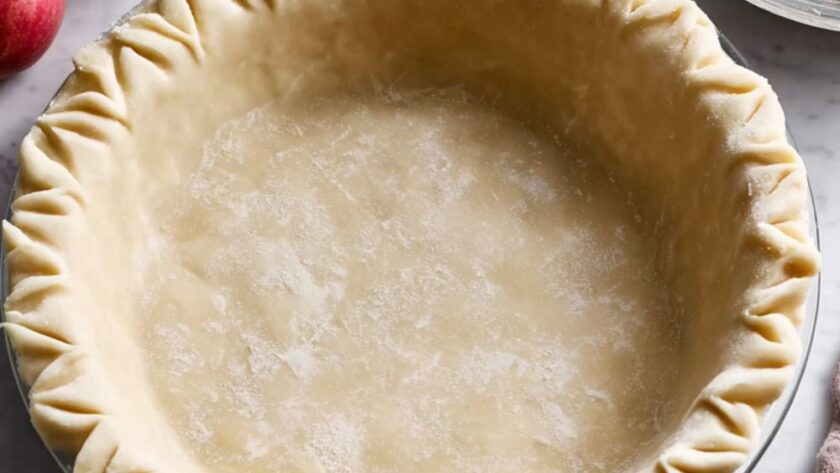
Martha Stewart’s pie crust uses five ingredients: butter, flour, salt, sugar, and ice water. No shortening, no vinegar, no food processor needed. You mix it by hand, shape two disks, chill them for an hour, and roll them out when you are ready to bake.
This recipe makes two 10-inch crusts, so you have enough for a top and bottom or for two separate pies. The dough freezes well, so you can make it weeks ahead and pull it out whenever you need it.
Try More Baking Recipes:
Why All Butter And No Shortening
Martha uses only butter in her crust. No shortening, no lard. Butter tastes better and creates flaky layers because the water in butter turns to steam in the oven, puffing up tiny pockets in the dough. Shortening does not do this the same way.
Use unsalted butter so you control the salt yourself. The butter has to be cold from the fridge, not room temperature. Cold butter is the single most important thing for a flaky crust.
Martha Stewart Pie Crust Ingredients
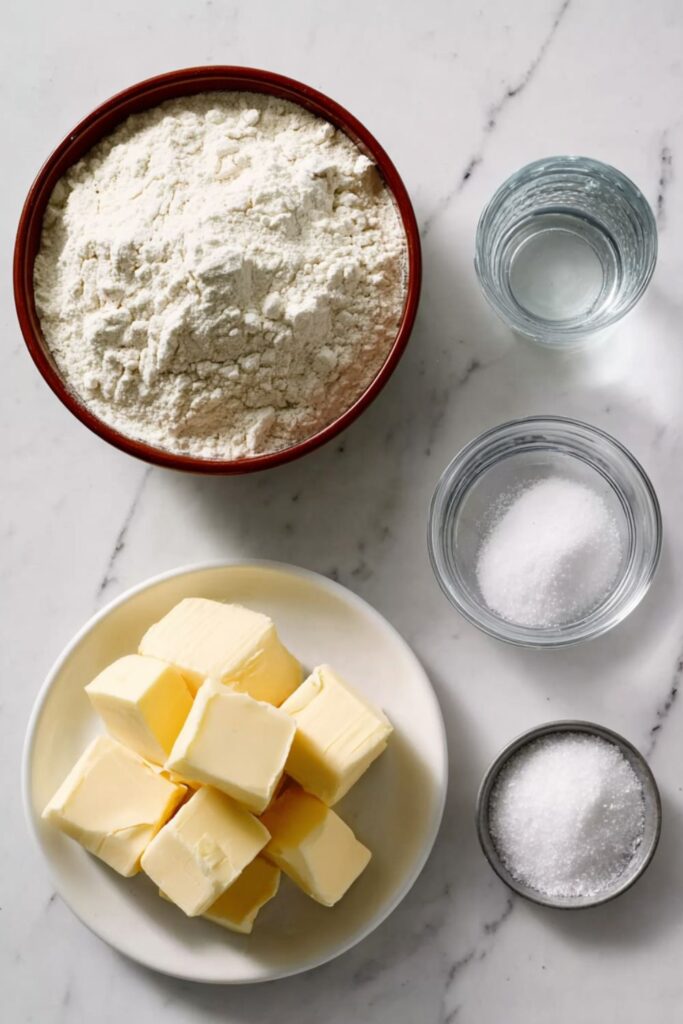
Five ingredients. That is it. The ice water is what brings the dough together, but you may not need the full half cup. Add it slowly and stop as soon as the dough holds when you squeeze a handful.
- 1 cup (2 sticks) unsalted butter, chilled, plus more for the pie plate
- 2 1/2 cups all-purpose flour, plus more for rolling
- 1 teaspoon salt
- 1 teaspoon sugar
- 1/2 cup ice water
How To Make Martha Stewart Pie Crust
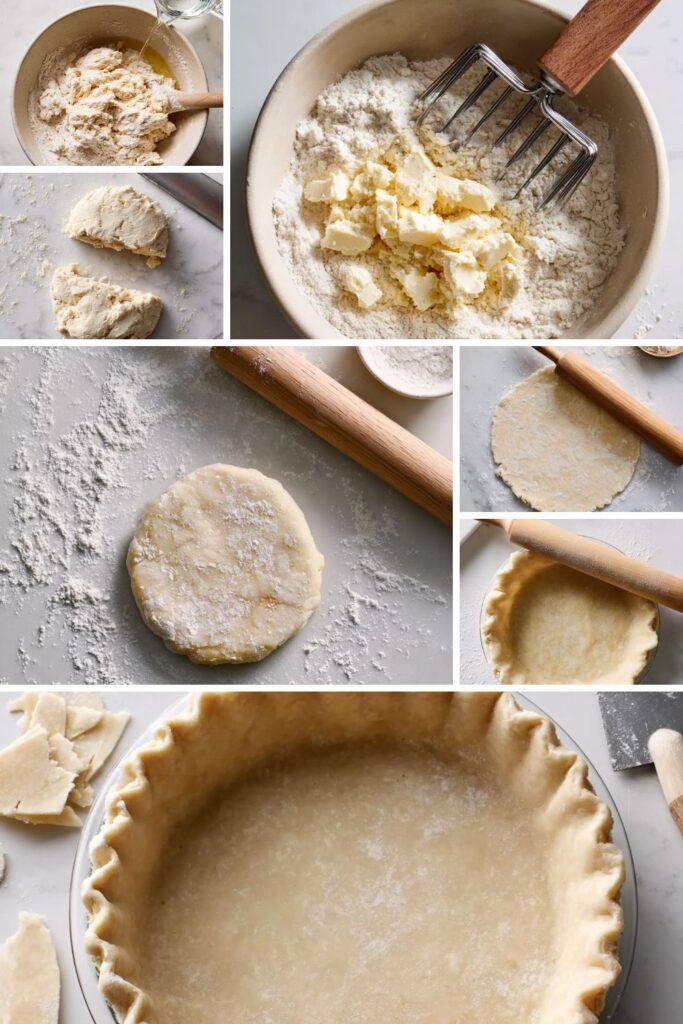
- Cut the butter: Cut each stick of butter into 8 pieces and put them back in the fridge until you need them.
- Mix the dry ingredients: Put the flour, salt, and sugar in a large bowl and stir to combine.
- Work in the butter: Add the cold butter pieces. Use a pastry blender or your fingertips to work the butter into the flour until the mixture looks like coarse meal with pea-sized pieces of butter still visible.
- Add the ice water: Drizzle 2 tablespoons of ice water over the mixture and blend. Add another 2 tablespoons and blend again. Squeeze a handful of dough. If it holds together, stop. If it crumbles, add more water 1 tablespoon at a time. You may not need the full 1/2 cup.
- Shape and chill: Turn the dough out onto a clean surface. Divide it in half, shape each piece into a flat disk, wrap in plastic, and refrigerate for at least 1 hour.
- Roll out: Dust your surface and the dough lightly with flour. Roll from the center outward, turning the dough a quarter turn after each roll, until it is 1/8 inch thick.
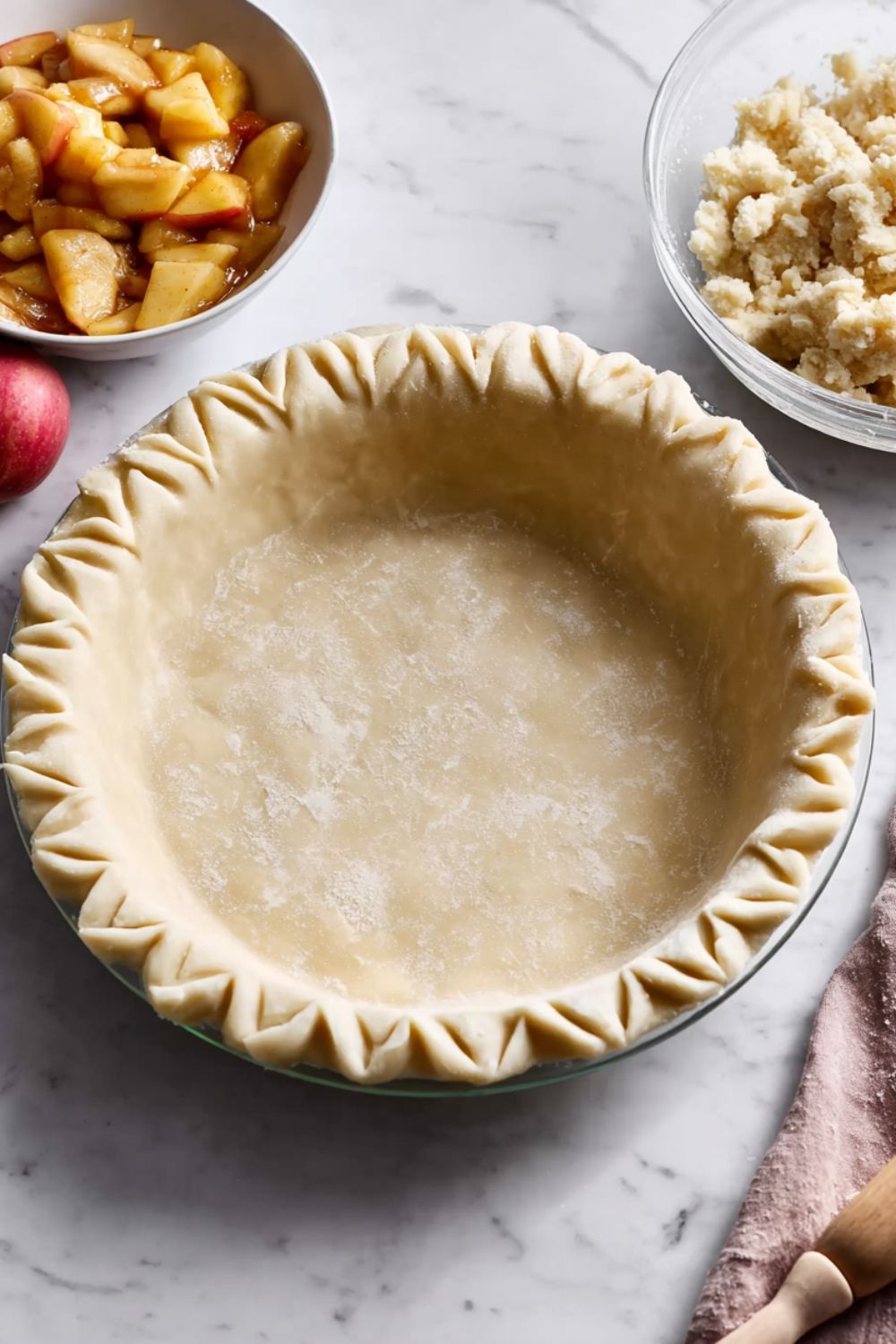
- Fit into the pie plate: Butter the pie plate. Roll the dough around the rolling pin, lift it, and unroll it over the plate. Press gently into place. Trim the edges, leaving a 1-inch overhang, then fold the overhang under to reinforce the rim.
Do Not Overwork The Dough
Stop mixing as soon as most of the flour is worked in. You should still see small pieces of butter in the dough. Those pieces are what melt in the oven and create the flaky layers. If you mix until the dough is smooth, the crust will be tough.
If the dough gets warm and sticky while you are rolling it, put it back in the fridge for 10 minutes. Cold dough rolls easier and bakes flakier. There is no rush.
What Is Blind Baking And When Do You Need It
Blind baking means baking the crust before you add the filling. You do this when the filling cooks faster than the crust, like with custard pies or quiche. Without blind baking, the bottom of the crust stays raw and soggy.
Line the crust with parchment paper, fill it with pie weights or dried beans, and bake until the edges start to brown and the bottom feels dry. Remove the weights and bake a few more minutes until lightly golden all over. Then add your filling.
Can You Use A Food Processor Instead
Yes. Martha includes a food processor variation. Pulse the butter into the flour for 8 to 10 seconds, then add the ice water through the feed tube with the machine running. Stop as soon as the dough comes together.
By hand gives you more control over the butter size, which Martha prefers. But both methods work.
How To Store Pie Dough
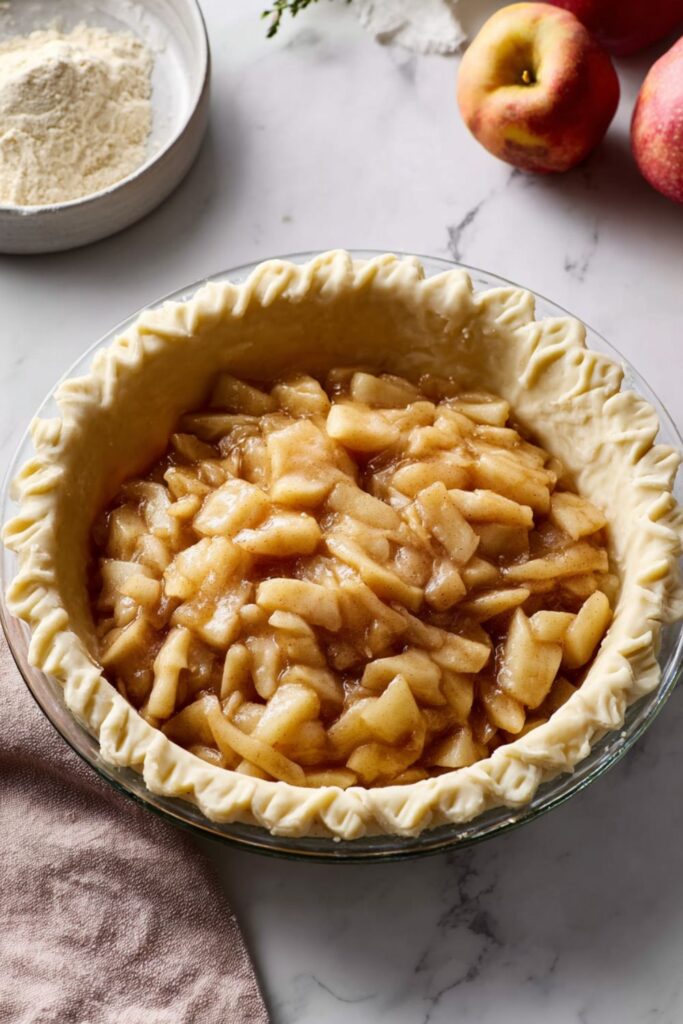
Wrapped disks keep in the fridge for up to 3 days. For longer storage, wrap them in a double layer of plastic and freeze for up to 3 months. Thaw overnight in the fridge before rolling.
You can also roll the dough out, fit it into the pie plate, and freeze the whole thing ready to fill. It goes straight from freezer to oven with no thawing needed. Add a few minutes to the bake time.
FAQs
- Why does the recipe use ice water? The water needs to be cold to keep the butter from melting into the flour. Warm water makes the dough sticky and the crust tough. Put ice cubes in a cup of water and measure from that.
- Why do I grease the pie plate if the crust has butter? Martha says it is a safety measure. Sometimes filling leaks between the crust and the plate and sticks. A thin layer of butter on the plate prevents that.
- Can I use salted butter? You can, but skip the added salt. Martha prefers unsalted so she can control exactly how salty the crust is.
- Does vinegar really help? Martha says no. Some recipes use vinegar to prevent gluten, but proper technique does the same job. She uses classic ingredients and does not add vinegar.
More Baking Recipes:
Nutrition Facts
(1 slice of crust, serves 16)
- Calories: 190
- Total Fat: 12g
- Saturated Fat: 7g
- Cholesterol: 30mg
- Sodium: 150mg
- Total Carbohydrates: 16g
- Protein: 2g
Martha Stewart Pie Crust Recipe
Description
Martha Stewart’s pie crust uses five ingredients: butter, flour, salt, sugar, and ice water. No shortening, no vinegar, no food processor needed. You mix it by hand, shape two disks, chill them for an hour, and roll them out when you are ready to bake.
This recipe makes two 10-inch crusts, so you have enough for a top and bottom or for two separate pies. The dough freezes well, so you can make it weeks ahead and pull it out whenever you need it.
Ingredients
Instructions
- Cut the butter: Cut each stick of butter into 8 pieces and put them back in the fridge until you need them.
- Mix the dry ingredients: Put the flour, salt, and sugar in a large bowl and stir to combine.
- Work in the butter: Add the cold butter pieces. Use a pastry blender or your fingertips to work the butter into the flour until the mixture looks like coarse meal with pea-sized pieces of butter still visible.
- Add the ice water: Drizzle 2 tablespoons of ice water over the mixture and blend. Add another 2 tablespoons and blend again. Squeeze a handful of dough. If it holds together, stop. If it crumbles, add more water 1 tablespoon at a time. You may not need the full 1/2 cup.
- Shape and chill: Turn the dough out onto a clean surface. Divide it in half, shape each piece into a flat disk, wrap in plastic, and refrigerate for at least 1 hour.
- Roll out: Dust your surface and the dough lightly with flour. Roll from the center outward, turning the dough a quarter turn after each roll, until it is 1/8 inch thick.
- Fit into the pie plate: Butter the pie plate. Roll the dough around the rolling pin, lift it, and unroll it over the plate. Press gently into place. Trim the edges, leaving a 1-inch overhang, then fold the overhang under to reinforce the rim.
Notes
- Cold butter is everything: Keep it in the fridge until the moment you need it. Warm butter makes tough crust.
- Stop when you see pea-sized pieces: Visible butter in the dough is what creates flaky layers.
- Food processor option: Pulse butter in 8-10 seconds, add water through feed tube. Works but gives you less control.
- Freeze the dough: Wrapped disks freeze for up to 3 months. Thaw overnight in the fridge.