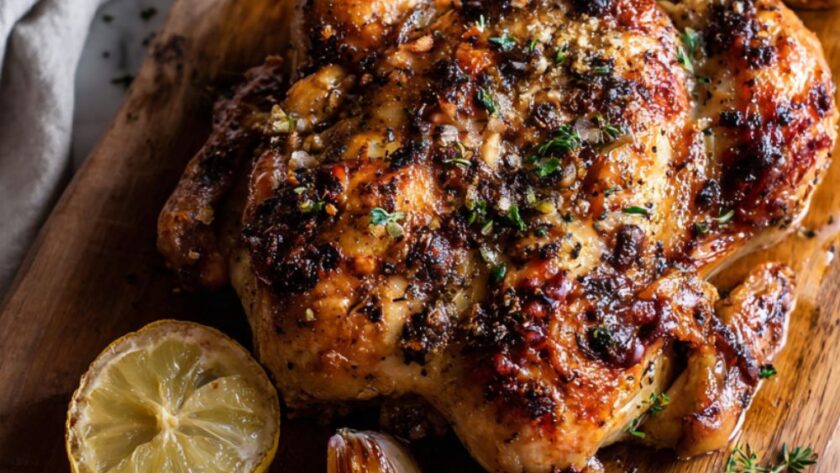
The trick to Martha Stewart’s Flat Roast Chicken is cutting out the backbone, pressing the whole bird flat, and searing it skin-side down in a cast-iron skillet before it goes into a 400-degree oven. The chicken roasts flat so every inch of skin crisps evenly, and it finishes with two sauces: a pan sauce made by swirling lemon juice and butter into the drippings, and a bright olive oil dressing with garlic and crushed red-pepper flakes.
This is the Martha Stewart roast chicken recipe I make when I want crispy skin on every single piece without any of the fuss of a traditional roast. It is one of Martha Stewart’s best chicken recipes because the flat roasting cuts the cook time way down, and the two sauces turn a simple roast chicken into something that tastes like a restaurant dish. I have been making this for years and it never gets old.
Try More Dinner Recipes:
Why You Will Love This Flat Roast Chicken:
- Every piece gets crispy skin: When a chicken roasts flat, the skin is all facing up and exposed to the oven heat evenly. No more fighting over the crispy parts because every piece comes out golden and shattery. I noticed the difference the very first time I tried this method.
- Two sauces from one pan: You get a buttery pan sauce from the drippings and a separate olive oil dressing with lemon, garlic, and red-pepper flakes. I drizzle both over the carved chicken and the plates always come back clean.
- Faster than a traditional roast: A flat chicken cooks more evenly and faster than one sitting upright. I have this done in under an hour from the moment the bird hits the skillet, which is about 20 minutes faster than a regular roast chicken.
Flat Roast Chicken Ingredients
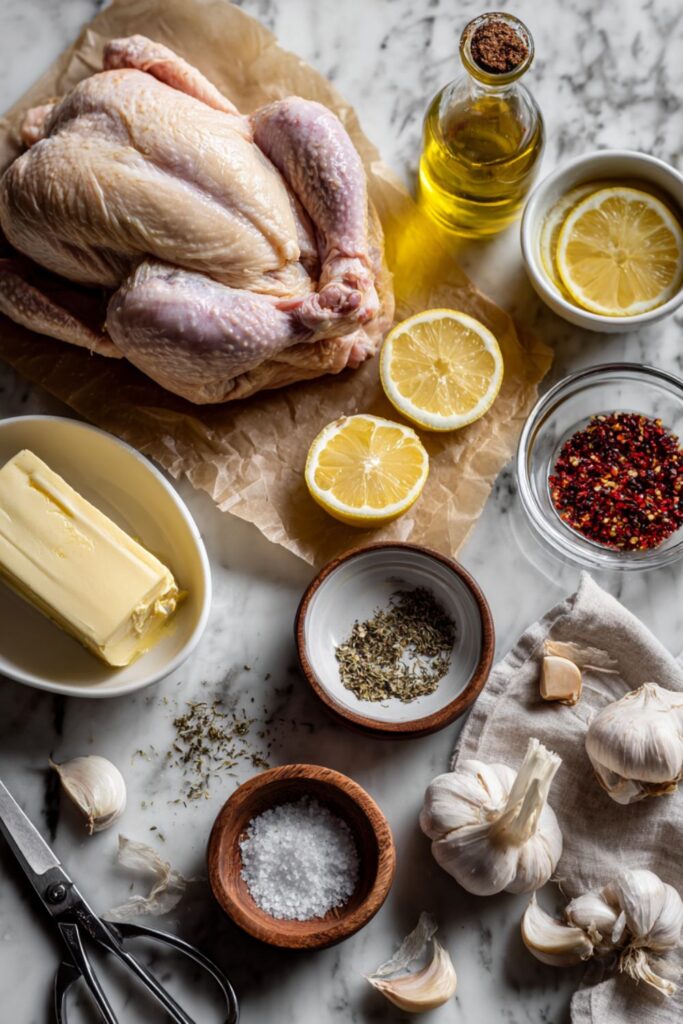
- 1 whole (3 to 4-pound) chicken
- Coarse salt and freshly ground black pepper
- 1/4 cup extra-virgin olive oil
- 2 tablespoons unsalted butter
- 3 tablespoons fresh lemon juice
- 1/4 teaspoon crushed red-pepper flakes
- 2 cloves garlic, smashed and peeled
How To Make Martha Stewart Flat Roast Chicken
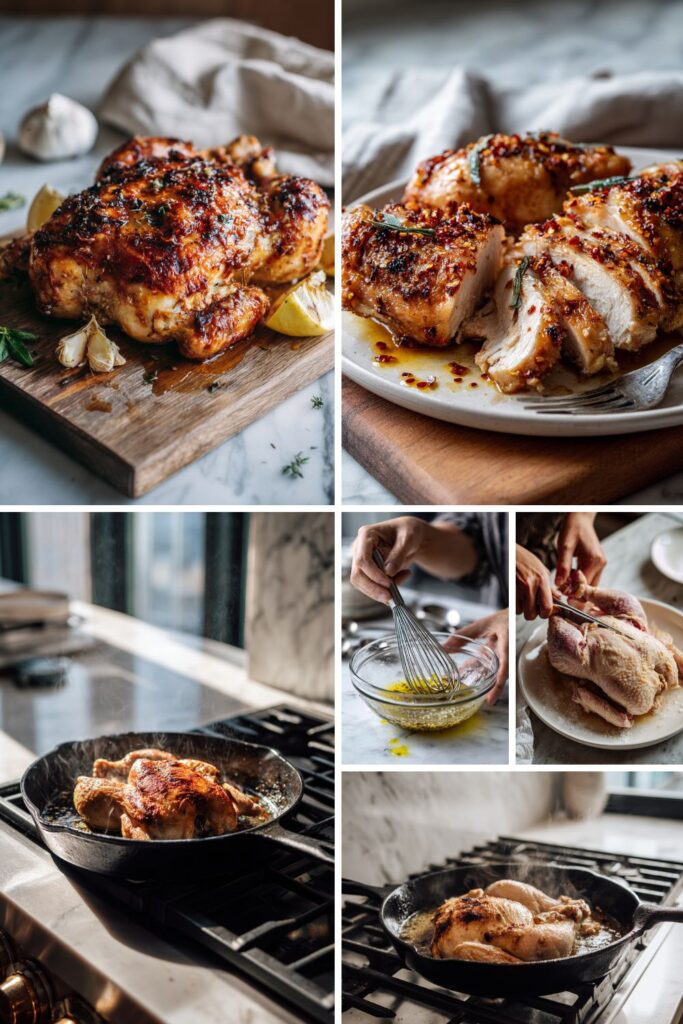
- Spatchcock the chicken: Preheat the oven to 400 degrees. Using kitchen shears, cut along both sides of the backbone to remove it. Discard or reserve for broth. Open the chicken’s legs and spread the bird down flat, skin side up. Press down firmly on the breastbone to flatten. Pat dry with paper towels and season generously with salt and pepper.
- Sear the chicken: Heat a large ovenproof skillet, preferably cast-iron, over high heat. Add 1 tablespoon of olive oil and 1 tablespoon of butter. Add the chicken skin-side down to the skillet. Let it brown without moving for about 3 minutes.
- Roast: Turn the chicken, taking care not to break the skin, and transfer the skillet to the oven. Roast until golden brown and cooked through, or until an instant-read thermometer inserted into the thickest part reaches 165 degrees. Transfer the chicken to a cutting board and let stand for 10 minutes.
- Make the two sauces: Add 1 tablespoon of lemon juice and the remaining tablespoon of butter to the hot pan, swirling to combine. In a small bowl, whisk together the remaining 3 tablespoons of olive oil, 2 tablespoons of lemon juice, red-pepper flakes, garlic, and a pinch of salt.
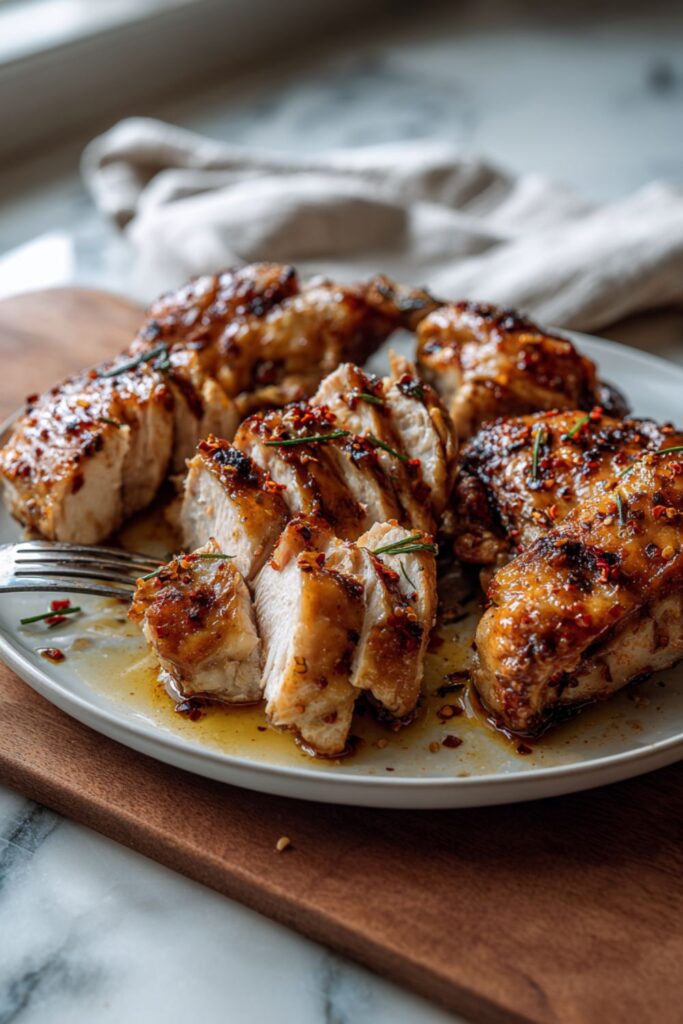
- Carve and serve: Cut the chicken into pieces and serve immediately, drizzled with the olive oil mixture and the pan sauce.
Recipe Tips
- Expect about 45 to 50 minutes in the oven: The recipe does not give a specific roast time, just “until 165 degrees.” For a 3 to 4-pound chicken at 400 degrees, I find it takes about 45 to 50 minutes. I start checking at 40 with a thermometer and pull it the moment the thigh hits 165.
- Press the breastbone hard: You should hear and feel it crack. If the chicken is not truly flat, the thick breast takes longer to cook than the thin legs and you end up with uneven results. I put my palm on the breastbone and lean my weight into it.
- Do not move the chicken during the sear: Those 3 minutes skin-side down on high heat are what build the base layer of crispiness. If you move it too early, the skin tears and sticks. I walk away from the stove and set a timer.
- Save the backbone: Martha says to discard or reserve it for broth. I always throw it in a freezer bag with onion scraps and celery ends. When the bag is full, I make stock. Free flavor.
What Goes Well With This Flat Roast Chicken
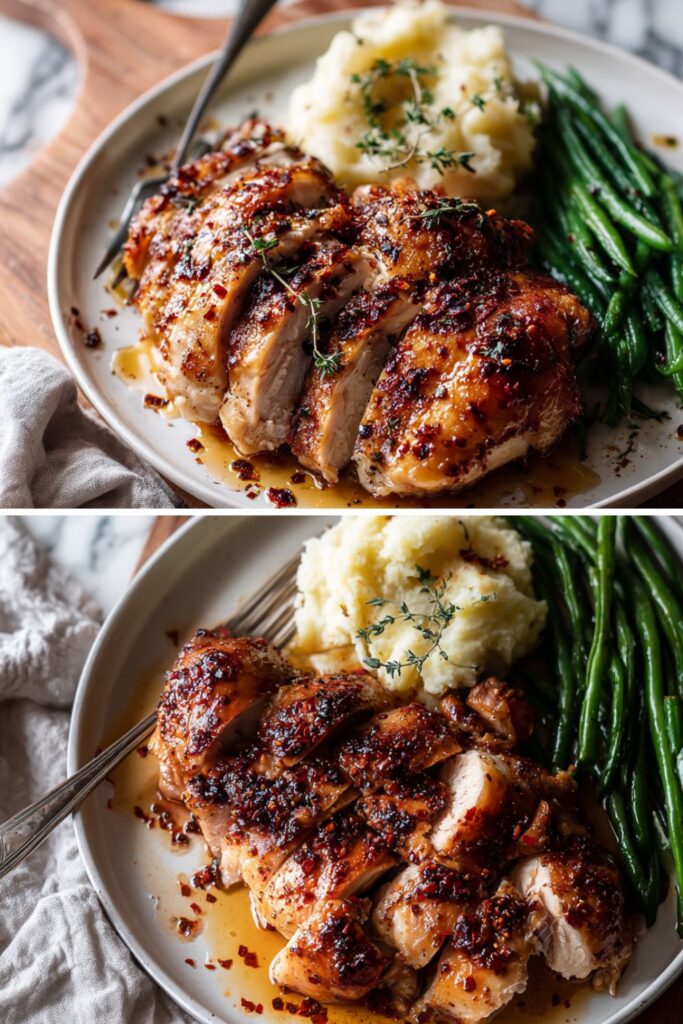
I go classic with this one. A bowl of mashed potatoes is mandatory because you need something to pour both sauces over. Some green beans on the side keep the plate balanced.
If I am feeling fancy, yorkshire pudding puffs straight from the oven are incredible with the pan drippings. That is a Sunday dinner move.
How To Store Leftovers
Pull the meat off the bone and store it with any extra sauce drizzled over the top. The lemon-garlic oil keeps the chicken from drying out overnight. Keeps 4 days in the fridge. I would not freeze this one because the two sauces separate and the garlic gets sharp after thawing.
I eat the cold chicken straight from the container, sliced thin on a sandwich with arugula and a little mustard. To reheat, a skillet over medium heat with a splash of the pan sauce warms it up in a couple minutes without drying it out.
FAQs
- Is this the same thing as spatchcocking? Basically yes. Removing the backbone and pressing the chicken flat is exactly what spatchcocking means. Martha calls it “flat roast” here, but the technique is the same. I use kitchen shears and it takes about 30 seconds once you have done it a couple times.
- How long does it actually take to roast? Martha does not give a specific time in this recipe, just “until 165 degrees.” In my experience, a 3 to 4-pound chicken at 400 degrees takes about 45 to 50 minutes after the initial sear. I always use a thermometer because oven temps vary.
- Can I use chicken parts instead of a whole chicken? Martha wrote this for a whole bird, and that is what works best. I would not use leg quarters because they release a lot of fat and the skillet gets greasy. Bone-in, skin-on breasts would work if you reduce the roast time by about 10 minutes.
- Why are there two sauces? The pan sauce is rich and buttery from the drippings. The olive oil mixture is bright and punchy with lemon, garlic, and red-pepper flakes. I pour both over each piece of chicken and the combination is what makes this recipe stand out from a regular roast.
More Dinner Recipes:
Nutrition Facts
(1 serving, serves 6)
- Calories: 420
- Total Fat: 26g
- Saturated Fat: 8g
- Cholesterol: 140mg
- Sodium: 460mg
- Total Carbohydrates: 1g
- Protein: 42g
Martha Stewart Flat Roast Chicken Recipe
Description
The trick to Martha Stewart’s Flat Roast Chicken is cutting out the backbone, pressing the whole bird flat, and searing it skin-side down in a cast-iron skillet before it goes into a 400-degree oven. The chicken roasts flat so every inch of skin crisps evenly, and it finishes with two sauces: a pan sauce made by swirling lemon juice and butter into the drippings, and a bright olive oil dressing with garlic and crushed red-pepper flakes.
This is the Martha Stewart roast chicken recipe I make when I want crispy skin on every single piece without any of the fuss of a traditional roast. It is one of Martha Stewart’s best chicken recipes because the flat roasting cuts the cook time way down, and the two sauces turn a simple roast chicken into something that tastes like a restaurant dish. I have been making this for years and it never gets old.
Ingredients
Instructions
- Spatchcock the chicken: Preheat the oven to 400 degrees. Using kitchen shears, cut along both sides of the backbone to remove it. Discard or reserve for broth. Open the chicken’s legs and spread the bird down flat, skin side up. Press down firmly on the breastbone to flatten. Pat dry with paper towels and season generously with salt and pepper.
- Sear the chicken: Heat a large ovenproof skillet, preferably cast-iron, over high heat. Add 1 tablespoon of olive oil and 1 tablespoon of butter. Add the chicken skin-side down to the skillet. Let it brown without moving for about 3 minutes.
- Roast: Turn the chicken, taking care not to break the skin, and transfer the skillet to the oven. Roast until golden brown and cooked through, or until an instant-read thermometer inserted into the thickest part reaches 165 degrees. Transfer the chicken to a cutting board and let stand for 10 minutes.
- Make the two sauces: Add 1 tablespoon of lemon juice and the remaining tablespoon of butter to the hot pan, swirling to combine. In a small bowl, whisk together the remaining 3 tablespoons of olive oil, 2 tablespoons of lemon juice, red-pepper flakes, garlic, and a pinch of salt.
- Carve and serve: Cut the chicken into pieces and serve immediately, drizzled with the olive oil mixture and the pan sauce.
Notes
- Expect about 45 to 50 minutes in the oven: The recipe does not give a specific roast time. For a 3 to 4-pound chicken at 400 degrees, expect about 45 to 50 minutes. Always use a thermometer.
- Press the breastbone hard: You should hear and feel it crack. If the chicken is not truly flat, the thick breast takes longer to cook than the thin legs.
- Do not move the chicken during the sear: Those 3 minutes skin-side down on high heat build the base layer of crispiness. Moving too early tears the skin.
- Save the backbone: Throw it in a freezer bag with onion scraps and celery ends for making stock later.