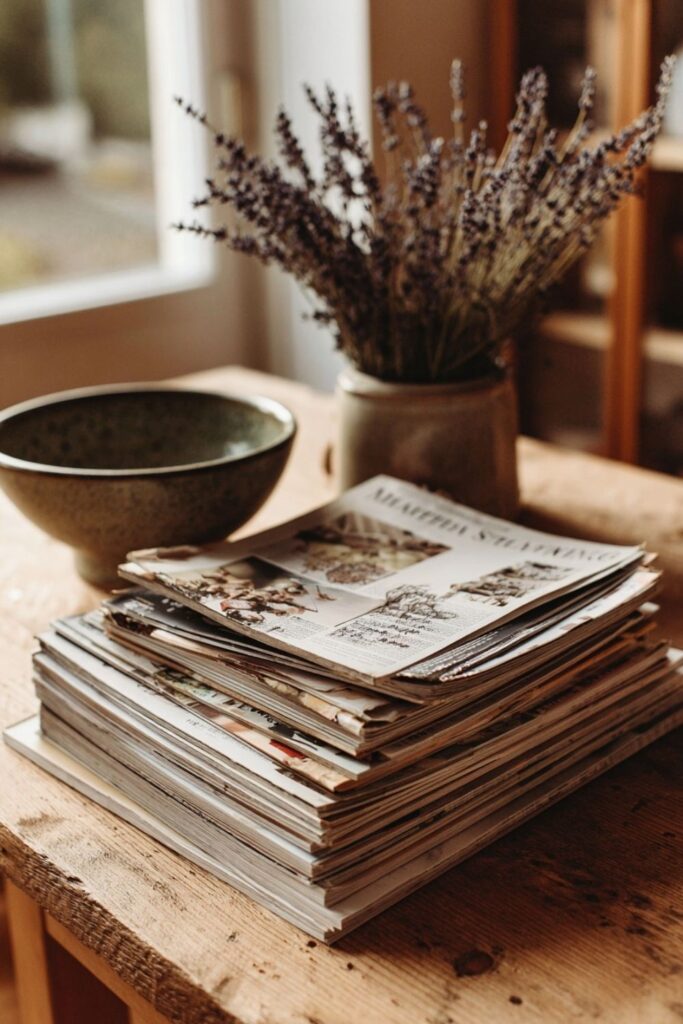
A stack of Martha Stewart Living magazines from 1993 sits on a wooden shelf, their thick matte covers still glowing. The pages smell faintly of paper and ink, and every photograph looks lit by someone who loved the angle of morning sun.
The vintage Martha Stewart aesthetic is having a second life right now. Pinterest searches for the term surged nearly 2,900 percent in 2025. A new generation hungry for slower, more intentional living is driving the revival.
What makes the vintage era different from today’s version is specificity. The original Martha Stewart Living was not about trends. It taught you the name of the transferware pattern, the history of the jadeite bowl, and why beeswax burns cleaner than paraffin.
Here are 15 details from that era that still hold up in any room or kitchen. Start with one, add another next month, and let the collection grow.
1. Turkey Hill as the Origin Story
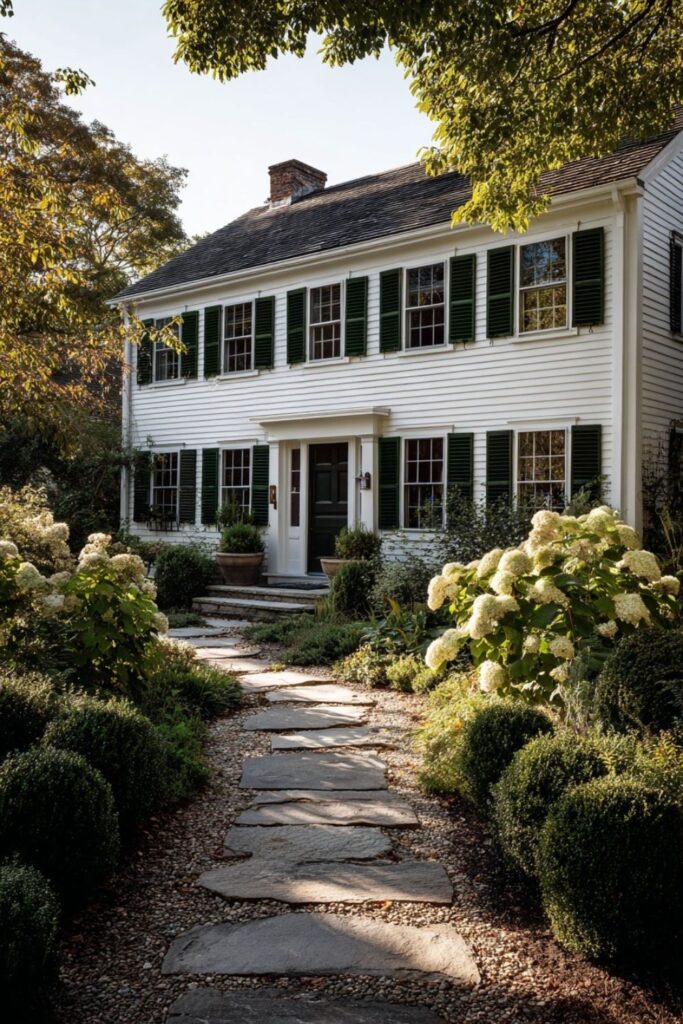
Martha and her then-husband Andy purchased a Federal-style home on Turkey Hill Road in Westport, Connecticut in 1971. That white house with its gardens and orchards became the backdrop for her first book, her magazine, and her television show.
Turkey Hill was never staged for cameras. It was a real working home where food was grown, chickens were raised, and flowers were cut fresh each morning. The style that launched an empire was simply how she lived, and the cameras happened to arrive.
2. The Thick Matte Pages of the Original Magazine
Martha Stewart Living launched in 1990, and the early issues were objects in themselves. The paper stock was heavier than most books. The photography used natural light, real rooms, and real food that had been cooked rather than styled with glue.
Those pages taught a generation to see their homes differently. A feature on ironstone carried the same editorial weight as a fashion spread in Vogue. The magazine treated domesticity as worthy of serious, beautiful attention.
3. Fire-King Jadeite on Every Shelf
Martha’s daughter Alexis started collecting Fire-King jadeite on a cross-country road trip in the 1990s. Martha displayed the milky green glassware on her show and in the magazine. Demand for vintage pieces soared overnight.
Jadeite bowls, cake stands, salt shakers, and covered dishes became the quiet signature of the era. The green was soft, cheerful, and never trendy. Line a shelf with six or eight jadeite pieces and the room instantly feels collected over years, not purchased in one trip.
4. Martha By Mail and the Green Glass Line
In the late 1990s, Martha launched her own jadeite reproductions through the Martha By Mail catalog. The covered rooster dish, the scalloped cake stand, and the hobnail vase were all pressed from vintage molds. Each piece carried the weight and glow of the originals.
Those catalog pieces are now collectible in their own right. A Martha-era feather bowl sells for over three hundred dollars today. When something is made with intention and real materials, it outlasts the era it was made in.
The signature pieces are placed. What builds the full vintage Martha feeling is the layer of materials and textures behind them.
5. Ironstone Collected at Every Estate Sale
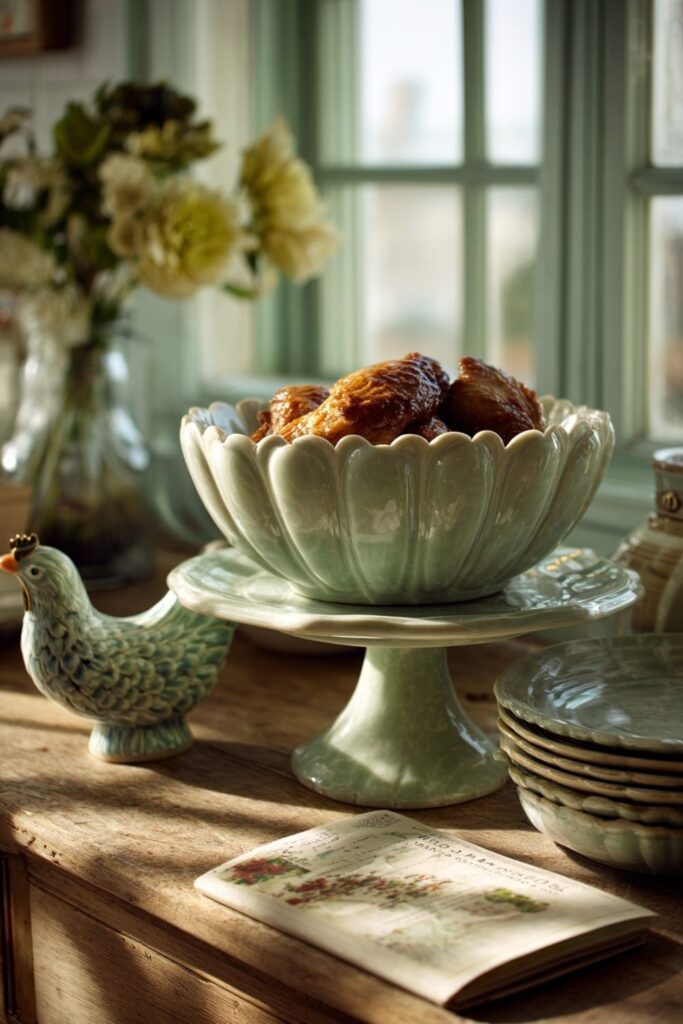
Ironstone was never decorative in the vintage Martha world. It was functional, heavy, and used daily. Cream-colored platters, pitchers, and bowls with fine crazing lines from decades of use filled her shelves.
The appeal of ironstone is its weight and warmth. It holds heat, stacks with presence, and ages without breaking down. A single ironstone platter from an estate sale can anchor a kitchen counter for the next twenty years.
6. Glass-Front Cabinets That Show Everything
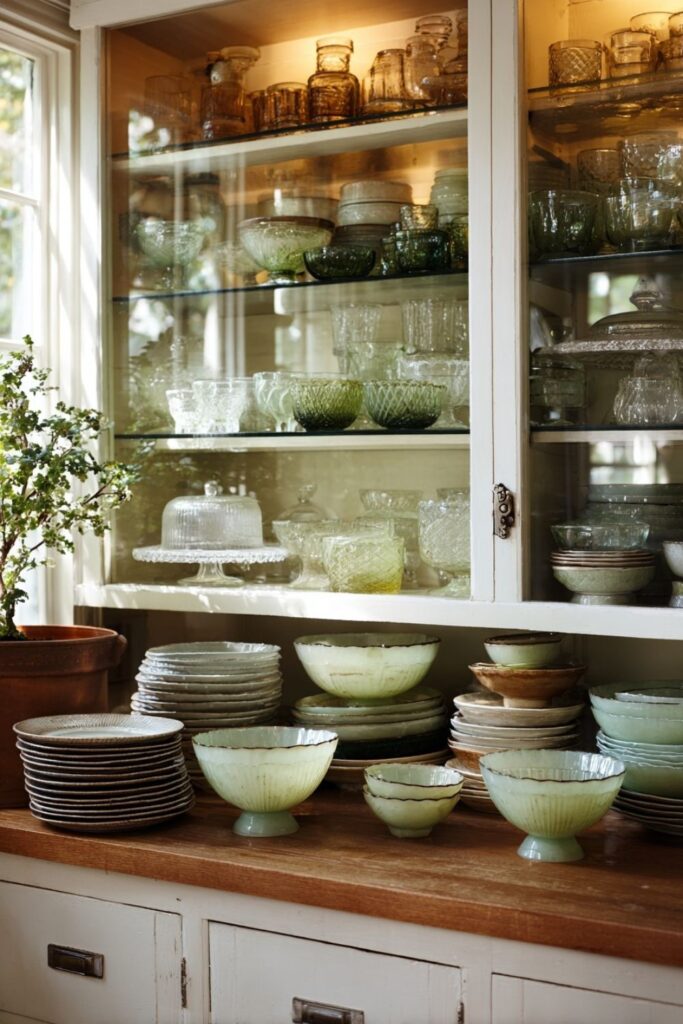
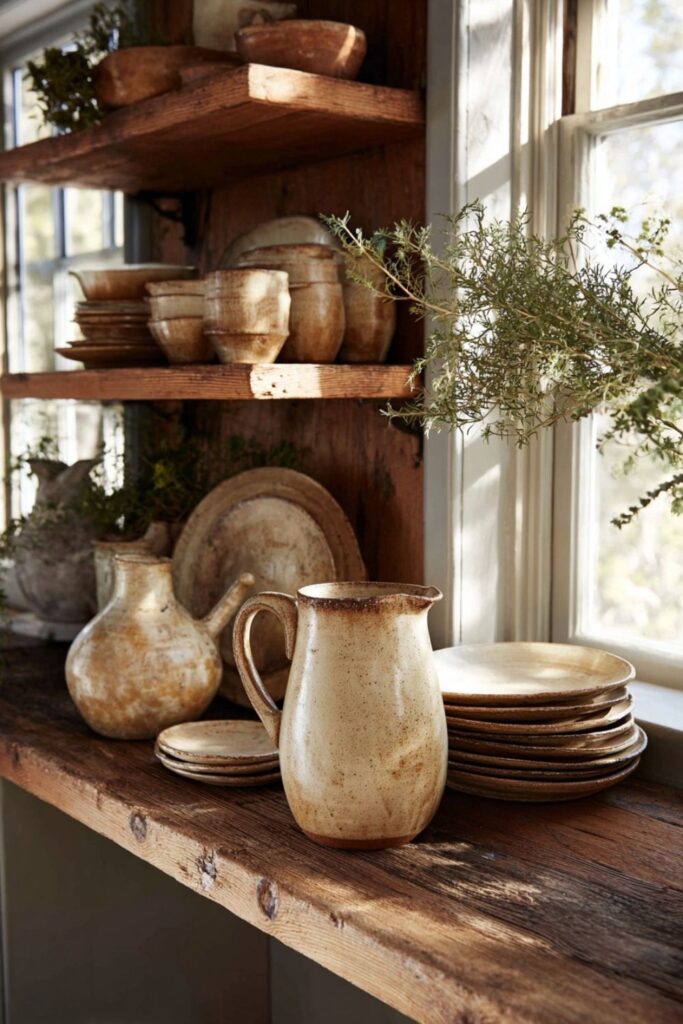
Martha’s kitchens always featured glass-front upper cabinets. The contents were meant to be seen: jadeite in rows, ironstone stacked neatly, pressed glass catching light from the window behind.
This is the opposite of hiding collections behind closed doors. A glass-front cabinet turns everyday dishes into a display that becomes part of the room’s character. Keep the shelves edited and the colors tight, and the cabinet decorates for you.
7. Transferware in Blue and Brown
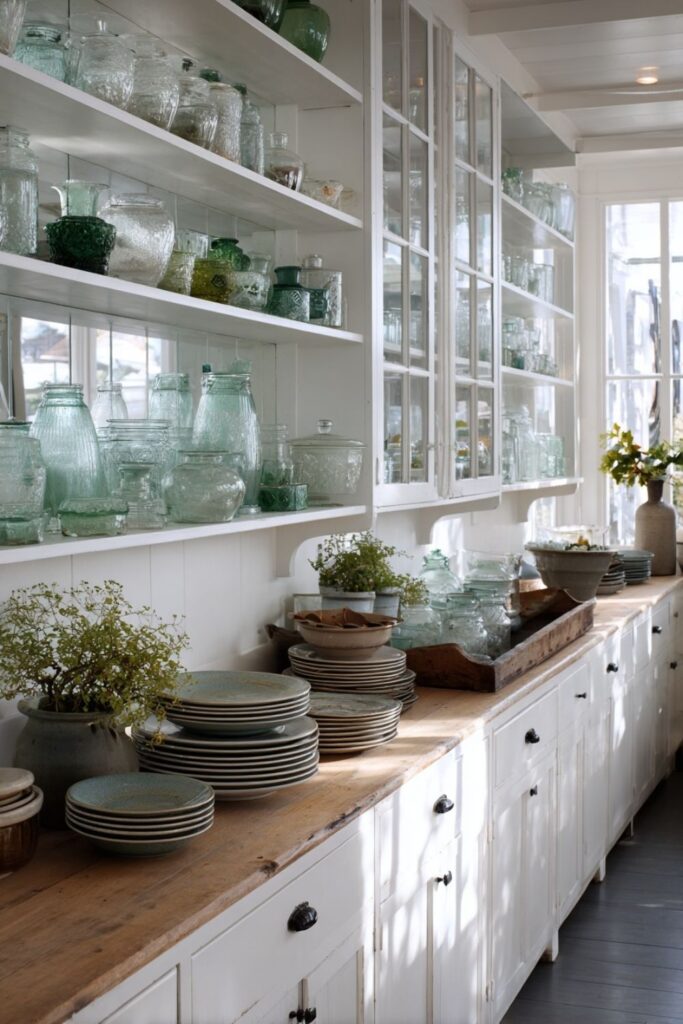
Segments on the original television show taught viewers to identify and collect transferware ceramics. Blue and brown plates with pastoral scenes, floral borders, and historical imagery became part of the visual language.
Mix transferware patterns on a single table and the result is a collected, inherited look. Martha never matched her plates; she paired them. A brown scenic plate next to a blue floral one tells a richer story than any uniform set.
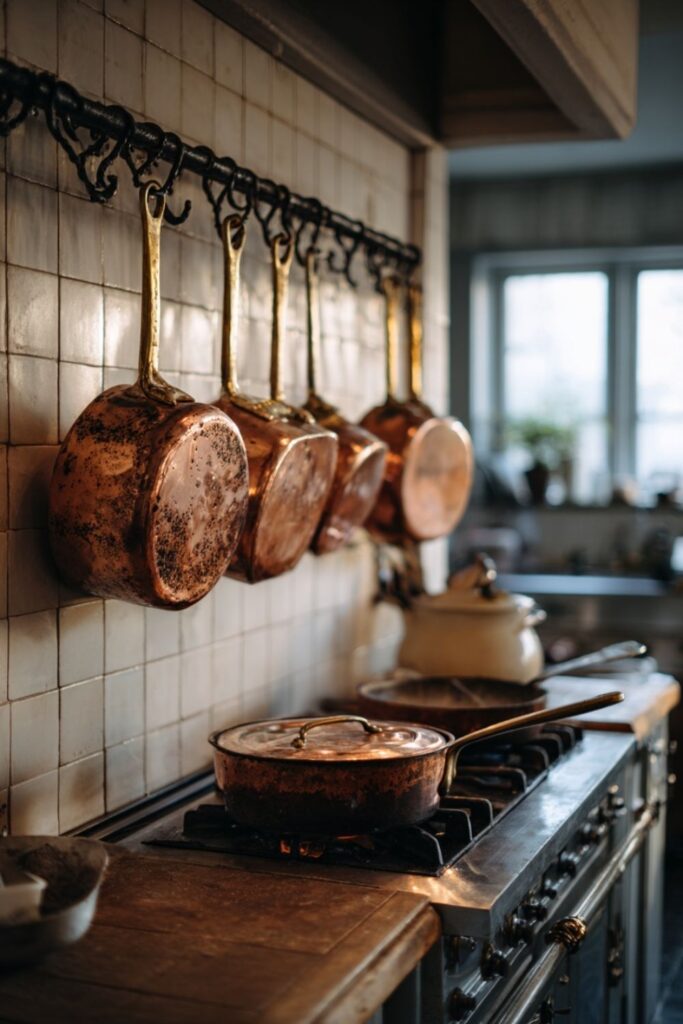
8. Copper Pots Hung Where You Can See Them
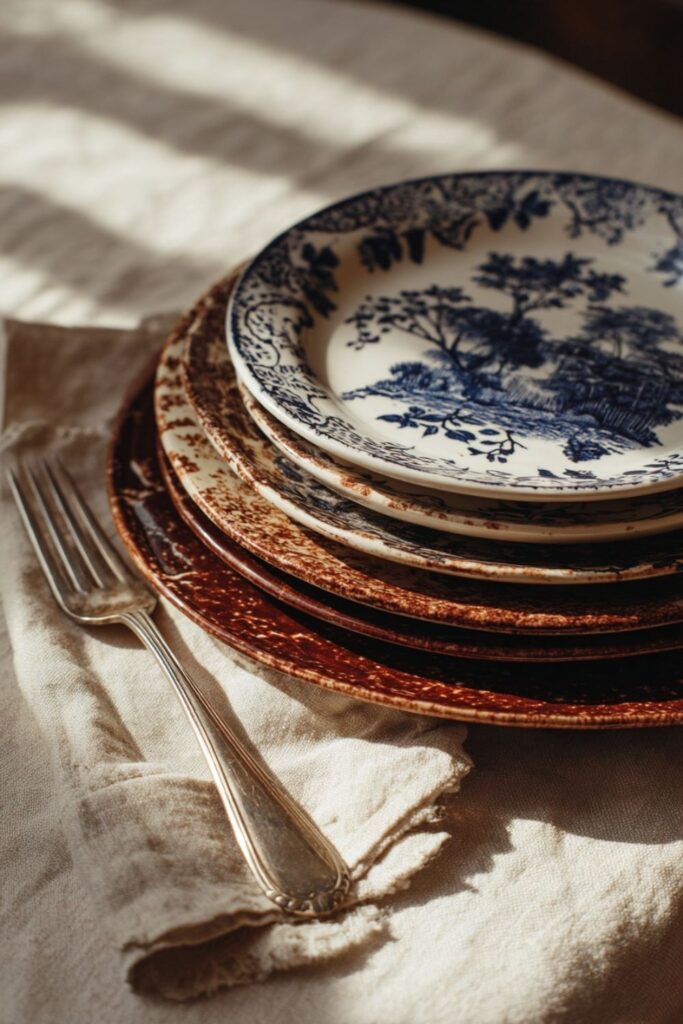
A rack of copper pots above the stove or along a kitchen wall was a signature of the Turkey Hill era. Copper conducted heat well, aged with character, and caught the light in a way that warmed the entire room.
Martha never hid her tools. Pots, wooden spoons, and rolling pins were displayed because they were used daily. A row of copper pots with brass handles is both functional storage and the warmest decoration a kitchen can have.
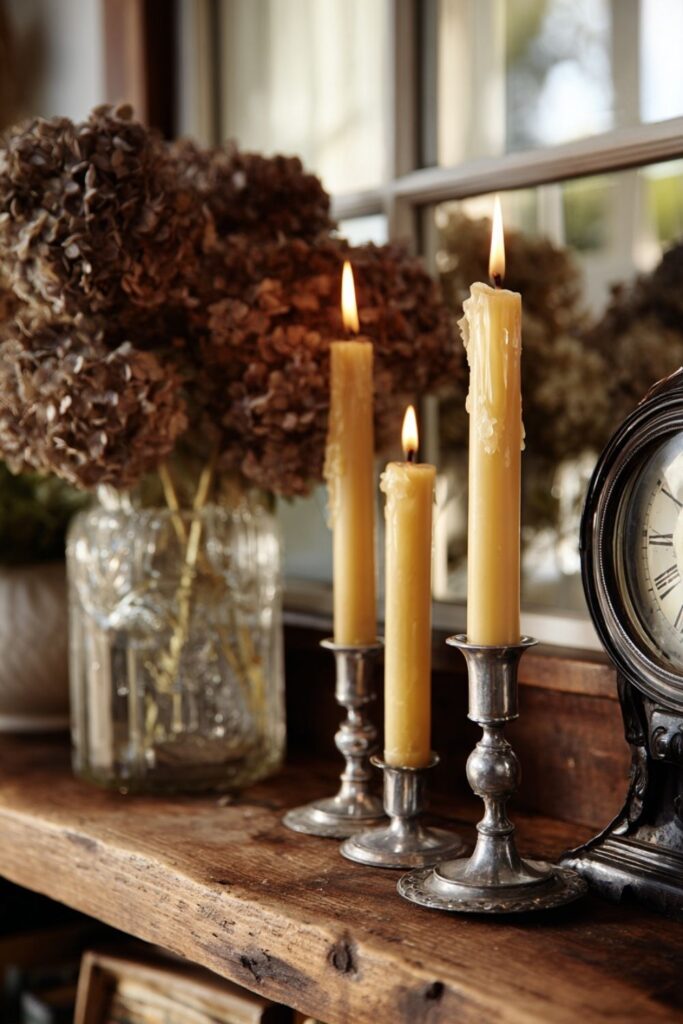
9. Beeswax Over Everything
Beeswax candles appeared in every room of every Turkey Hill photograph. Tapers on the dining table, pillars on the mantel, votives on the bathroom ledge. The warm honey color and subtle scent were inseparable from the era.
Martha never used paraffin, and the difference shows in every photograph from that period. Beeswax burns with a golden tone that paraffin cannot match. The candles themselves become objects in the room, not just sources of light.
The textures are layered. What comes next adds the warmth that separates a collected room from a decorated one.
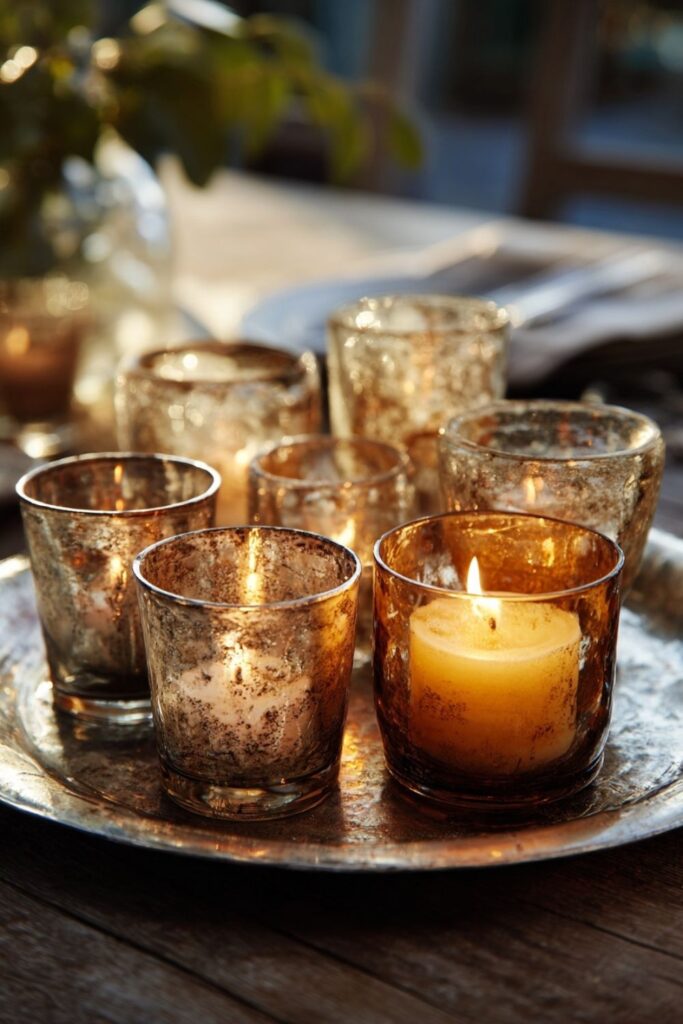
10. Mercury Glass in Clusters
Mercury glass votives, ornaments, and vases appeared in clusters on mantels and side tables throughout the Turkey Hill years. The mottled silver surface caught candlelight and scattered it softly across every room.
Vintage mercury glass has imperfections: tiny bubbles, uneven patina, spots where the silver has worn thin. Those marks are the beauty. Group five or seven pieces on a tray, and the cluster reads as a collection rather than a single decoration.
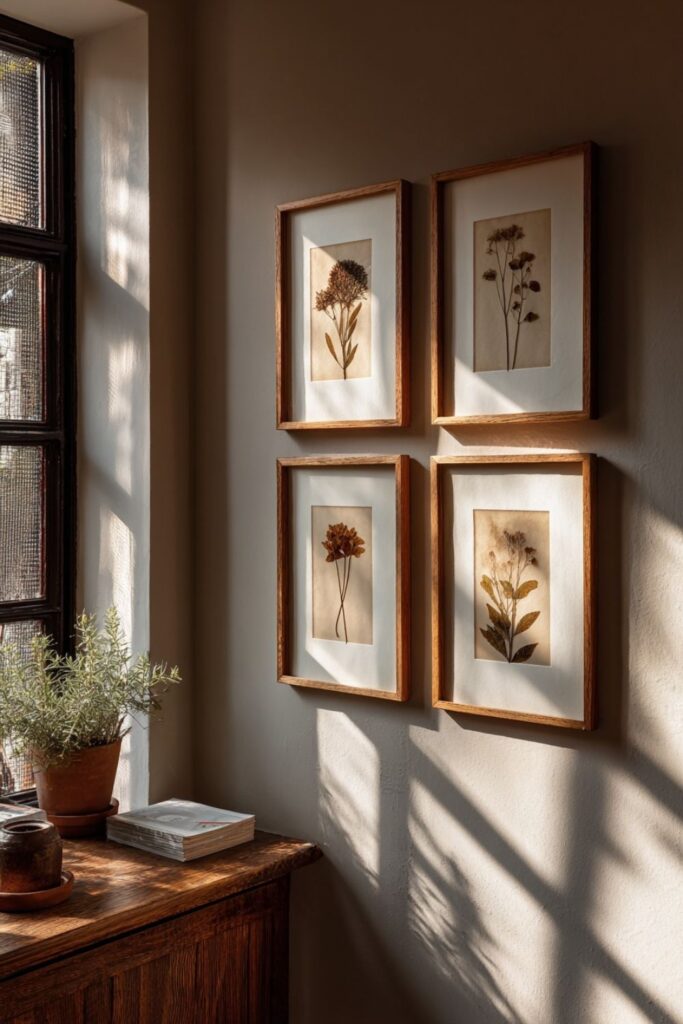
11. Pressed Flowers and Botanical Prints
The original magazine featured tutorials on pressing flowers and framing them behind glass. Botanical prints in simple wooden frames lined hallways, kitchens, and guest bedrooms throughout the Turkey Hill home.
This is a detail that costs almost nothing and carries enormous character. Press a dahlia from the garden, mount it on cream card stock, and frame it simply. A row of three or four botanical prints along a stairway wall is pure vintage Martha, quiet and academic and deeply personal.
12. Gingham in the Kitchen
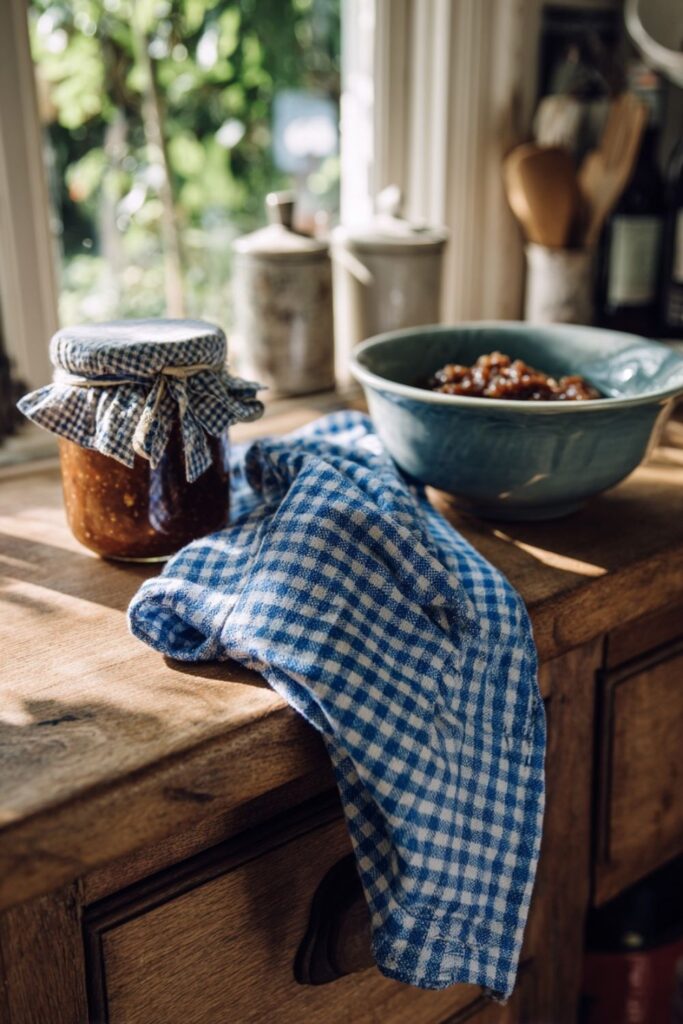
Gingham curtains, napkins, and ribbons tied around jars were part of the 1990s Martha kitchen vocabulary. The pattern is simple, cheerful, and timeless in a way that bold prints are not.
Use gingham sparingly and in one color family: blue and white, green and white, or red and white. A gingham tea towel draped over the oven handle or a ribbon around a jar of preserves signals the era without overdoing it.
13. White Hydrangeas in Abundance
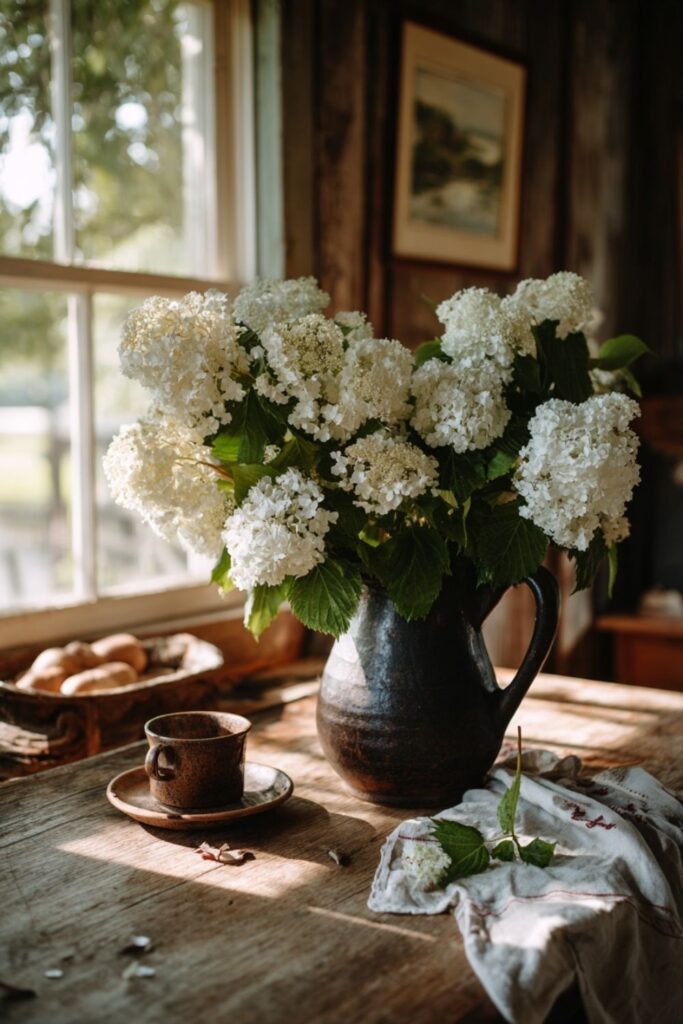
Annabelle hydrangeas, round and white and lush, appeared in nearly every summer and autumn issue of the magazine. Martha planted them in masses, cut them in armfuls, and filled ironstone pitchers to overflowing.
One hydrangea in a small vase is pleasant. Fifteen stems packed into a large pitcher is vintage Martha. The principle of mass planting applies to cut flowers just as it does to the garden, so choose one variety and commit.
14. The Collected Kitchen Counter
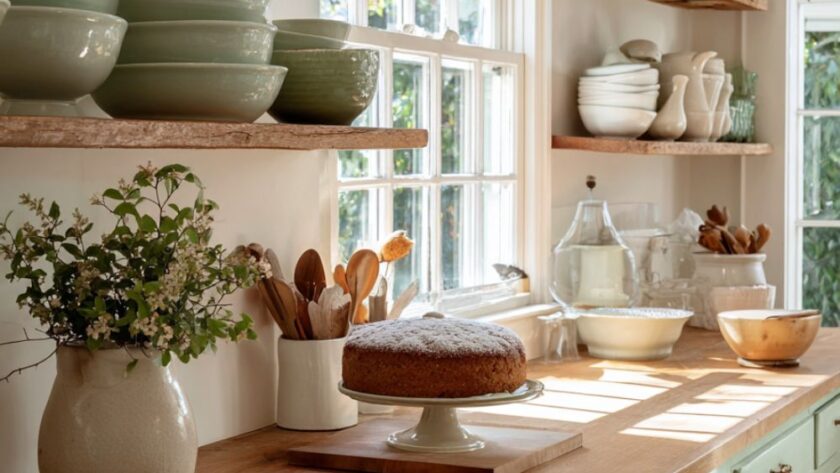
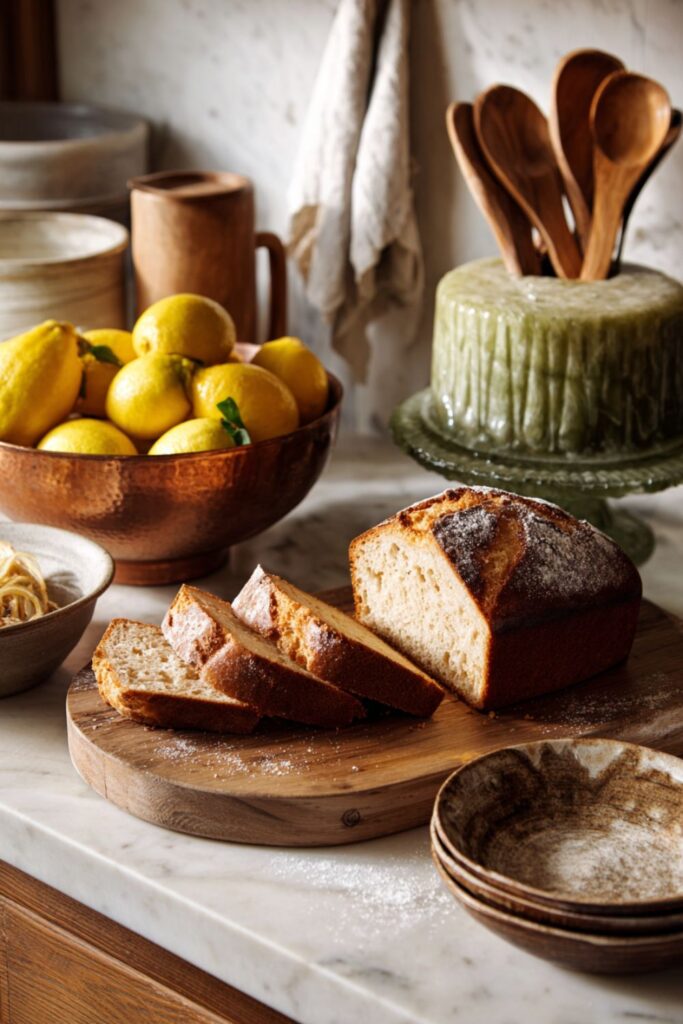
The vintage Martha kitchen counter was never bare or staged. A wooden cutting board held bread half-sliced, a copper bowl held lemons, and a jadeite cake stand displayed a dusted pound cake beside a small pitcher of wooden spoons.
Each item was functional and placed with care, never cluttered or random. Flour still on the board and a knife resting beside the bread made the kitchen feel like someone had just stepped away. It looked like a real life, not a photograph.
The details are almost complete. These final touches carry the era forward into whatever room you are building today.
15. A Home That Looks Like a Life
The vintage Martha Stewart aesthetic was never about perfection for its own sake. It was about the belief that daily surroundings deserve thought, care, and real materials. Linen over polyester, beeswax over paraffin, ironstone over melamine, collected over purchased.
That belief is what made the 1990s era resonate so deeply that it returned three decades later. A generation raised on disposable design is reaching for something that lasts. The vintage Martha home does not need to be recreated exactly; it simply needs to be felt.
The vintage Martha Stewart aesthetic endures because it was never about a single season or trend. It was about an approach: choose real materials, display what you love, and let your home tell the story of where you have been.
Pick one piece to start: a jadeite bowl at a flea market, an ironstone platter at an estate sale, or a stack of beeswax tapers that smell faintly of honey when lit on a Tuesday. The collection begins with one choice and grows from there.
What made the vintage era so compelling was not the objects themselves. It was the conviction behind them: that everyday life is worth the effort of making it beautiful.
You might also like: