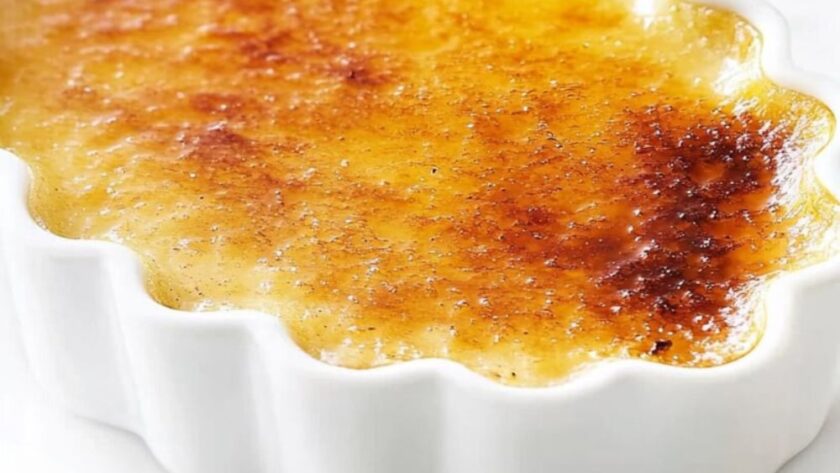
Martha Stewart’s crème brûlée is heavy cream, egg yolks, sugar, a vanilla bean, and a pinch of salt. It bakes in a water bath at 300°F for about 35 minutes, chills for at least two hours, and gets a crackly sugar top right before serving.
Martha says if the sugar top does not crack when you tap it with a spoon, it is not a real crème brûlée. The recipe serves eight and can be made up to three days ahead, which makes it one of the best dinner party desserts because all the work happens before guests arrive.
Try More Dessert Recipes:
Why You Need A Water Bath
The ramekins sit in a pan of hot water while they bake. The water keeps the heat gentle and even, which stops the egg yolks from curdling and the custard from cracking. Without the water bath, the outside cooks too fast while the inside stays raw.
Start boiling the water before you make the custard so it is ready when you need it. Pour it into the pan after the ramekins are already on the oven rack so you do not carry a heavy pan of hot water across the kitchen.
Martha Stewart Crème Brûlée Ingredients
Five ingredients for the custard, plus sugar for the top. Use a real vanilla bean if you can. Martha scrapes the seeds into the cream and drops the pod in too. If you use vanilla extract instead, add it after straining, not before, or the flavor cooks off.
For the custard:
- 4 cups heavy cream
- 3/4 cup sugar
- 1 vanilla bean, split lengthwise
- 7 large egg yolks
- 1/4 teaspoon coarse salt
For the topping:
- 3/4 cup sugar

How To Make Martha Stewart Crème Brûlée
- Set up the oven: Preheat to 300°F. Boil a kettle of water. Place eight 5-ounce ramekins in a large roasting pan.
- Heat the cream: Put the cream and half the sugar (about 6 tablespoons) in a saucepan. Scrape the vanilla bean seeds into the cream and add the pod. Heat over medium until bubbles form around the edges, 7 to 8 minutes. Do not boil.
- Whisk the yolks: In a large bowl, whisk the egg yolks with the remaining sugar and the salt.
- Temper the eggs: Ladle a small amount of the hot cream into the yolk mixture and whisk. Add two more ladles, one at a time, whisking after each. Then gradually whisk in the rest of the cream. Strain through a fine sieve into a measuring cup.
- Bake in a water bath: Divide the custard among the ramekins. Slide the pan into the oven, then pour boiling water into the pan until it comes halfway up the sides of the ramekins. Bake until the custards are set but still jiggle slightly in the center when shaken, 30 to 40 minutes.
- Chill: Remove the ramekins from the water bath with tongs. Cool on a rack for 30 minutes, then cover with plastic wrap and chill for at least 2 hours or up to 3 days.
- Torch the tops: Sprinkle about 1 1/2 tablespoons sugar over each custard. Pass a kitchen torch in a circular motion 1 to 2 inches above the surface until the sugar bubbles and turns amber. Serve right away.
What Does Tempering Mean And Why Does It Matter
Tempering is adding hot liquid to egg yolks a little at a time. If you dump all the hot cream in at once, the yolks cook into scrambled bits. Adding it slowly raises the temperature gently so the yolks stay smooth.
Start with one ladle. Whisk fast. Then add more. By the third ladle, the yolks are warm enough to handle the rest of the cream. Strain the mixture after to catch any bits that did cook.
No Torch? Use The Broiler
Martha includes a broiler method. Freeze the custards for 15 minutes first so the cold custard does not melt while the sugar caramelizes. Set the rack 4 inches below the broiler, sprinkle the sugar on top, and broil until deep golden brown, about 3 minutes.
Watch closely. The sugar goes from golden to burnt in seconds under a broiler. A torch gives you more control, but the broiler works if that is what you have.
Can You Make This For Fewer People
Martha says to halve the recipe for four. Use 2 cups cream, 6 tablespoons sugar, 1 vanilla bean, 4 egg yolks, and a pinch of salt. Use 1 1/2 tablespoons sugar per ramekin for the topping. Everything else stays the same.
The full recipe also freezes well. One reviewer kept ramekins in the freezer for three months and said they tasted perfect after thawing.
How To Store Crème Brûlée
The custards keep in the fridge, covered in plastic wrap, for up to 3 days before you add the sugar top. Do not torch them until you are ready to serve. The sugar topping softens within an hour and loses its crack.
This is what makes crème brûlée the best dinner party dessert. All the cooking happens days ahead. The only thing you do right before serving is sprinkle sugar and torch it, which takes 30 seconds per ramekin.
FAQs
- Why is my custard grainy? Either you overbaked it or you did not strain the mixture before pouring it into the ramekins. Martha says to strain even if it looks smooth because straining catches tiny bits and breaks up air bubbles.
- How do I know when it is done? The custard should jiggle slightly in the center when you shake the ramekin. If it is completely firm, it is overbaked. The custard finishes setting as it chills in the fridge.
- Can I use vanilla extract instead of a vanilla bean? Yes. Add 2 teaspoons of vanilla extract after straining, not before. Heating extract too long causes the flavor to fade.
- Why coarse salt? Martha uses coarse salt in most of her dessert recipes. A small amount of salt in custard brings out the sweetness and the vanilla flavor. Fine salt works too.
More Dessert Recipes:
Nutrition Facts
(1 ramekin, serves 8)
- Calories: 520
- Total Fat: 40g
- Saturated Fat: 24g
- Cholesterol: 280mg
- Sodium: 100mg
- Total Carbohydrates: 36g
- Protein: 5g
Martha Stewart Crème Brûlée Recipe
Description
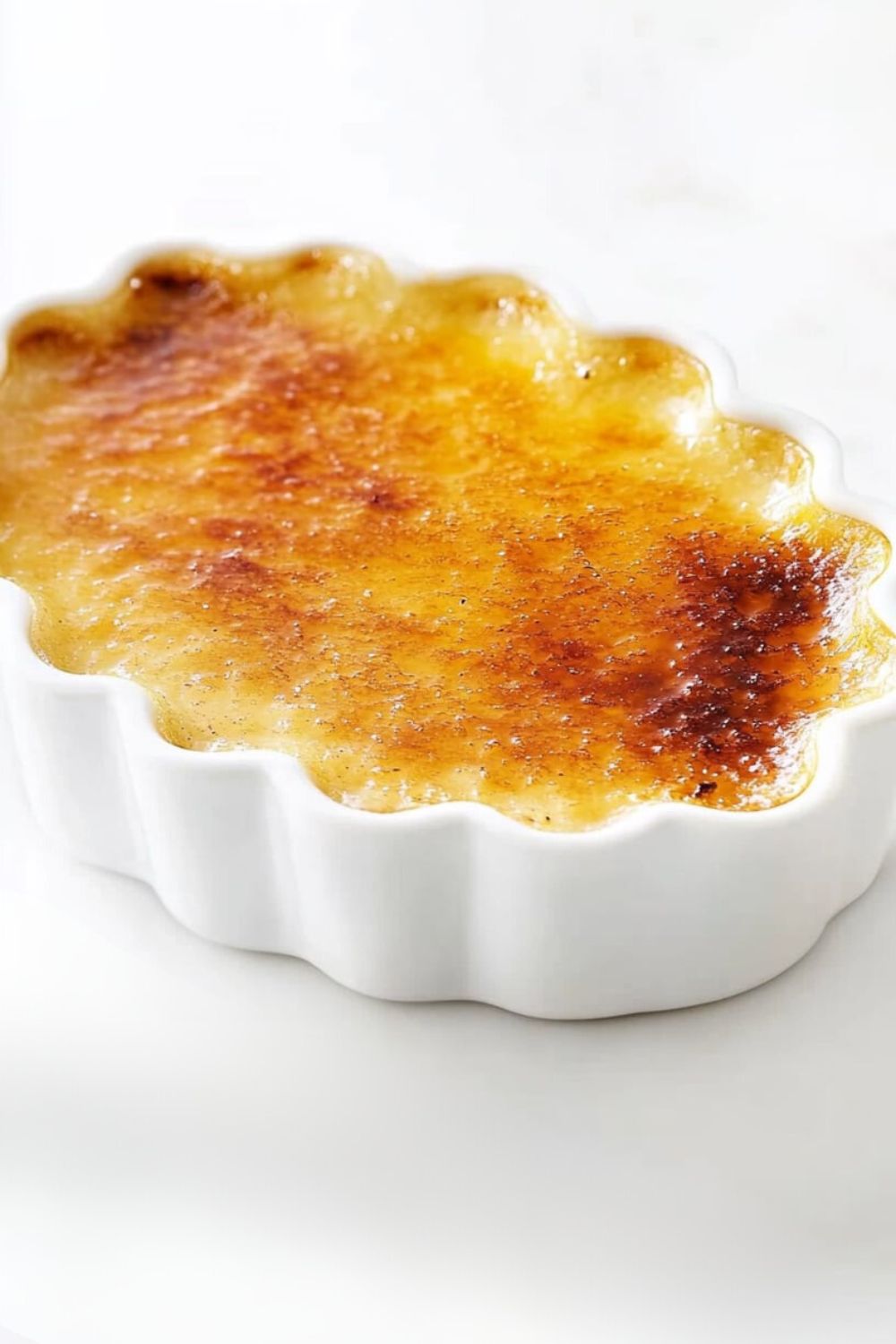
Martha Stewart’s crème brûlée is heavy cream, egg yolks, sugar, a vanilla bean, and a pinch of salt. It bakes in a water bath at 300°F for about 35 minutes, chills for at least two hours, and gets a crackly sugar top right before serving.
Martha says if the sugar top does not crack when you tap it with a spoon, it is not a real crème brûlée. The recipe serves eight and can be made up to three days ahead, which makes it one of the best dinner party desserts because all the work happens before guests arrive.
Ingredients
For the custard:
For the topping:
Instructions
- Set up the oven: Preheat to 300°F. Boil a kettle of water. Place eight 5-ounce ramekins in a large roasting pan.
- Heat the cream: Put the cream and half the sugar (about 6 tablespoons) in a saucepan. Scrape the vanilla bean seeds into the cream and add the pod. Heat over medium until bubbles form around the edges, 7 to 8 minutes. Do not boil.
- Whisk the yolks: In a large bowl, whisk the egg yolks with the remaining sugar and the salt.
- Temper the eggs: Ladle a small amount of the hot cream into the yolk mixture and whisk. Add two more ladles, one at a time, whisking after each. Then gradually whisk in the rest of the cream. Strain through a fine sieve into a measuring cup.
- Bake in a water bath: Divide the custard among the ramekins. Slide the pan into the oven, then pour boiling water into the pan until it comes halfway up the sides of the ramekins. Bake until the custards are set but still jiggle slightly in the center when shaken, 30 to 40 minutes.
- Chill: Remove the ramekins from the water bath with tongs. Cool on a rack for 30 minutes, then cover with plastic wrap and chill for at least 2 hours or up to 3 days.
- Torch the tops: Sprinkle about 1 1/2 tablespoons sugar over each custard. Pass a kitchen torch in a circular motion 1 to 2 inches above the surface until the sugar bubbles and turns amber. Serve right away.
Notes
- Strain the custard: Even if it looks smooth, strain through a fine sieve. It catches cooked egg bits and breaks up air bubbles.
- Chill at least 2 hours: Cutting this short leaves the custard loose and runny.
- Torch right before serving: The sugar top softens within an hour and loses its crack.
- Half recipe for 4: 2 cups cream, 6 tbsp sugar, 1 vanilla bean, 4 yolks, pinch of salt.