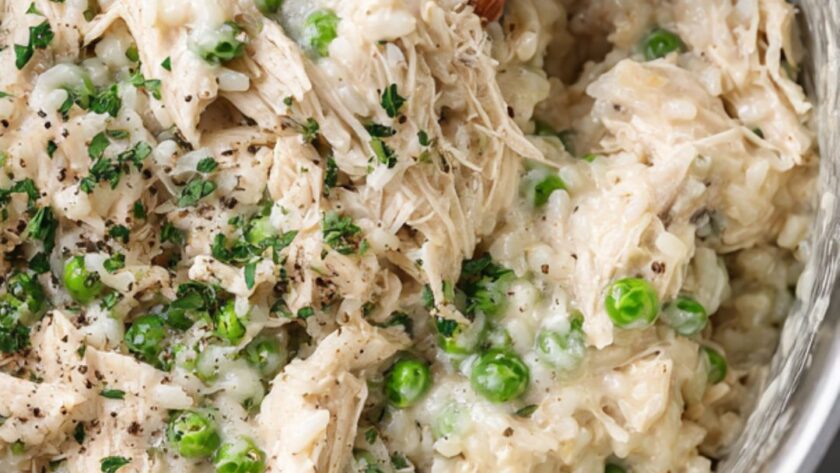
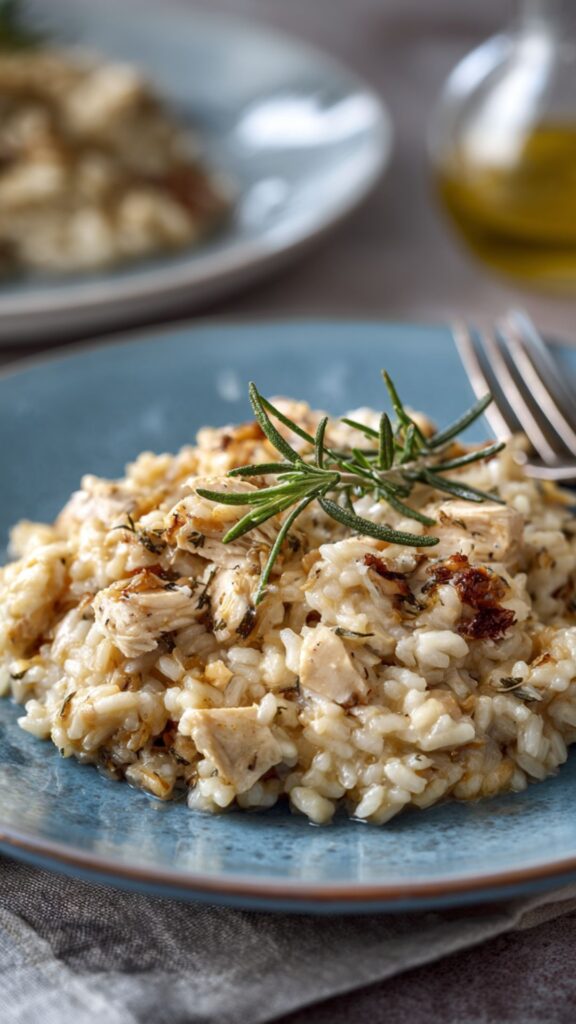
When it comes to refined home cooking, few dishes embody the “elevated comfort” aesthetic quite like a Martha Stewart Chicken Risotto. This recipe is a masterclass in technique, transforming humble pantry staples—Arborio rice, chicken stock, and aromatics—into a velvety, restaurant-quality meal that feels like a warm hug in a bowl.
While many shy away from risotto due to its reputation for being “fussy,” Martha’s approach simplifies the process without sacrificing the signature creamy texture that defines a perfect Italian stir. By slowly incorporating warm broth and allowing the rice to release its natural starches, you create a rich, luxurious sauce without needing a drop of heavy cream.
Try More Dinner Recipes:
- Martha Stewart Baked Chicken And Onions Recipe
- Martha Stewart Chicken Salad Club Roll Recipe
- Martha Stewart Chicken Sausage And Bean Casserole Recipe
Why You Will Love This Martha Stewart Chicken Risotto:
- Pillowy Soft Texture: The slow-stirring method ensures a perfectly creamy consistency where each grain of rice remains distinct but is enveloped in a savory, starchy sauce.
- One-Pan Elegance: Aside from warming the broth, the entire meal comes together in one heavy-bottomed pot or Dutch oven, making cleanup remarkably easy.
- Aromatic Depth: Using a combination of dry white wine, shallots, and fresh thyme provides a sophisticated flavor profile that balances the richness of the Parmesan cheese.
- Protein-Packed & Hearty: The addition of tender, shredded chicken (or pan-seared breast) turns a side dish into a complete, satisfying main course.
- Technique Builder: Mastering this recipe gives you the foundation to create endless variations, from mushroom and truffle to lemon and asparagus.
- Crowd-Pleasing: It is sophisticated enough for a formal dinner party yet cozy enough for a quiet Sunday night at home with the family.
- Pantry Friendly: Most of the ingredients are kitchen staples, meaning you can whip up a gourmet meal without a last-minute trip to a specialty grocery store.
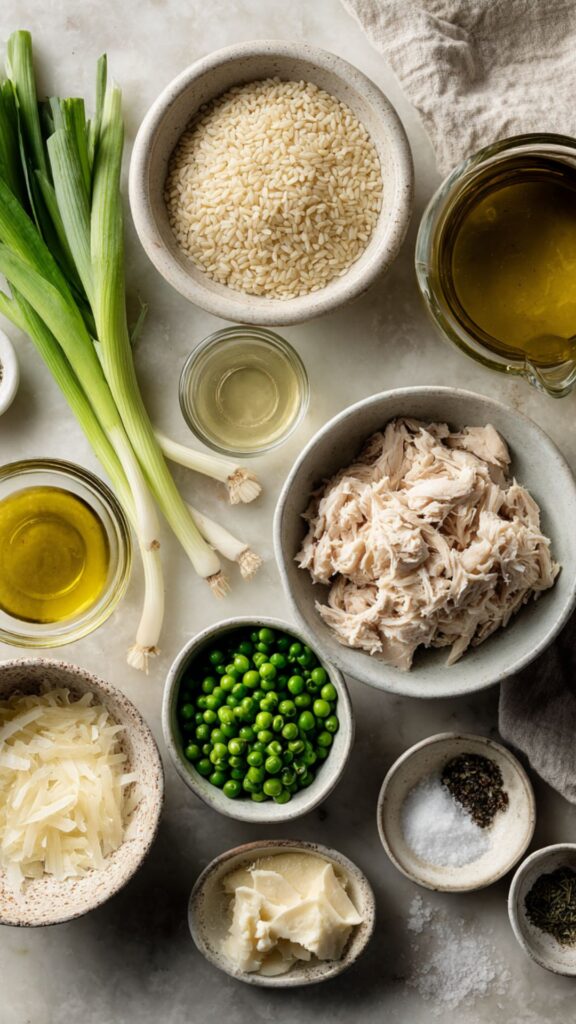
Martha Stewart Chicken Risotto Ingredients
- 1 tbsp Extra-virgin olive oil
- 1 bunch Scallions, thinly sliced (whites and greens separated)
- 1 cup Arborio rice (do not rinse)
- 1/2 cup Dry white wine (like Pinot Grigio or Sauvignon Blanc)
- 3 to 4 cups Low-sodium chicken broth, kept warm in a side pot
- 2 cups Shredded cooked chicken (rotisserie chicken works perfectly)
- 1 cup Frozen peas, thawed
- 2 tbsp Unsalted butter
- 1/2 cup Freshly grated Parmesan cheese
- Coarse salt and freshly ground pepper to taste
How To Make Martha Stewart Chicken Risotto
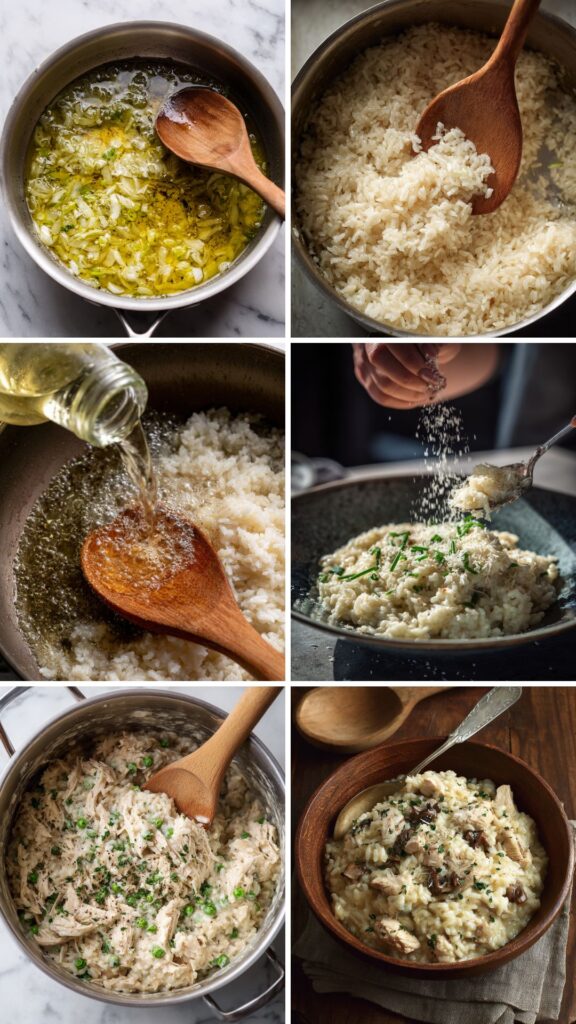
- Sauté Aromatics: Heat the olive oil in a large saucepan over medium heat. Add the scallion whites and a pinch of salt. Sauté for 1–2 minutes until soft.
- Toast the Rice: Add the Arborio rice to the pan. Stir constantly for 2 minutes until the edges of the grains become translucent. This “toasting” step is crucial for the rice to hold its shape.
- Deglaze: Pour in the white wine. Stir until the liquid is almost completely absorbed by the rice.
- The “Slow Stir” Method: Add the warm broth one ladleful (about 1/2 cup) at a time. Stir frequently and wait until the liquid is absorbed before adding the next ladle. Continue this process for 18–20 minutes until the rice is tender but still has a slight “bite” (al dente).
- Fold in Protein: Stir in the shredded chicken and peas. Cook for another 2 minutes just to heat them through.
- The Finish: Remove from heat. Vigorously stir in the butter, Parmesan cheese, and scallion greens. The friction from stirring creates that famous creamy “mantecatura” finish. Season with salt and pepper to taste.
Recipe Tips for Success
- Keep Broth Hot: Never add cold broth to your rice; it shocks the grain and stops the cooking process, leading to an uneven texture.
- Don’t Over-Stir: You don’t need to stir every second. Stirring frequently is good to release starch, but over-stirring can make the risotto gluey.
- The “Wave” Test: Your risotto is done when it is “all’onda” (like a wave). If you shake the pan, the rice should move fluidly, not sit in a stiff clump.
What To Serve With Chicken Risotto?
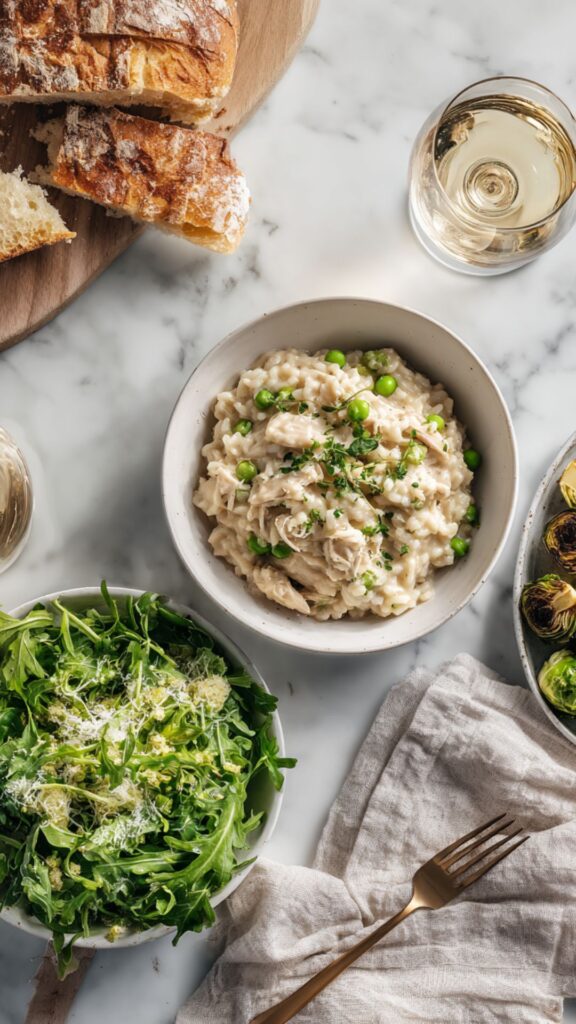
To balance the rich, creamy weight of the risotto, serve it alongside a crisp arugula salad tossed in a bright lemon vinaigrette. For extra texture, roasted balsamic Brussels sprouts or garlic-rubbed broccolini provide a satisfying charred crunch. If you want to lean into the Italian theme, a basket of warm focaccia or crusty sourdough is perfect for catching every last drop of the starchy sauce. Finish with a glass of chilled Pinot Grigio for the ultimate pairing.
How To Store Leftover Chicken Risotto?
To keep your risotto from drying out, transfer it to an airtight container once it has cooled to room temperature and store it in the refrigerator for up to three days. If you need to keep it longer, you can freeze it in a heavy-duty freezer bag for up to two months, though keep in mind that the texture of the rice may become slightly softer upon thawing.
How To Reheat Leftover Chicken Risotto?
The best way to bring back the creamy “mantecatura” is to place the risotto in a small saucepan over medium-low heat and add a splash of chicken broth or water, stirring constantly for 3 to 5 minutes until it loosens up and becomes silky again. For a quicker fix, place a portion in a microwave-safe bowl with a tablespoon of liquid, cover it with a damp paper towel, and heat in 30-second intervals, stirring between each until it is steaming and creamy throughout.
FAQs
Can I use regular long-grain white rice for risotto? No. Long-grain rice (like Jasmine or Basmati) lacks the high starch content required to create that creamy sauce. You must use short-grain, high-starch rice like Arborio, Carnaroli, or Vialone Nano.
What is the best substitute for white wine? If you want to avoid alcohol, use an equal amount of chicken broth plus 1 tablespoon of lemon juice or white wine vinegar. The acidity is necessary to cut through the richness of the starch and cheese.
Can I use water instead of chicken broth? You can, but the flavor will be significantly thinner. If using water, you’ll need to be much more generous with your herbs, salt, and aromatics like garlic and shallots to compensate.
What kind of chicken is best for risotto?Rotisserie chicken or leftover roasted chicken is the easiest “shortcut.” If cooking from scratch, boneless skinless thighs stay juicier during the stirring process than breasts.
Why is my risotto gummy or gluey? This usually happens if you over-stirred the rice or cooked it at too low a temperature for too long. It can also happen if you rinsed the rice before cooking—never wash risotto rice, as you’ll wash away the starch you need for the sauce!
Why is the rice still crunchy even though I’ve used all the broth? Your heat was likely too high, causing the liquid to evaporate before the rice could absorb it. Simply heat up a bit more broth (or even warm water) and continue the process until the rice reaches the desired tenderness.
My risotto is too salty. How can I fix it? If you used salted broth and added Parmesan, it can get salty fast. Stir in a splash of heavy cream or a dollop of unsalted butter or mascarpone at the end to mellow out the saltiness.
More Dinner Recipes:
- Martha Stewart Apricot Dijon Glazed Chicken Recipe
- Martha Stewart Chicken Scarpariello Recipe
- Martha Stewart Almond Crusted Chicken Recipe
Martha Stewart Chicken Risotto Recipe Nutrition Facts
- Calories 465 kcal
- Total Fat 16g
- Saturated Fat 8g
- Cholesterol 85mg
- Sodium 680mg
- Total Carbohydrates 42g
- Protein 32g
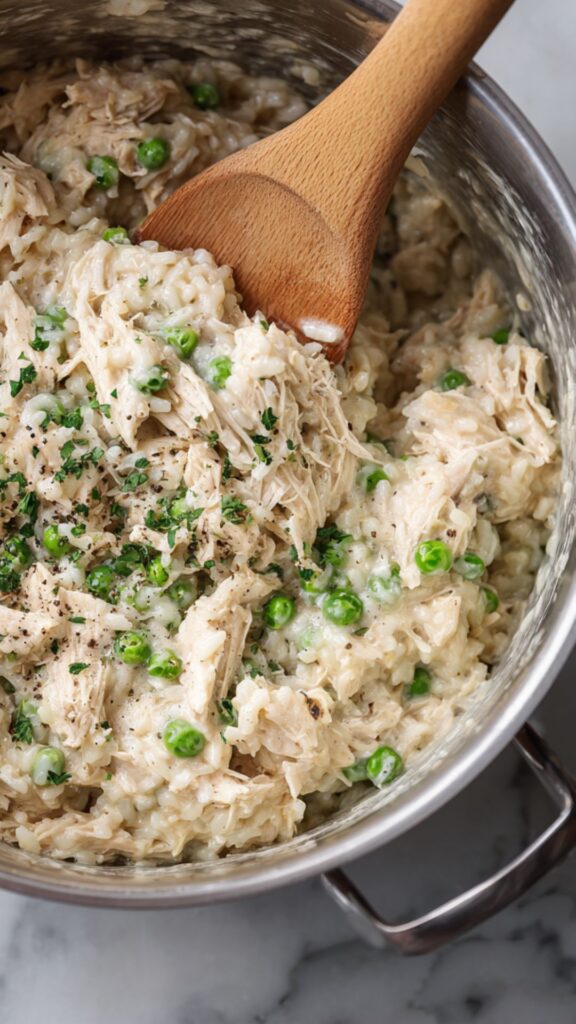
Martha Stewart Chicken Risotto Recipe
Description
When it comes to refined home cooking, few dishes embody the “elevated comfort” aesthetic quite like a Martha Stewart Chicken Risotto. This recipe is a masterclass in technique, transforming humble pantry staples—Arborio rice, chicken stock, and aromatics—into a velvety, restaurant-quality meal that feels like a warm hug in a bowl.
Ingredients
Instructions
- Sauté Aromatics: Heat the olive oil in a large saucepan over medium heat. Add the scallion whites and a pinch of salt. Sauté for 1–2 minutes until soft.
- Toast the Rice: Add the Arborio rice to the pan. Stir constantly for 2 minutes until the edges of the grains become translucent. This “toasting” step is crucial for the rice to hold its shape.
- Deglaze: Pour in the white wine. Stir until the liquid is almost completely absorbed by the rice.
- The “Slow Stir” Method: Add the warm broth one ladleful (about 1/2 cup) at a time. Stir frequently and wait until the liquid is absorbed before adding the next ladle. Continue this process for 18–20 minutes until the rice is tender but still has a slight “bite” (al dente).
- Fold in Protein: Stir in the shredded chicken and peas. Cook for another 2 minutes just to heat them through.
- The Finish: Remove from heat. Vigorously stir in the butter, Parmesan cheese, and scallion greens. The friction from stirring creates that famous creamy “mantecatura” finish. Season with salt and pepper to taste.
Notes
- Keep Broth Hot: Never add cold broth to your rice; it shocks the grain and stops the cooking process, leading to an uneven texture.
Don’t Over-Stir: You don’t need to stir every second. Stirring frequently is good to release starch, but over-stirring can make the risotto gluey.
The “Wave” Test: Your risotto is done when it is “all’onda” (like a wave). If you shake the pan, the rice should move fluidly, not sit in a stiff clump.