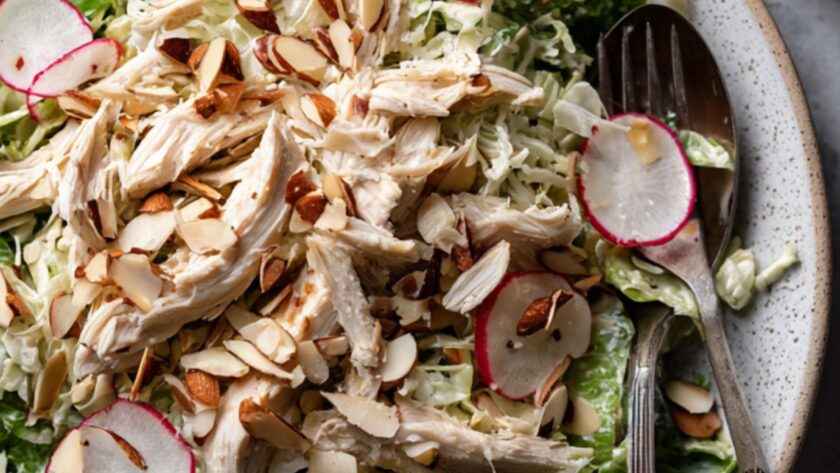
The first time I read this recipe I thought poaching chicken in buttermilk was a mistake. It is not. Martha Stewart’s Chicken Breast Poached in Buttermilk uses boneless chicken breasts gently cooked in a quart of buttermilk with sage and garlic until they hit 150 degrees, and they come out softer and more flavourful than any poached chicken breast I have ever made.
I think of this as Martha Stewart’s fancier poached chicken salad because the sliced chicken goes over shredded escarole with radishes, toasted almonds, and a yogurt dressing made with cornichons and capers. It sounds like a lot but the whole thing takes about an hour and I come back to it every spring when I want something light but filling.
Try More Dinner Recipes:
Why You Will Love This Buttermilk Poached Chicken:
- Buttermilk changes everything: Poaching in water gives you plain chicken. Poaching in buttermilk gives you chicken that is tangy and incredibly tender because the acid in the buttermilk breaks down the proteins while it cooks. I did not believe it until I tried it side by side with regular poached chicken.
- The dressing is something else: Greek yogurt, cornichons, capers, lemon zest, and a little reserved buttermilk. It tastes like a fancy restaurant sauce and it takes five minutes to stir together. I have started putting it on everything.
- It feeds a crowd without effort: Six chicken breasts, one Dutch oven, one hour. Most of that hour is just the chicken sitting at room temperature or gently poaching while you make the dressing and shred the escarole. There is no rushing involved.
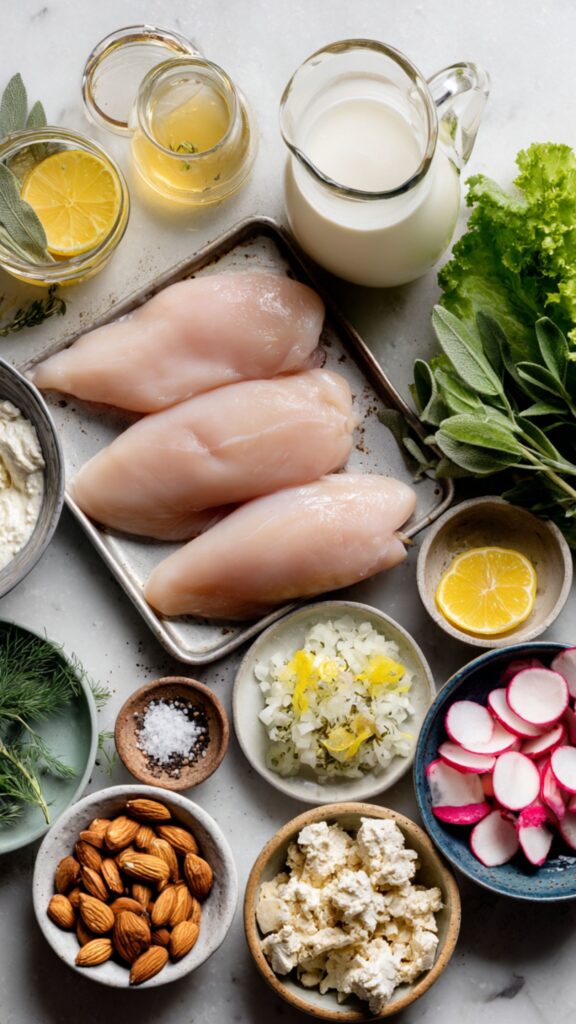
Chicken Breast Poached In Buttermilk Ingredients
- 6 boneless, skinless chicken breasts (about 7 ounces each)
- 1 quart buttermilk
- 4 sprigs sage
- 1 tablespoon lemon juice
- 4 garlic cloves, smashed and peeled
- Coarse salt and freshly ground pepper
- 1 cup plain whole-milk Greek yogurt
- 1 small shallot, minced (about 1 tablespoon)
- 1/4 cup finely chopped cornichons or small dill gherkins
- 2 teaspoons capers, rinsed and drained
- 1 teaspoon finely grated lemon zest
- 1 small head escarole (about 6 ounces), shredded
- 4 radishes, very thinly sliced (about 1/2 cup), for serving
- 1/4 cup sliced almonds, toasted, for serving
How To Make Martha Stewart Chicken Breast Poached In Buttermilk
- Bring chicken to room temperature: Take the chicken breasts out of the fridge and let them sit at room temperature for 30 minutes. This helps them cook evenly in the buttermilk.
- Set up the poaching liquid: Set aside 3 tablespoons of buttermilk for the dressing. Pour the rest into a large Dutch oven and add the sage sprigs and garlic cloves.
- Poach the chicken: Season the chicken with salt and pepper and put them in the buttermilk in a single layer. Cook over medium heat, stirring now and then, until the liquid reaches about 170 degrees on a thermometer. It should shimmer but not simmer. The buttermilk will curdle a little and that is normal. Keep the heat steady and poach the chicken, turning it occasionally, until a thermometer in the thickest part reads 150 degrees, about 15 minutes once the liquid reaches temperature. The chicken will keep cooking after you take it out.
- Cool and slice: Move the chicken to a dish and let it cool. Throw away the poaching liquid. Slice the chicken.
- Make the dressing: In a bowl, mix the yogurt, shallot, cornichons, capers, lemon zest, lemon juice, and the reserved 3 tablespoons of buttermilk. Season with salt.
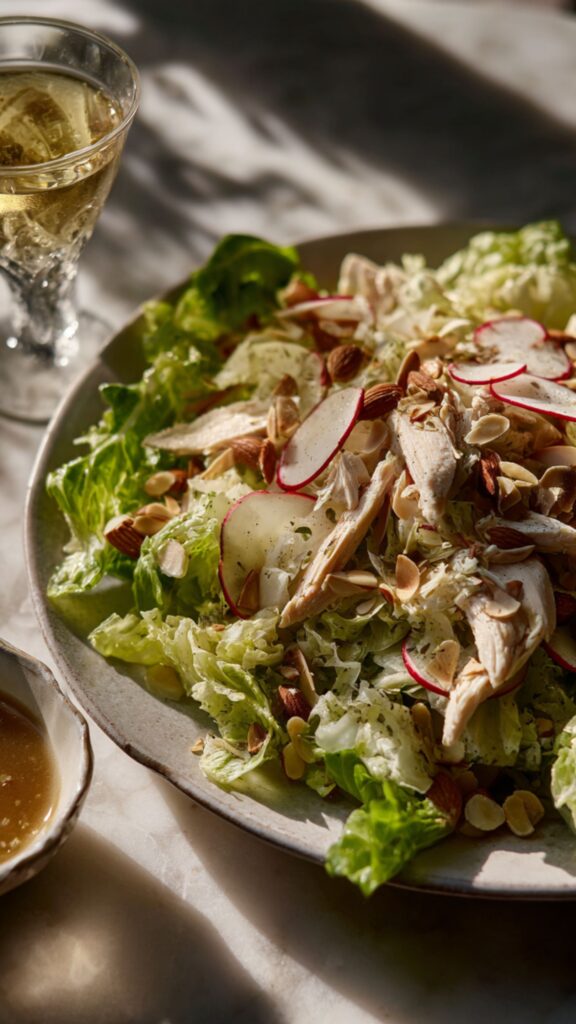
- Assemble and serve: Spread the shredded escarole on a platter. Lay the chicken slices on top, then scatter the radishes and toasted almonds over everything. Serve the dressing on the side.

Recipe Tips
- Watch the temperature closely: This is the one step where you need to pay attention. If the buttermilk starts simmering instead of just shimmering, the chicken will get tough. Keep it at 170 degrees and adjust the heat if it creeps up. I check the thermometer every few minutes.
- Do not skip the 30-minute rest: Cold chicken dropped into warm buttermilk will cook unevenly. The outside gets done before the inside catches up. I know 30 minutes feels like a long wait but it matters here.
- Toast the almonds yourself: Buy them raw and toast them in a dry skillet for a few minutes. Pre-toasted almonds from the bag are stale half the time and the crunch is not the same.
How This Compares To Regular Poached Chicken
If you have tried Martha’s poached chicken, this is a completely different result. Regular poaching gives you clean, neutral chicken you can use anywhere. Buttermilk poaching gives you chicken that is tangy and silky with a flavour already built in.
I use the regular version when I need plain chicken for salads or sandwiches. I make this one when the chicken IS the main event and I want people to notice it.
What Goes Well With This Poached Chicken
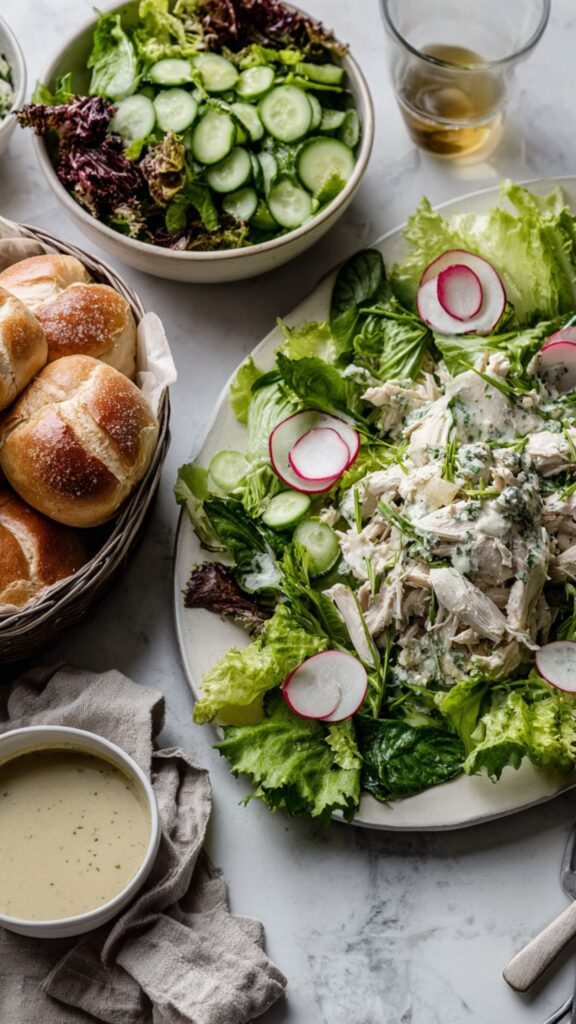
This is already a full plate with the escarole, radishes, and dressing, so I keep the sides simple. Warm dinner rolls are all you really need because they are good for scooping up the extra dressing from the platter.
If I am serving this at a lunch with friends I will add a light cucumber salad on the side to keep everything fresh. A simple vinaigrette on extra greens works too if you want more on the table without making it heavy.
How To Store Leftovers
Keep the sliced chicken and dressing in separate containers in the fridge for up to 2 days. The dressing can actually be made up to 4 days ahead, which is one of the best things about this recipe. I would not store the assembled salad because the escarole wilts fast once the dressing touches it.
I eat the leftover chicken cold the next day over fresh greens with a squeeze of lemon. It does not need reheating because it was meant to be served at room temperature anyway. That makes this one of the easiest leftovers I have ever dealt with.
FAQs
- Can I use regular lettuce instead of escarole? Yes. Martha says you can use your favourite salad greens. I have done arugula and it worked well because it has a peppery bite that goes with the tangy dressing. Romaine works too if you want something milder.
- Why does the buttermilk curdle? That is normal and Martha says to expect it. The acid in the buttermilk reacts with the heat and separates a little. Just stir occasionally and keep the temperature steady. You throw the liquid away after so it does not matter how it looks.
- Can I use bone-in chicken breasts? You could but they will take longer to reach 150 degrees and they are harder to slice neatly. Martha calls for boneless, skinless breasts here and I would stick with that. This recipe is about the tender, clean slices on the platter.
- What are cornichons? Tiny French pickles, smaller and crunchier than regular dill pickles. You can find them near the pickles in most grocery stores. If you cannot find them, small dill gherkins work the same way. Martha lists both as options.
More Dinner Recipes:
Nutrition Facts
(1 serving, serves 6)
- Calories: 370
- Total Fat: 12g
- Saturated Fat: 3g
- Cholesterol: 125mg
- Sodium: 590mg
- Total Carbohydrates: 12g
- Protein: 50g
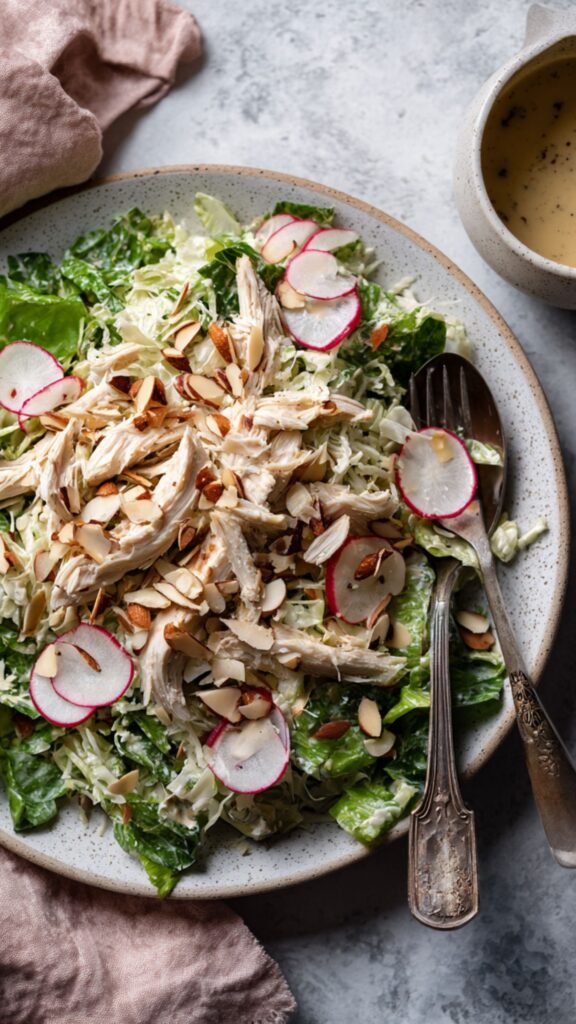
Martha Stewart Chicken Breast Poached Buttermilk Recipe
Description
The first time I read this recipe I thought poaching chicken in buttermilk was a mistake. It is not. Martha Stewart’s Chicken Breast Poached in Buttermilk uses boneless chicken breasts gently cooked in a quart of buttermilk with sage and garlic until they hit 150 degrees, and they come out softer and more flavourful than any poached chicken breast I have ever made.
I think of this as Martha Stewart’s fancier poached chicken salad because the sliced chicken goes over shredded escarole with radishes, toasted almonds, and a yogurt dressing made with cornichons and capers. It sounds like a lot but the whole thing takes about an hour and I come back to it every spring when I want something light but filling.
Ingredients
Instructions
- Bring chicken to room temperature: Take the chicken breasts out of the fridge and let them sit at room temperature for 30 minutes. This helps them cook evenly in the buttermilk.
- Set up the poaching liquid: Set aside 3 tablespoons of buttermilk for the dressing. Pour the rest into a large Dutch oven and add the sage sprigs and garlic cloves.
- Poach the chicken: Season the chicken with salt and pepper and put them in the buttermilk in a single layer. Cook over medium heat, stirring now and then, until the liquid reaches about 170 degrees on a thermometer. It should shimmer but not simmer. The buttermilk will curdle a little and that is normal. Keep the heat steady and poach the chicken, turning it occasionally, until a thermometer in the thickest part reads 150 degrees, about 15 minutes once the liquid reaches temperature. The chicken will keep cooking after you take it out.
- Cool and slice: Move the chicken to a dish and let it cool. Throw away the poaching liquid. Slice the chicken.
- Make the dressing: In a bowl, mix the yogurt, shallot, cornichons, capers, lemon zest, lemon juice, and the reserved 3 tablespoons of buttermilk. Season with salt.
- Assemble and serve: Spread the shredded escarole on a platter. Lay the chicken slices on top, then scatter the radishes and toasted almonds over everything. Serve the dressing on the side.
Notes
- Watch the temperature closely: Keep the buttermilk at 170 degrees. If it simmers the chicken will get tough. Check the thermometer every few minutes.
- Do not skip the 30-minute rest: Cold chicken dropped into warm buttermilk will cook unevenly.
- Toast the almonds yourself: Raw almonds toasted in a dry skillet for a few minutes taste much better than pre-toasted.