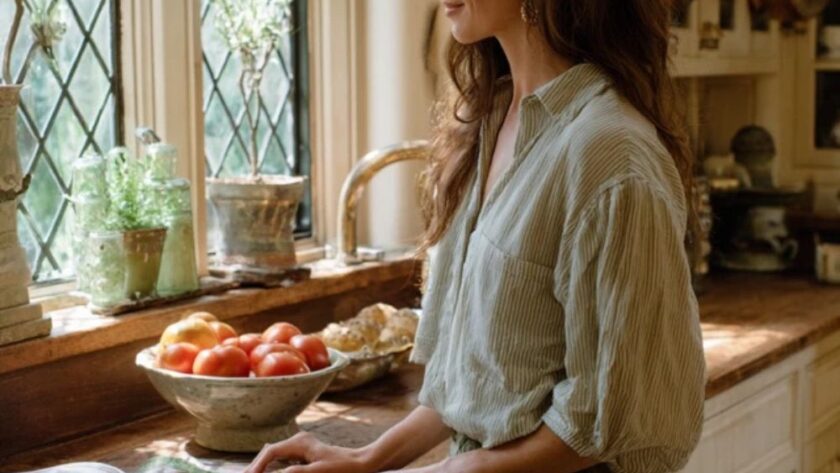
Saturday morning, 1995. The television is on and Martha is demonstrating how to force paperwhite bulbs in a shallow dish of pebbles. Her chambray shirt is rolled to the elbows, and jadeite bowls line the counter behind her.
The Martha Stewart aesthetic 90s era was a specific cultural moment. The magazine launched in 1990 and the television show debuted in 1993. By mid-decade, Martha had turned domesticity into something aspirational and intelligent.
What made the 90s version different from anything before or since was access. She showed you how to do it yourself and told you exactly where to find the materials. Your Tuesday dinner deserved the same attention as a holiday feast.
Here are 17 details from that decade that still hold up. Each one carries the DNA of an era when making your home beautiful was treated as a serious, worthwhile pursuit.
1. The Television Show as a Weekly Education
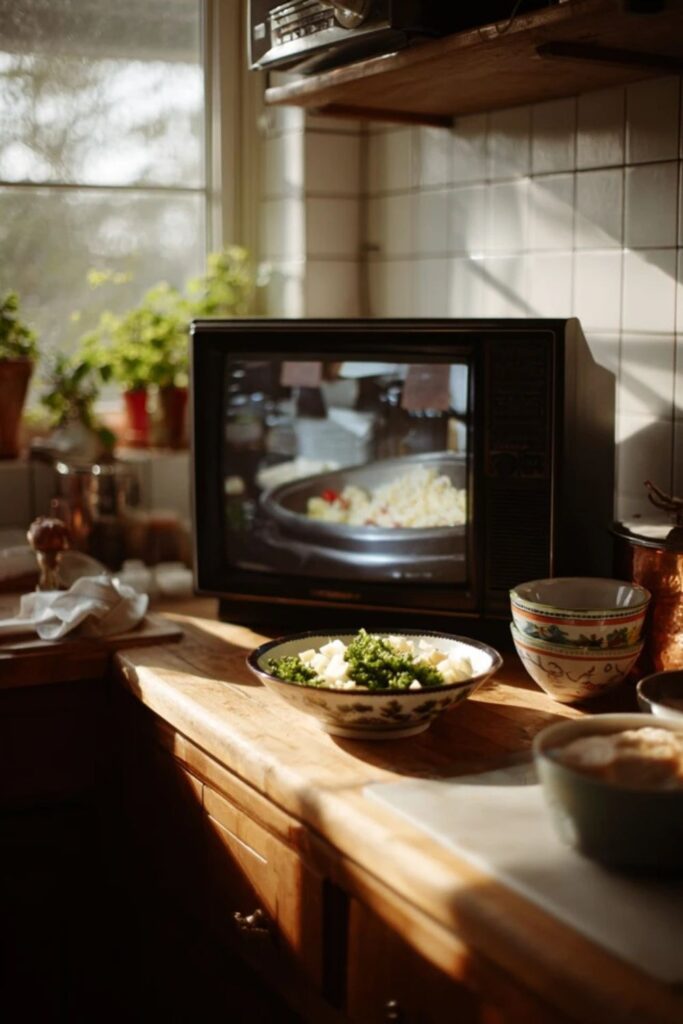
Martha Stewart Living debuted on television in 1993 and aired on weekday and weekend mornings. Each episode was a quiet lesson in specifics: transferware, mantel arrangement, cleaning copper with lemon and salt.
The show had no flashy graphics and no studio audience. Martha spoke directly to the camera as if teaching one person at a time. The pace was slow, the information was specific, and the production valued natural light over spotlights.
2. The Thick Matte Magazine in Every Kitchen
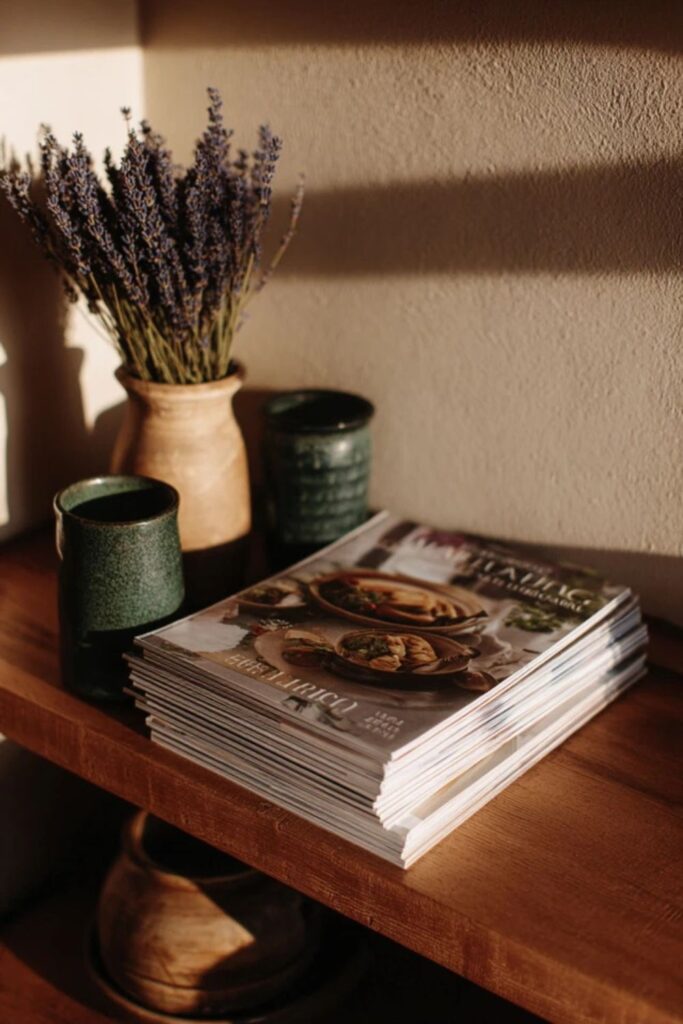
Martha Stewart Living magazine used heavier paper stock than most books. The photography relied on natural light and real settings. No digital retouching, no staged perfection, just real rooms shot with extraordinary care.
Women kept stacks of back issues the way others kept novels. A feature on pressing flowers or building a window box carried the same ambition as a Condé Nast travel piece. The magazine treated the home as worthy of the finest journalism.
3. Chambray and Khakis as the Uniform
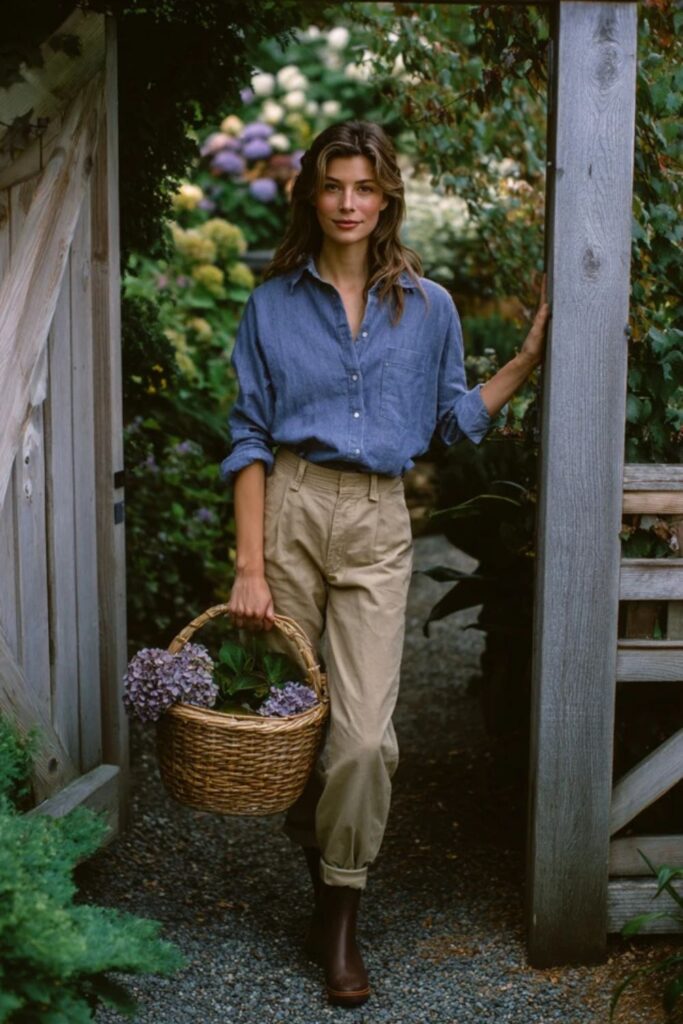
Martha’s 90s wardrobe was a blueprint for practical elegance. Chambray shirts rolled to the elbows, khaki chinos, crisp white button-downs, and L.L. Bean duck boots on muddy garden days.
The 90s fashion world was chasing grunge and minimalism. Martha ignored all of it. Boxy blazers over denim, Hermès scarves at the neck, and pearl studs in the ears completed a look that said: I work with my hands and I dress for the task.
4. K-Mart and the Democratization of Good Design
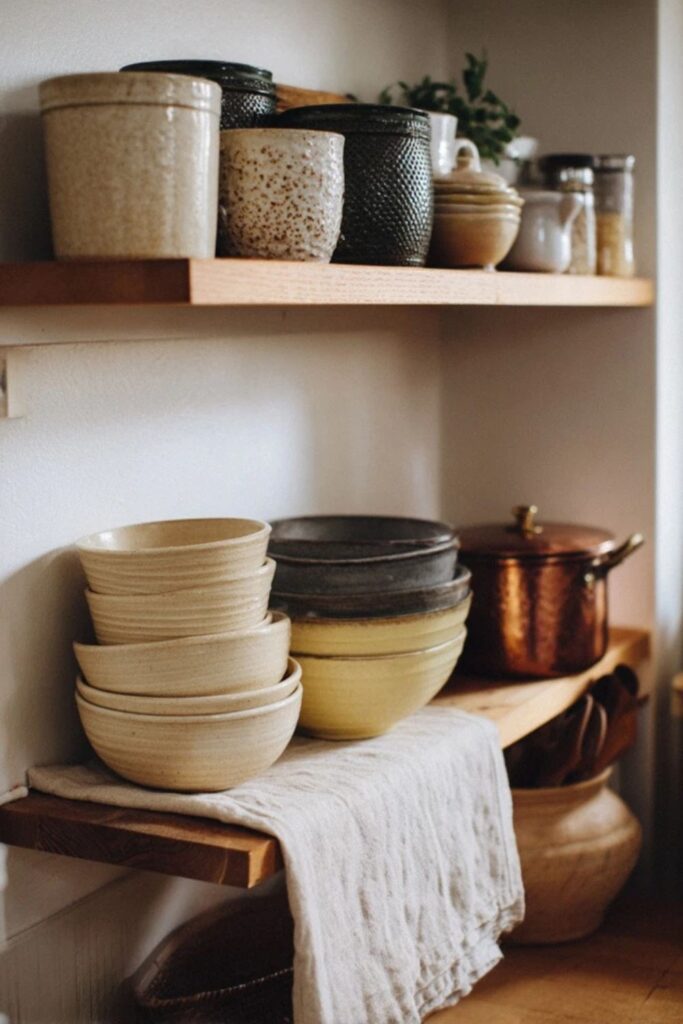
In 1997, Martha launched her Everyday line at K-Mart. Bed linens, paint colors, kitchenware, and garden tools arrived at a price point that made the aesthetic accessible to everyone. Bedford Gray became a paint color anyone could buy.
This was radical at the time. A mass retailer selling tasteful, well-designed home goods challenged the entire market. Martha proved that good design did not require a high price, only a clear eye.
The foundations of the decade are set. What follows builds the texture and detail that made the 90s Martha era feel like a complete world.
5. Martha By Mail and the Art of the Catalog
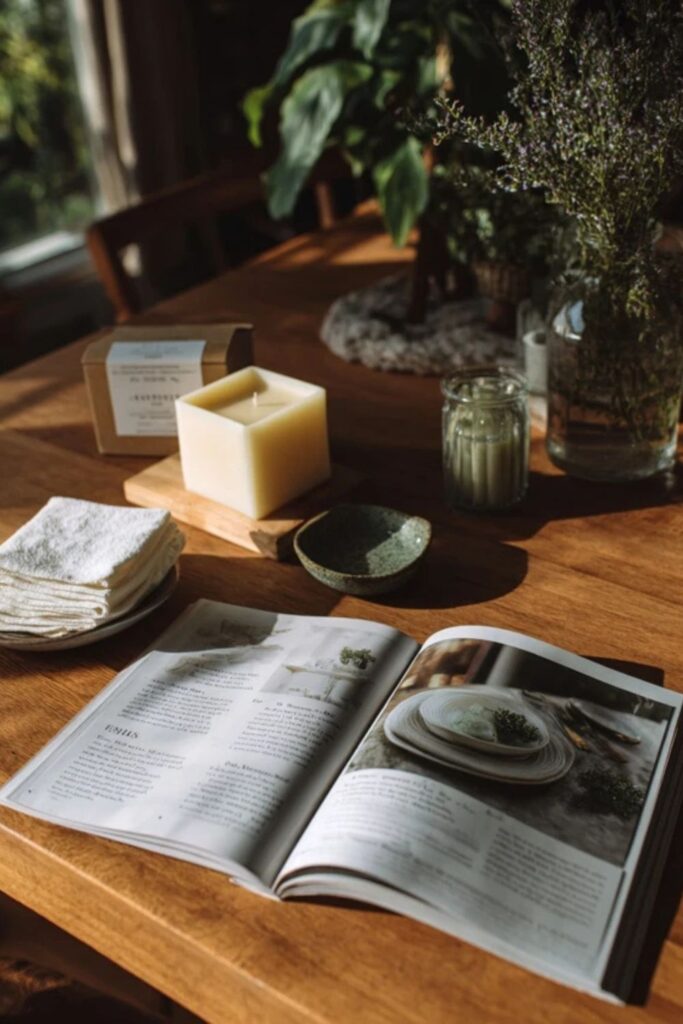
Martha By Mail launched in 1995 and became a curated world delivered to your mailbox. Jadeite reproductions, garden tools with wooden handles, beeswax candle kits, and linen napkins arrived in tissue-lined boxes.
Each catalog was designed with the same care as the magazine. The photography was beautiful and the descriptions were specific. Ordering from Martha By Mail was not shopping; it was joining a way of living.
6. Jadeite on the Show, Jadeite on Every Shelf
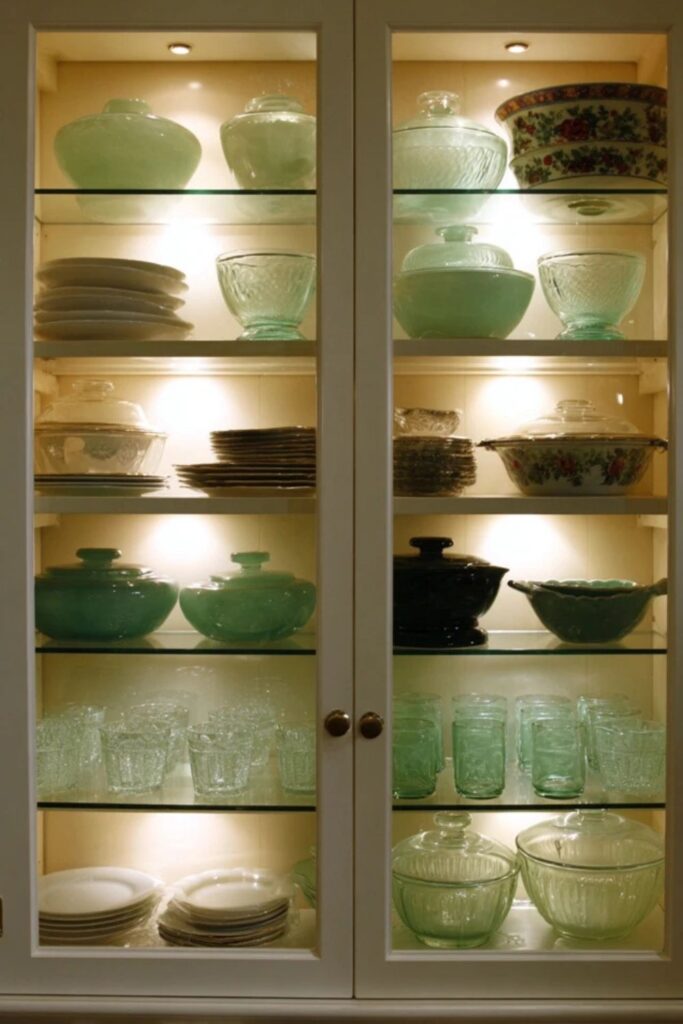
Martha’s daughter Alexis began collecting Fire-King jadeite on a cross-country road trip in the early 90s. Martha displayed it on television, and thrift store prices doubled within months. The milky green glass became the decade’s quiet signature.
The Martha By Mail catalog sold reproductions pressed from vintage molds. Covered roosters, hobnail vases, and scalloped cake stands arrived in collectors’ kitchens nationwide. A 90s-era Martha feather bowl now sells for over three hundred dollars.
7. “Good Things” as a Philosophy
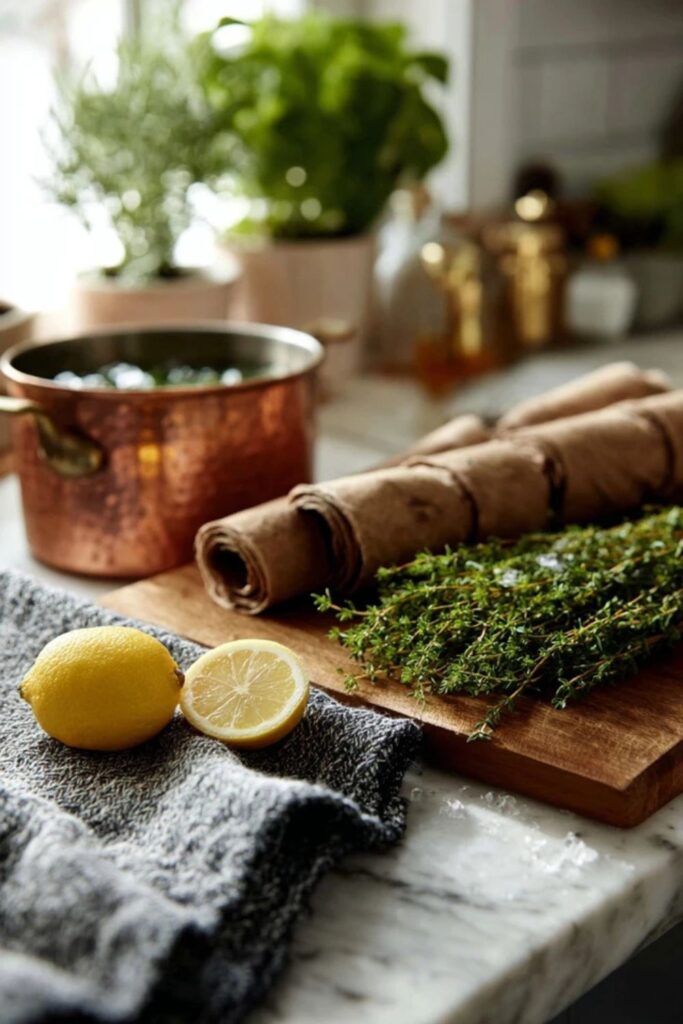
The “Good Things” segment on the show offered small, practical tips each episode. Clean copper with lemon and salt. Store linen napkins on cardboard tubes. Freeze herbs in olive oil for winter cooking.
These tips taught viewers that improving daily life did not require a renovation. It required paying attention to small tasks and finding a better way. The philosophy was: no detail is too small to deserve your thought.
8. Turkey Hill as the Set and the Symbol
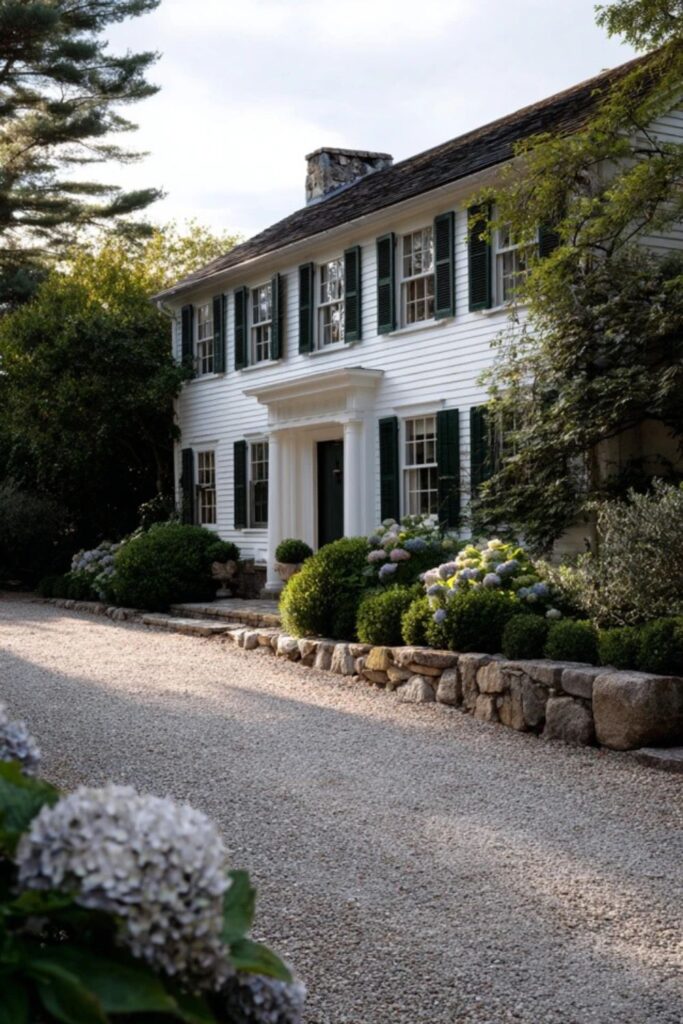
Martha’s white Federal-style farmhouse on Turkey Hill Road in Westport, Connecticut was the backdrop for everything. The gardens, the kitchen, the stone walls, and the chicken coop all appeared weekly.
Turkey Hill was never a set built for television. It was a real home where real work happened daily. Viewers trusted Martha’s advice because she demonstrated it in a kitchen she actually cooked in, on land she actually tended.
9. Copper Pots as Both Tool and Decoration
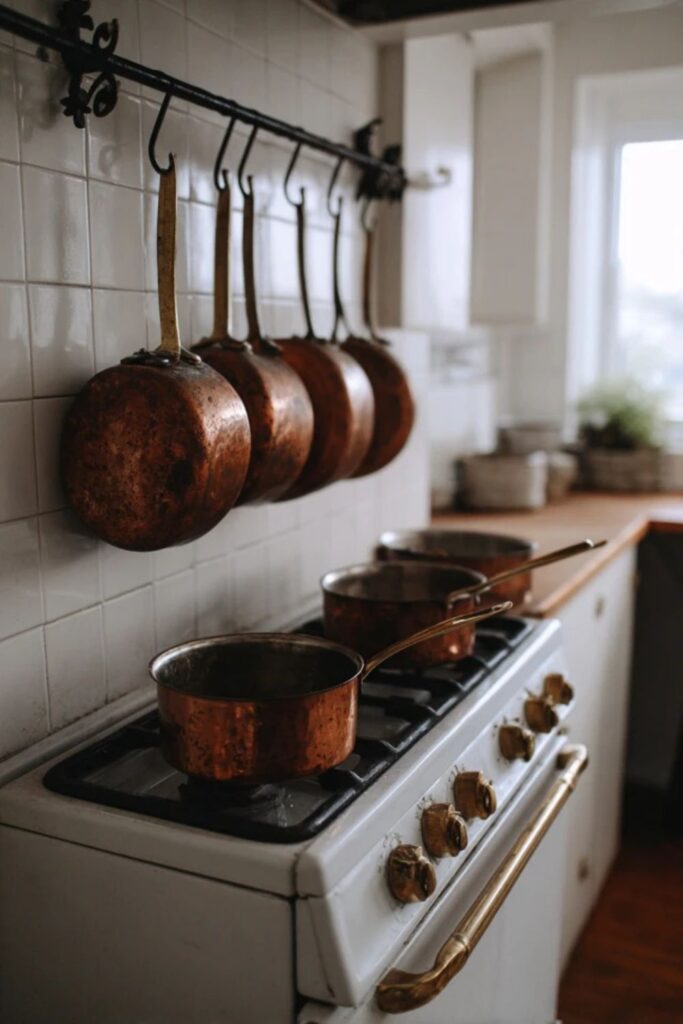
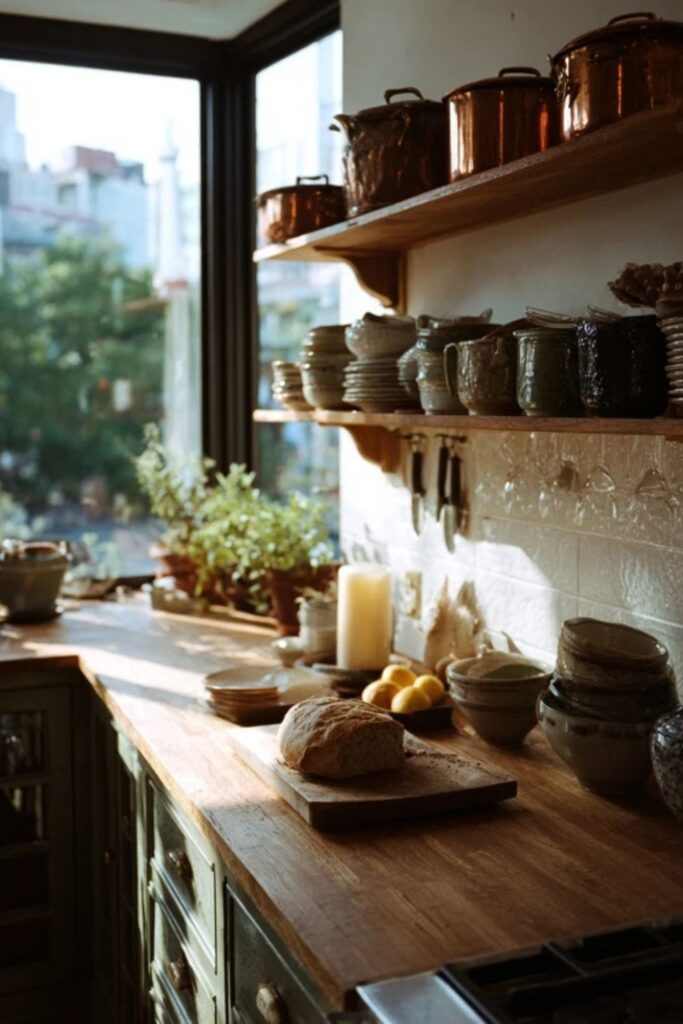
A hanging rack of copper pots above the stove was the visual signature of the 90s Martha kitchen. The pots were used daily and cleaned with lemon and salt. Their patina deepened with every meal.
Martha never separated her tools from her decor. A copper pot that cooked the soup and then traveled to the table was both functional and beautiful. That refusal to divide utility from aesthetics defined the entire decade.
The kitchen and the wardrobe are complete. What follows adds the sensory details that made the 90s Martha era feel alive in every room.
10. Beeswax in Every Room, Every Season
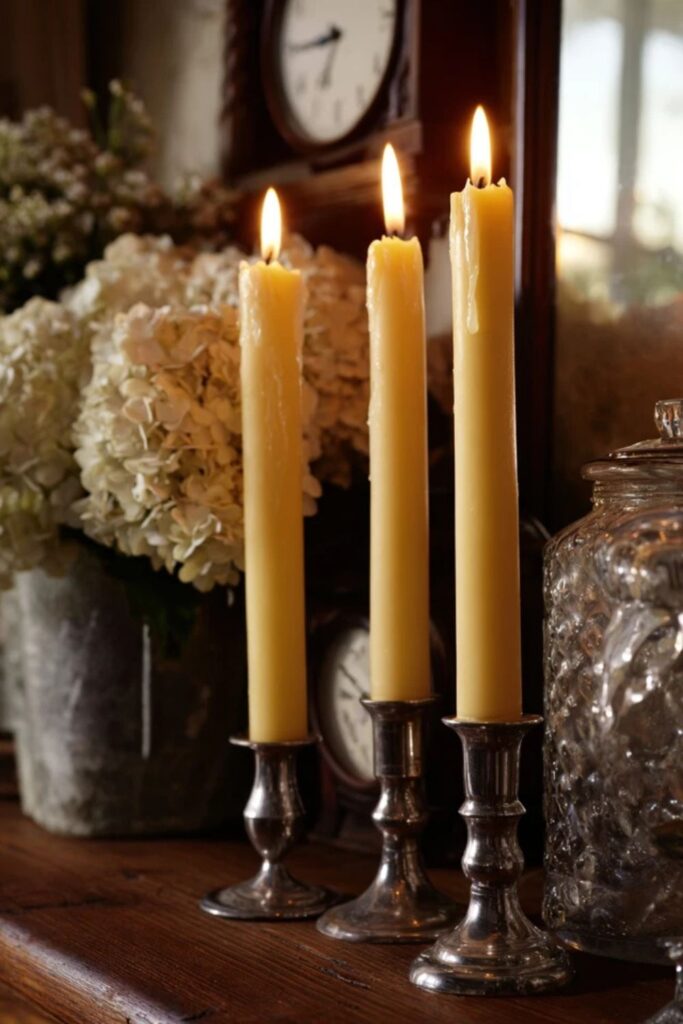
Beeswax candles appeared in every photograph from the decade. Tapers in silver candlesticks on the dining table. Pillars on the bedroom mantel. Votives on the bathroom ledge beside a stack of white towels.
The warm honey color and faint natural scent were inseparable from the era. Beeswax burns golden, drips slowly, and fills a room with quiet warmth. Martha never used paraffin, and the difference showed in every image.
11. The Lily Pond Lane Orange Room
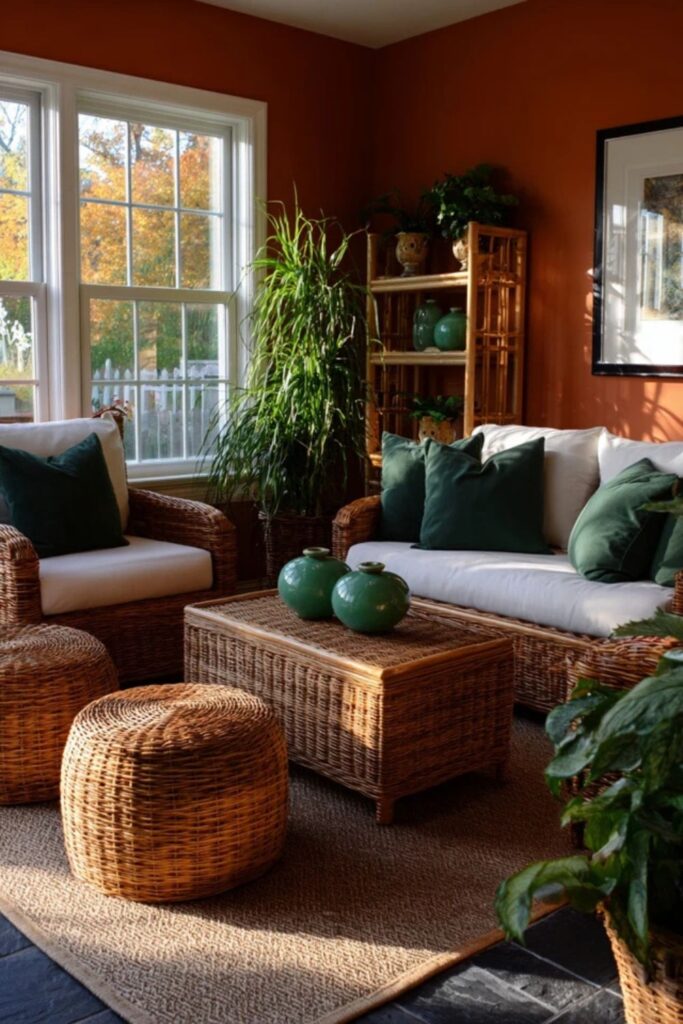
Martha’s former home on Lily Pond Lane featured a daring orange three-season room. Burnt orange walls paired with jadeite green accents created a combination that felt bold and grounded at the same time.
This room proved Martha was never afraid of color when used with discipline. The orange was warm, not neon. The jadeite provided contrast without clash. Thirty years later, burnt orange and jade green are trending again as a pairing, and Martha did it first.
12. Ironstone Hunted at Every Flea Market
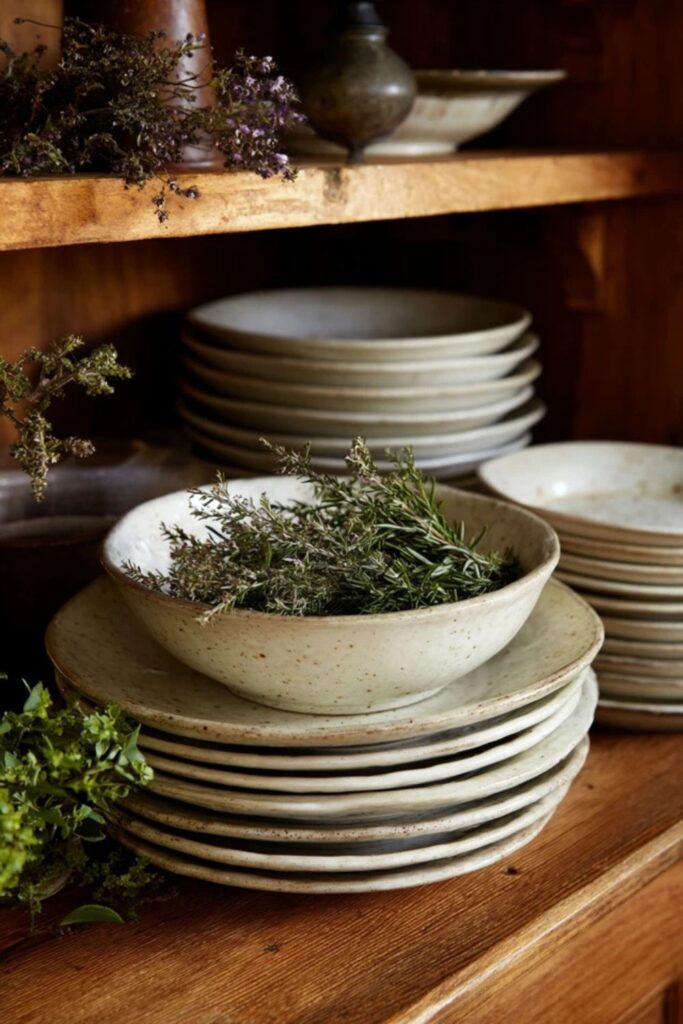
Heavy cream ironstone was the workhorse of the 90s Martha table. The television show sent viewers to estate sales and flea markets across the country searching for platters, pitchers, and bowls with fine crazing.
Martha taught that crazing was not a flaw but proof of a long, useful life. A single ironstone platter cost a few dollars and anchored a kitchen counter for decades. The hunt itself became part of the ritual of building a 90s Martha home.
13. The Barbour Jacket for Every Outdoor Task
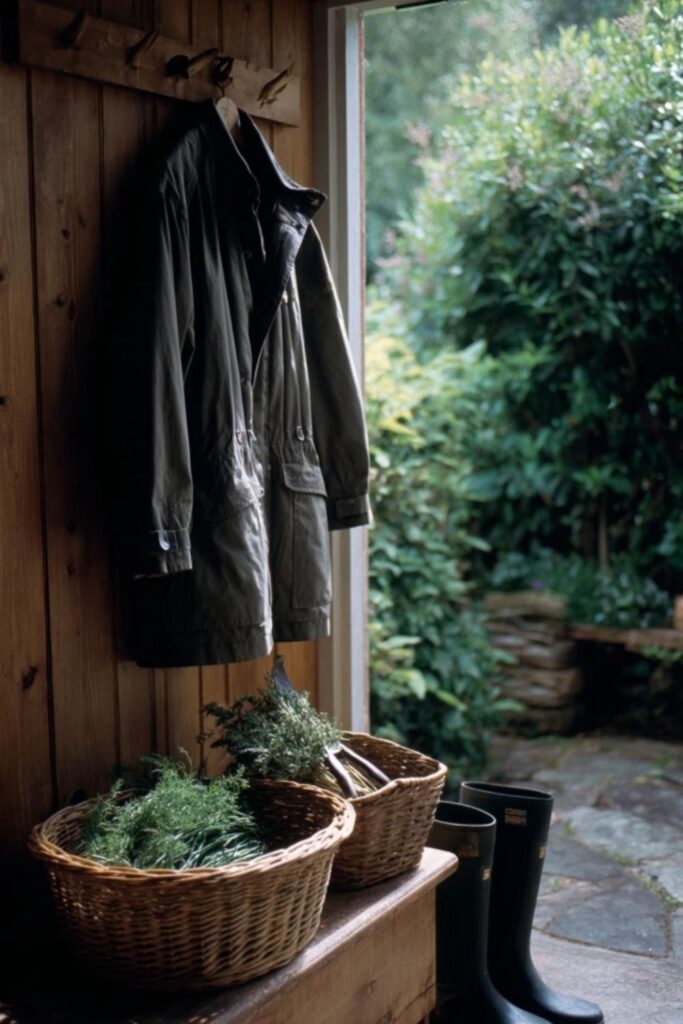
Martha wore Barbour waxed jackets for garden work, farm chores, and walks on her property. The British countryside influence was unmistakable. The jacket said: I am outdoors often, and I dress for real weather.
Pair a Barbour with a cashmere sweater, khaki chinos, and wellies. This was the 90s uniform for anything outside the kitchen. The jacket developed a patina of use that made it look better with each passing season.
14. The Hermès Scarf at the Neck
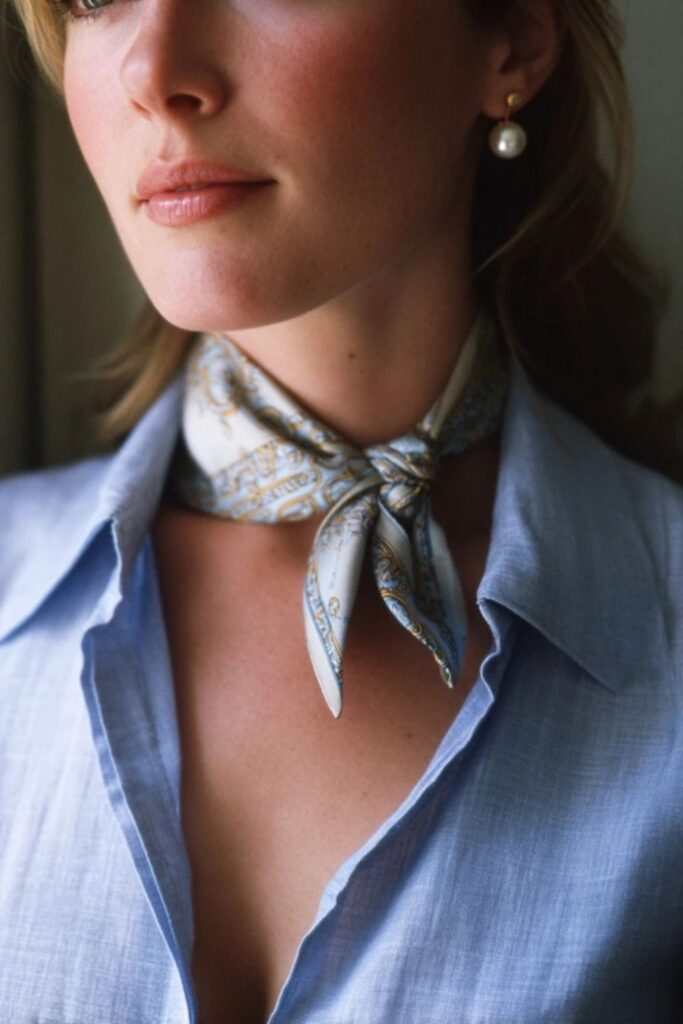
Martha collected Hermès silk scarves for decades and wore them knotted loosely at the neck over chambray or cashmere. The scarf added a flash of pattern and color to an otherwise monochromatic outfit.
One scarf can change the entire tone of a simple look. A printed silk square over a white button-down and khakis is pure 90s Martha: practical base, one point of luxury. The scarf was never an accessory; it was a signature.
The details are almost complete. What follows carries the 90s spirit into how you actually live, not just how you decorate or dress.
15. White Hydrangeas Cut by the Armful
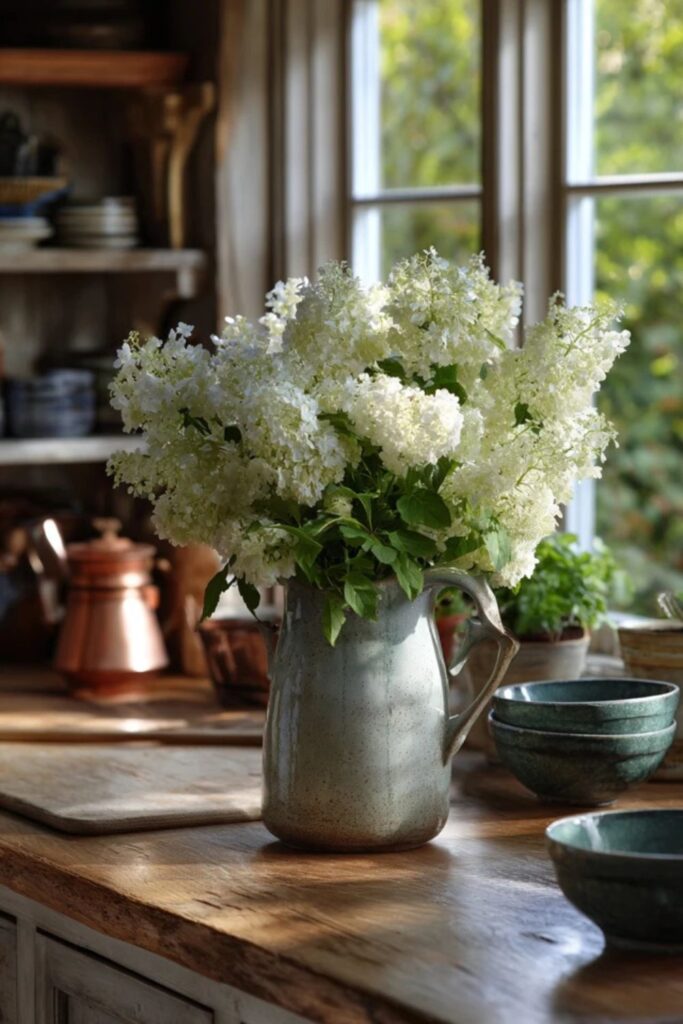
Annabelle hydrangeas appeared in nearly every summer and fall issue of the magazine. Martha grew them in masses and cut them in armfuls for ironstone pitchers on counters and dining tables.
One hydrangea in a small vase is pleasant. Fifteen packed into a large pitcher is the 90s Martha moment. Mass planting applies to cut flowers just as it does to the garden: one variety, full commitment, generous abundance.
16. The Collected Kitchen Counter
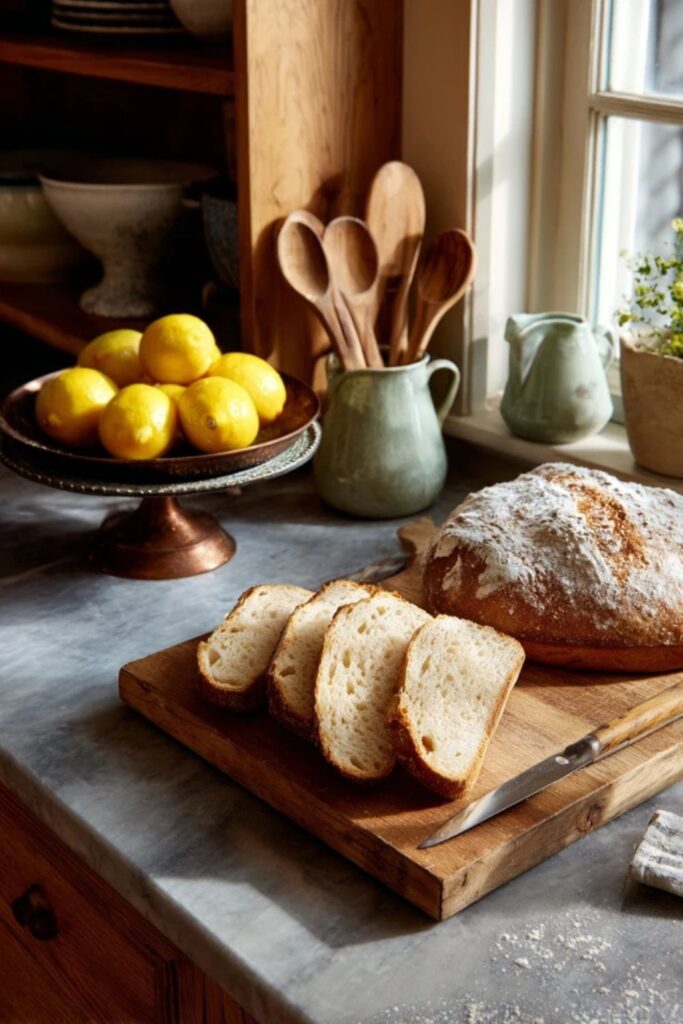
The 90s Martha kitchen counter was never empty and never cluttered. A wooden cutting board held bread half-sliced. A copper bowl held lemons. A jadeite cake stand displayed a dusted pound cake.
Each item was functional and placed with care. Flour dusted the board and a knife rested beside the bread. The kitchen looked like someone had just stepped away, a real life in progress rather than a photograph.
17. A Decade That Taught Us to Pay Attention
The lasting legacy of the Martha Stewart aesthetic 90s era is not a product line or a paint color. It is the habit of noticing: the weight of a bowl, the scent of a candle, the way light falls through glass onto green jadeite.
Martha taught a generation that small choices matter most. Linen over polyester and beeswax over paraffin. The 90s delivered that lesson through a magazine and a television show, and it lives on in every kitchen where someone reaches for the real thing.
The Martha Stewart aesthetic 90s era endures because it was never about one decade. It was about an approach to daily life that reached its clearest form between 1990 and 2000. The tools were a magazine, a television show, and a catalog. The message was simple: your home deserves your attention.
Start with one detail from the era. A jadeite bowl found at a flea market. A chambray shirt worn until it softens. A beeswax candle lit on an ordinary Wednesday. The 90s aesthetic does not require a time machine; it only requires the decision to care.
What made that decade so powerful was not the objects. It was the conviction that everyday life is worth the effort of making it beautiful. That conviction has not aged a single day.
You might also like: