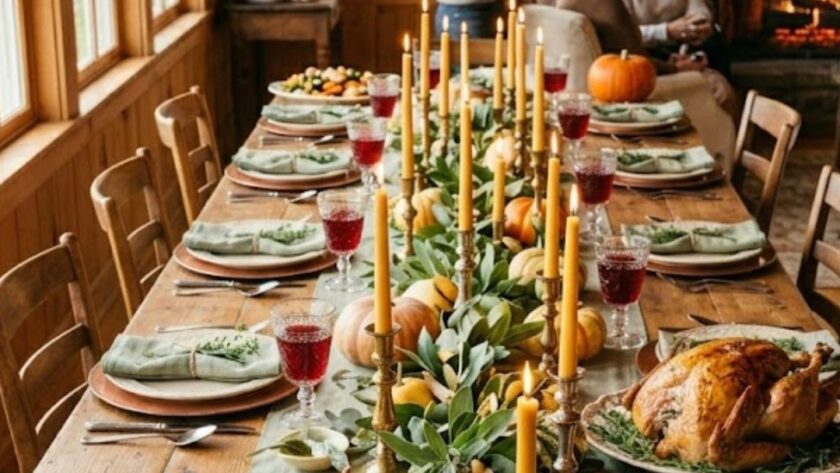
Steam rises from a copper pot of butternut squash soup on the stove. The Brown Room table is already set for fifteen, its long wooden surface lined with pumpkins from the garden and beeswax candles not yet lit.
The Martha Stewart Thanksgiving aesthetic starts days before the meal. It begins with polishing silver, pulling turkey platters from the basement pantry, and setting the table a full day ahead so nothing feels rushed.
This is not a holiday assembled from a single store display. Every platter, every linen napkin, every candlestick has a story and a reason for being on that table.
Here are 17 ways to build a Thanksgiving that carries that same depth. Start with one idea this year, add another next November, and let the tradition grow on its own.
1. The Brown Room Palette
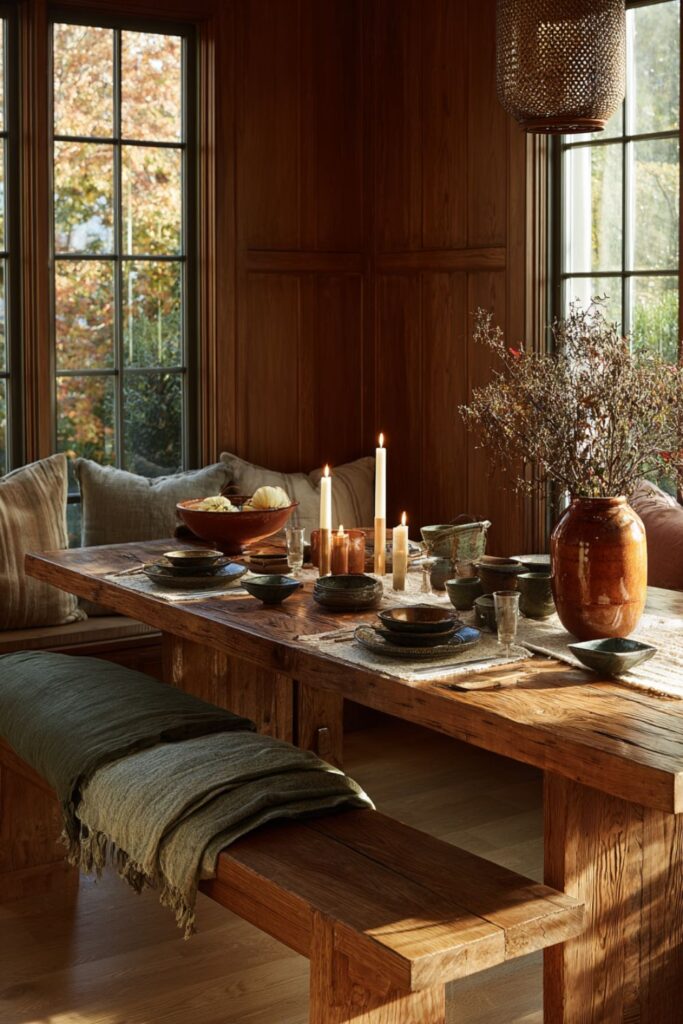
Martha’s Thanksgiving happens in her Brown Room at the Bedford farm. Sycamore veneer panelling, hardwood floors, and warm amber light set the tone. The room itself dictates the palette: warm neutrals, rust, sage green, and copper.
Commit to a tight range of three or four colors pulled from autumn itself. Burgundy, cream, sage, and copper work together without competing. A disciplined palette makes even a crowded table look edited and calm.
2. Blue Staffordshire Turkey Plates
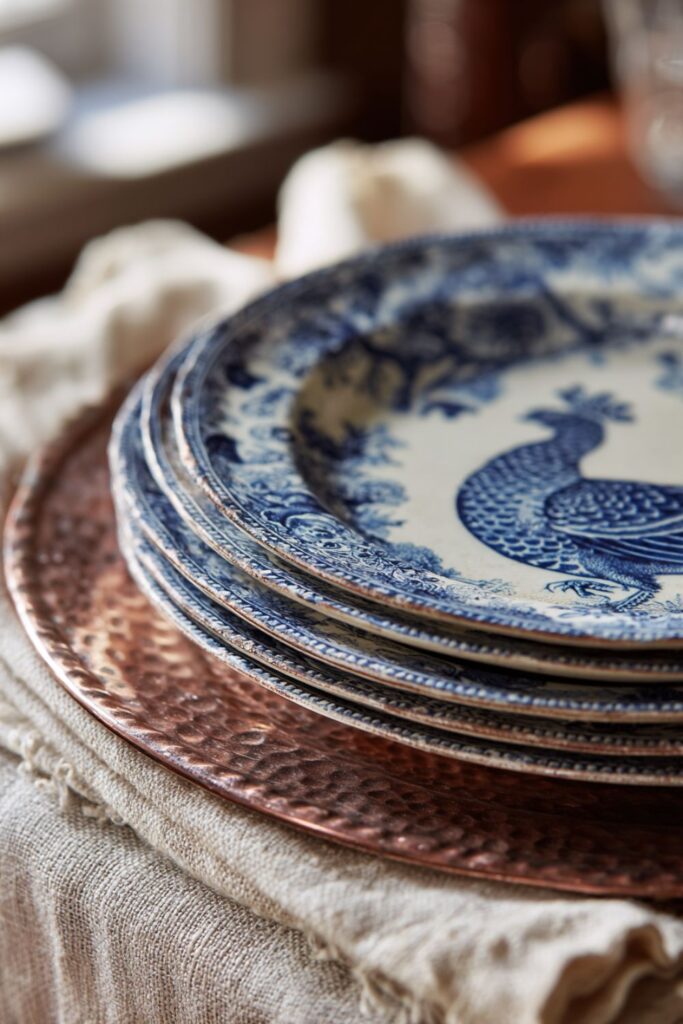
Martha collects antique Staffordshire turkey plates and brings them out only in November. By the 1870s, English potters were making this holiday dinnerware for the American market. These plates carry that history right to your table.
You do not need a full matching set to get the look right. Three or four turkey plates mixed with plain ironstone creates the layered, collected feeling Martha favors. Check estate sales in October when sellers know the demand is about to arrive.
3. The Table Set a Full Day Before
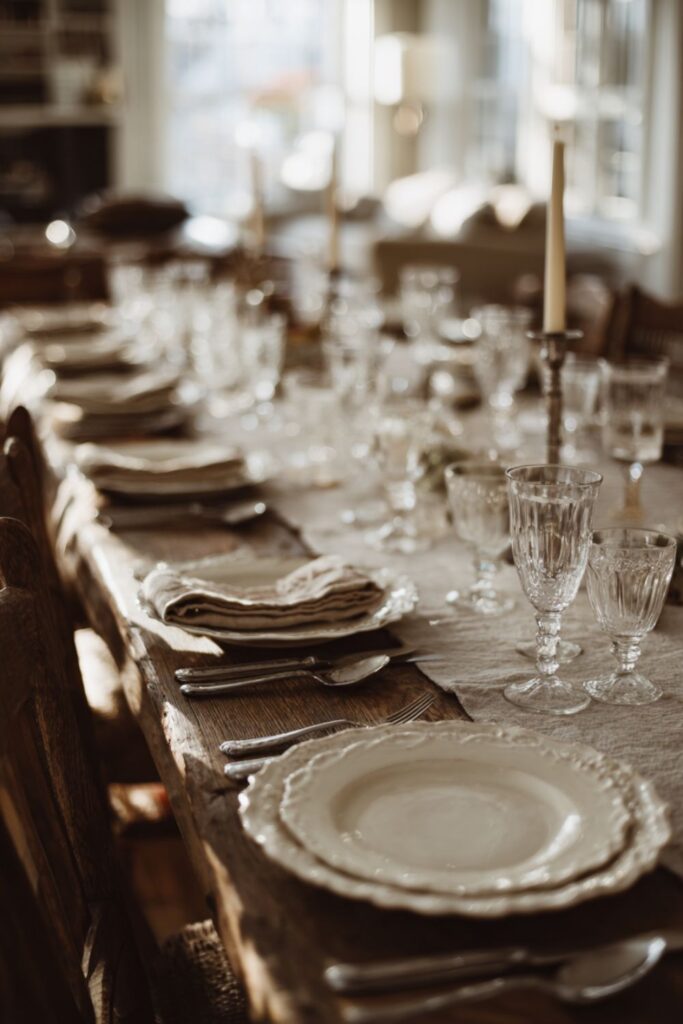
Martha sets her Thanksgiving table the day before the holiday without exception. Plates, flatware, napkins, glasses, and candles are all placed while the kitchen is still quiet. This single habit removes the chaos of arranging things at the last minute.
With the table finished early, the morning of Thanksgiving belongs entirely to cooking. The room feels intentional when guests walk in because it was given time and unhurried attention. Centerpieces chosen in advance mean nothing requires a frantic search on the day itself.
4. Ironstone Platters for the Spread
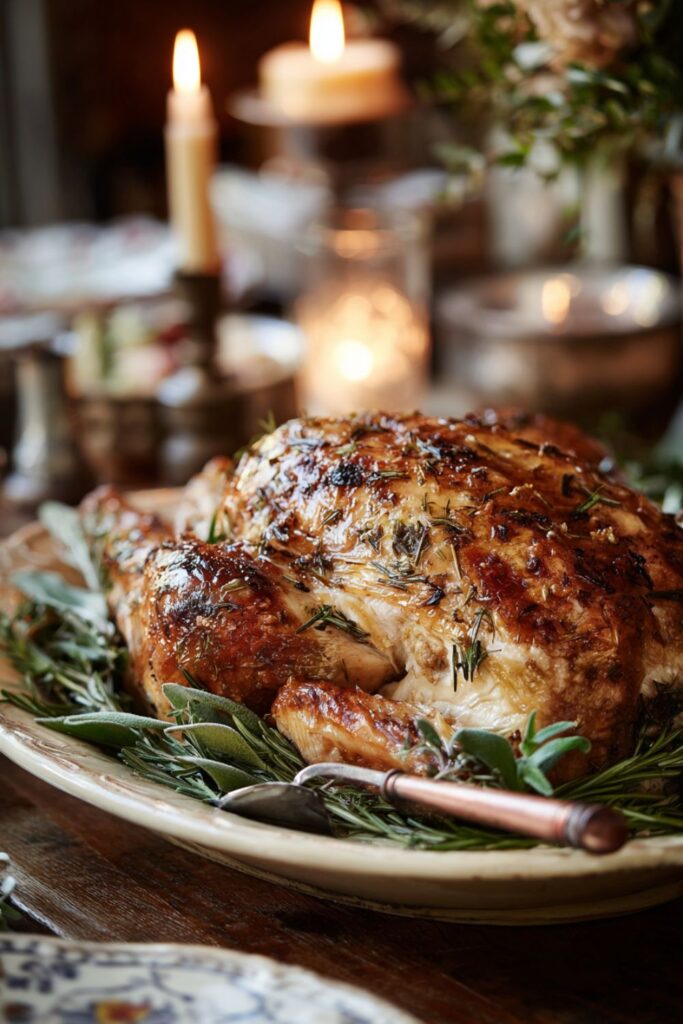
Heavy cream ironstone platters hold the turkey, the roasted vegetables, and the bread. Their weight and warmth make food look abundant and grounded in a way thin ceramics cannot match.
Martha serves family style, often in the same vessel used for cooking. An ironstone platter stacked with carved turkey and surrounded by herbs feels generous and honest. Let the food fill to the edges and slightly beyond, because abundance is the goal.
The anchors are in place. What follows builds the texture that makes this table feel like it belongs to a family, not a catalog.
5. Copper Everywhere It Catches Light
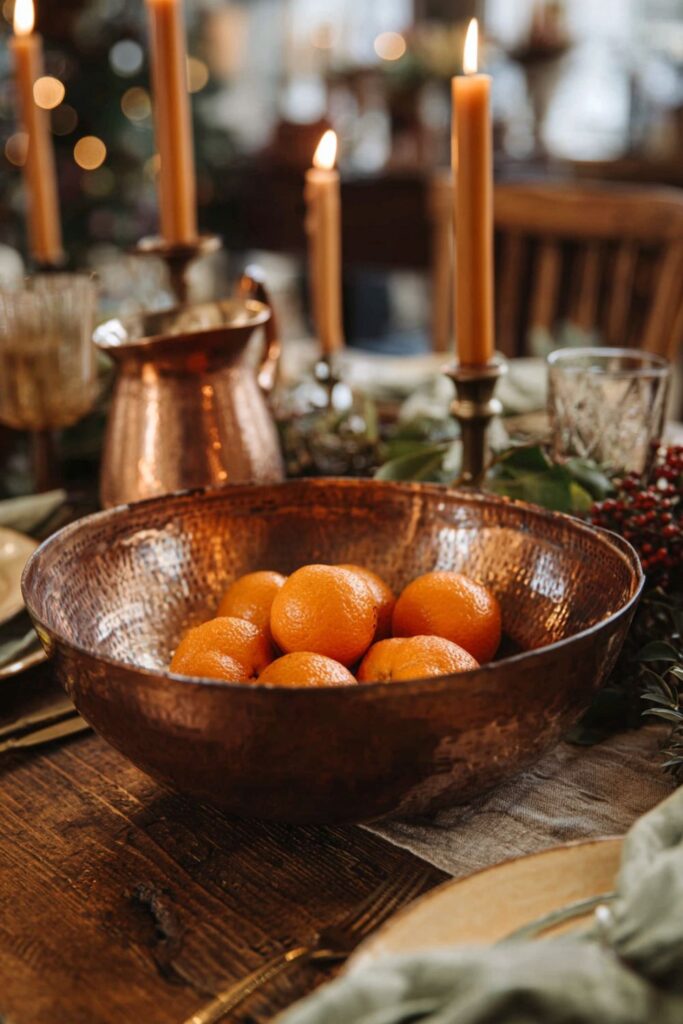
Copper chargers under dinner plates, a copper bowl holding clementines, a copper pitcher for water or cider. Martha’s affection for this metal is well documented, and Thanksgiving is where it earns its keep.
Copper catches candlelight like no other surface in your home. Its warm, rosy tone deepens as it develops patina through seasons of use. A few copper pieces scattered across the table tie the warm palette together without matching too precisely.
6. Gourds Drilled as Candlesticks
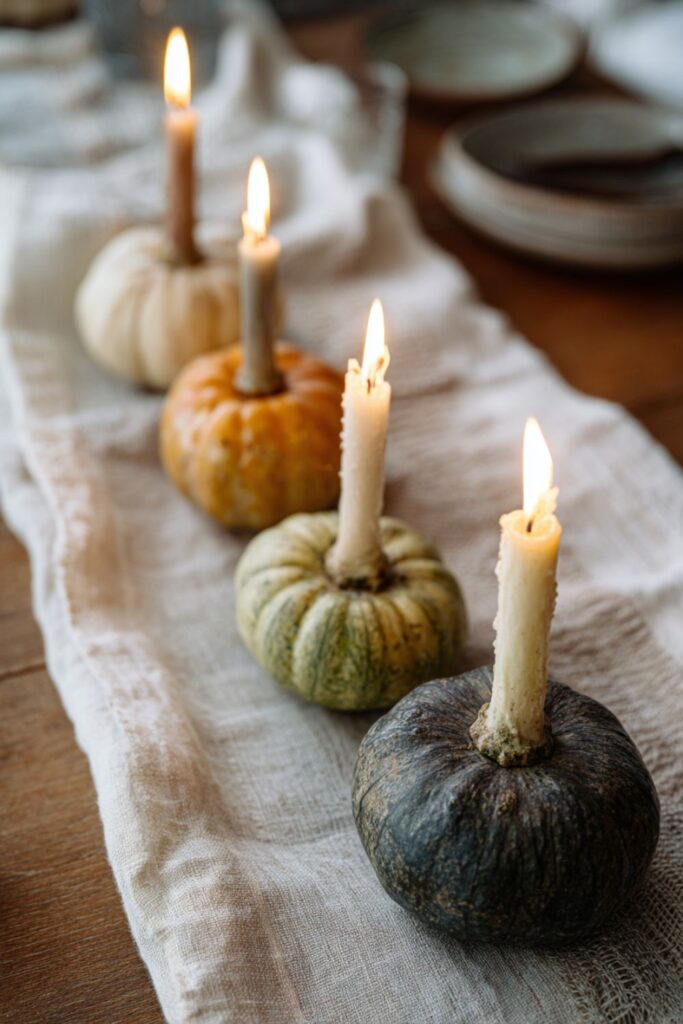
Martha shared this on Instagram and it became one of her most copied ideas. Collect gourds with at least one flat side and use a paddle bit to drill a half-inch hole in the top. Insert a taper candle and you have an organic, handmade candlestick.
Line five or seven gourd candlesticks down the center of the table. The variety of shapes and colors creates an unplanned, natural rhythm. Each one is slightly different, and no two Thanksgivings will look the same because of it.
7. Linen Napkins in Harvest Tones
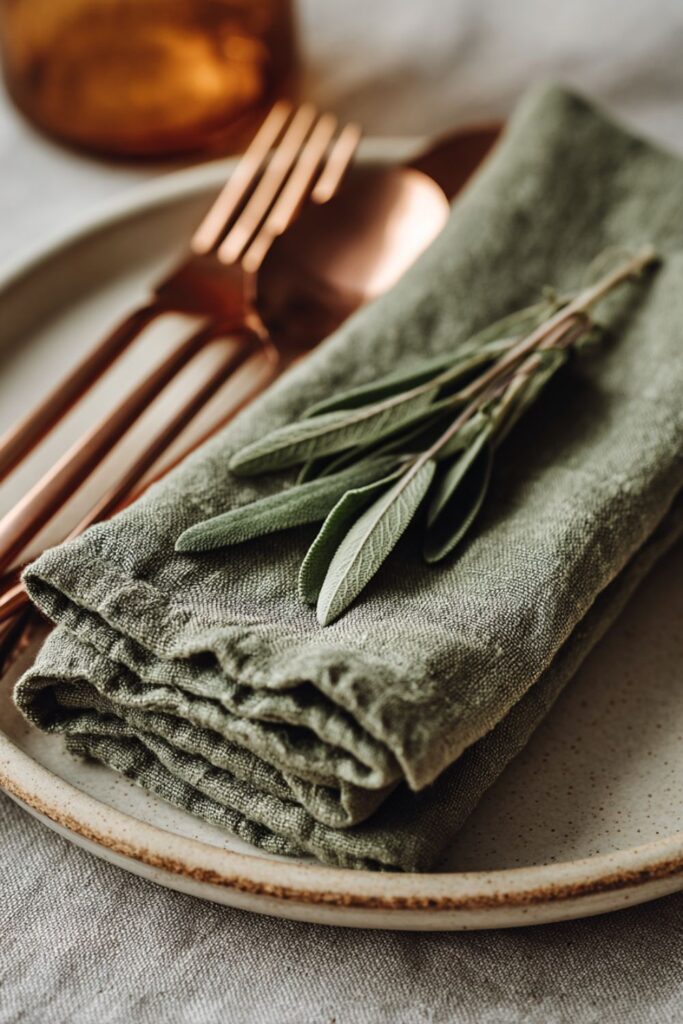
Rust, sage, cream, or deep burgundy linen napkins folded simply beside each plate. No elaborate folds and no rings unless they are inherited silver ones. The napkin itself is the detail, and it needs nothing added.
Martha keeps her linens rolled on cardboard tubes so they stay wrinkle-free and ready. Pull them the day before and fold each one with a sprig of rosemary or sage tucked inside. Guests unfold the napkin and the herb releases its clean, green scent immediately.
8. Beeswax Tapers, Never Paraffin
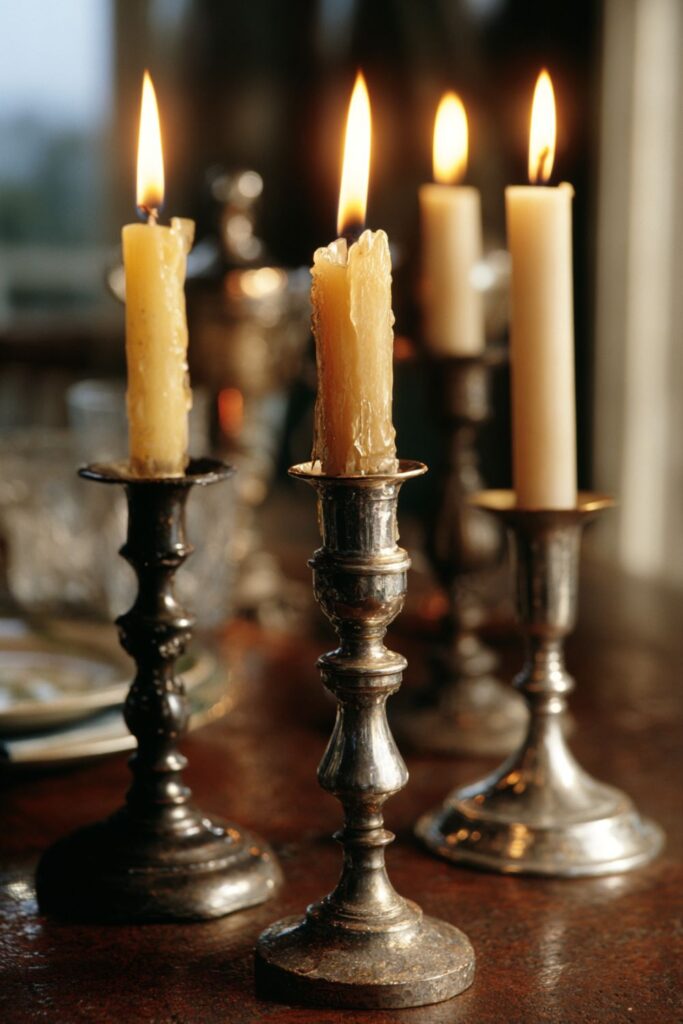
Every candle on a Martha Thanksgiving table is beeswax without exception. The warm honey color of the wax complements autumn tones naturally. The faint scent is clean, not sweet, and it never competes with the aroma of the food.
Place tapers in mismatched candlesticks of silver, brass, and pewter along the center. Light them thirty minutes before guests sit down so the wax begins to soften and drip. The glow of real flame on copper and ironstone is what makes the room come alive.
9. Turkey Figurines Throughout the House
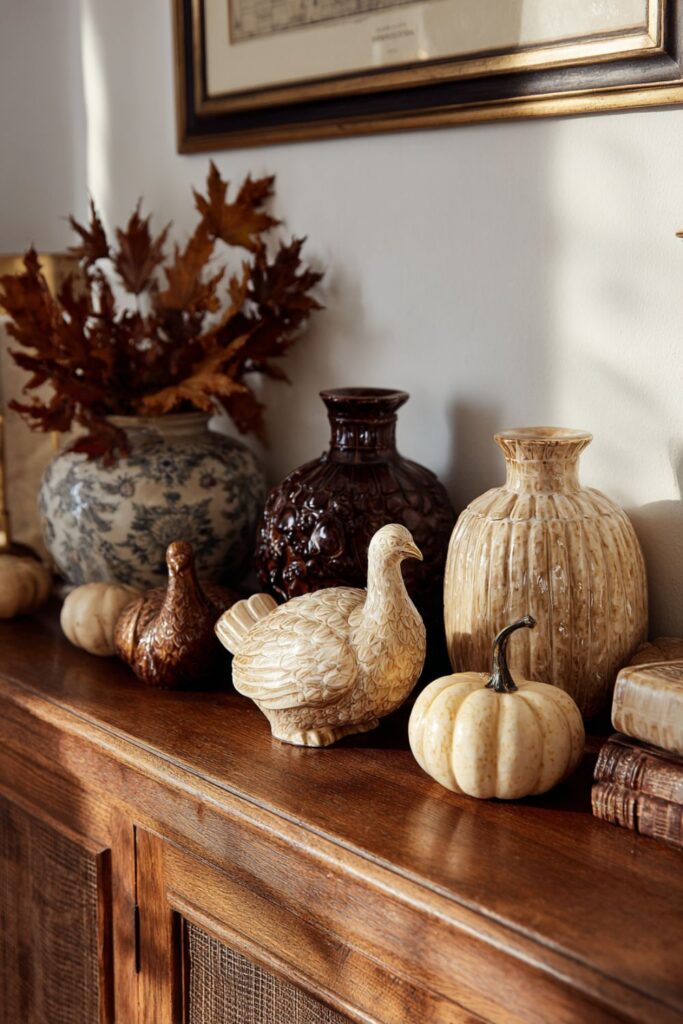
Martha displays over one hundred turkey figurines every Thanksgiving at her farm. Many were cast years ago in PermaStone, a lightweight cement, then tinted in earth tones by hand. They appear on mantels, side tables, the servery, and the entry hall.
Start a collection of your own with even three or four small figures from different eras. Group them on a sideboard or along a window ledge with a few autumn leaves tucked between. A collection displayed with commitment has more impact than a single decoration placed at random.
The textures are layered. What comes next is smaller, closer to the plate, and more personal to each guest.
10. Garden Pumpkins Stuffed and Served
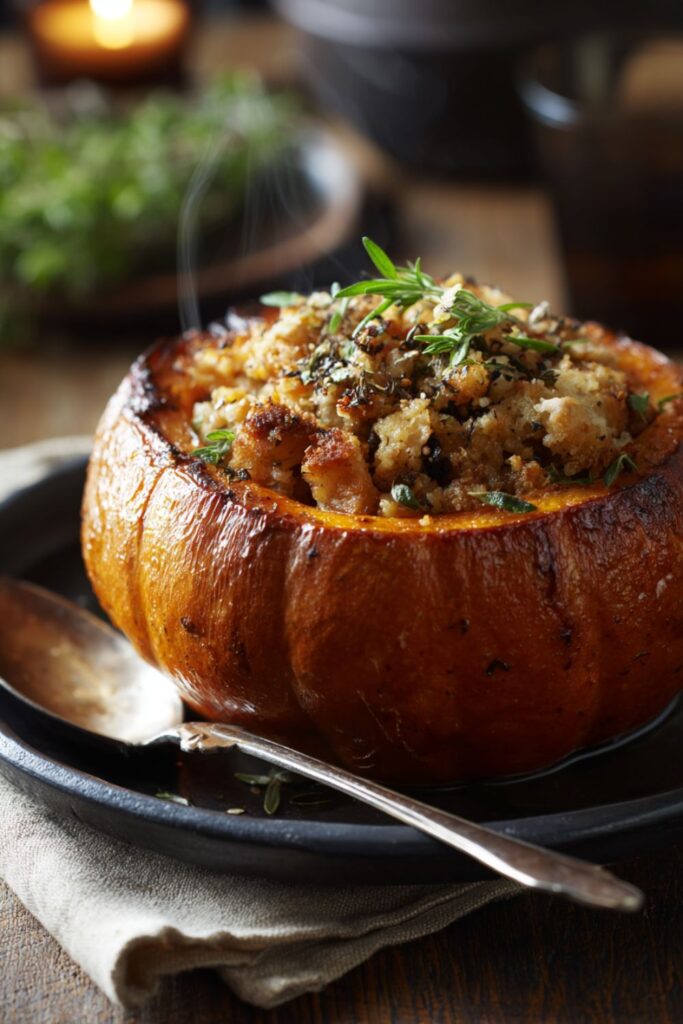
Martha grows pumpkins on her Bedford farm and uses them as both decoration and serving vessel. A roasted pumpkin filled with fruit, nut, and bread stuffing sits on the table as a centerpiece you can eat.
Small sugar pumpkins or acorn squash work as individual serving bowls for soup. Scoop out the seeds, roast the shell until tender, and ladle the soup in at the table. The vessel becomes part of the meal, nothing is wasted, and every guest has their own small pumpkin to hold.
11. Big Martha’s Mashed Potatoes
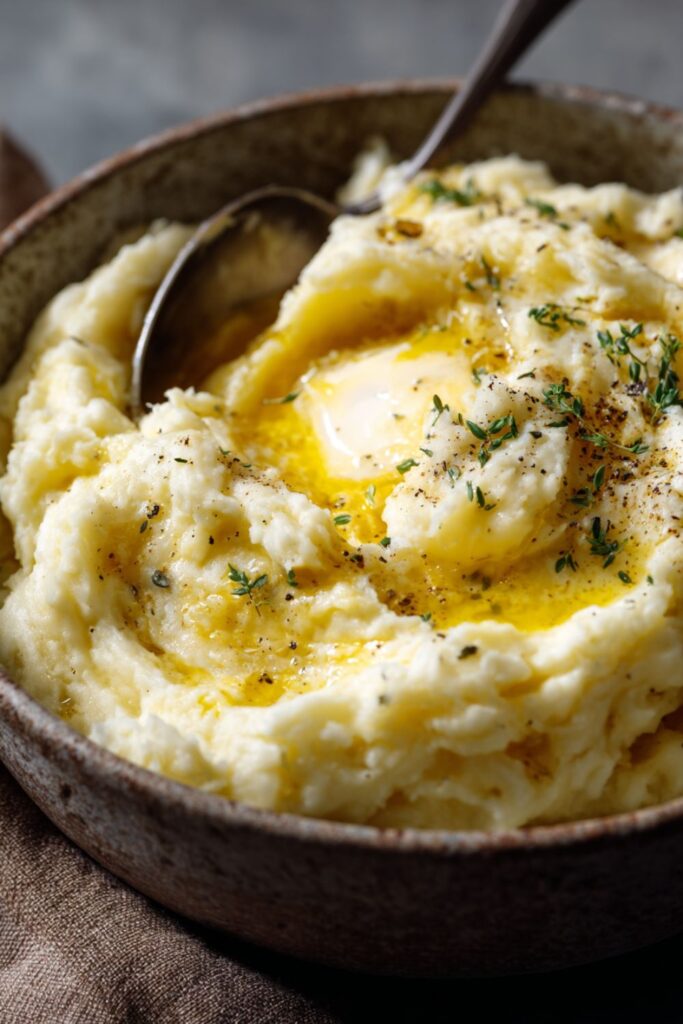
Martha’s mother, known as Big Martha, made mashed potatoes enriched with cream cheese. The recipe has appeared in every Thanksgiving Martha has hosted for decades, and it is not a side dish but an anchor.
Serve them in a deep ironstone bowl with a generous pat of butter melting slowly on top. The surface should look slightly uneven, scooped rather than smoothed by a machine. Food that looks touched by hands fits this table better than anything piped from a pastry bag.
12. The Cheesecloth Turkey
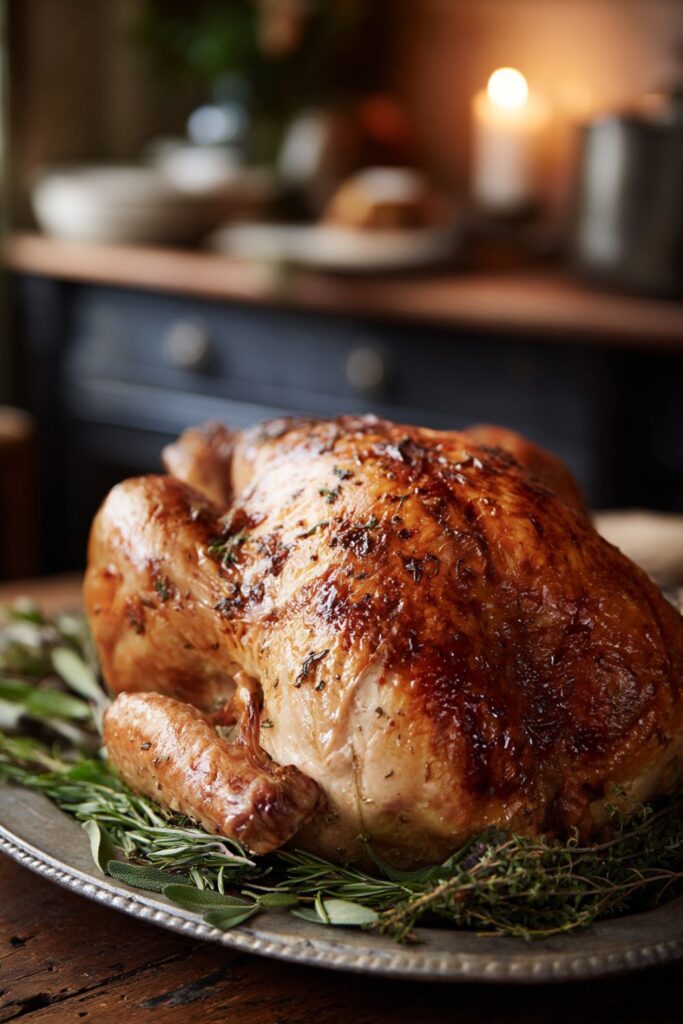
Martha’s signature roasting method wraps the bird in cheesecloth soaked in butter and white wine. The cloth keeps the breast moist while the skin turns golden and crackling beneath. No basting required at any point during the roast.
Present the turkey on the largest ironstone platter you own. Pile fresh rosemary, sage, and thyme from the garden loosely around the base, still on their stems. The platter should look like the bird just came from a farm kitchen, which it did.
13. Cornbread in Turkey Molds
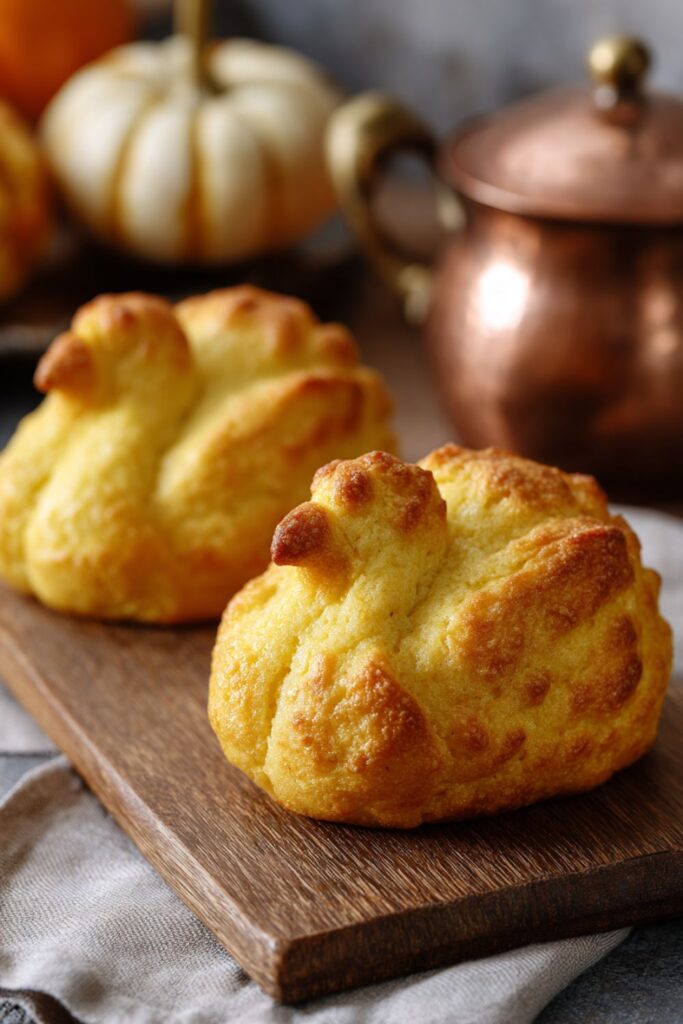
Martha bakes cornbread in five-cup Nordic Ware turkey molds every single year. The golden bird-shaped breads sit on the table and look festive without any additional decoration. They double as both a centerpiece and a side dish.
A cream-infused jalapeño cornbread takes the turkey mold beyond the ordinary. Place the cornbread birds directly on the table on small wooden boards for guests to share. People tear off pieces throughout the meal and the bread disappears naturally into the conversation.
14. Cranberry Sauce in Pressed Glass
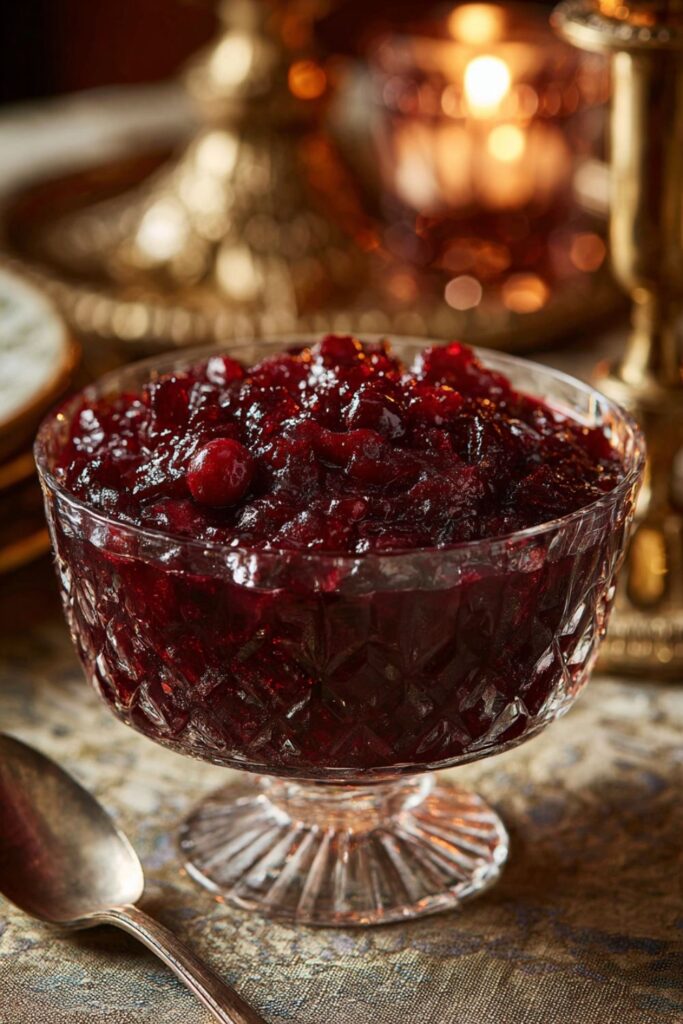
Martha’s cranberry sauce is simple: whole berries, orange zest, sugar, and a touch of cinnamon. The deep ruby color belongs in a vessel that shows it off rather than hides it. A pressed glass compote lets the color do all the talking.
Pressed glass refracts the candlelight through the ruby sauce and scatters warm patterns across the cloth. Place two small pressed glass dishes, one at each end of a long table, so every guest has easy reach. Serve with a silver spoon that carries its own history.
The food is ready and the candles are burning lower. These final touches are what guests carry home in their memory long after the meal.
15. Thirty-Two Pies for the People You Love
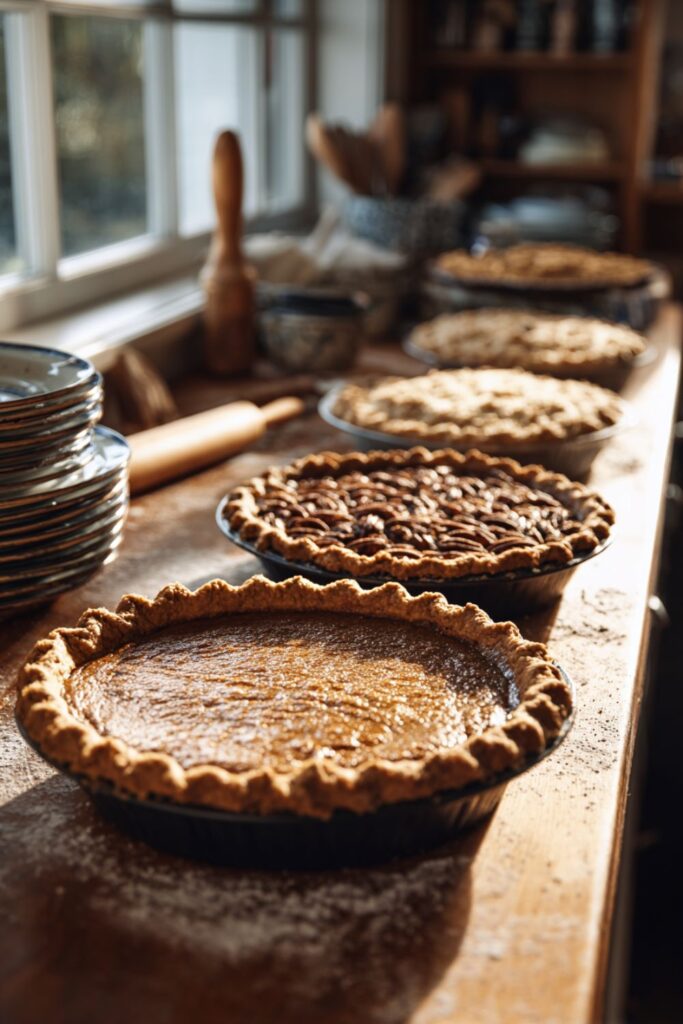
Every Thanksgiving, Martha bakes pies for every member of her farm staff as a personal tradition. In 2025, she and her team made thirty-two over three days. The flavors were maple bourbon pumpkin, pumpkin honey molasses, pecan, and chocolate pecan tart.
You do not need thirty-two, but bake three: a pumpkin with hand-crimped edges, a pecan, and a fruit tart. Line them on the kitchen counter so guests can see the full spread before dessert is served. The sight of pies cooling on a counter is Thanksgiving distilled into a single, quiet image.
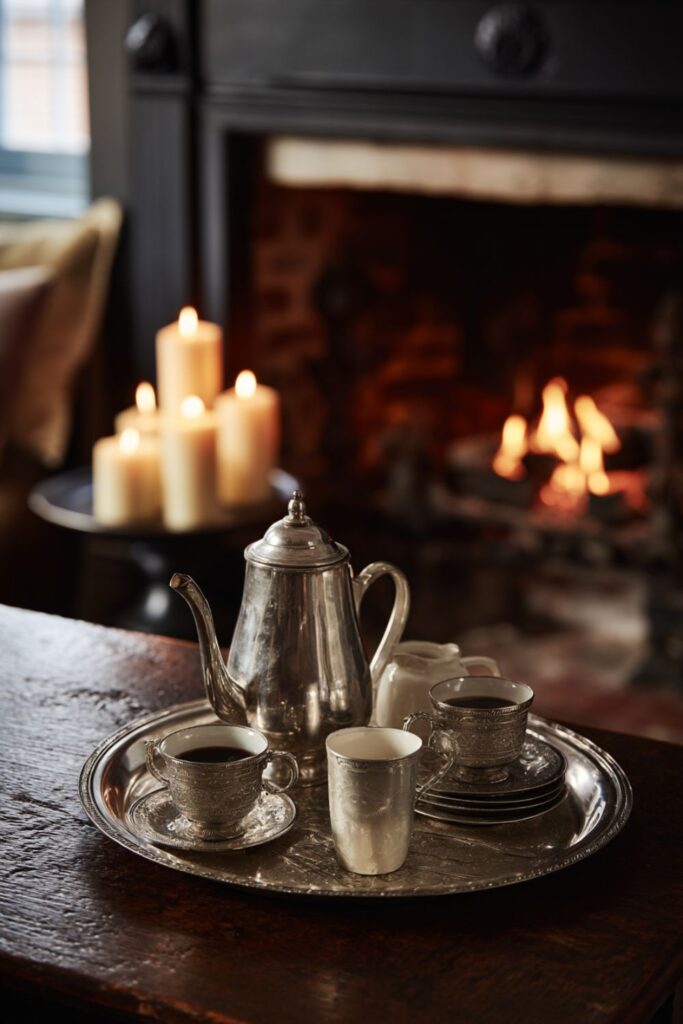
16. Coffee Service on a Silver Tray
After pie, Martha moves to coffee on a dedicated silver tray. The tray holds the pot, cream in a small pitcher, sugar in a bowl, and a stack of cups. It travels from kitchen to table to living room without ceremony.
This small ritual extends the evening well beyond the final course. Guests settle into deeper conversation and the candles burn lower around them. A coffee tray signals that the night is not over, that there is time to stay a while longer.
17. A Grateful Table, Not a Decorated One
The final layer of the Martha Stewart Thanksgiving aesthetic is invisible to the eye. It is the care behind each decision: silver polished on Wednesday, pies started on Monday, garden pumpkins saved since October.
Guests do not see the planning that went into the evening. They see a table that feels warm, a meal that tastes like someone cared, and a room that glows with real candlelight. That feeling is built slowly, over many Novembers, and it cannot be rushed or bought.
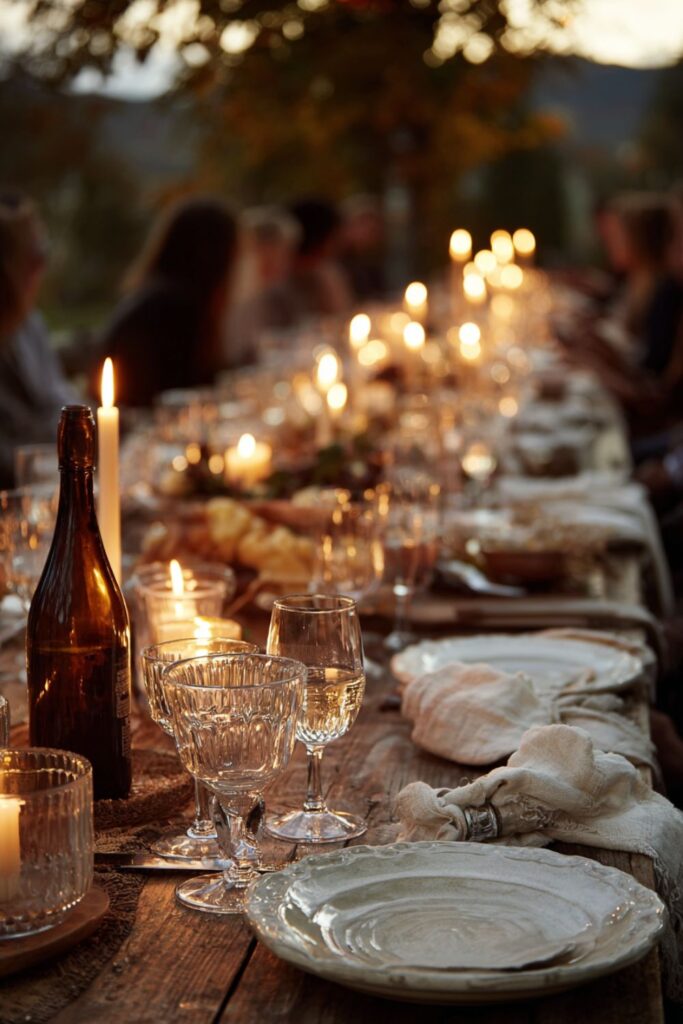
The Martha Stewart Thanksgiving aesthetic is not about impressing anyone at the table. It is about honoring the meal, the people around it, and the rituals that connect one year to the next. Ironstone and copper and beeswax are the materials, but the real ingredient is time.
Start this year with one new tradition. Set the table the night before. Bake three pies by hand. Drill candles into gourds from the market. Do it again next year, and add something new each time.
A Thanksgiving that feels inherited was simply a Thanksgiving someone cared enough to repeat. The tradition does not arrive fully formed; it is layered on, year after year, until the table tells the story itself.
You might also like: