Martha wrote an entire book called “Organizing: The Manual for Bringing Order to Your Life.” Her philosophy fits in one sentence: everything has a place, and if it does not have a place, it does not belong.
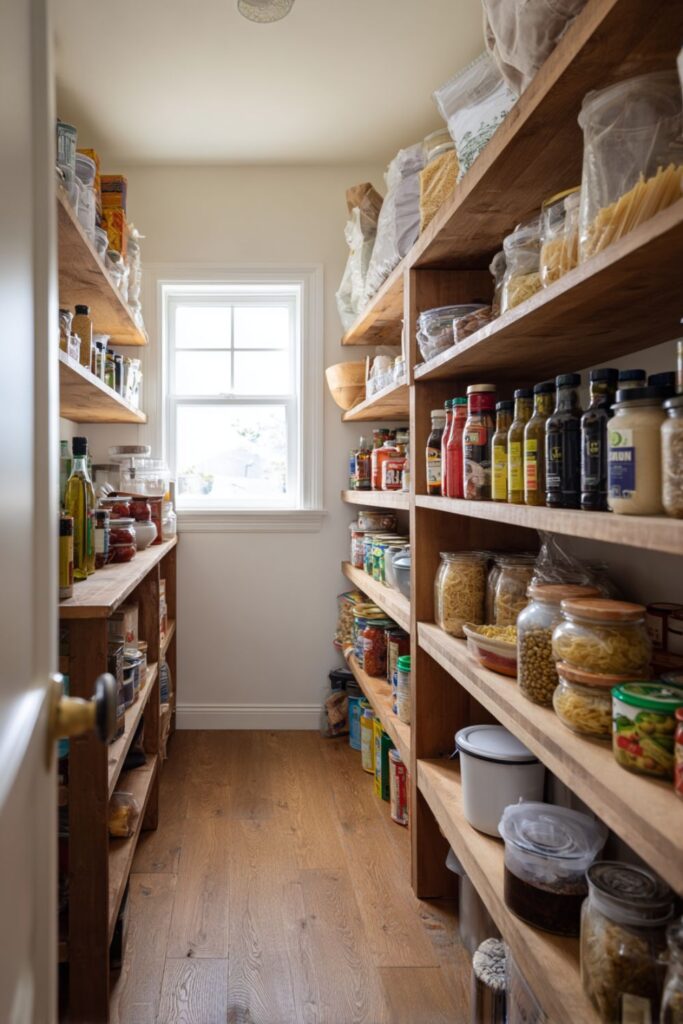
1. Glass Jars for Everything in the Pantry
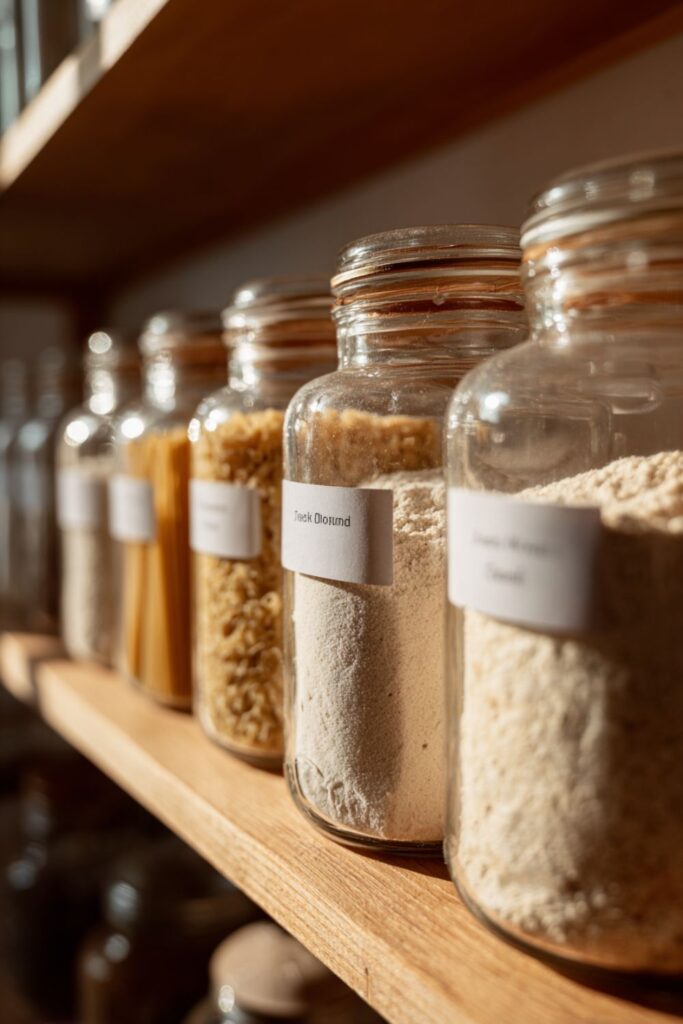
Martha decants flour, sugar, pasta, cereals, and nuts into clear glass jars with tight lids. “I always decant my sugar and flour. It’s better to keep them in jars,” she told The Today Show. You see what you have, you see when it runs low, and nothing spills.
2. Label Everything, Including the Date
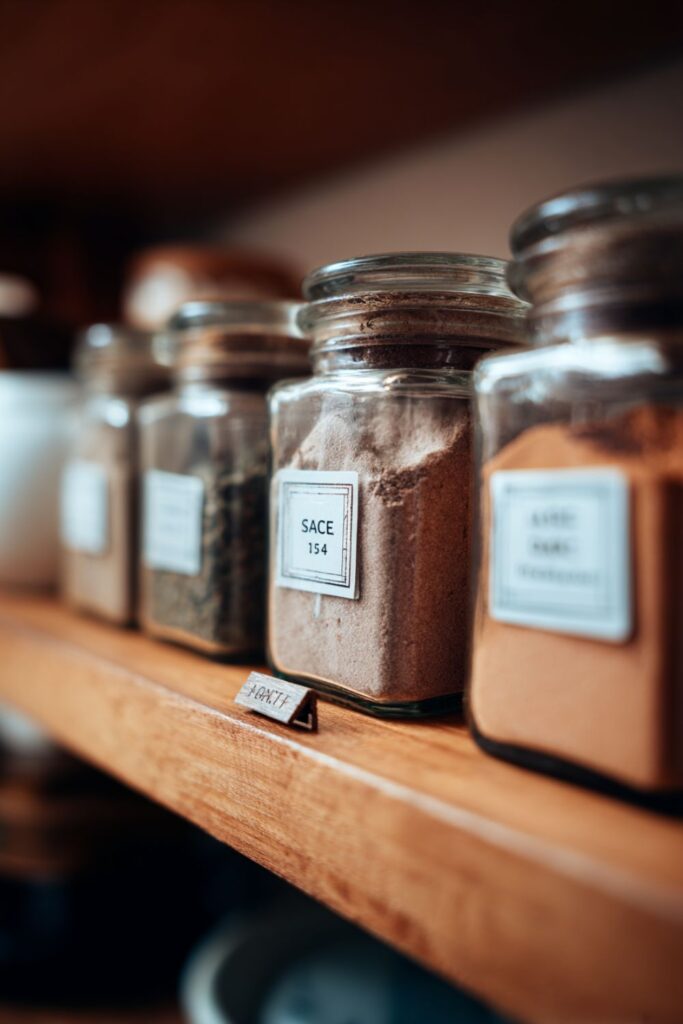
Martha uses a label maker on every container and adds the expiry date. “For spices, you should put the date on the bottom,” she says. A label removes guesswork. A date removes waste.
3. Group by Task, Not by Type
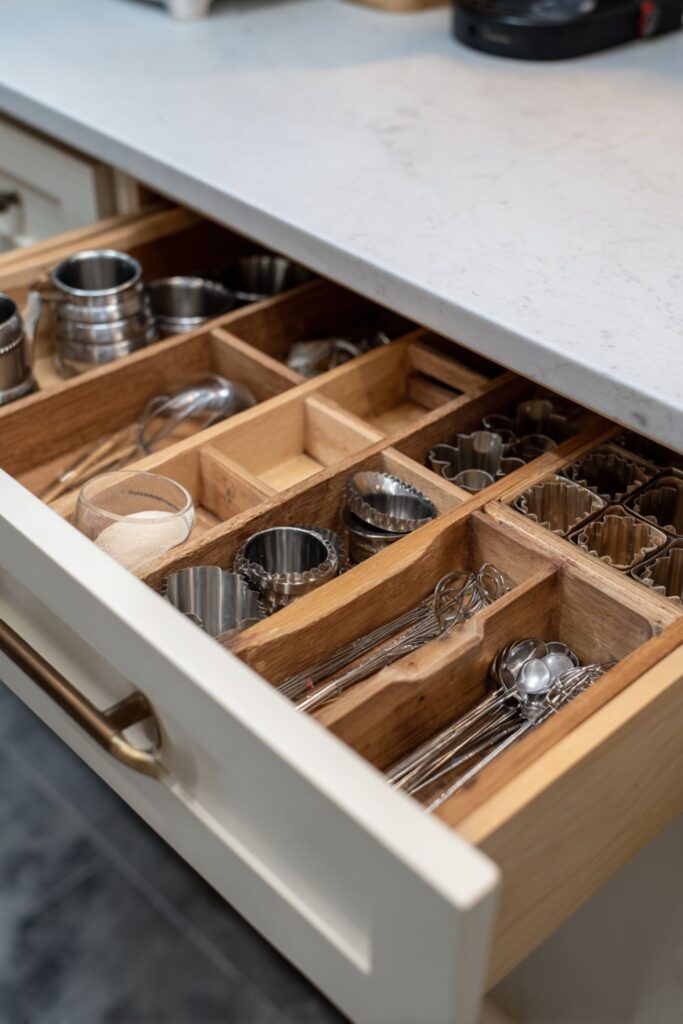
Martha stores items by what you do with them, not what they are. Baking supplies together in one drawer. Pet food, medicine, and grooming tools together in one cabinet. Cleaning products, brushes, and sponges together under one sink.
4. Most-Used Items on the Lowest Shelves
Martha places the ingredients she reaches for daily on the easiest shelves. Baking supplies and specialty items go higher. The pantry is organized by frequency of use, not alphabetical order.
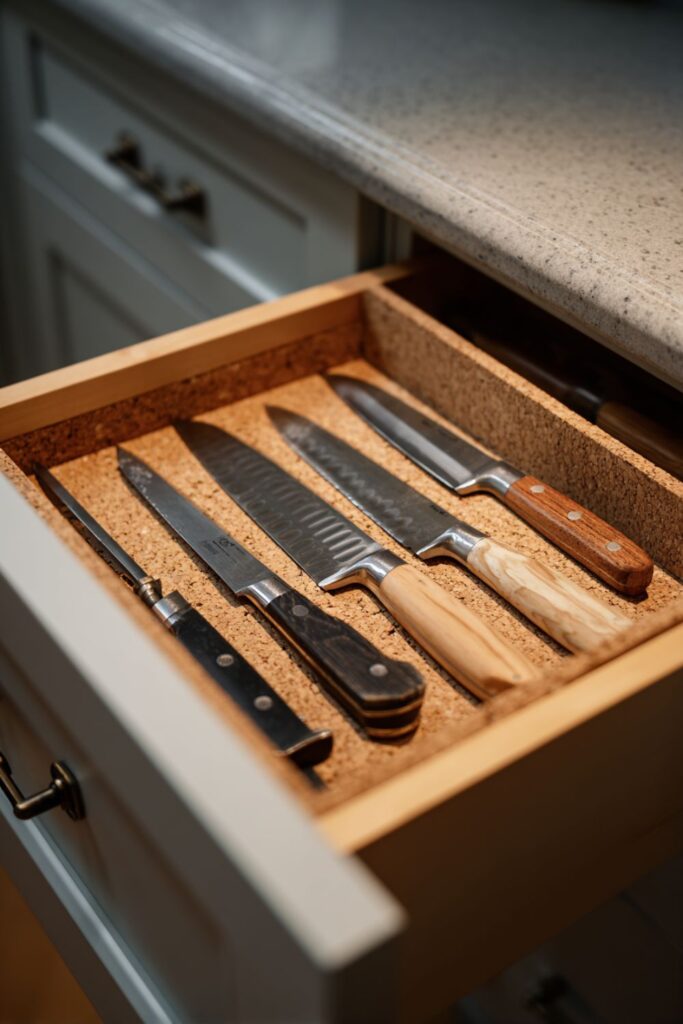
5. A Dedicated Knife Drawer with Dividers
Martha keeps knives in a divided drawer, separated by type, with cork inserts to prevent sliding. No knife block on the counter. No magnetic strip on the wall. The blades are protected, organized, and out of sight.
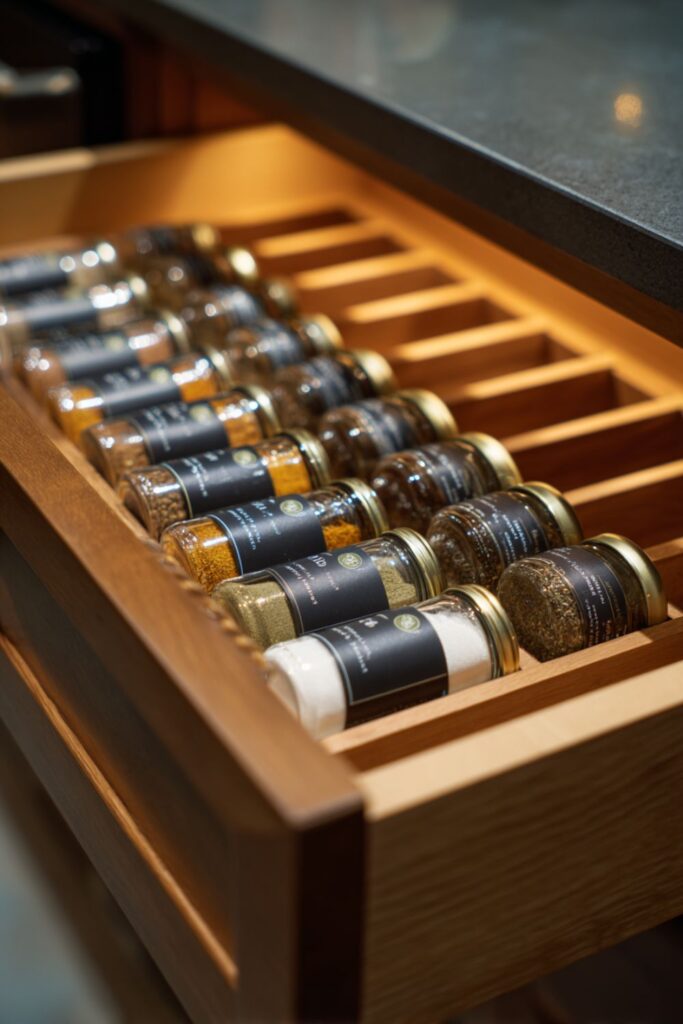
6. Spices in a Slanted Drawer, Not a Rack
Martha stores spices in a drawer with angled shelves so labels face upward and every jar is visible at once. Spices stay fresher in a dark drawer than on a sunlit countertop rack.
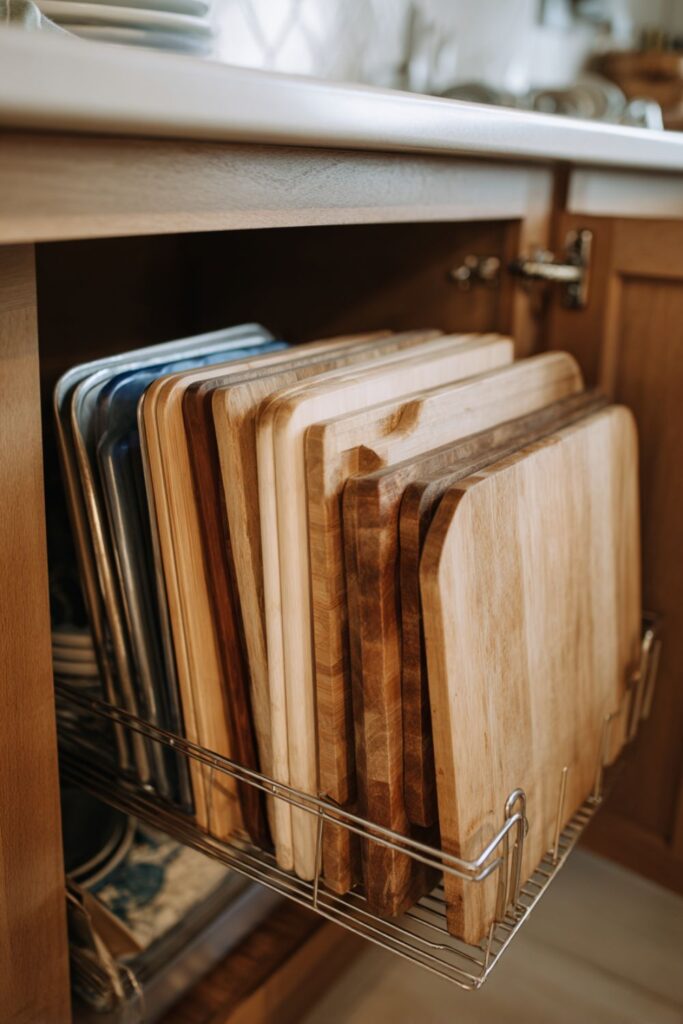
7. Vertical Storage in Every Cabinet
“Vertical storage makes the most of your cupboards,” Martha said on The Today Show. Cutting boards, baking sheets, and trays stand upright in dividers instead of stacked flat. You pull one out without moving six others.
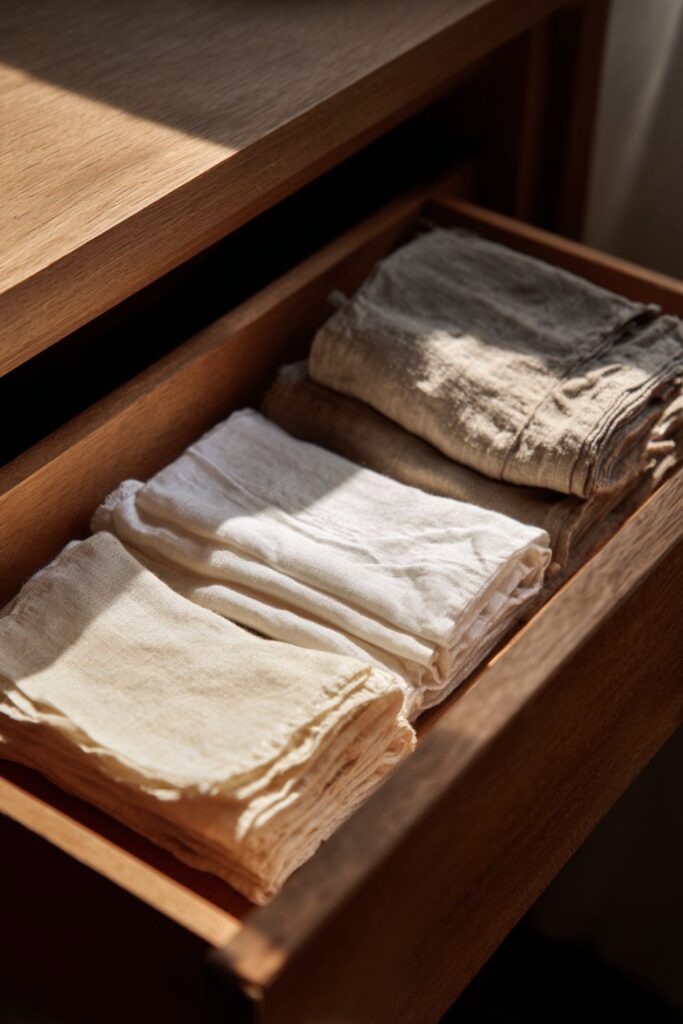
8. Linens Folded and Separated by Use
Martha divides kitchen linens in a drawer: placemats on one side, napkins on the other. In her linen closet at Skylands, vintage tablecloths hang on removable wooden dowels to prevent creasing. Everything is sorted by function and accessible without unfolding the pile.
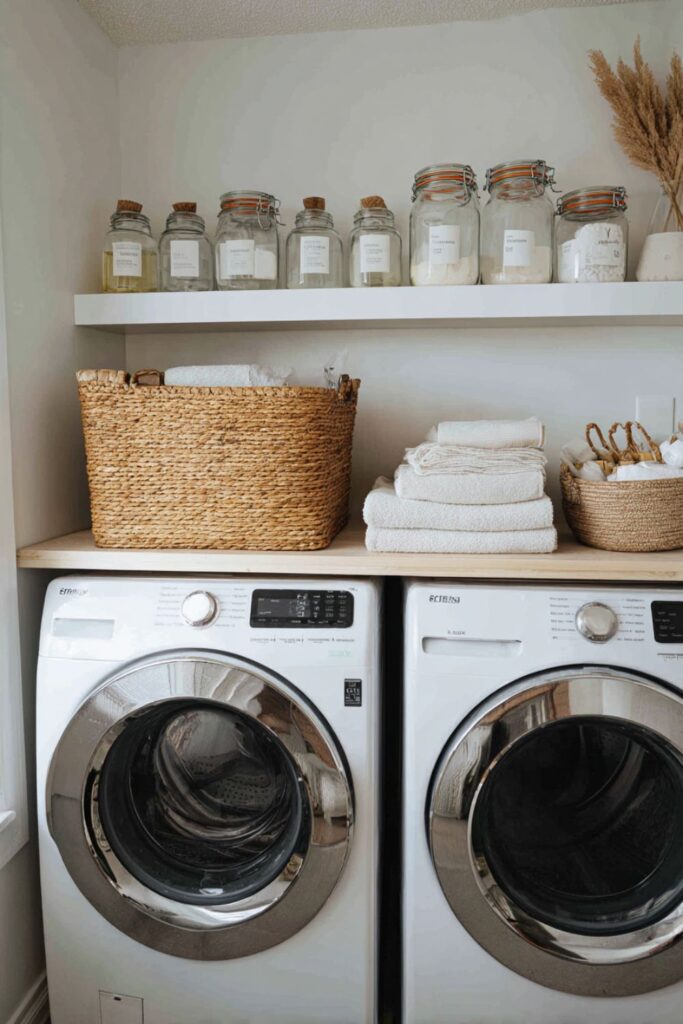
9. Wide Shelving Above the Washer and Dryer
In her organizing book, Martha recommends installing wide shelves above the washer and dryer for detergent, stain removers, and folded clean laundry. The space above most machines is wasted. A shelf turns it into the most useful storage in the room.
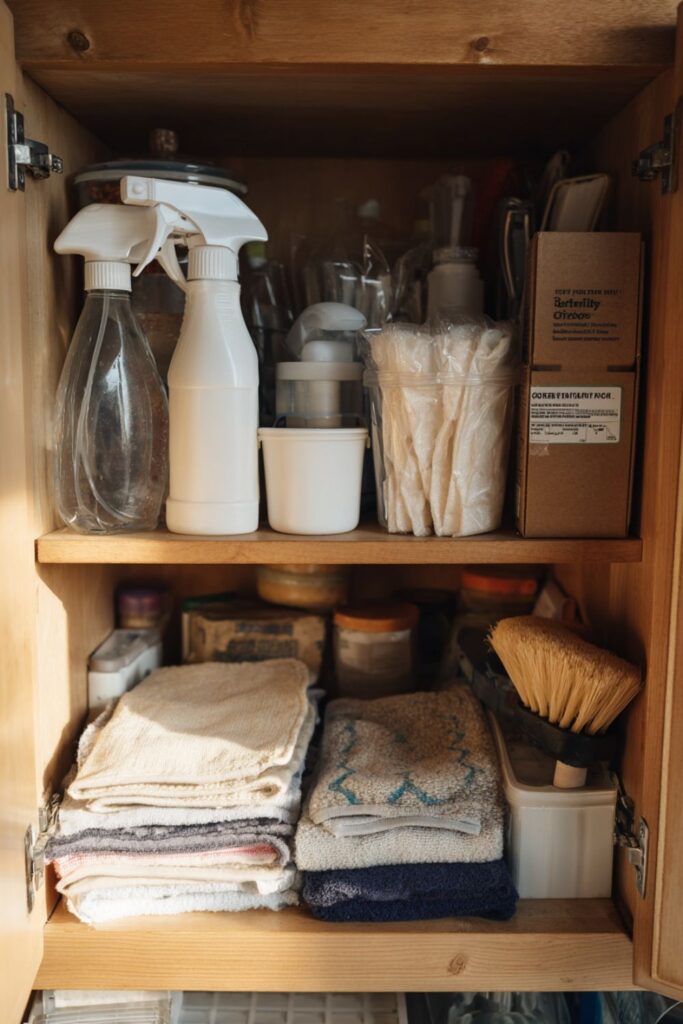
10. A Cleaning Cabinet with Everything in One Place
Martha keeps all cleaning supplies, brushes, buckets, and sponges together in one lower cabinet. When it is time to clean, she opens one door and everything is there. No searching under three different sinks.
The kitchen and utility rooms are sorted. What follows covers the rest of the house, room by room.
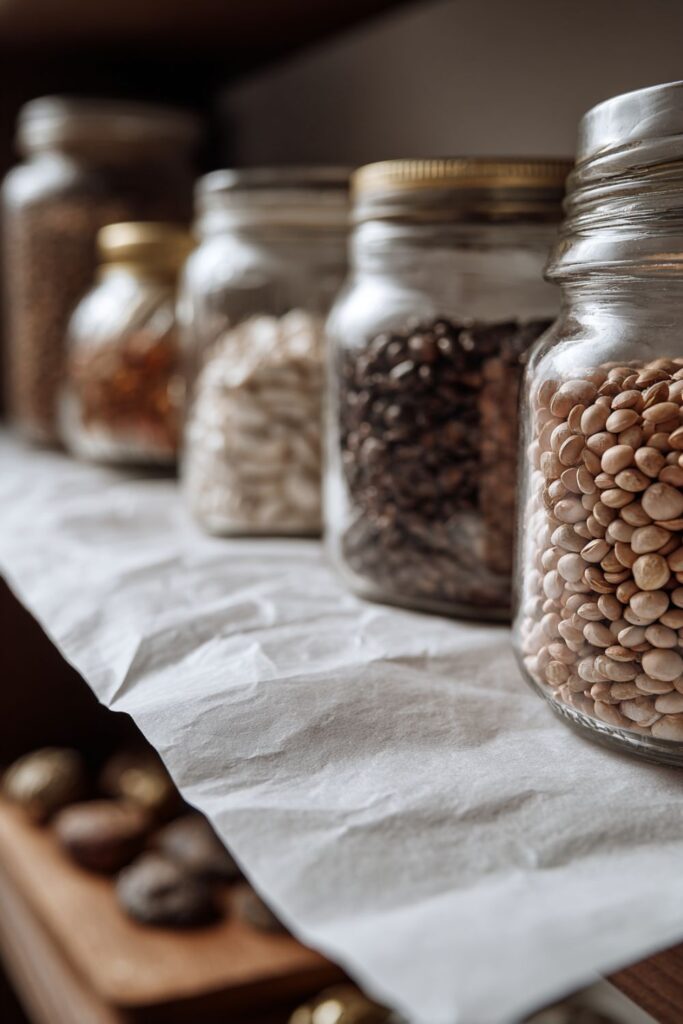
11. Freezer Paper on Every Shelf
Martha lines pantry and cabinet shelves with freezer paper instead of adhesive shelf liners. When something spills, she replaces the paper in seconds. No scrubbing, no peeling, no residue.
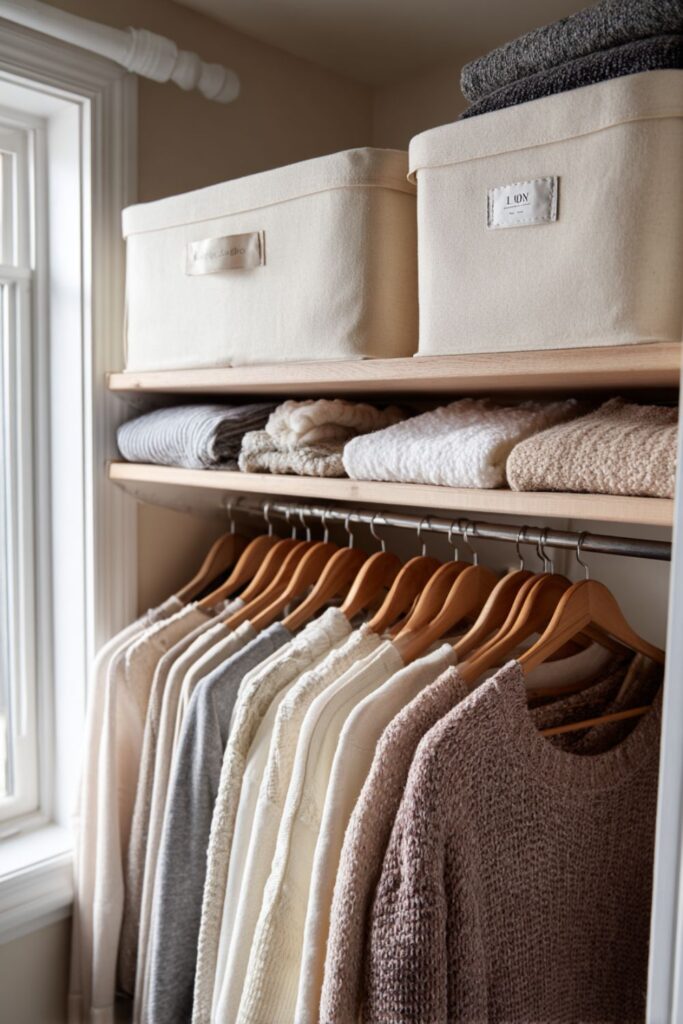
12. Seasonal Clothing Swaps on a Schedule
Martha swaps wardrobes seasonally and stores off-season clothing in labeled containers. Her organizing book includes a calendar showing exactly when to swap bedding, rotate clothing, and pack away holiday decorations.
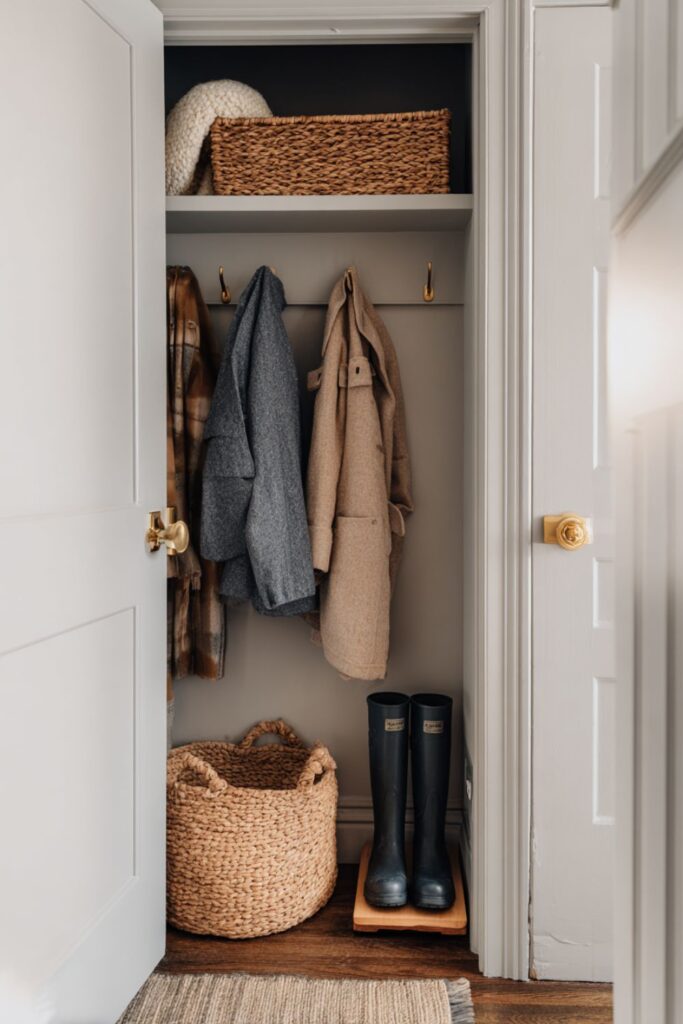
13. The Hall Closet as a System, Not a Dump
Martha treats the hall closet like a small room with zones: hooks at child height, a shelf for hats and gloves, a basket for scarves, and a boot tray on the floor. Every item enters and exits without disturbing anything else.
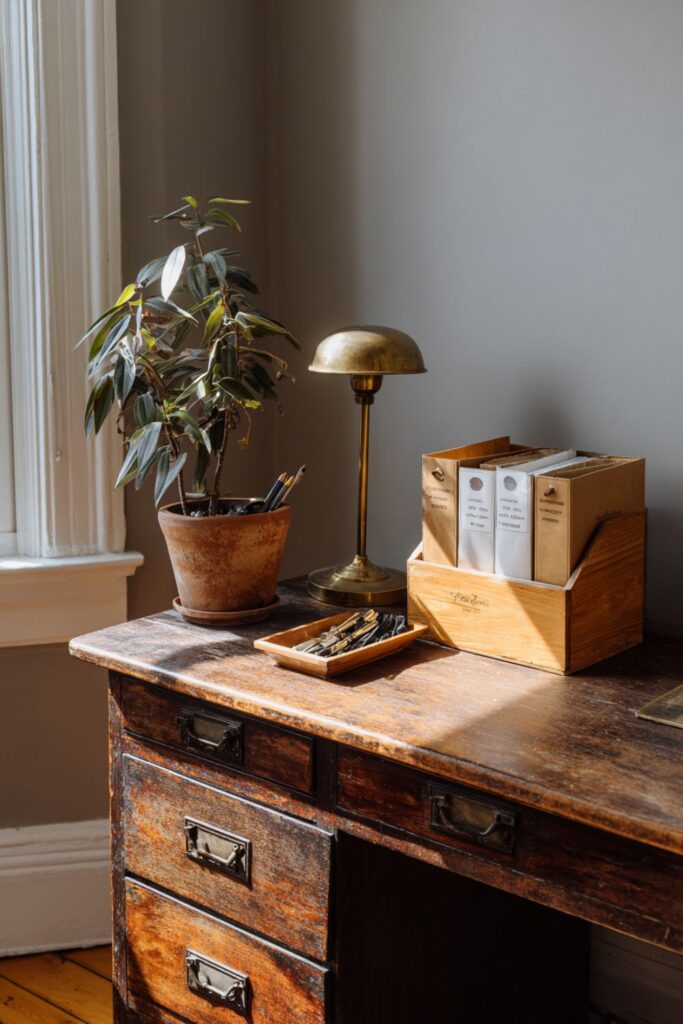
14. A Home Office in Any Corner
Martha says a home office does not need a room. It needs a desk, a filing system, and a light. Her converted porch office at Bedford uses an antique desk, a chair, and labeled drawers. The office fits the corner, not the other way around.
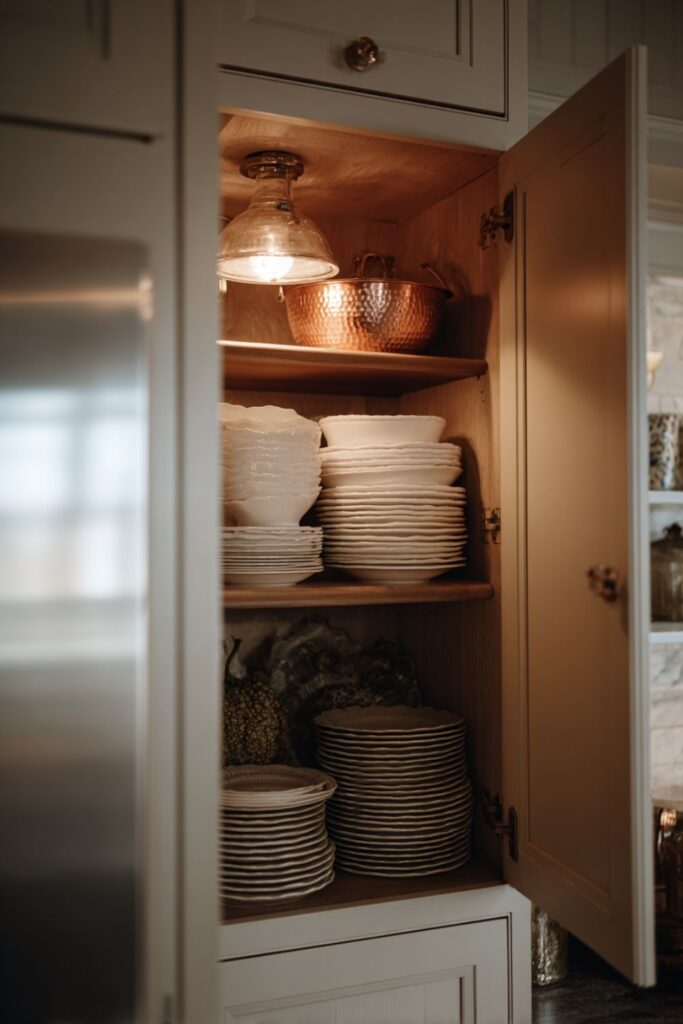
15. Use Every Inch, Including Above the Fridge
Martha uses the cabinet above the refrigerator for special-occasion items: serving platters, holiday dishes, and oversized bowls you need twice a year. The space most people ignore becomes storage for things that deserve a home but not daily access.
Martha Stewart home organization is not about perfection. It is about systems. Glass jars so you see what you have. Labels so you know when it expires. Groups so you find what you need. A place for everything, and everything returned to its place after use.