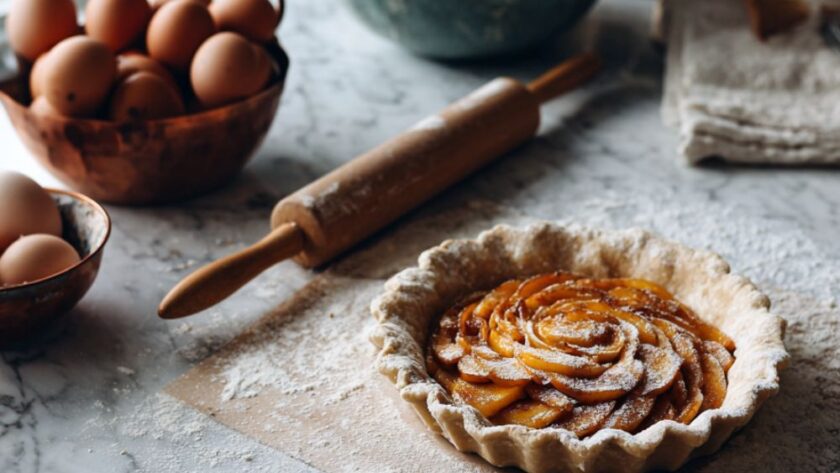
A marble counter dusted with flour. A copper bowl holding three brown eggs. A wooden rolling pin resting on a circle of pale dough. A half-finished galette with peach slices arranged in a slow spiral, its edges folded inward by hand.
Nobody is eating yet. Nothing is finished. That is the Martha Stewart baking aesthetic. It is not about the recipe. It is about the way the kitchen looks in the middle of making something, and the way the finished thing looks on the counter before anyone picks up a fork.
Martha has said baking is what she enjoys most when preparing food. She loves measuring. She loves the chemistry. She has published more baking books than any other category: Cookie Perfection, Cake Perfection, Pies and Tarts, Fruit Desserts, the Baking Handbook. Each one is photographed with the same attention to visual composition that her magazine applies to a room or a garden. The food is the subject, but the light, the surface, and the tools are the frame.
Pinterest searches for the Martha Stewart aesthetic surged nearly 2,900% in 2025. Baking content is among the most saved. A single image of a lattice pie on an ironstone platter can collect thousands of pins. These 15 ideas are the scenes behind those pins.
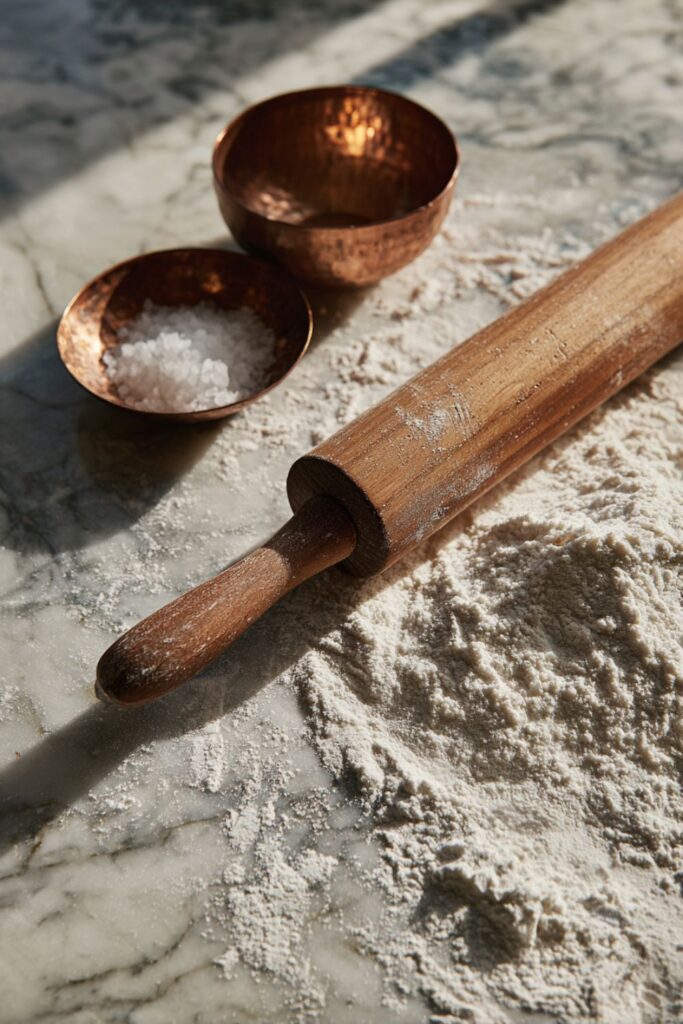
1. Flour Dusted Across a Marble Counter
The first image of the Martha baking aesthetic is not food. It is the surface. A marble counter or a marble pastry board lightly dusted with flour. The white powder on the pale stone creates a soft, powdery texture that morning light catches and holds.
Marble stays cool, which keeps butter and dough cold during rolling. That is the practical reason Martha uses it. The visual reason is that marble and flour together look like a painting. Scatter flour with a light hand before you roll. Let it settle into the veining. The counter tells the story before the dough is even touched.
2. A Copper Bowl Holding Brown Eggs
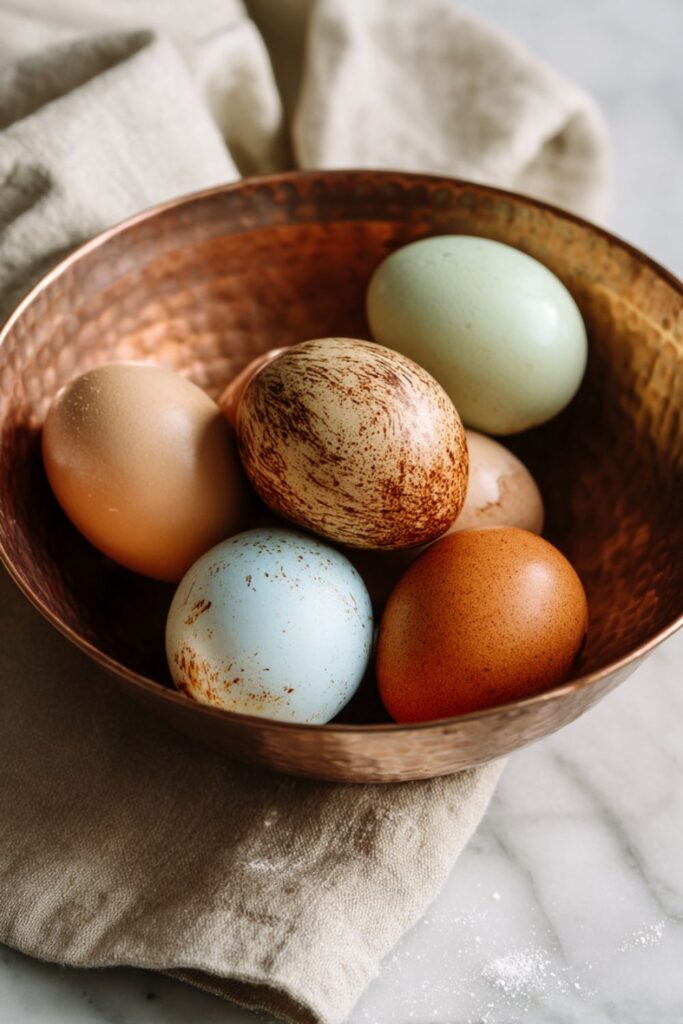
Martha keeps Araucana chickens at Bedford. Their eggs are blue-green and brown, each one a slightly different shade. A copper bowl holding six of these eggs on the counter beside the flour is one of the most pinned baking images in her entire archive.
The copper warms the scene. The eggs add organic shape and natural colour. Together they signal that real ingredients are about to become something beautiful. Use a wide, shallow copper bowl. Place the eggs loosely so each one is visible. The light should catch the copper rim and the curve of the shells at the same time.
3. A Wooden Rolling Pin on Pale Dough
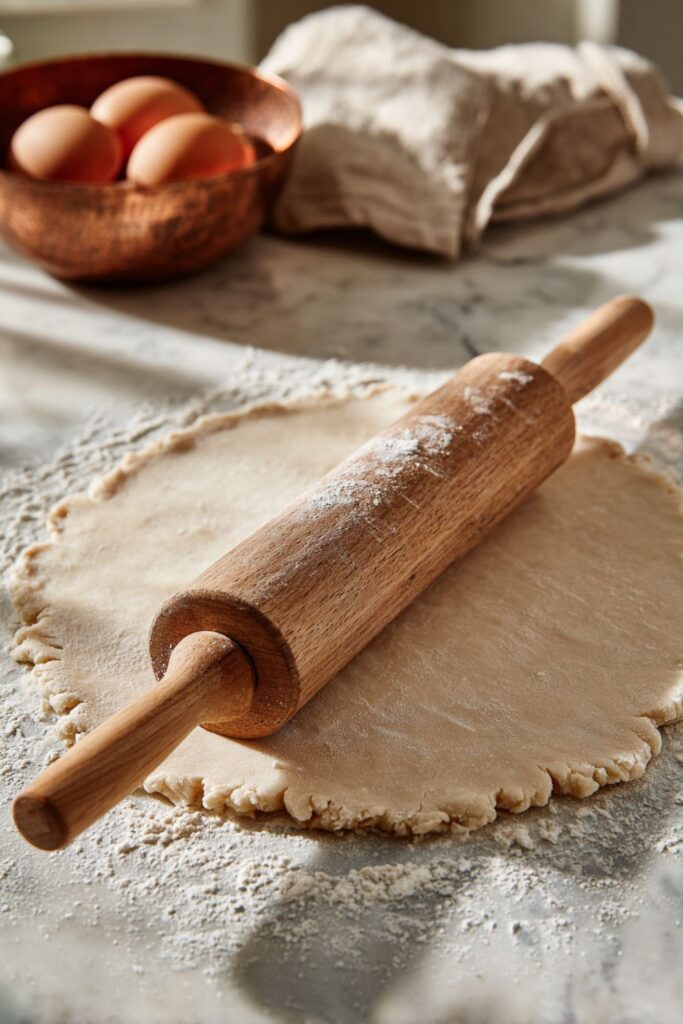
The rolling pin in Martha’s kitchen is wood. Not marble, not stainless steel, not silicone. A wooden pin develops a patina from years of flour and butter. It darkens at the handles where hands grip it. That wear is part of the aesthetic.
Photograph the pin resting on a circle of rolled-out dough. The dough should be slightly uneven at the edges, not a perfect circle. The “unfinished” quality is intentional. It tells the viewer someone is mid-task, hands still floury, about to crimp or fold. That tension between done and not-done is the heart of Martha’s mid-bake photography.
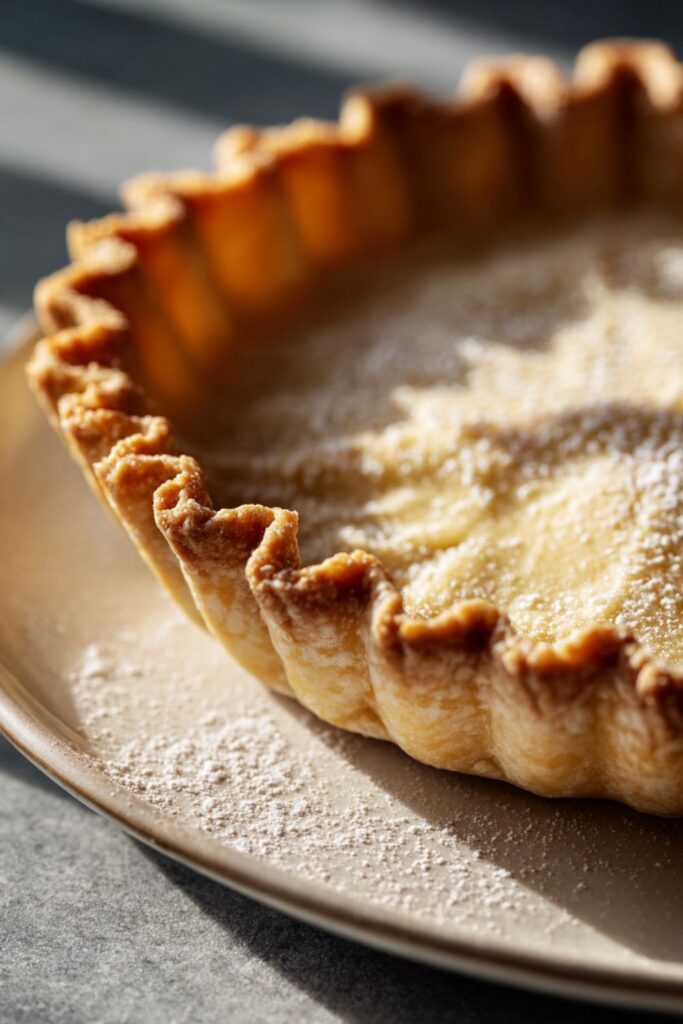
4. A Hand-Crimped Pie Edge
Martha’s pie books teach three kinds of decorative edges: fork-pressed, fluted, and rope. The fluted edge, pinched between thumb and forefinger every half inch around the rim, is the most recognisable. Each pinch leaves a slightly different mark. The imperfection is what makes it human.
The edge of a pie is the most photographed detail in the baking aesthetic. Shoot it from above or at a slight angle so the crimped pattern catches light and shadow along the rim. The crust should be golden and slightly uneven. A perfect, machine-pressed edge has no character. A hand-crimped edge tells you someone stood at this counter and shaped every inch.
Those four scenes, the floured counter, the eggs, the rolling pin, and the crimped edge, are the foundation. They capture the before and the during. What follows adds the finished baked goods, the presentation, and the tools that turn a kitchen into a still life.
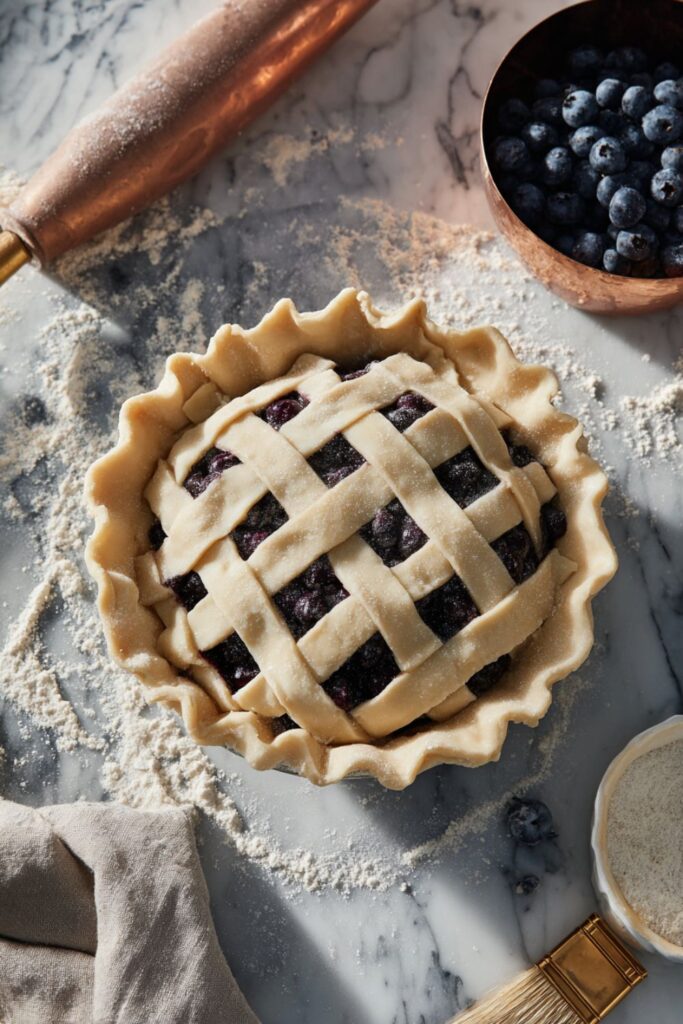
5. A Lattice-Top Pie Before It Bakes
Martha’s Pies and Tarts book devotes an entire section to latticework. Strips of dough woven over a fruit filling create a pattern that is both structural and decorative. A lattice pie before it enters the oven is one of the most saved baking images on Pinterest.
The lattice should be tight but not rigid. The strips should vary slightly in width. Tuck the ends under the rim and crimp. Egg-wash the surface so it bakes to a deep gold. The unbaked lattice pie, sitting on the counter in raw dough and jewel-coloured fruit, is the single most pinnable moment in the baking process.
6. A Free-Form Galette With Rough Edges
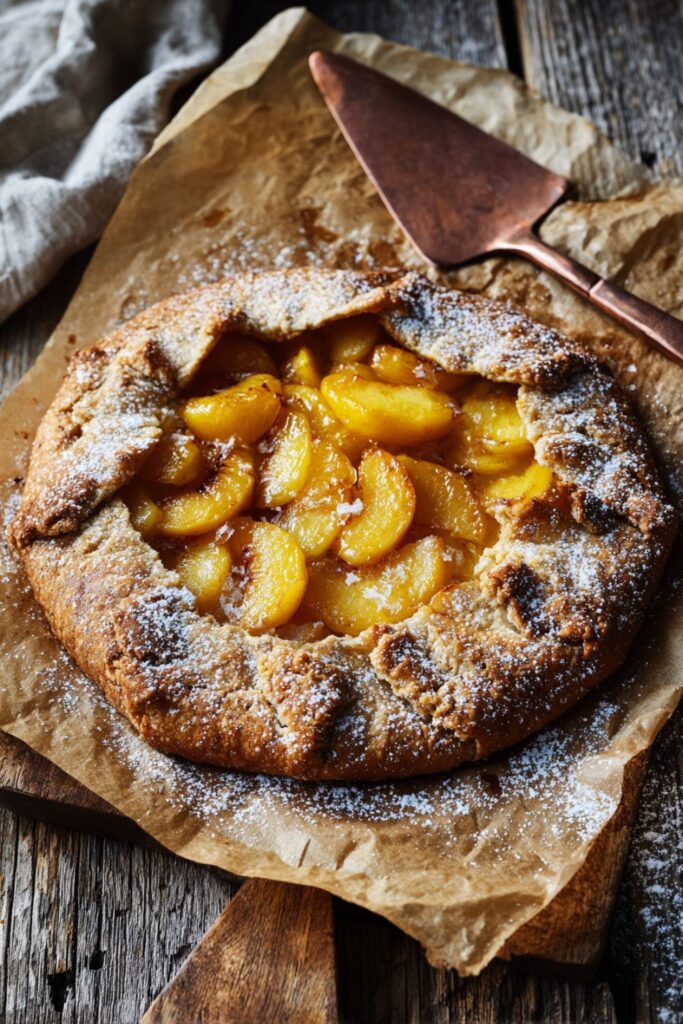
The galette is Martha’s most approachable baked good. No pie dish. No perfect circle. Just a flat round of dough folded loosely over seasonal fruit. The edges are rough and uneven on purpose. The fruit peeks through the open centre. The whole thing sits on a sheet of parchment.
A peach galette in summer. An apple galette in fall. A pear galette in winter. The MOOD blog captured the trend perfectly: “I baked a peach galette from scratch and learned that a pie cooling on a windowsill makes everything better.” The galette is the baking aesthetic for people who want the visual without the precision of a double-crust pie.
7. Powdered Sugar Dusted Through a Stencil
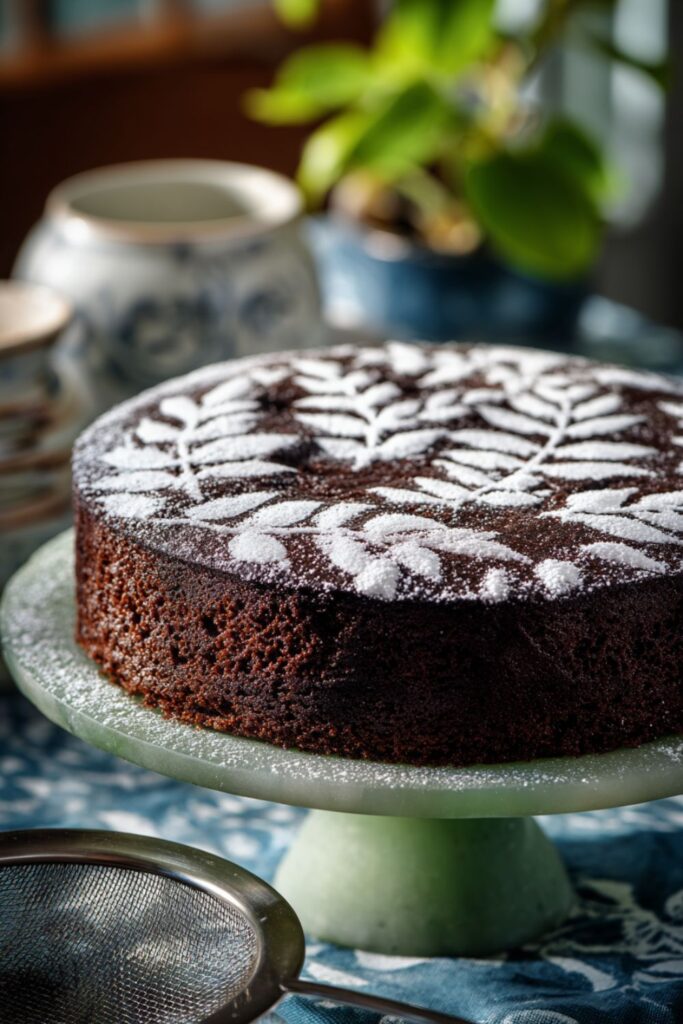
Martha uses paper stencils to dust powdered sugar onto cakes and brownies. A simple shape, a star, a leaf, a monogram, appears in white against the dark surface of a chocolate cake. The technique takes thirty seconds and transforms a plain cake into a photograph.
Cut a stencil from parchment paper. Hold it just above the surface and sift powdered sugar through a fine-mesh sieve. Lift the stencil straight up. The pattern stays. Martha’s Cookie Perfection book shows this technique on brownies, tarts, and rolled cookies. It is the fastest way to make a baked good look editorial.
8. Botanical Pressed Cookies
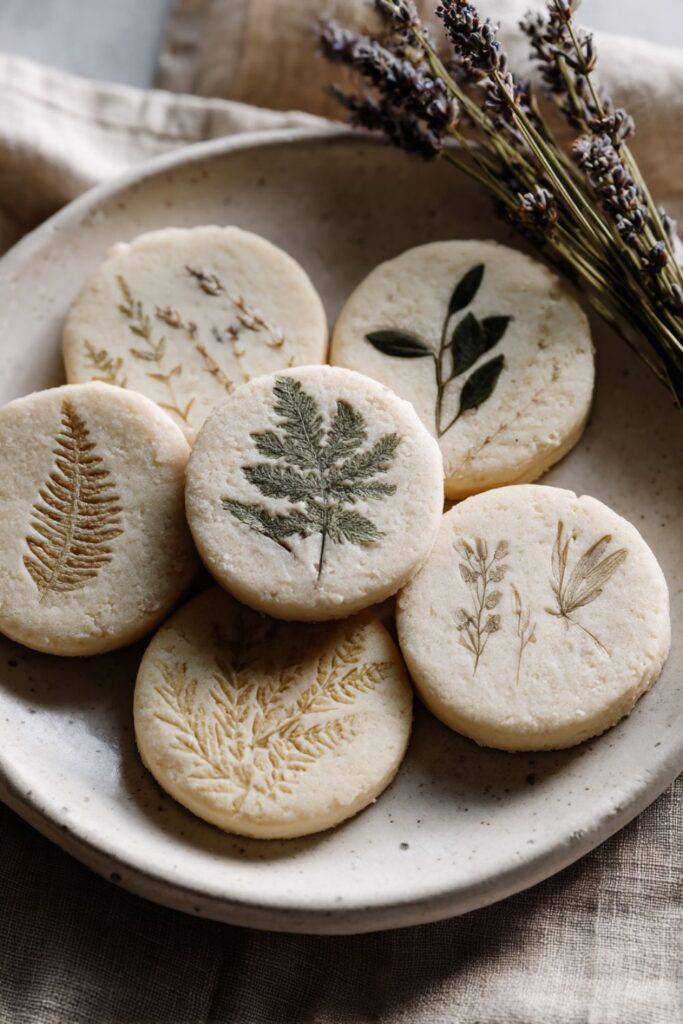
Martha’s Cookie Perfection book includes cookies pressed with real botanical shapes. Fern fronds, herb sprigs, and small flowers pressed into soft dough before baking leave a fossil-like impression. The technique creates cookies that look like nature specimens preserved in butter and sugar.
Roll sugar cookie dough flat. Press a fern frond or a sprig of rosemary gently into the surface. Bake. The plant burns away or is removed after baking, leaving only the imprint. Arrange the finished cookies on a cream ironstone platter. The pressed patterns photograph beautifully from above and pin as standalone images.
9. A Cake on a Jadeite Stand
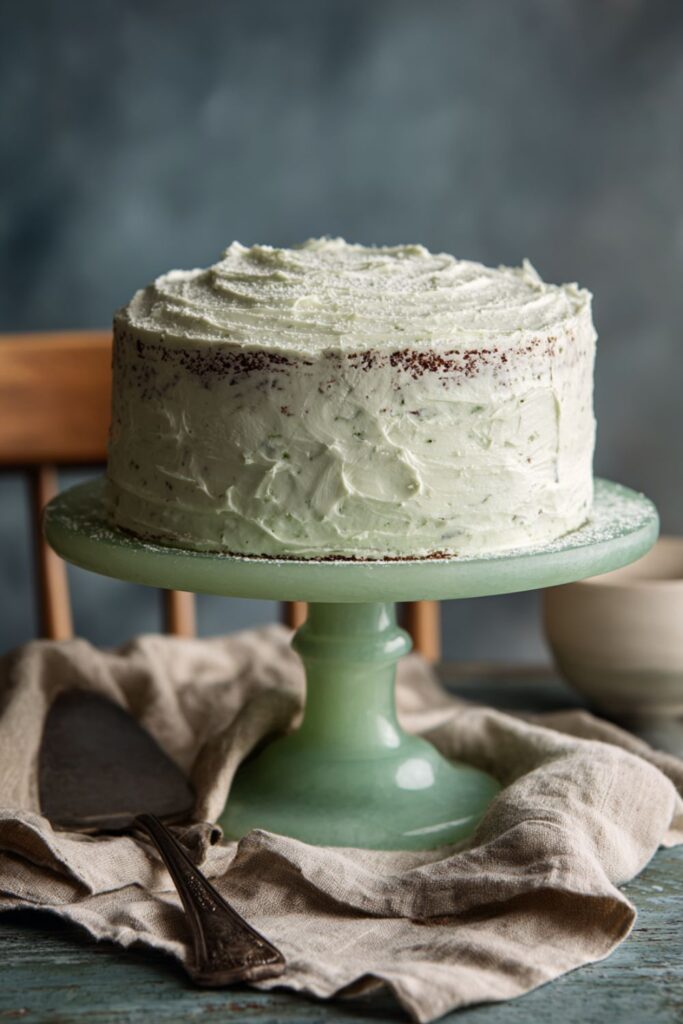
The jadeite cake stand is Martha’s most iconic baking prop. The milky green-blue glass pedestal lifts the cake to eye level and adds colour beneath it. A simple white-frosted cake on a jadeite stand looks like it belongs in a magazine. The stand does half the styling work.
Place a single-layer cake or a bundt on the stand. Do not add additional decoration around the base. The jadeite and the cake are enough. The stand’s colour works with white frosting, chocolate, cream, and powdered sugar. It reads as vintage, cheerful, and specifically Martha. A jadeite stand is the one baking prop worth investing in.
The finished baked goods are styled and glowing. The galette is golden. The cookies hold their botanical prints. The cake sits on its jadeite throne. What follows adds the atmospheric details that turn a kitchen with baked goods into a full Martha Stewart baking scene.
10. Edible Flowers on a Finished Cake
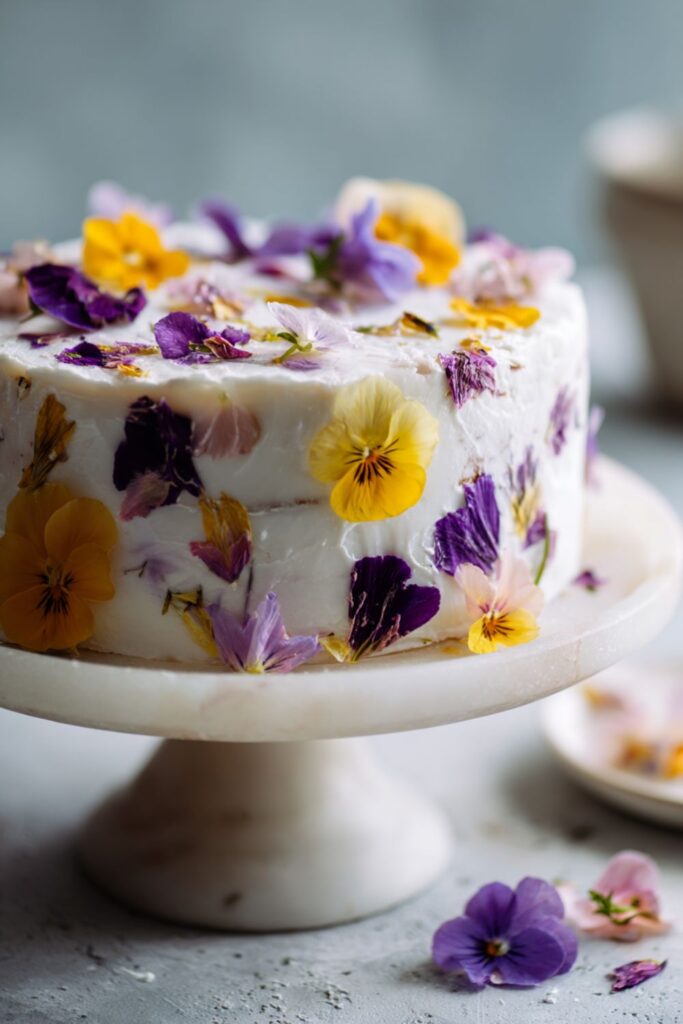
Martha’s Cake Perfection book features cakes decorated with edible flowers: pansies, violas, nasturtiums, and rose petals. The flowers are pressed gently into soft frosting or arranged in a crown around the top edge. No fondant. No piping bags. Just real flowers on real buttercream.
Choose flowers that are pesticide-free and food-safe. Press them into frosting while it is still tacky. Arrange in a loose, natural pattern, not a rigid circle. The flowers should look as if they fell from a garden and landed on the cake. That controlled accident is the Martha approach to cake decoration: it looks effortless because every petal was placed with intent.
11. Butter in a Stamped Mold
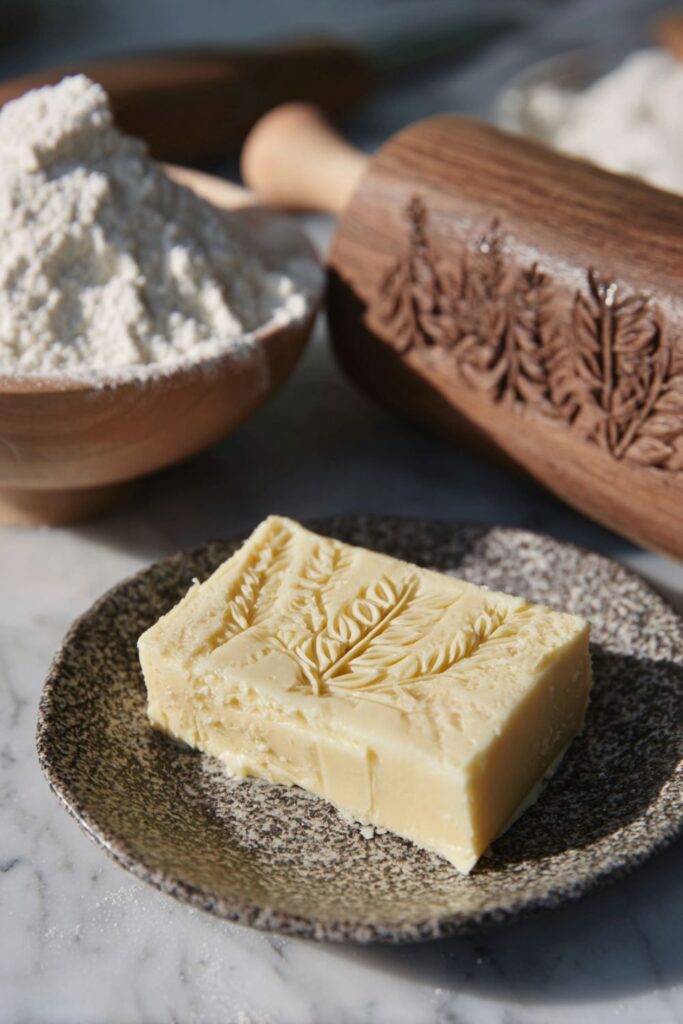
Before baking begins, the butter sits out to soften. Martha’s butter comes from a mold. A wooden butter mold with a carved pattern, a thistle, a wheat sheaf, an acorn, presses a design into the surface. The stamped butter on a small ironstone dish is a still life before it becomes an ingredient.
Place the molded butter on a dish near the flour and the eggs. Let it soften at room temperature. The stamped pattern slowly loses definition as the butter warms. That slow dissolve is part of the visual story: an object moving from decoration to function. The butter is beautiful, and then it is useful. Both states matter.
12. A Linen Towel Draped Beside a Cooling Rack
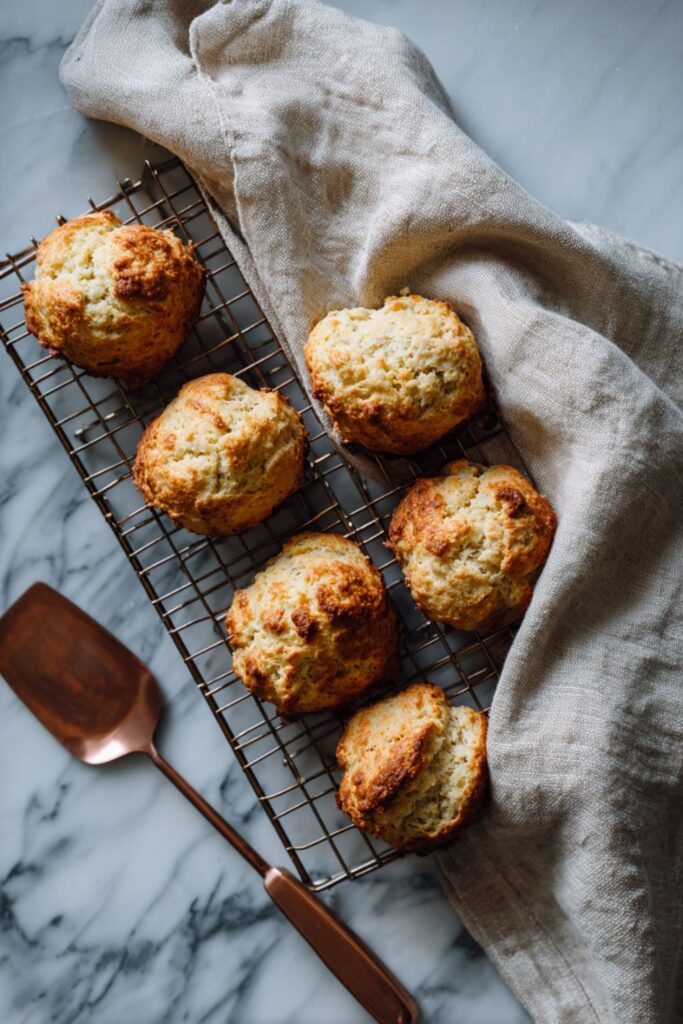
A linen kitchen towel in cream or soft stripe draped beside a wire cooling rack is the quiet background detail that ties the baking scene together. The towel catches crumbs. It wipes floury hands. It rests between tasks. In a photograph, it adds texture and softness to a scene of hard surfaces: marble, metal, glass.
Choose a linen towel with a visible weave. Drape it loosely, not folded. Let one corner hang off the counter edge. The towel should look used, not staged. A wrinkle or a flour smudge makes it real. The towel and the cooling rack together signal that something just came out of the oven and the room still smells like it.
13. An Ironstone Platter Holding a Finished Pie
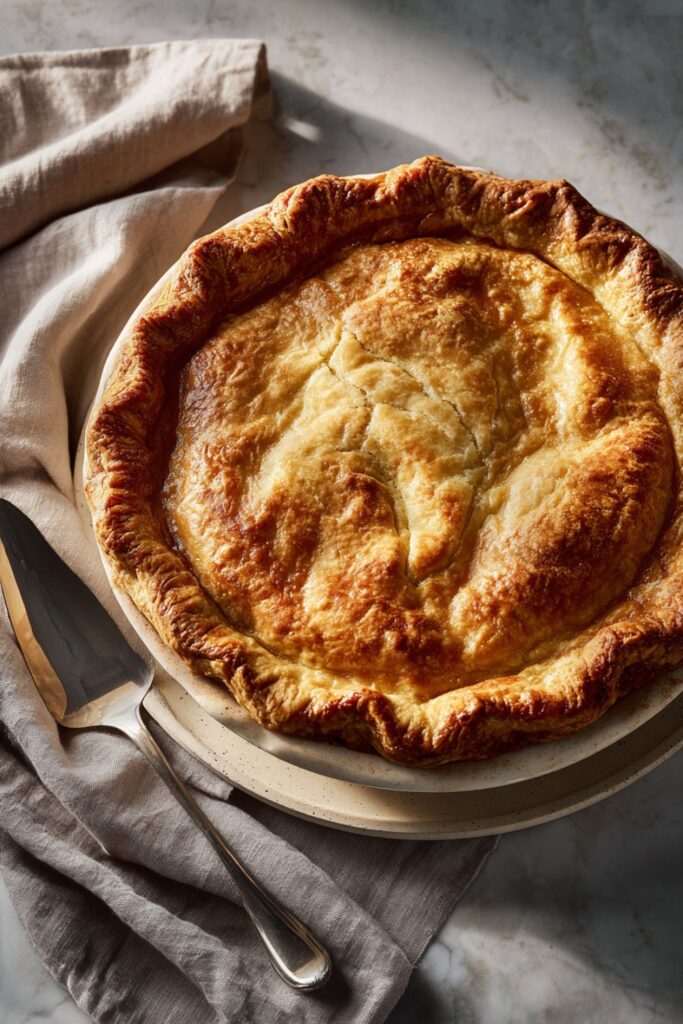
Martha serves pies on cream ironstone platters, not in the baking dish. The transfer from dish to platter is the moment the pie stops being food and starts being a composed object. The ironstone’s weight and matte surface ground the pie and make it look permanent.
Slide a fully cooled pie onto a wide ironstone platter. Leave space around the edges. Place a silver pie server beside it. The platter should be larger than the pie. The empty rim of ironstone surrounding the crust is negative space that frames the pie the way a mat frames a print. That rim is where the baking aesthetic becomes editorial.
14. A Pie Cooling on a Windowsill
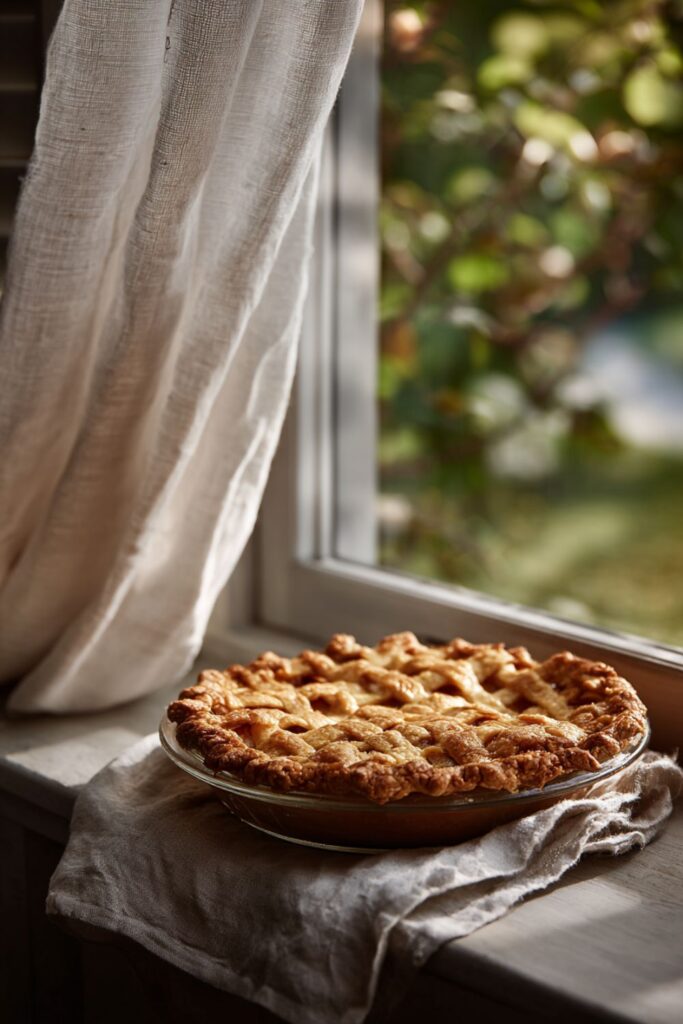
This is the most romantic image in the baking aesthetic. A pie on a windowsill, steam rising, linen curtain lifting in a breeze, garden visible through the glass. It is the image that made an entire generation of women search Pinterest for “Martha Stewart baking aesthetic.”
Place a freshly baked pie on a folded linen towel on the windowsill. Open the window a few inches. Let the curtain move. The pie needs to cool for structural reasons, but the windowsill placement is pure visual storytelling. It connects the kitchen to the outdoors, the baked good to the season. A peach pie on a windowsill in July. An apple pie in October. The season is in the frame.
Every scene is in place: the counter, the tools, the mid-task moments, the finished goods, and the windowsill. The final idea captures the moment that makes the whole effort worth it.
15. The First Slice on a Pressed Glass Plate
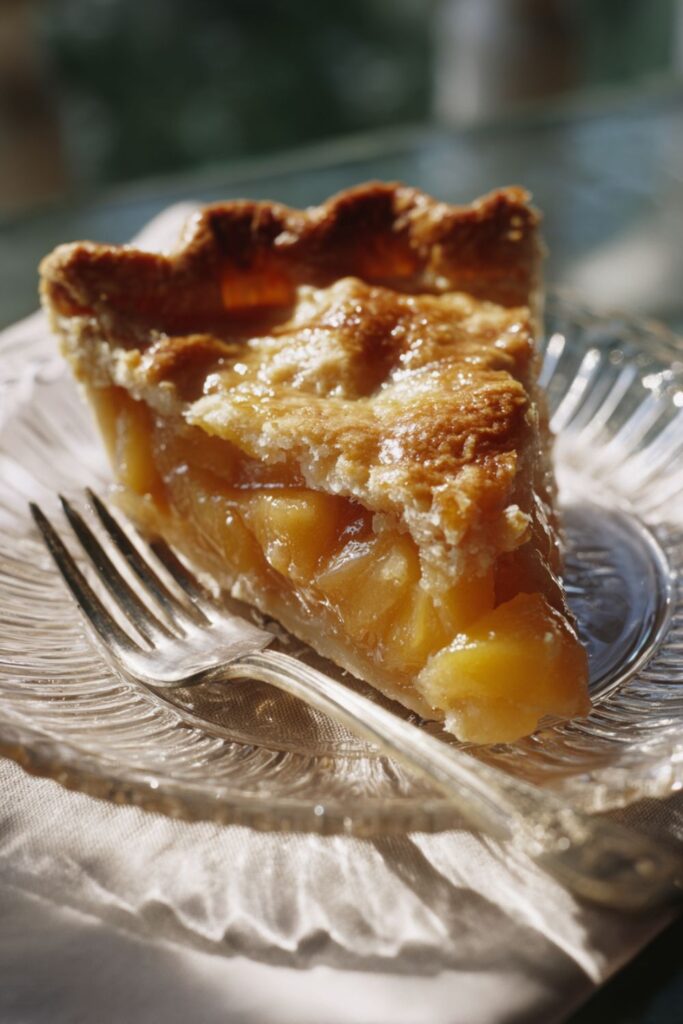
The baking aesthetic ends the same way a Martha dinner ends: with one beautiful serving on a beautiful plate. A single slice of pie on a pressed glass dessert plate. The filling is visible in cross-section. The crust is golden and flaky. A fork rests beside it, tines down.
Use a pressed glass plate so the light passes through it. Place the slice at a slight angle. Do not add garnish. The fruit inside and the crust outside are the only colours. The plate catches light and throws it back in tiny prisms. A single slice on glass, photographed in afternoon light, is the last save-worthy image in the baking story. It is the moment the kitchen goes quiet and someone finally sits down.
The Martha Stewart baking aesthetic is not about what you bake. It is about what the kitchen looks like while you bake and what the finished thing looks like before it is eaten. Flour on marble. Copper catching light. Dough shaped by hand. Fruit arranged in a spiral. A pie on a sill.
Start with one scene. Dust the counter with flour and place a wooden rolling pin on it. Crack eggs into a copper bowl. Crimp one pie edge by hand. Each moment is a photograph and each photograph is a pin. The kitchen becomes the most beautiful room in the house not because of the cabinets or the paint. It becomes beautiful because someone is making something in it with care.
The best baking photographs are taken before the first bite. The kitchen is still warm. The light is still good. And the pie is still whole.
You might also like: