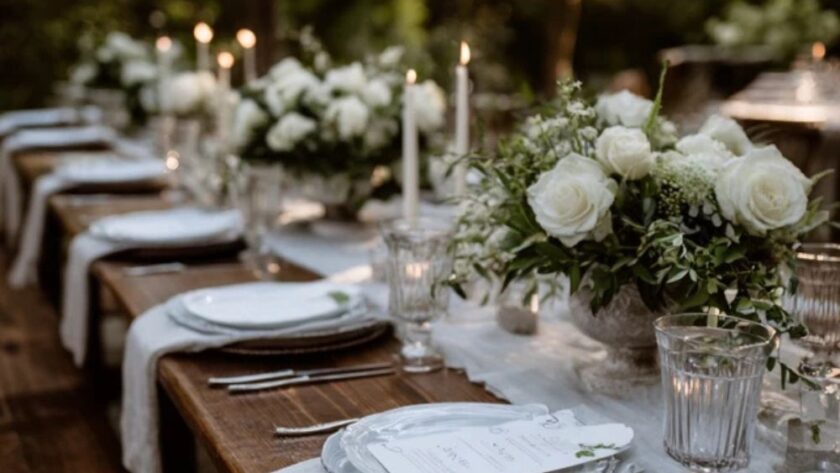
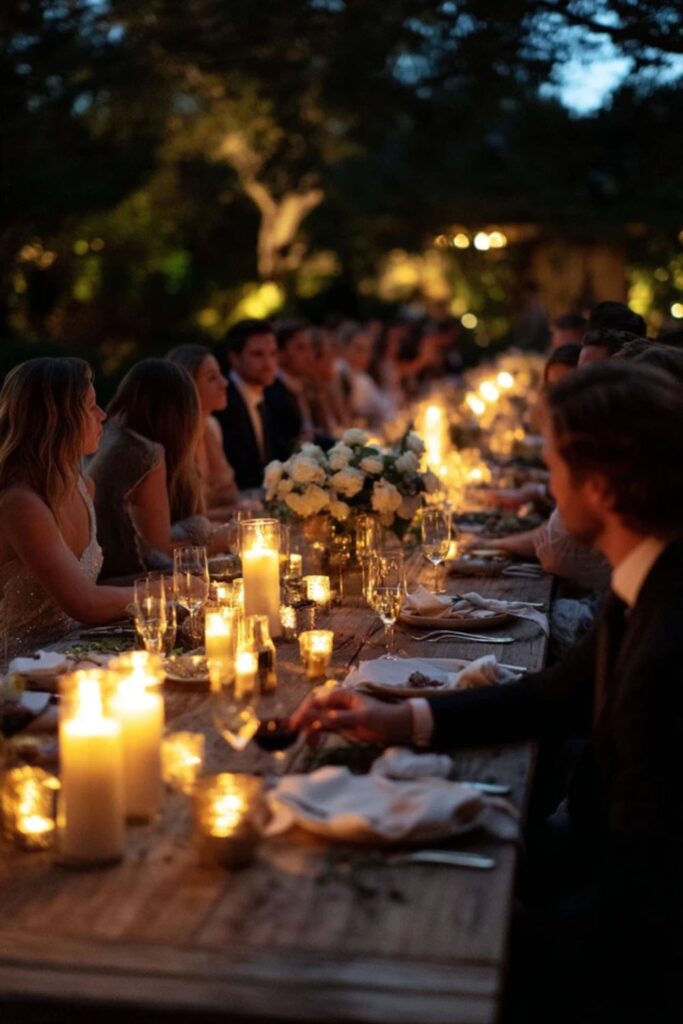
Late afternoon light filters through the branches above a long wooden table set for forty. White garden roses spill from silver urns, and beeswax tapers wait to be lit beside linen napkins holding a sprig of lavender.
The Martha Stewart aesthetic wedding is not about a color scheme chosen from a Pinterest board. It is about intention behind every material, every flower, every vessel on the table. The details feel gathered over time, even when assembled in a single season of planning.
What separates this approach from a standard “elegant” wedding is restraint and specificity. Martha Stewart Weddings taught a generation of brides that the fabric of the napkin matters as much as the menu. A single variety of flower repeated in abundance beats a mixed bouquet every time.
Here are 17 ways to bring that philosophy to your own day. Start with the details that matter most to you and build outward from there.
1. A Garden Ceremony with Real Ground Beneath Your Feet
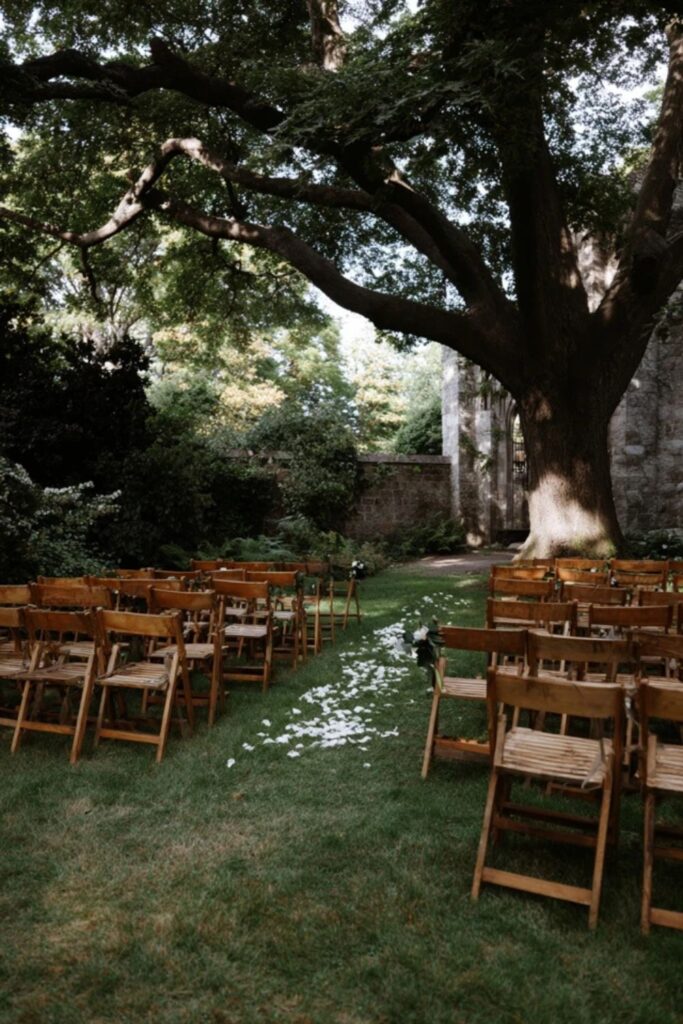
Martha has always favored ceremonies held outdoors on real grass, under real trees, with real weather. A grassy meadow, a family backyard, a walled garden. The architecture of nature is all the decoration a ceremony needs.
Skip the rented arch draped in tulle and let the setting do the work instead. A row of wooden chairs, an aisle of scattered petals, and a mature tree overhead is more memorable than any rented structure.
2. One Flower, Repeated in Abundance
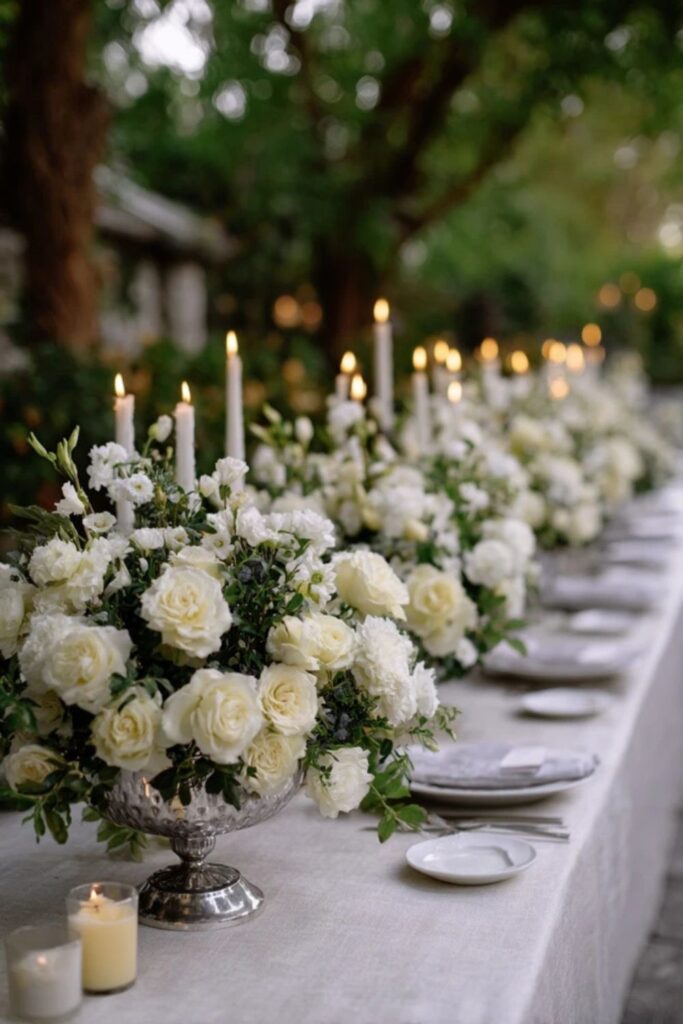
The Martha approach to wedding flowers is the same as her approach to gardens: mass planting. One variety repeated in generous quantities creates more impact than a dozen varieties arranged once.
Choose white garden roses, or peonies, or dahlias, and commit fully. Fill every vessel on the table with the same bloom and carry it in the bouquet. When one flower dominates, the entire day feels cohesive without a color chart.
3. Linen Everything, Paper Nothing
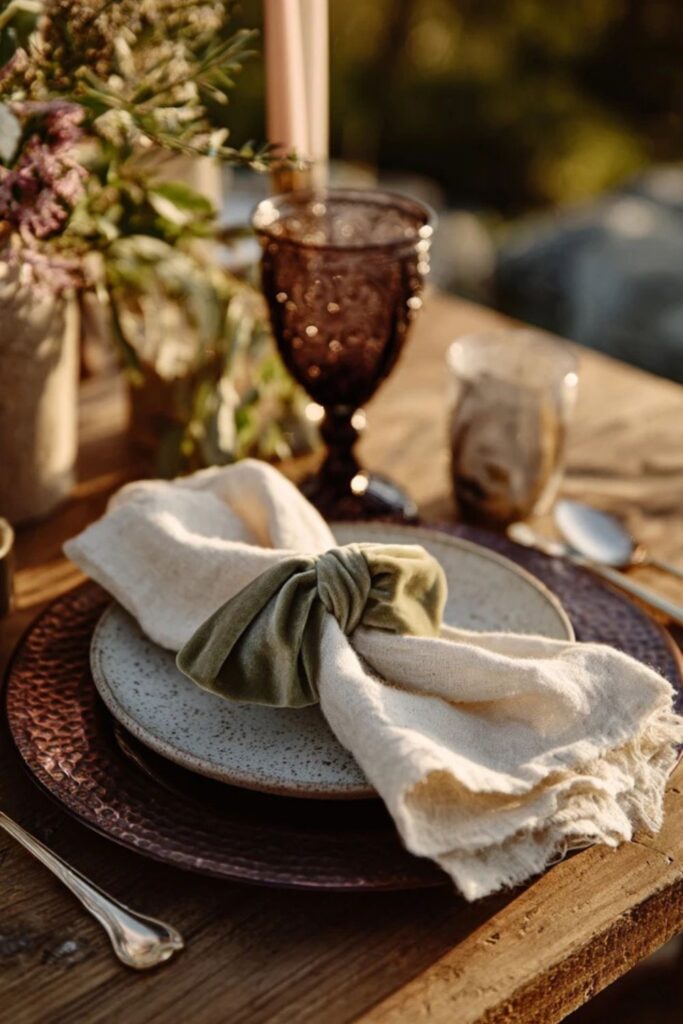
Linen tablecloths, linen napkins, and linen runners set the foundation for every Martha reception table. The texture of real linen, slightly wrinkled and soft from washing, creates warmth no rental fabric can match.
Choose cream, putty, or very pale sage for the base layer. Fold napkins simply and tie each one with velvet ribbon or a fresh herb sprig. The weight and softness of linen beneath a guest’s hand registers even without being noticed consciously.
4. Beeswax Tapers Down the Entire Table
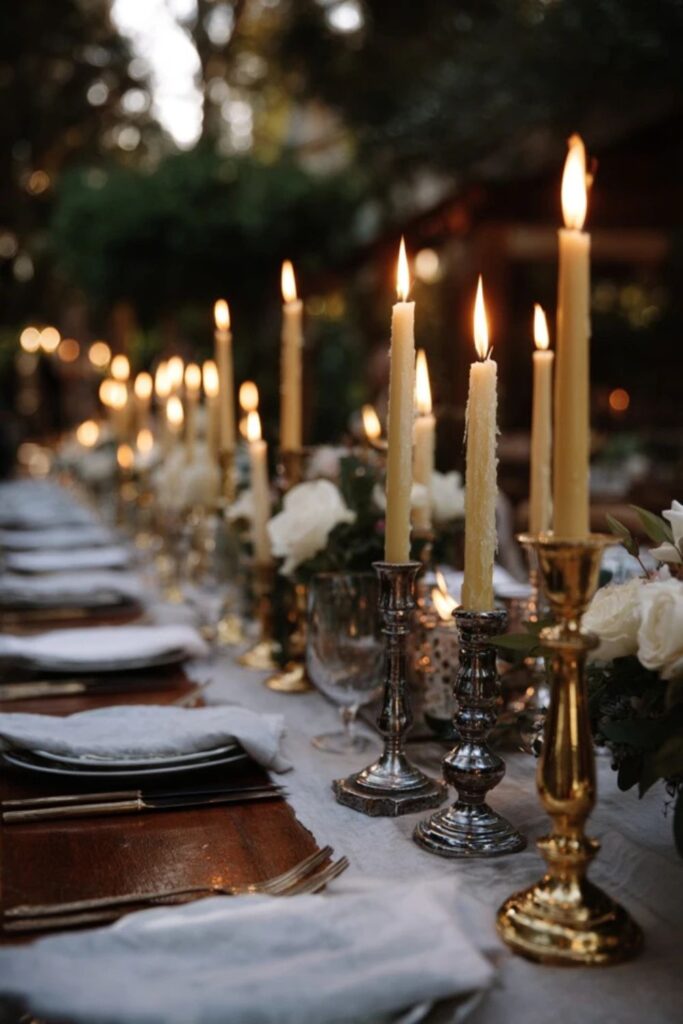
Every candle at a Martha wedding is beeswax. The warm honey color, the faint natural scent, and the slow golden burn set a tone paraffin cannot replicate. Candles are not decoration; they are atmosphere.
Line the full length of the table with tapers in mismatched silver, brass, and pewter candlesticks. Light them as guests take their seats. By the time the toasts begin, the wax will have dripped and the room will glow.
The ceremony is set and the table has its anchor pieces. What follows builds the layers that make the reception feel inherited rather than rented.
5. Ironstone and Copper Layered at Each Place
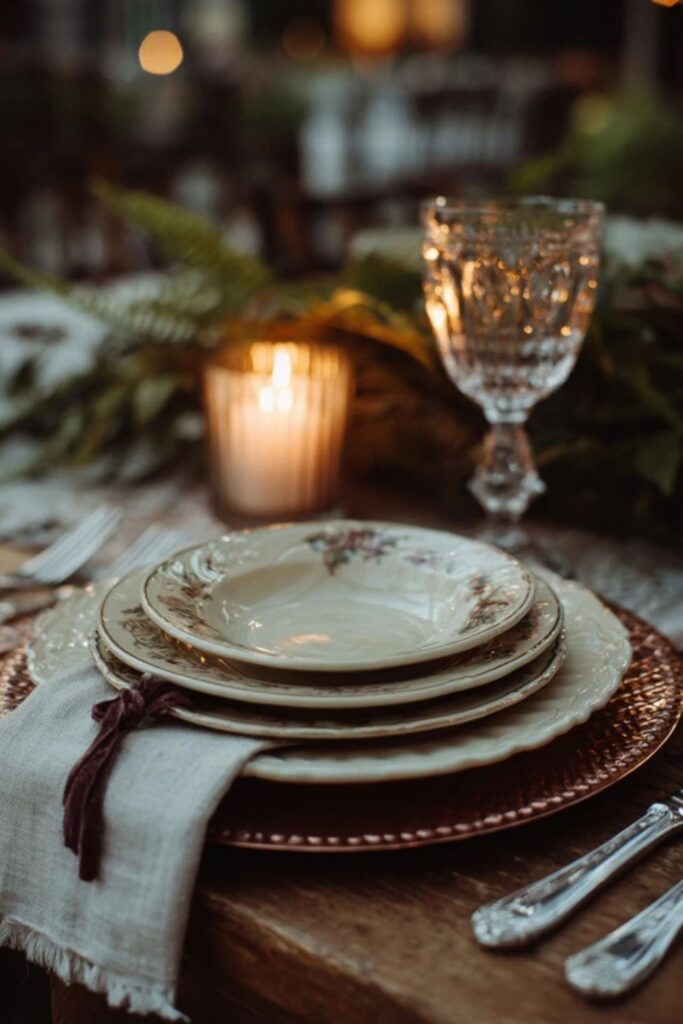
Skip the standard rental china and layer instead. A cream ironstone dinner plate on a burnished copper charger creates a place setting that looks collected from a lifetime of hosting.
Mix patterns if you can find enough: a plain ironstone for dinner, a transferware salad plate, a simple bread plate. Each setting becomes slightly unique, as if the couple borrowed from grandmothers on both sides of the family.
6. Pressed Glass Goblets for Every Guest
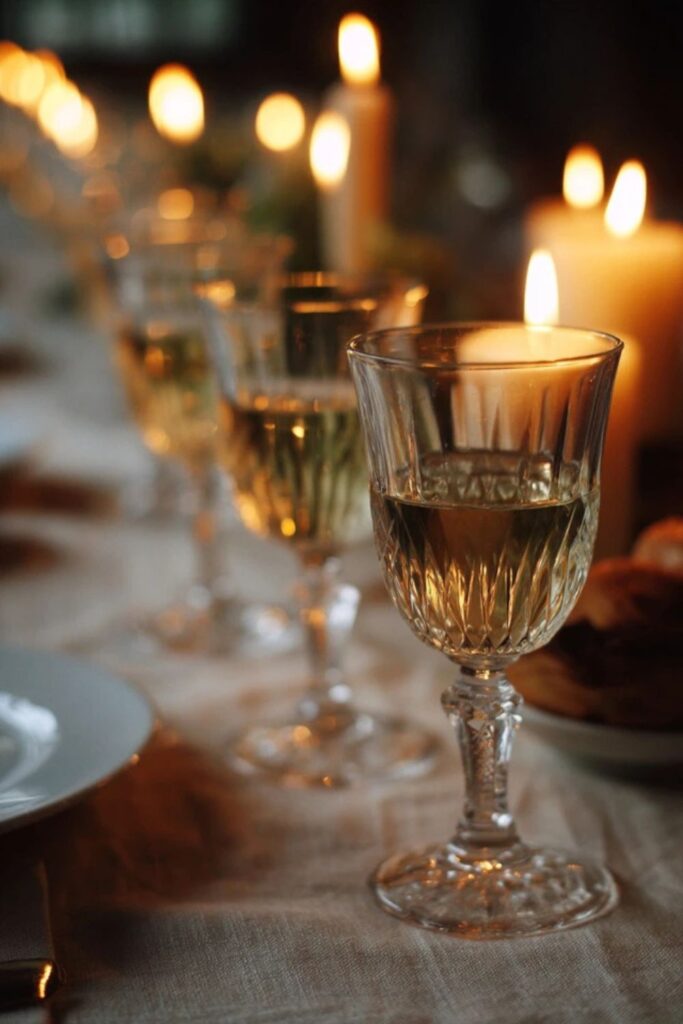
Vintage pressed glass catches candlelight and scatters it in small shifting patterns across the tablecloth. Each tiny cut in the surface refracts light differently than smooth modern glass. The effect is subtle, shimmering, and alive.
Collect pressed glass goblets from thrift stores in the months before the wedding and mix patterns freely. After the reception, send each guest home with their goblet as a favor that actually means something.
7. Letterpress Invitations with Botanical Detail
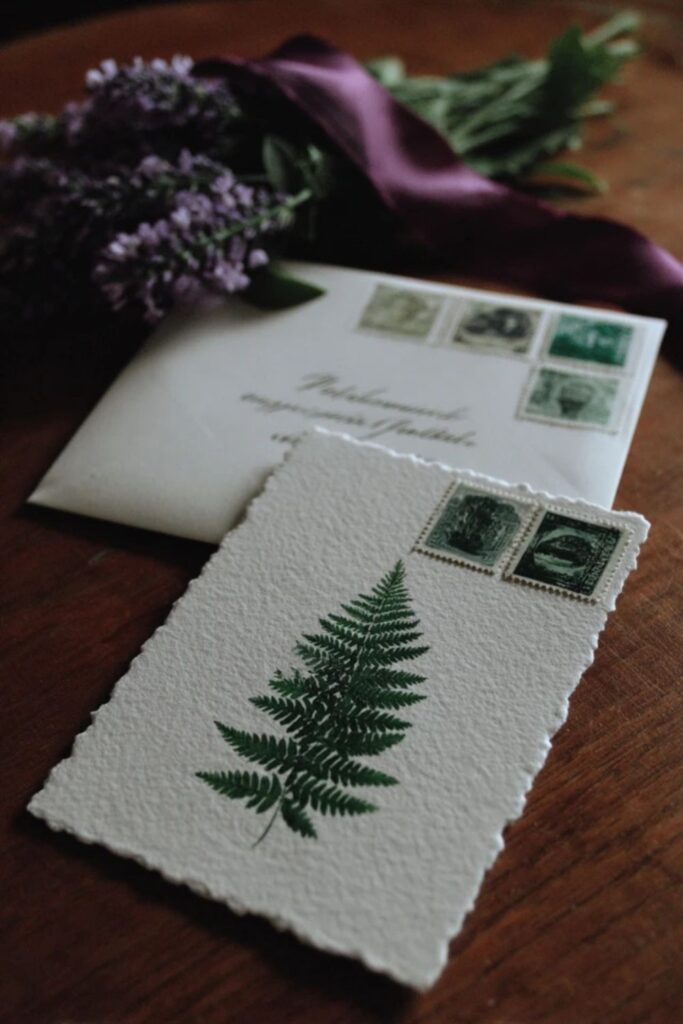
Martha Stewart Weddings championed letterpress printing with botanical illustrations and calligraphed envelopes. The invitation sets the tone for the entire day before a single guest arrives.
Choose heavy cotton paper and a single ink color: deep green, navy, or warm gray. A pressed fern on the invitation echoes the garden setting. Have the envelopes addressed by hand, and this small investment in craft signals that every detail was considered.
8. Family-Style Dinner Served in the Cooking Vessel
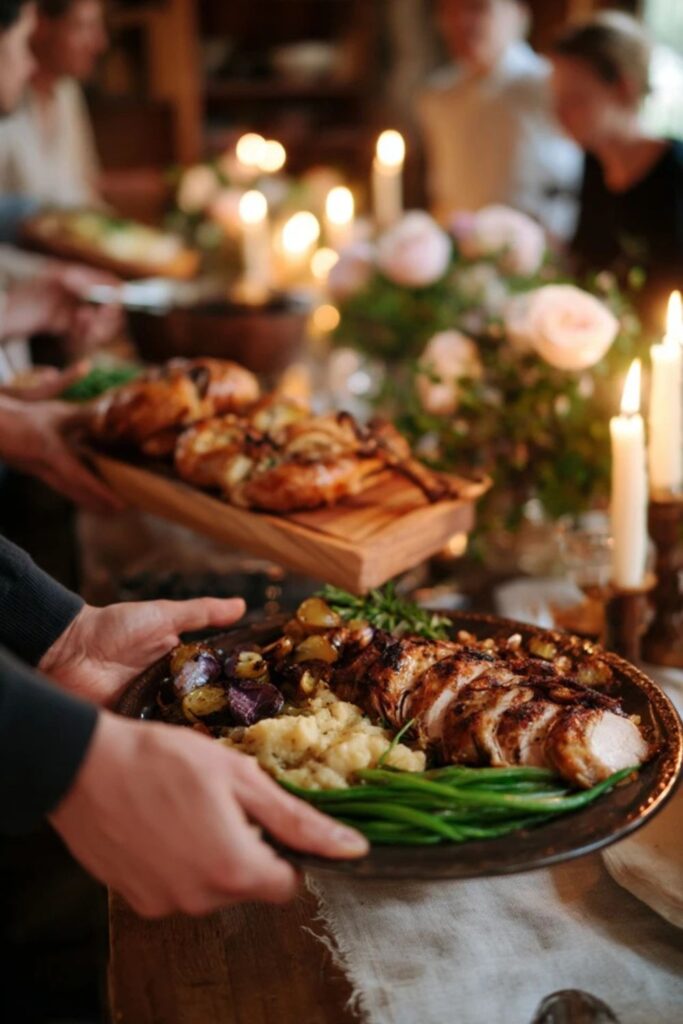
Martha’s entertaining philosophy applies directly to weddings: serve family style in the pot you cooked in. Ironstone platters of carved chicken, copper pots of roasted vegetables, and wooden boards of sliced bread travel down the table.
This approach makes guests feel they are at a dinner party, not a banquet. Conversation happens naturally when people reach for bread and pour wine for the person beside them. The food becomes part of the evening, not a plated interruption.
9. A Bouquet You Could Have Picked from a Garden
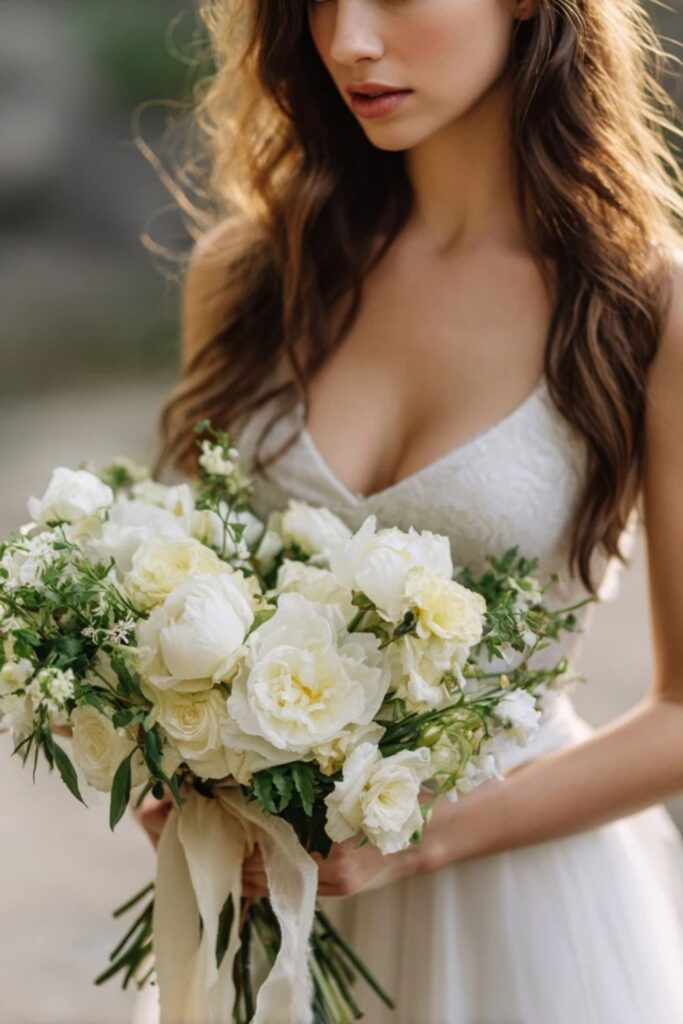
The Martha bridal bouquet looks like it was gathered that morning, not assembled by a committee. A loose handful of garden roses or peonies tied with a simple silk ribbon. Stems visible, greens included, nothing wired or forced.
Carry it loosely at your side, not clutched at the waist. Let a few stems hang longer than the rest. The beauty is in the asymmetry, the feeling that nature arranged this rather than a florist with a grid.
The layers are building. What comes next adds the personal, handmade touches that separate a Martha wedding from any other.
10. Calligraphed Place Cards on Real Paper
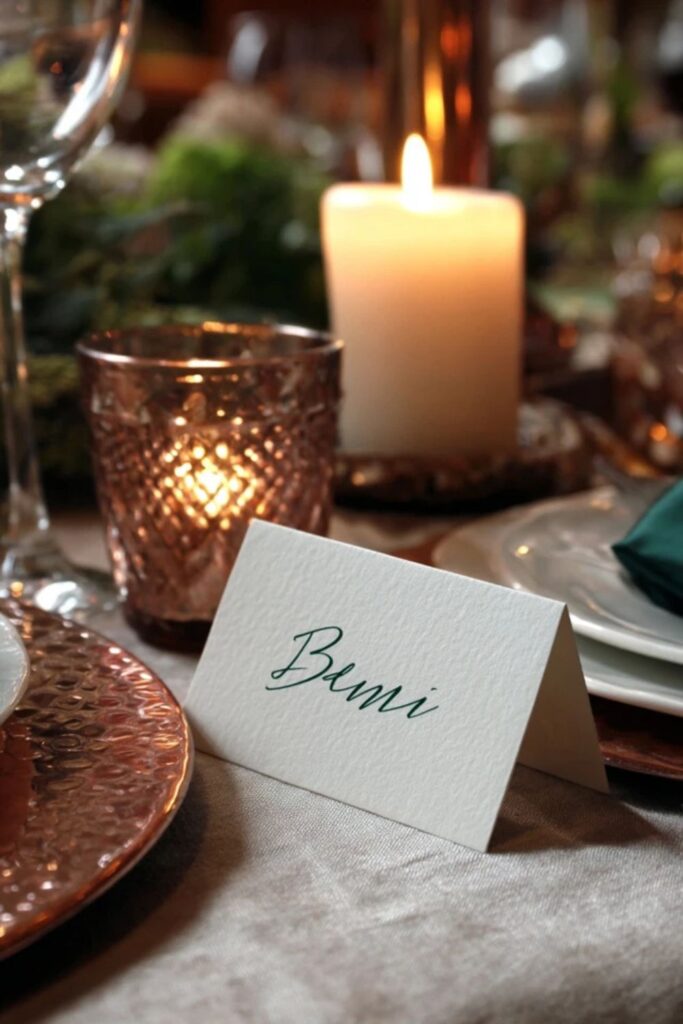
A handwritten place card tells each guest they were thought of individually. Use heavy card stock in cream or white with black or deep green ink. Hire a calligrapher or practice the lettering yourself.
Prop each card against a pressed glass votive or tuck it into a folded napkin. Someone sat down and wrote your name by hand for this particular seat. That effort carries more meaning than any printed card.
11. Edible Favors Wrapped by Hand
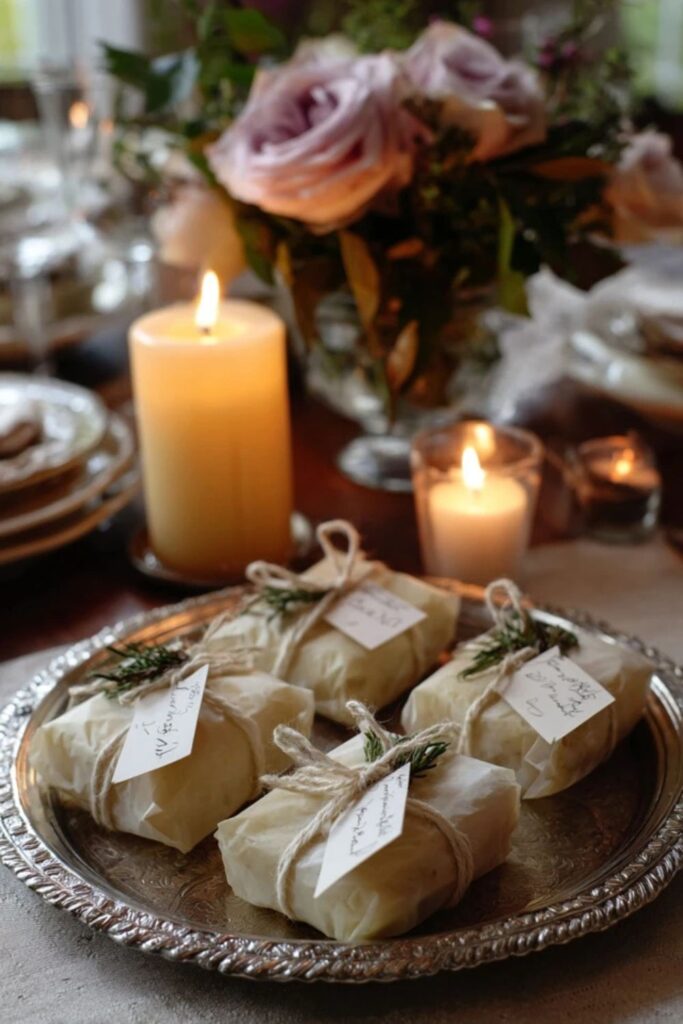
Martha’s favors are always edible and wrapped with care. Small bags of candied almonds, jars of local honey, or boxes of hand-decorated cookies. Each one tied with ribbon and a handwritten tag.
A favor guests can eat that evening is more thoughtful than a trinket that ends up in a drawer. Wrap them in wax paper or muslin tied with twine. Place one at each seat and it becomes part of the table setting.
12. The Cake as a Separate Moment
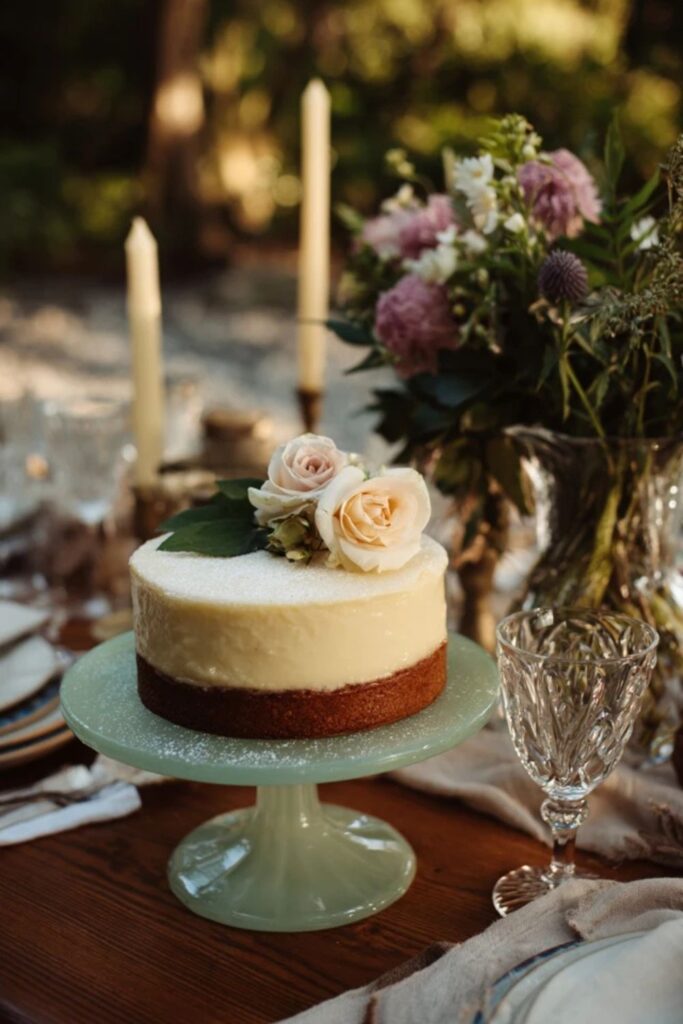
Dessert deserves its own moment at a Martha wedding. The cake is not wheeled out as a footnote to dinner. It is displayed on a dedicated table with its own candles and flowers.
A single-tier cake on a jadeite stand, dusted with powdered sugar and topped with fresh garden roses, is all you need. No fondant sculptures or tiered towers unless the couple truly wants them. Simplicity here reads as confidence.
13. Velvet Ribbon as the Connective Thread
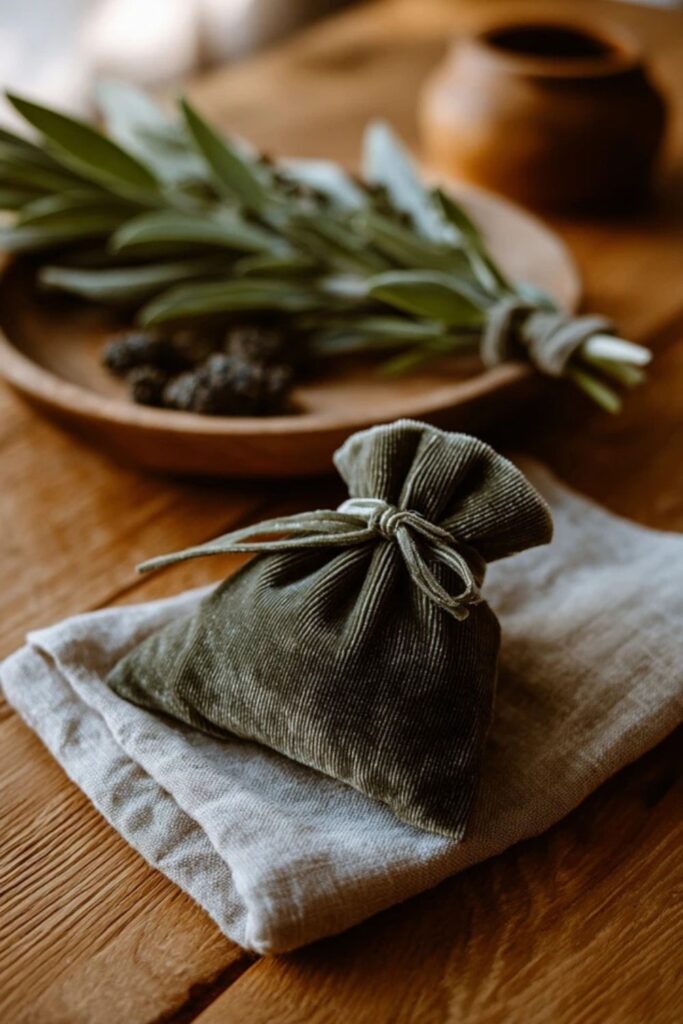
A single ribbon color and texture can connect every element of the day. Dusty sage velvet or soft blush tied around the bouquet, the napkins, the favor bags, and the ceremony programs.
The ribbon creates a visual thread that ties the whole day together. Guests may not name it, but they will feel it. Consistency in one small material carries more weight than coordination across twenty details.
14. Mercury Glass for Soft, Scattered Light
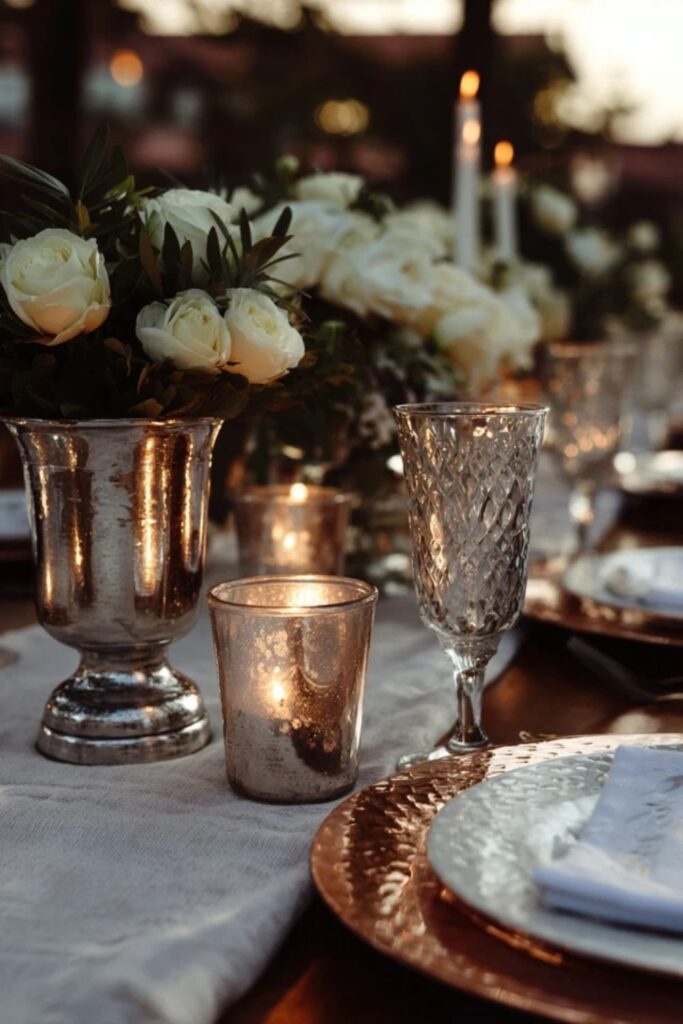
Mercury glass votives placed between flower arrangements scatter candlelight in a mottled, gentle glow. The imperfect silver surface reflects without the sharpness of polished metal. It softens every face at the table.
Collect mercury glass votives in varied sizes and cluster three to five between each arrangement. As the sun sets and the candles take over, the table becomes a constellation of warm, shifting light.
The details are nearly complete. These final touches are what guests remember on the drive home and carry with them for years.
15. Herbs Instead of Confetti
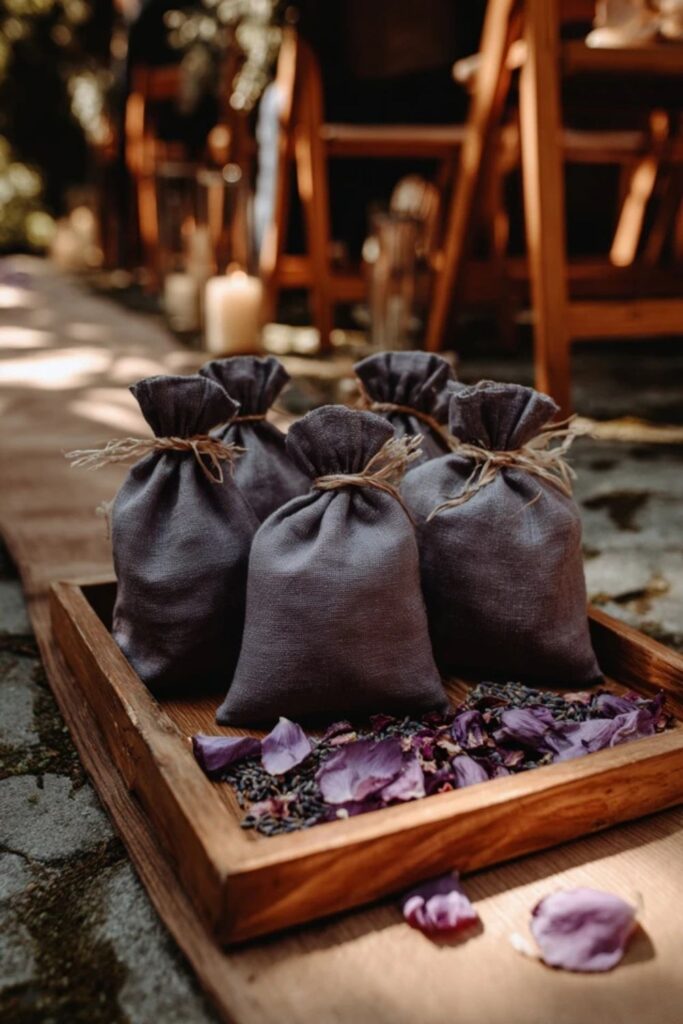
Martha favors dried lavender, rosemary, or rose petals tossed as the couple exits. The scent is immediate and memorable. Dried herbs crumble underfoot and release fragrance with every step.
Package them in small muslin bags or paper cones and place one on each ceremony chair. The toss lasts seconds, but the scent lingers in the couple’s hair and clothes all evening. Photographs cannot capture it, but guests never forget.
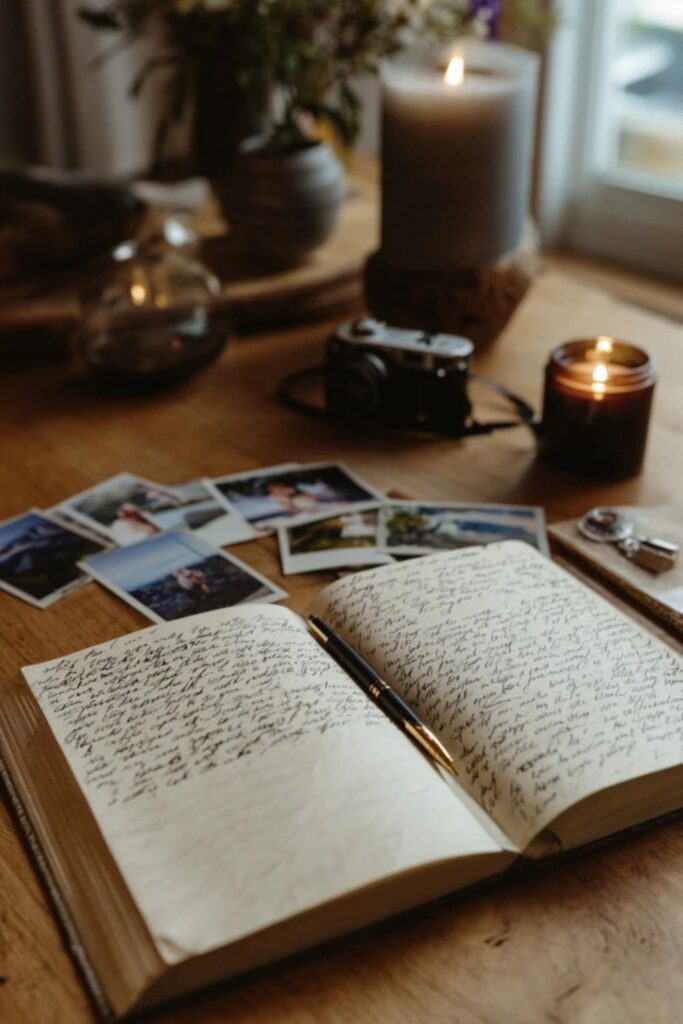
16. A Guest Book That Becomes a Keepsake
Martha’s approach to guest books goes beyond a blank journal. A linen-bound album with space for a Polaroid and a handwritten note from each guest becomes something the couple returns to for decades.
Set up a small table near the entrance with the album, a pen, and a camera. Invite guests to take a photo and write a message beside it. The finished book becomes an archive of the people who were there and what they wanted to say.
17. A Room That Glows, Not Sparkles
The final layer of a Martha Stewart aesthetic wedding is the light itself. No string lights, no uplighting, no LED anything. Beeswax candles, mercury glass votives, and the last golden light of day are enough.
As evening settles and the candles burn lower, the room takes on a warmth that feels intimate and ancient. Copper catches flame, linen softens, and faces glow. A room feels alive because real fire is burning in it.
The Martha Stewart aesthetic wedding is not about spending the most or impressing the hardest. It is about choosing real materials, real flowers, and real fire. Linen instead of polyester, beeswax instead of battery-operated, one bloom repeated in abundance.
Start with the detail that matters most to you: the linen napkins, the letterpress invitation, or the jadeite cake stand. Build outward from that single choice and let the rest follow naturally.
A wedding planned this way does not look like a catalog. It looks like two people who paid attention to what mattered and let the rest fall away.
You might also like: