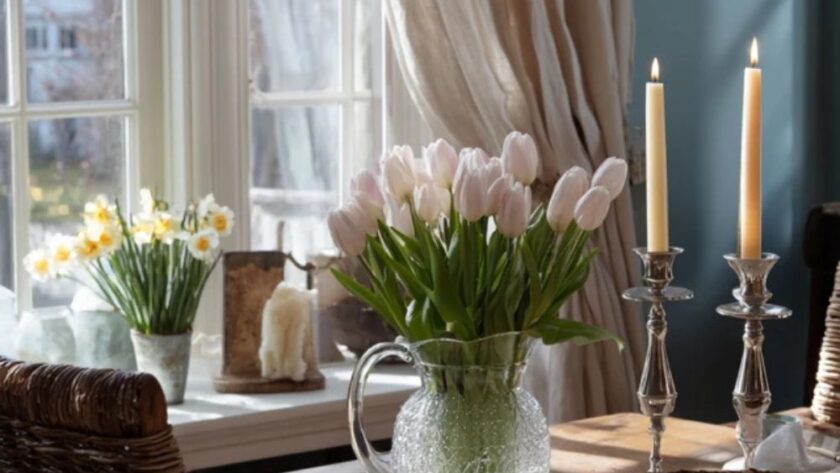
A window pushed open for the first time since October lets in air that smells like wet earth and something green. On the sill, a pressed glass vase of pale pink tulips catches the light. Their petals are almost translucent.
That moment is the Martha Stewart aesthetic spring. It is the season when a home sheds its winter layers. Light pours in, colour returns, and the first cut flowers from the garden fill every room.
Martha plants hundreds of tulip bulbs at her Bedford farm every autumn. By April, her raised beds erupt in rows of pink, apricot, and cream. She cuts them by the trayful and fills every surface. Her spring is not about pastel throw pillows from a chain store. It is about real flowers, real light, and the discipline to swap winter weight for spring clarity.
These 17 ideas follow her lead. Each one trades what the room needed in January for what it needs right now, as the days grow longer.
1. Swap Heavy Curtains for Washed Linen
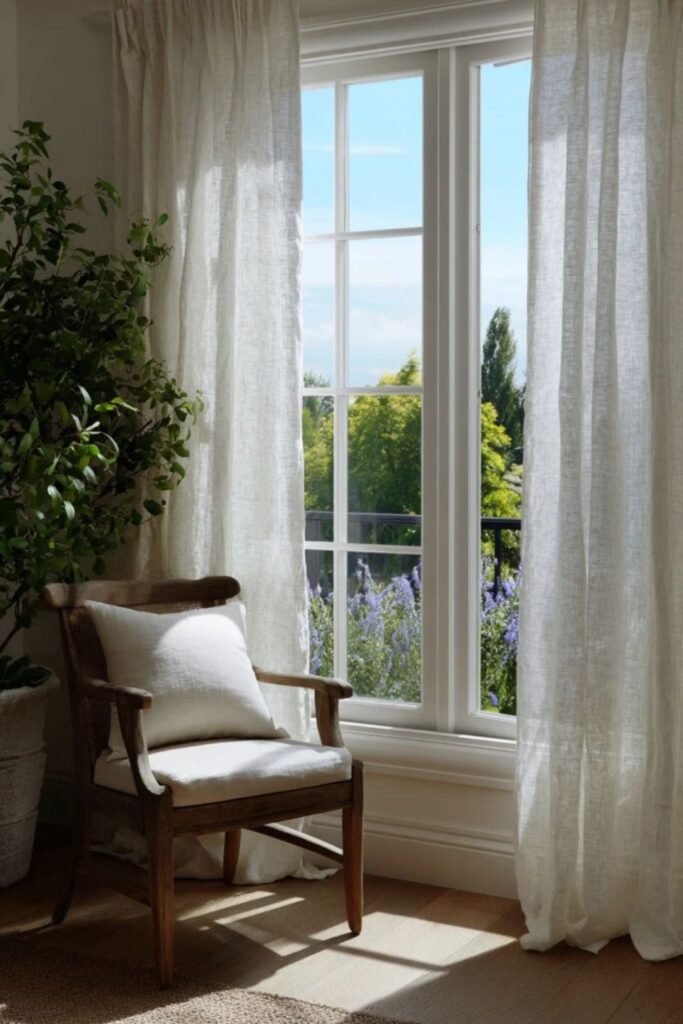
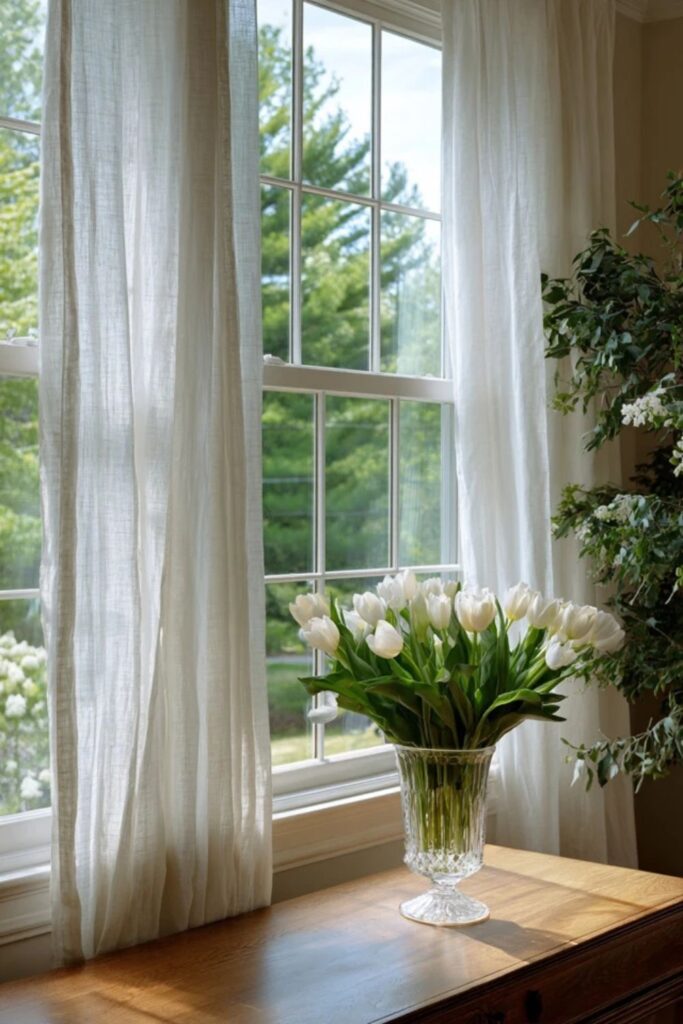
The single fastest way to change a room for spring is at the windows. Pull down the heavy velvet or wool and replace them with washed white linen. The linen filters light without blocking it, and it moves with any breeze from an open window.
Hang the linen panels from simple iron or nickel rods. Let them pool slightly on the floor or just brush it. The wrinkled texture of washed linen reads as relaxed rather than formal. Morning light through white linen gives every room a soft, even glow. That glow is how spring finally feels like it has arrived indoors.
2. Tulips in Masses, One Colour at a Time
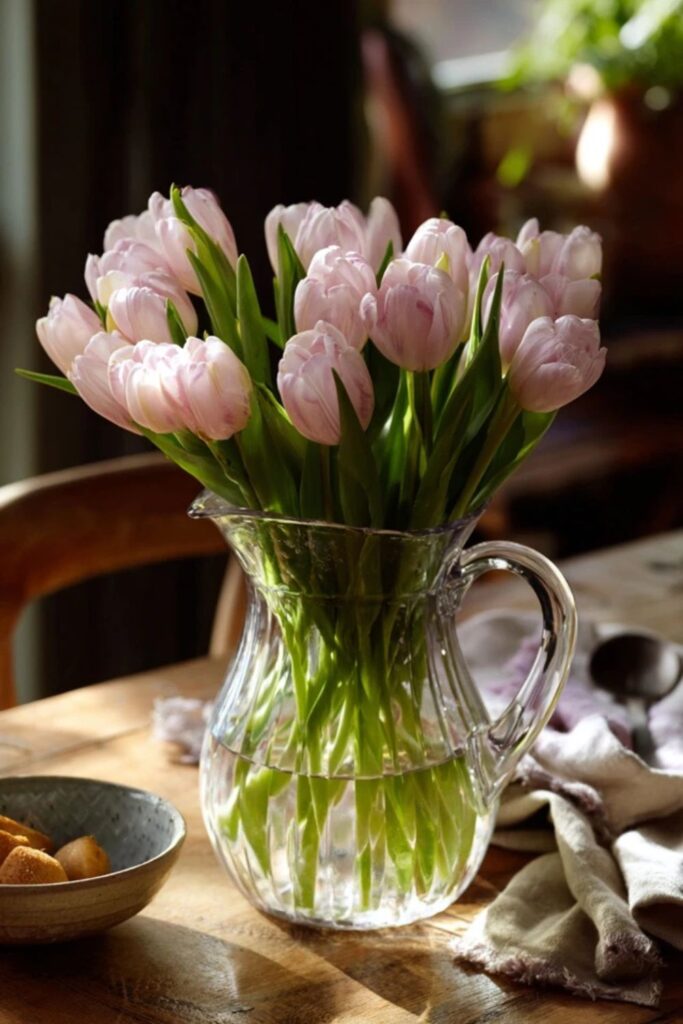
Martha’s spring signature is a mass of tulips in a single colour. Pale pink in a pressed glass pitcher. Cream in a jadeite bowl. Deep apricot in a copper pot. She grows varieties like ‘Sanne’ and ‘Silver Parrot’ at Bedford. Her crew cuts them into trays every morning in April.
Arrange tulips in a narrow-necked vase to keep the stems upright. Tulips keep lengthening after cutting, which gives the arrangement a living quality over several days. Cut stems at a 45-degree angle and change the water every two days. One variety per vase, twenty stems minimum. Fewer looks thin. More looks like a statement.
3. Araucana Blue on One Wall or Every Wall
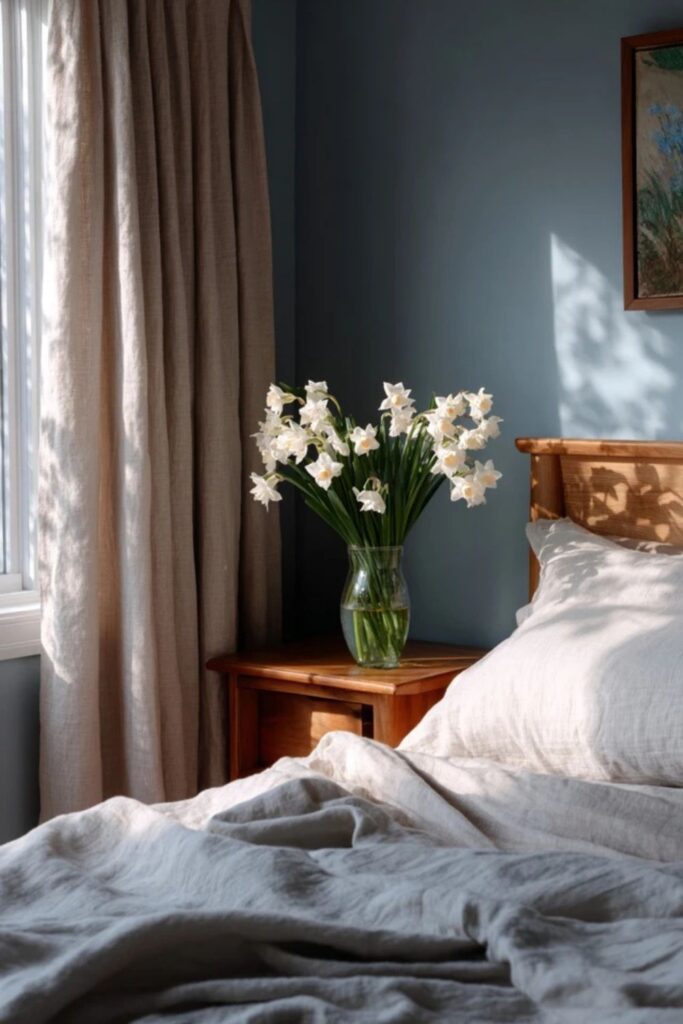
Araucana blue is the soft blue-green of Martha’s own chicken eggs. It is her spring colour. One wall painted this shade in a bedroom or a hallway shifts the entire palette from winter neutrals to something hopeful.
For a bolder commitment, paint all four walls. The colour works with white linen, cream ironstone, silver, and fresh greenery. It catches spring light differently than Bedford Gray. The blue reflects warmth back into the room and makes white flowers glow. Wooden surfaces look richer against it too.
4. Flowering Branches in a Tall Vessel
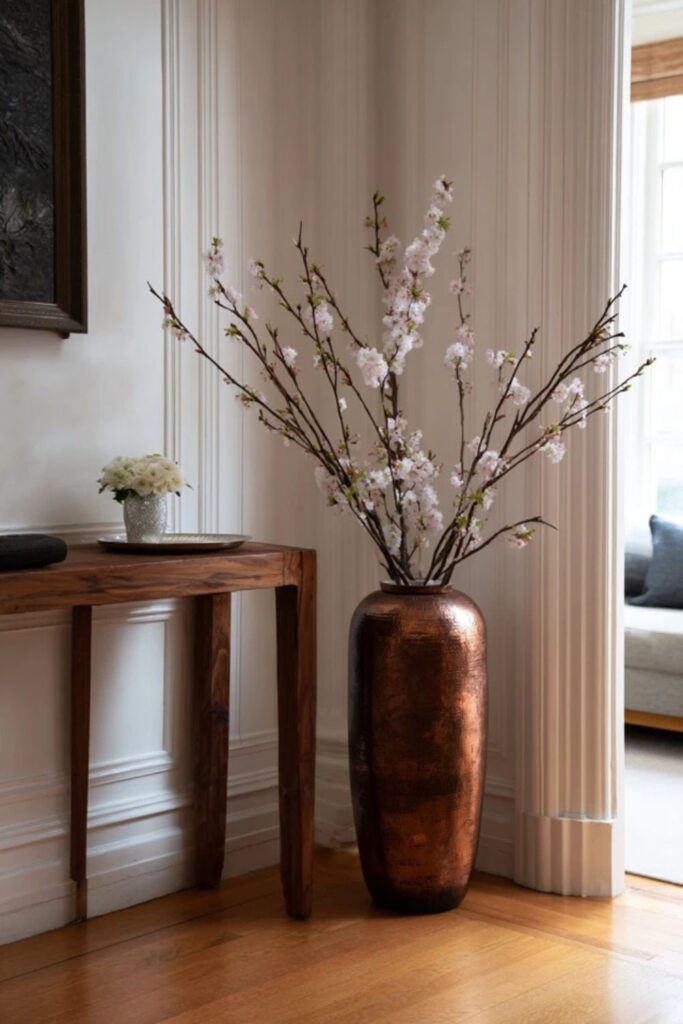
Before her tulips open, Martha brings spring indoors with branches. Weeping cherry, forsythia, quince, and magnolia all work. Cut them in bud and place them in a tall pressed glass or copper vessel. They will open within days in a warm room.
The scale of a branch arrangement fills a corner or an entryway. Cut branches when the buds are swollen but not yet open. Stand them in deep water in a cool room overnight. Then move them to their display spot the next morning. The buds will open over three to five days, giving you a slow-motion spring in a vase.
Winter’s dark palette is behind you. Those first four changes bring the season inside with real force. The curtains lighten the room, the tulips fill it with colour, and the branches give it height. What follows layers spring into the textures and surfaces of daily life.
5. Lighten the Bedding to Cotton Percale
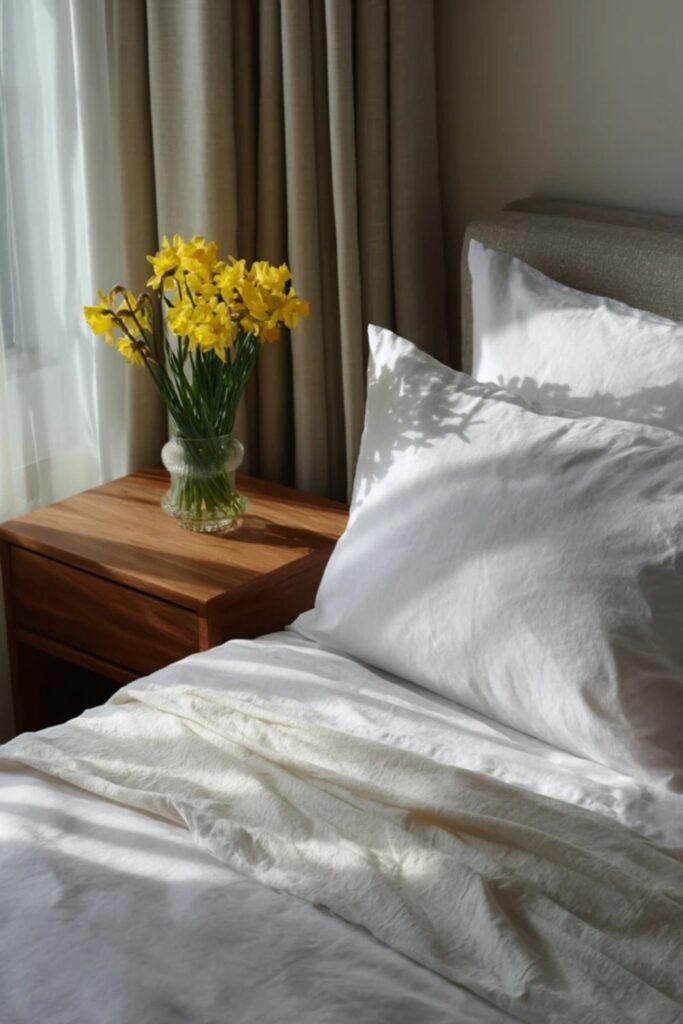
Martha swaps her flannel sheets for crisp cotton percale as soon as the nights warm. The shift from heavy, matte texture to something cool and smooth changes how the bedroom feels instantly. Percale has a crispness that softens with use but never goes limp.
Choose white or cream. Layer a lightweight cotton blanket at the foot of the bed instead of a duvet. The whole bed should look as if it exhaled when the season turned. Put a single pressed glass vase of daffodils on the nightstand to complete the transition. The room reads as spring from the doorway.
6. Bring the Silver Out for Daily Use
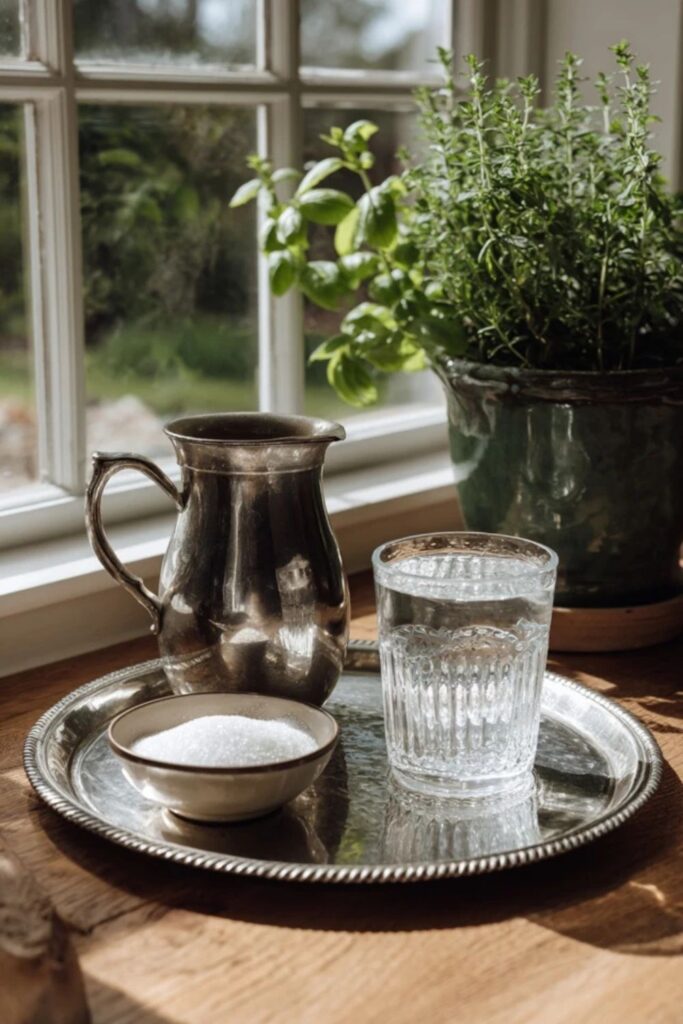
Martha uses her silver year-round, but spring is when it feels most at home. Silver reflects the longer, brighter light of the season. A silver tray on the kitchen counter, silver candlesticks on the mantel, a silver pitcher holding tulips.
Do not save silver for guests. Use it on a Tuesday for tea. Set a small silver tray with a cream pitcher and a pressed glass tumbler on the dining room table. The tray reads as spring without a single pastel. Polish the silver once in March. Then let it develop a soft patina through the warmer months.
7. Wicker for Texture and Weight
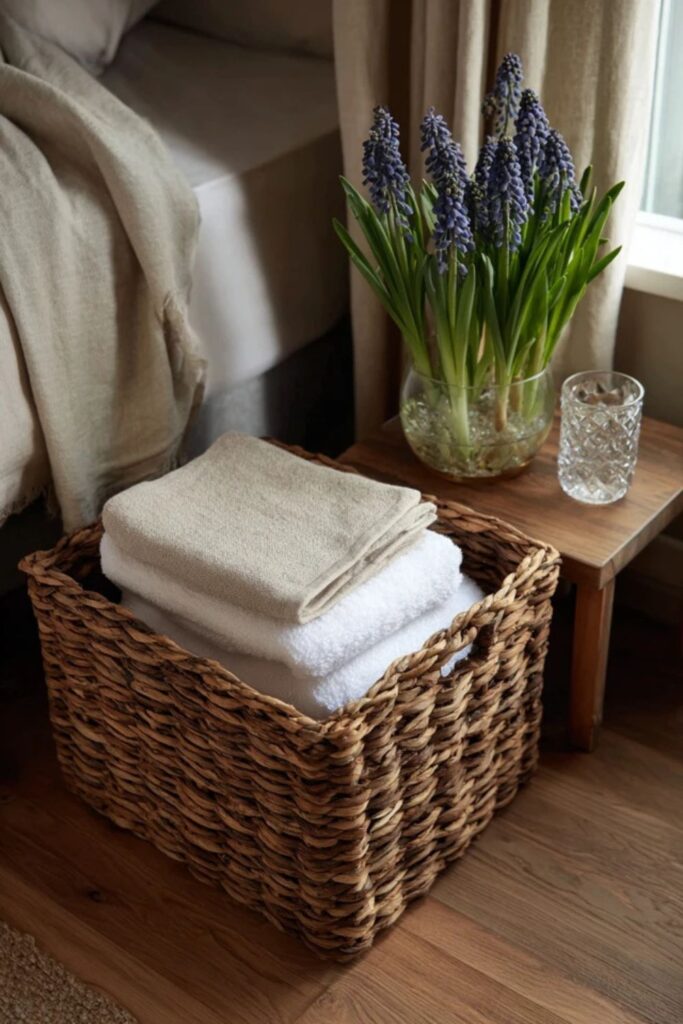
Wicker baskets, chairs, and trays belong to spring the way copper belongs to fall. The woven texture adds warmth without heaviness. Martha uses wicker in her outdoor spaces and brings it inside for the warmer months too.
A wicker tray on the coffee table holding books and a candle. A wicker basket in the bathroom stacked with white cotton towels. A wicker planter on the windowsill holding forced hyacinths. Choose natural or whitewashed wicker. The organic weave pairs with linen and pressed glass in a way that harder materials cannot.
8. Hyacinths Forced in Glass Bulb Vases
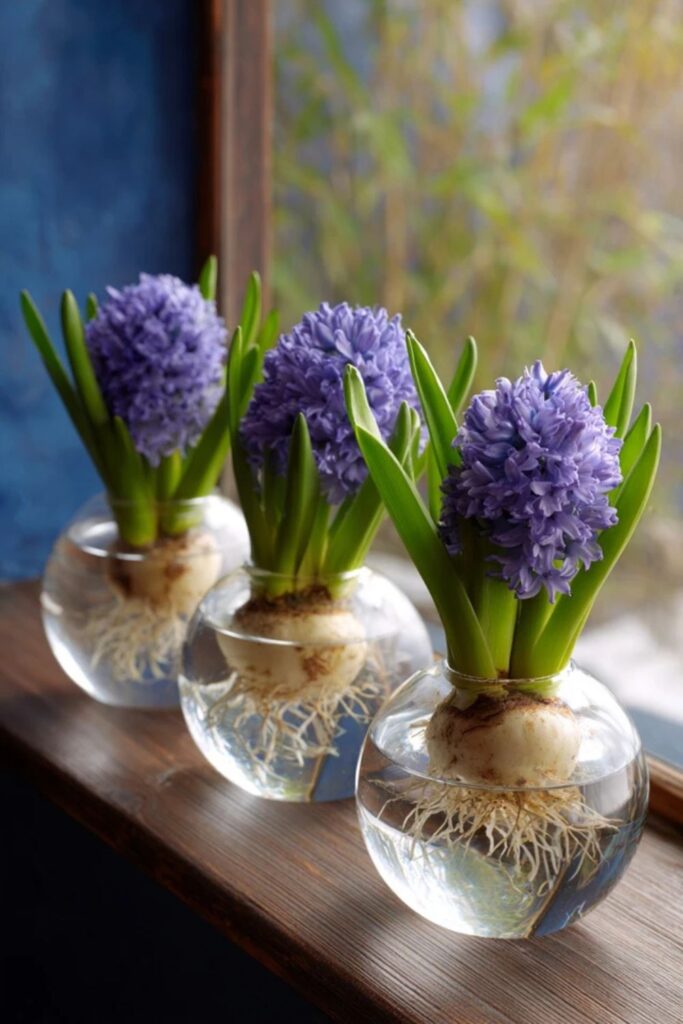
Forced hyacinth bulbs in clear glass vases are a Martha spring staple. The roots grow visibly in the water below. The green shoot pushes upward. The fragrant bloom opens over a week, and the entire life cycle becomes a tabletop display.
Line three or five bulb vases in a row on a windowsill or mantel. Choose white, pale blue, or soft purple varieties. One hyacinth can scent a small room entirely on its own. Mass them on the kitchen counter or a bathroom shelf. The effect is both fragrant and graphic, like a living science experiment dressed in spring colour.
9. A Spring Wreath of Living Greenery
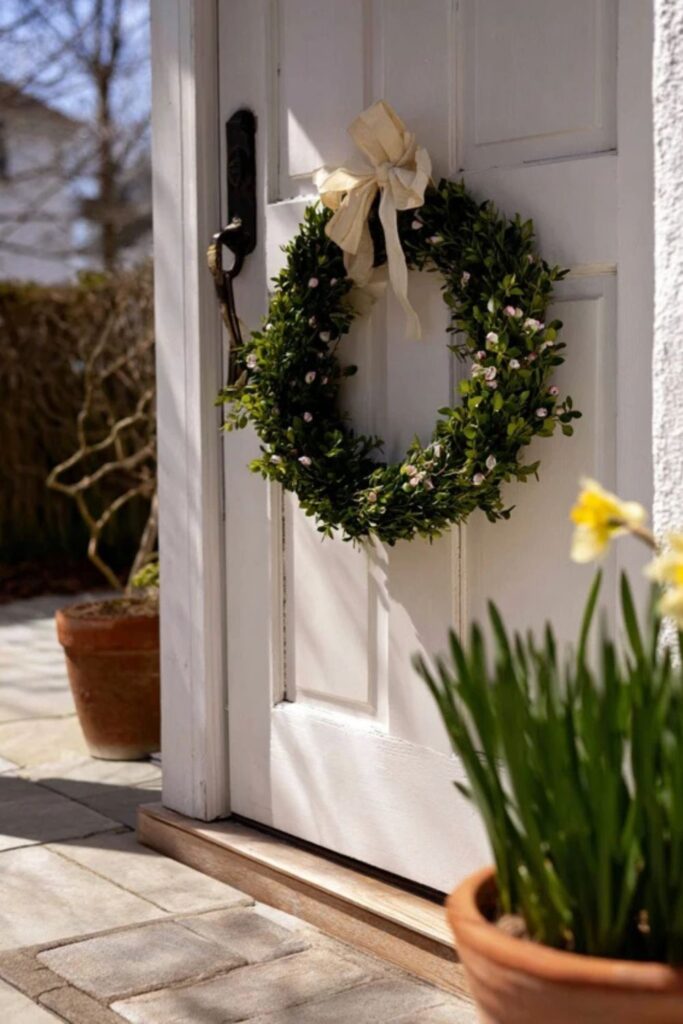
Martha’s spring wreaths are not dried or artificial. They are made from fresh boxwood, ivy, or flowering branches wired onto a simple form. A living wreath on the front door marks the season with something that will change colour and texture as the weeks pass.
Make a simple wreath from boxwood clippings. The tight leaves hold their shape for weeks and dry gracefully. Wire in a few sprigs of flowering quince or a cluster of small white blooms. Hang it with a simple linen ribbon, not a bow. The wreath should look gathered from the garden that morning, not purchased from a craft store.
Lighter fabrics, silver, wicker, living greenery, and forced bulbs are now in place. The room has shed its winter skin. What follows are the smaller, more personal details that make a spring home feel considered rather than simply redecorated.
10. Daffodils by the Dozen on Every Surface
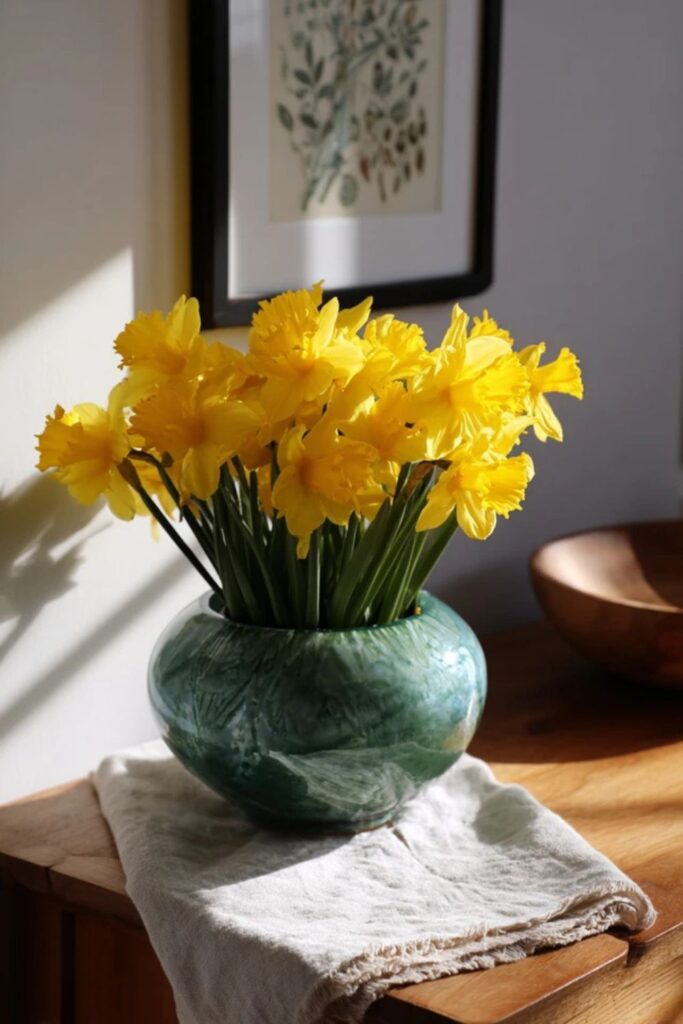
Martha’s Bedford farm erupts in daffodils every spring. She cuts them in abundance and scatters them through the house. Daffodils are the most cheerful spring flower and the least expensive. They last well in water, especially with conditioning.
Freshly cut daffodil stems release a sap that shortens the life of other flowers. Place them in water alone for twelve hours before combining them with anything else. Then fill jadeite bowls, pressed glass pitchers, and ironstone mugs with loose bunches. One colour, one variety, in every room. The repetition of yellow through the house is mass planting brought indoors.
11. Open the Windows Before Noon
This is the most Martha spring idea, and it costs nothing. Open every window you can before noon. Let the air move through the house. Spring air smells different from winter air. It carries pollen, wet earth, cut grass, and the faint sweetness of something blooming.
Moving air lifts linen curtains and cools rooms that have been sealed for months. It replaces the stale indoor scent of winter with something alive. Martha’s Bedford house sits on a working farm. Spring arrives there audibly: birds, wind, running water. Opening the windows invites all of it inside.
12. Pale Pink Accents in Small Doses
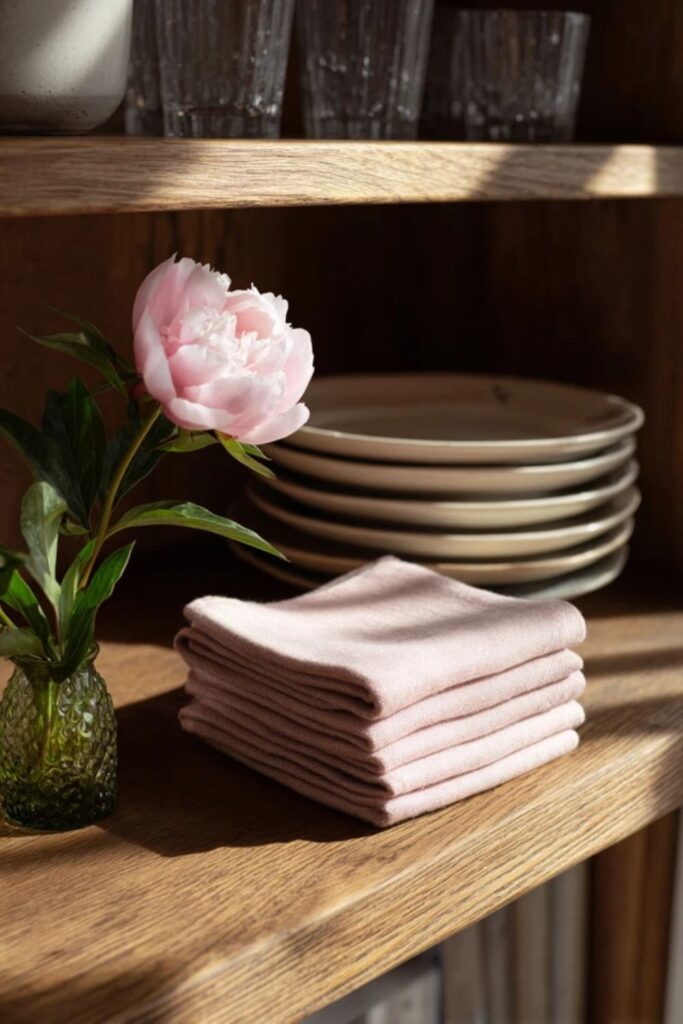
Spring is the one season Martha allows soft colour beyond her usual neutrals. Pale pink appears in tulip petals, linen napkins, a single throw pillow, or a blush candle on a silver tray. The pink is never bright or synthetic. It is the colour of a petal that has been open for two days.
Use pink sparingly. One or two accents per room is the limit. The pink should feel like it arrived with the flowers. It should leave when they do. A pale pink linen napkin at each place setting on the table says spring without announcing it. The restraint is what keeps it from feeling like a theme.
13. Swap Beeswax Pillars for Taper Candles
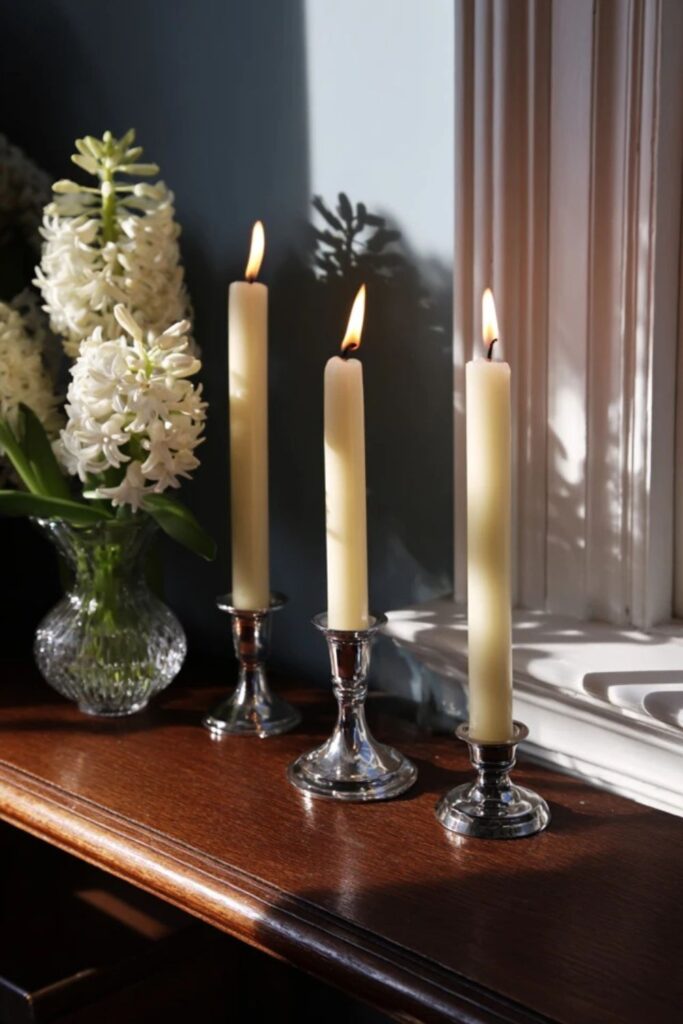
Winter calls for thick beeswax pillars that burn for hours in a dark room. Spring calls for the leaner silhouette of taper candles in cream or ivory. Tapers in silver holders look lighter and more architectural. They suit the longer evenings when candles are lit after dinner, not at dusk.
Group three tapers of different heights on the mantel or the dining table. The vertical lines echo the upward energy of spring. Tulip stems, budding branches, new shoots in the garden, everything points up. Tapers burn faster than pillars, so you replace them more often. That turnover is its own small seasonal ritual.
14. Herbs on the Windowsill in Terracotta
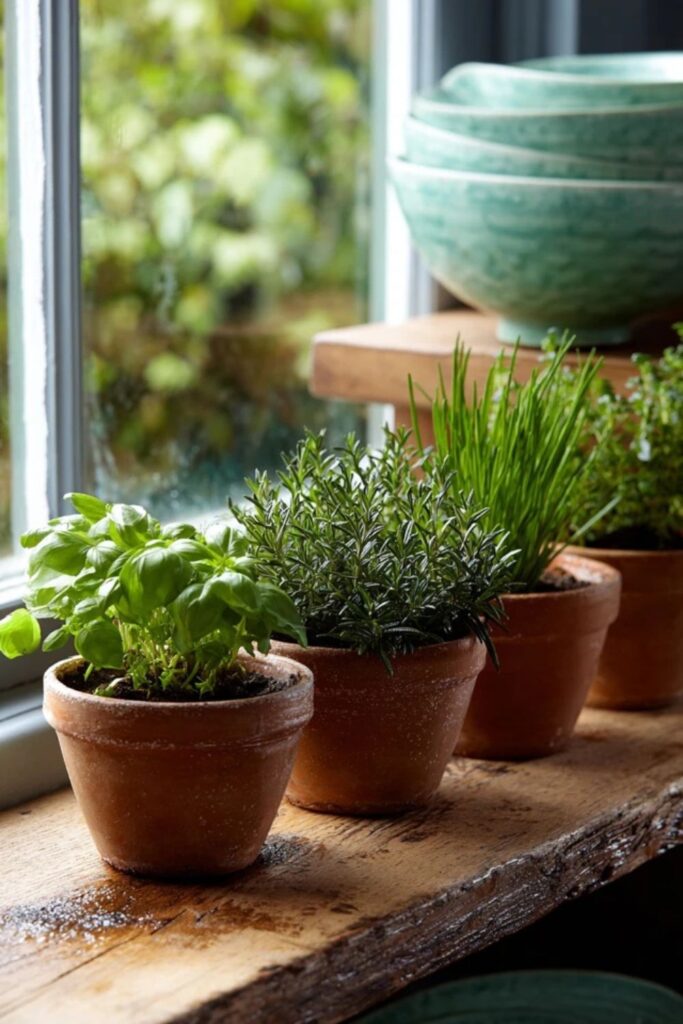
Martha starts her kitchen herbs in the greenhouse at Bedford every March. By April, basil, thyme, rosemary, and chives sit on her windowsills in small terracotta pots. The living herbs connect the kitchen to the garden before the outdoor beds are ready.
Group three to five pots on a sunny sill. Choose terracotta over plastic every time. The warm clay complements the Araucana blue and cream palette of spring. Use the herbs daily. Snipping fresh thyme for a Tuesday omelette is the kind of quiet, seasonal act that Martha’s whole philosophy is built around.
The daffodils, the open windows, the herbs and candles: each one makes the season felt in a different room. The final three ideas focus on how you gather, eat, and celebrate once your home is ready for spring.
15. A Spring Table Set With Pressed Glass
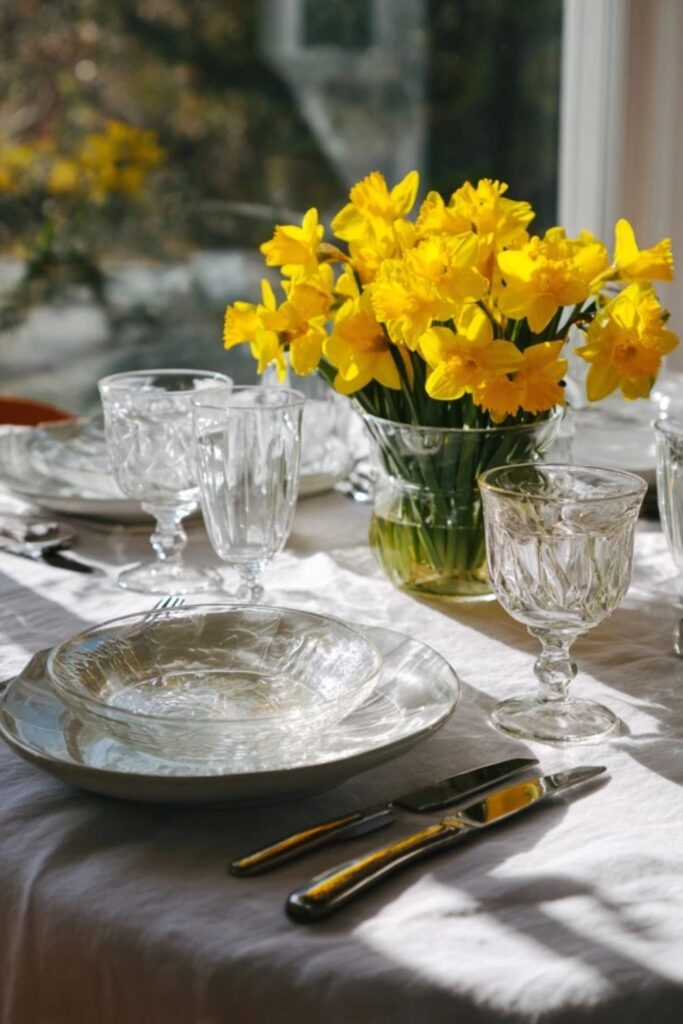
The spring table at Martha’s house is lighter than her winter one. Pressed glass plates replace heavy ironstone. A pressed glass pitcher holds water instead of wine. The transparency of glass lets the linen cloth show through. Cut patterns refract the longer daylight.
Set the table with clear glass for lunch or afternoon tea. The effect is crystalline and cool. Keep the linen white or cream. Add a low arrangement of daffodils or tulips and silver flatware. The table should look like a greenhouse: bright, transparent, and alive. It should make your guests want to sit for a while.
16. Peonies When the Season Allows
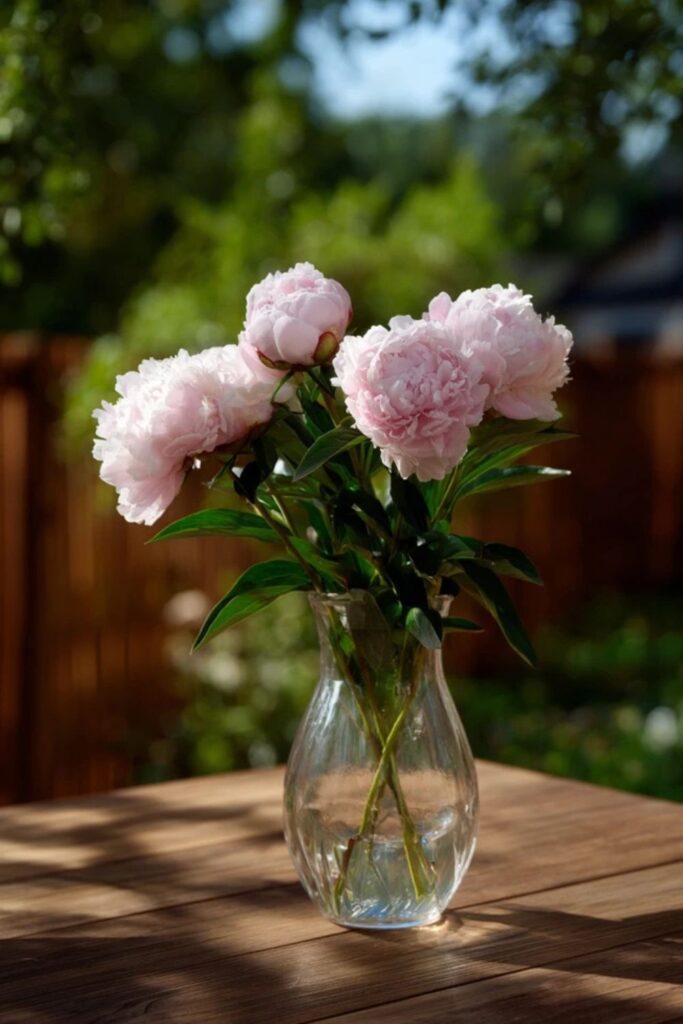
Peonies are Martha’s favourite late-spring flower. She grows 22 varieties in 11 double rows at Bedford. Their lush, ruffled heads are the most generous bloom spring produces. When peonies arrive, they take the place of tulips as the house flower.
Buy peonies in tight bud. They will open over two to three days in a warm room. Their size doubles as the petals unfold. Place them in a pressed glass pitcher or a silver bowl. One peony in a bud vase on a nightstand has as much presence as a dozen on a dining table. Their brief season, only a few weeks, makes each bloom feel like a gift.
17. The First Outdoor Meal of the Year
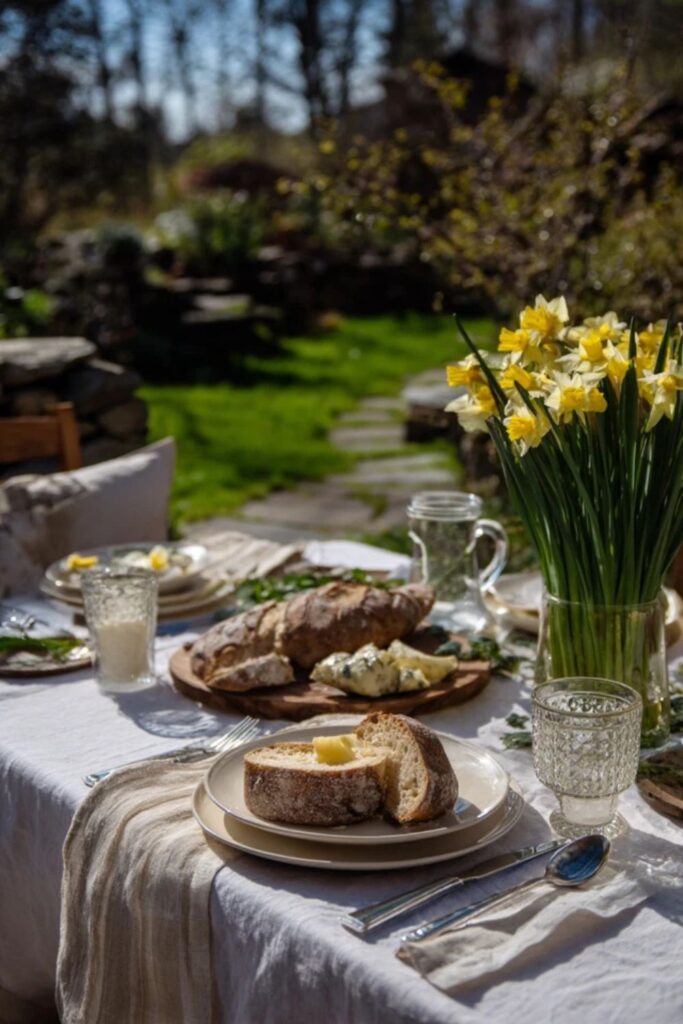
The truest sign of Martha spring is moving the table outside. Set a simple meal on the porch, the patio, or the garden path. The food does not need to be elaborate. Bread, cheese, radishes, a salad of spring greens, and a glass of cold white wine are enough.
Set the outdoor table the way you would set the indoor one. Use a linen cloth, real flatware, and pressed glass. The formality of a proper setting in an informal space is pure Martha. A gust of wind lifts the edge of the cloth. A bee circles the flower arrangement. Those interruptions are part of the meal, and the season deserves a table that honours every one of them.
The Martha Stewart aesthetic spring is not about redecorating. It is about responding to what the season asks. The light changes, and you change the curtains. The tulips bloom, and you fill every room. The air warms, and you push the windows open.
Start with one vase of tulips on the kitchen counter. Open one window before noon. Fold one linen napkin in pale pink and set it at your place. Spring enters a home through small, intentional acts. Each one says the same thing: the season matters, and so does the way you live inside it.
The best spring rooms do not look decorated. They look like someone left the garden door open.
You might also like: