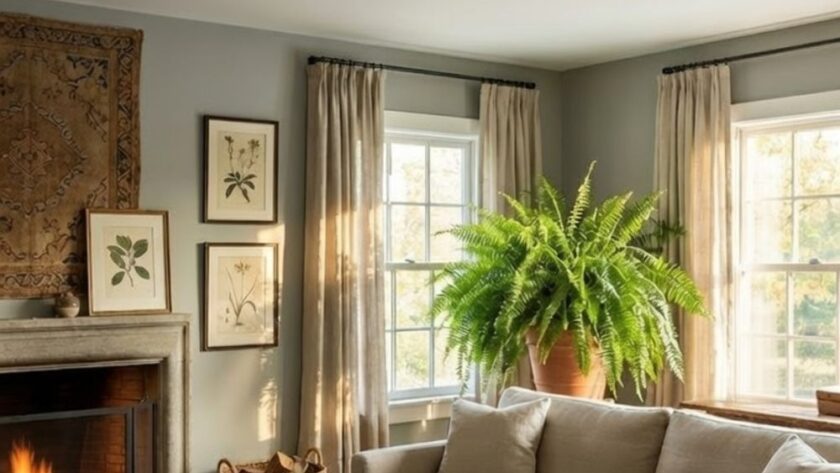
The fire has burned down to embers, casting a soft orange glow on the velvet sofa. A stack of art books sits on the ottoman, and the only sound is the turning of a page and the ticking of an antique clock.
The Martha Stewart aesthetic living room is not a showroom where guests are afraid to sit. It is a library, a salon, and a place for rest, all wrapped into one.
This style balances the masculine weight of dark wood and brass with the feminine softness of velvet and linen. It is a room built for conversation, reading, and the slow passage of time.
Here are 15 ways to design a living space that feels collected, comfortable, and timeless.
1. The Deep Neutral Sofa
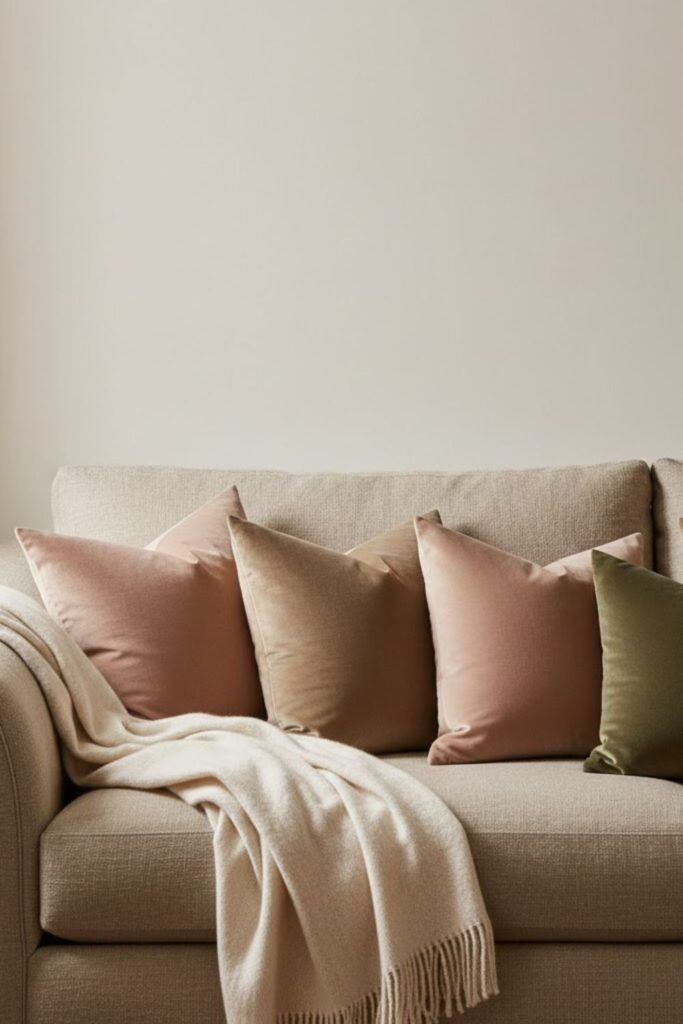
The sofa dictates the comfort of the room. Choose a classic roll-arm shape in a neutral fabric like oatmeal linen or heavy cotton duck.
It should be deep enough to curl up in. Avoid trendy shapes or bright patterns on this large piece; let the pillows and throws tell the color story.
2. Symmetry in Lighting
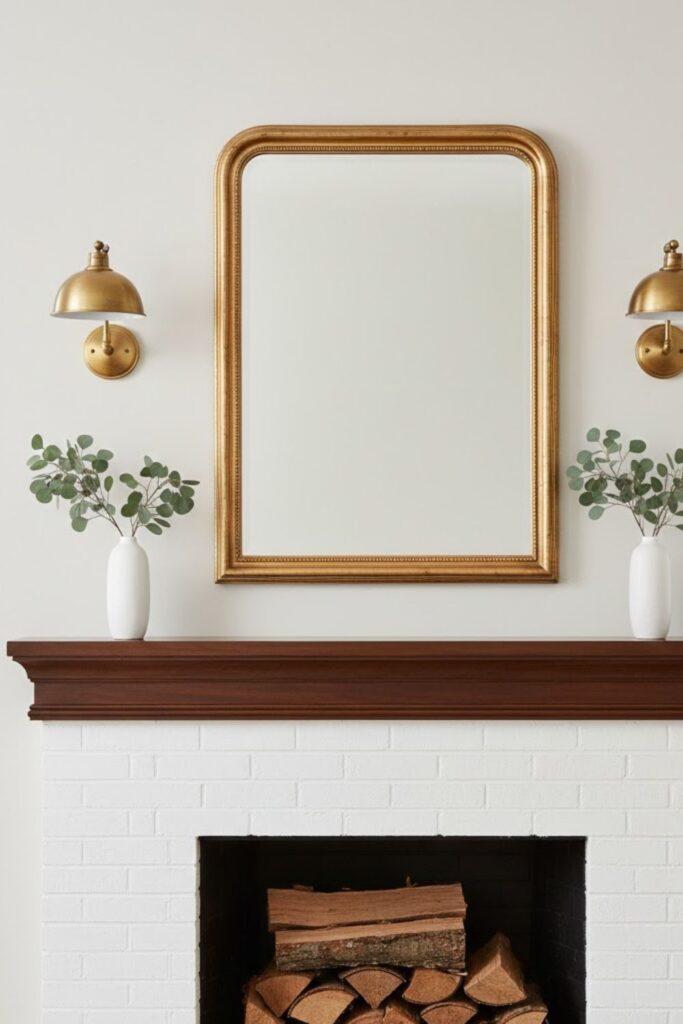
Martha’s interiors always rely on symmetry to create calm. Place matching lamps on end tables on either side of the sofa, or install identical sconces flanking the fireplace.
This visual balance stops the room from feeling cluttered, even if you have many collections on display. It creates a sense of order that is instantly relaxing.
3. The Coffee Table of Books
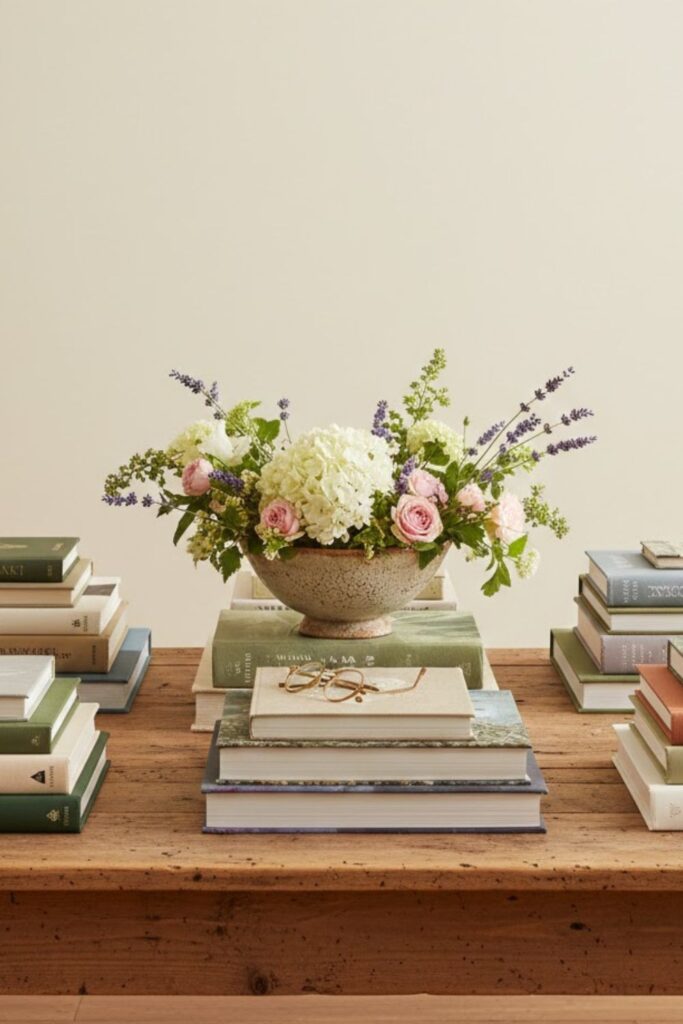
A coffee table should offer something to do. Cover the surface with neat stacks of large art, garden, and history books.
This is not just decoration; it is an invitation to browse. Top the stacks with a magnifying glass or a small bowl of curiosities to add height and texture.
4. Bedford Gray Paint
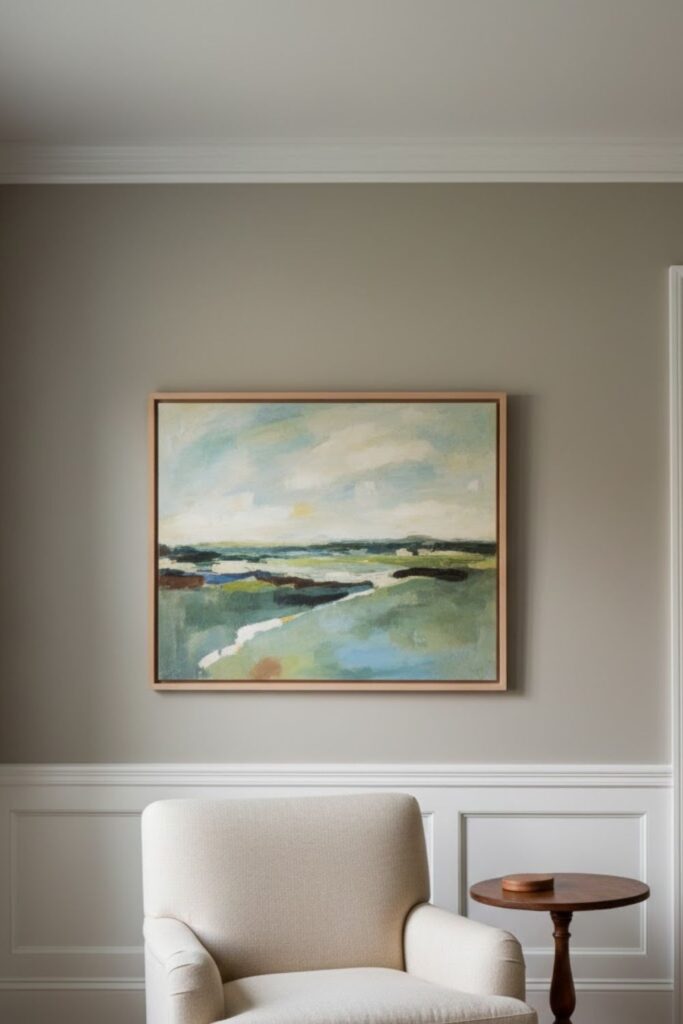
Paint the walls Bedford Gray. This specific shade—a warm, putty gray with brown undertones—works as a perfect neutral that is richer than white but softer than dark colors.
It makes white trim look crisp and provides a sophisticated backdrop for oil paintings and gold frames.
5. Sisal Layered with Wool
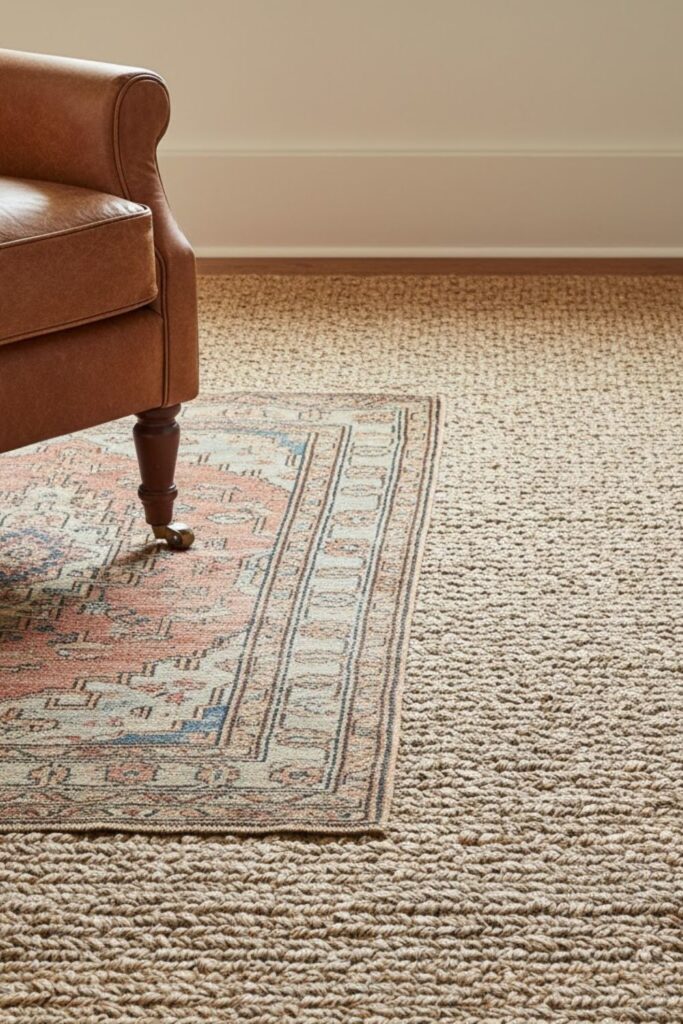
Start with a large natural fiber rug, like sisal or seagrass, to cover most of the floor. Then, layer a smaller antique wool rug on top in the center of the seating area.
The sisal adds earthy texture and durability, while the wool rug adds color and softness underfoot. It is a classic “high-low” mix.
6. Velvet Accents
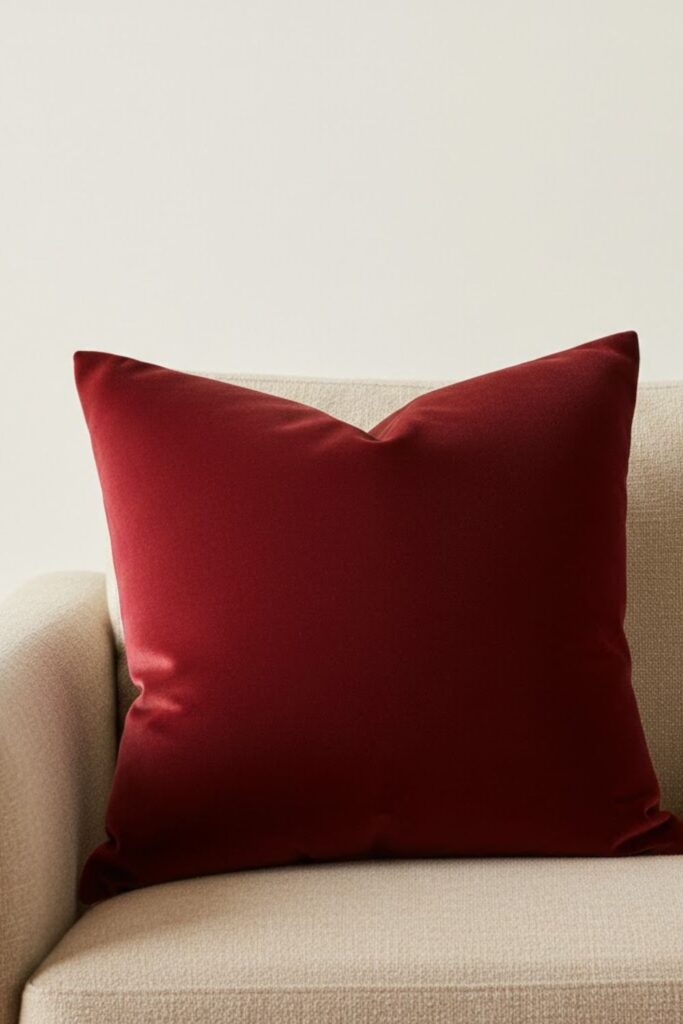
Introduce velvet through throw pillows or a single armchair. Choose deep, historical colors like Turkey Red, moss green, or goldenrod.
Velvet catches the light and adds a sense of history to the room. It feels luxurious to the touch and contrasts beautifully with the matte linen of the sofa.
7. Mercury Glass Collections
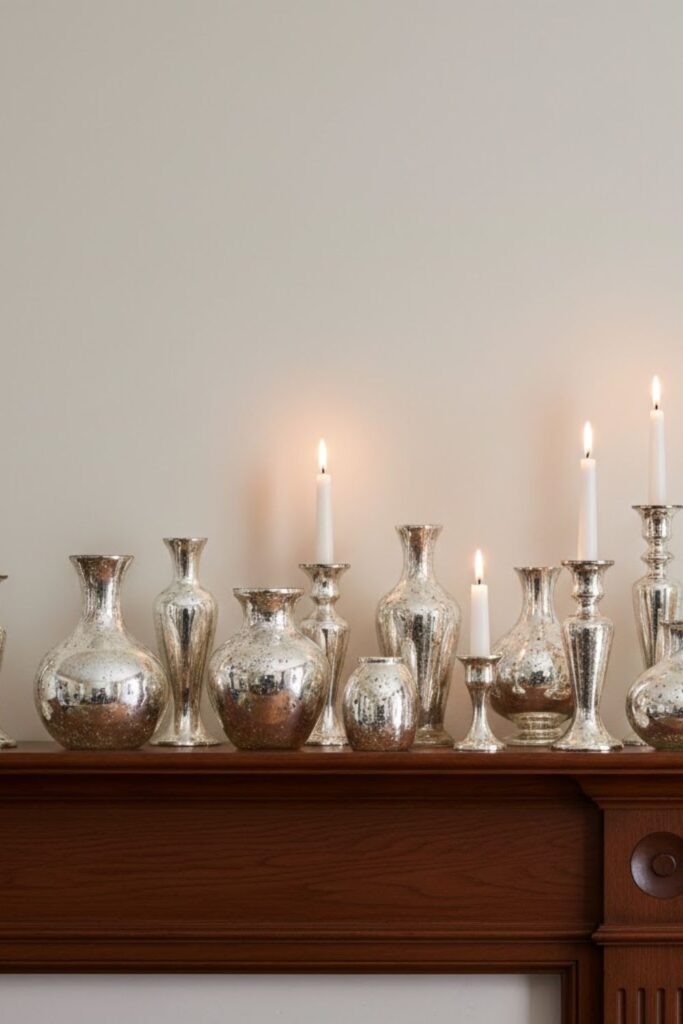
Display a collection of mercury glass on a mantel or a side table. The mottled silver finish reflects light in a softer way than polished silver.
Group different shapes and sizes together for impact. In the evening, the reflection of candlelight in the glass creates a magical atmosphere.
8. Faux Bois Details
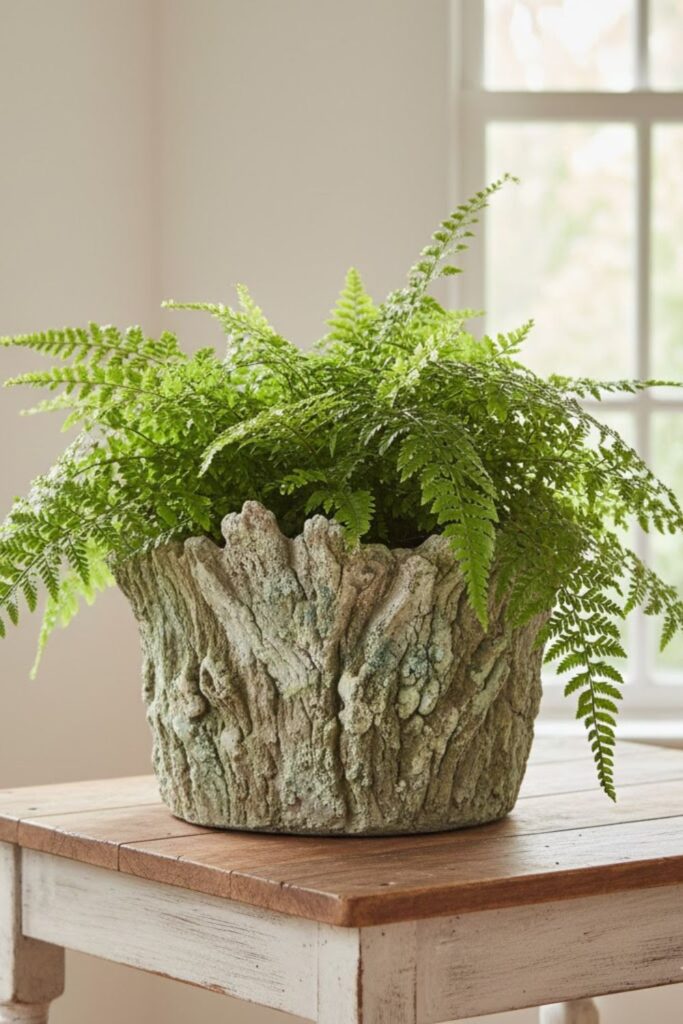
Faux bois (false wood) is a favorite material in this aesthetic. Look for concrete planters or ceramic vases made to look like tree branches or bark.
These pieces bring a bit of the garden indoors and add a rustic, whimsical element to a formal room.
9. The Ottoman Tray
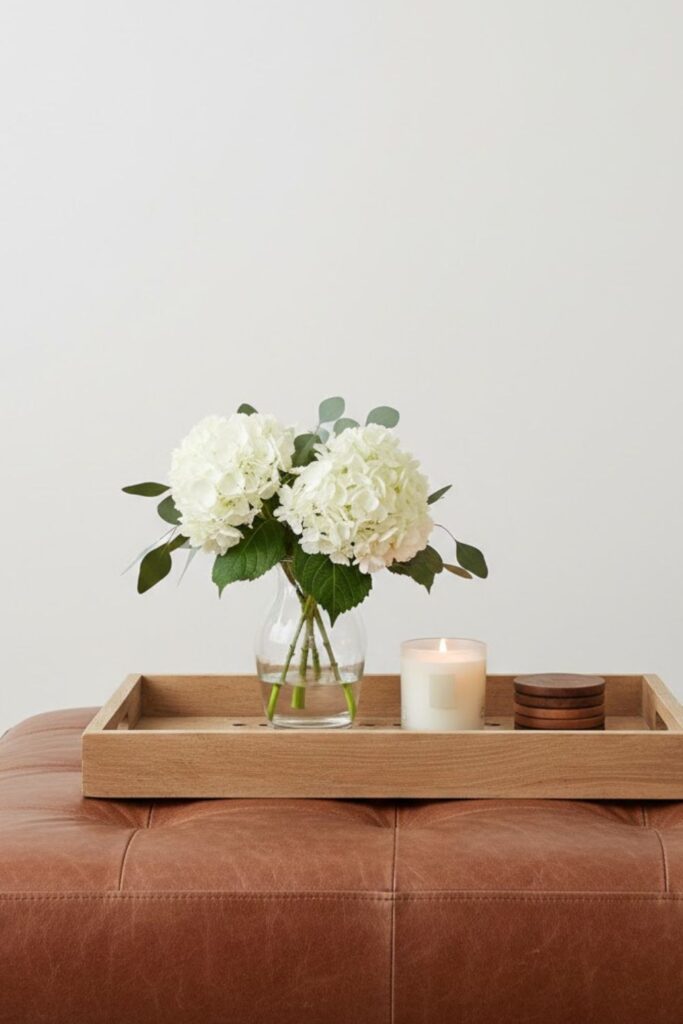
If you have a fabric ottoman instead of a coffee table, use a large, sturdy tray to create a flat surface. This allows you to set down drinks and display flowers safely.
Choose a tray made of wood, lacquer, or woven rattan. It adds structure to the soft furniture.
10. Black Lamp Shades
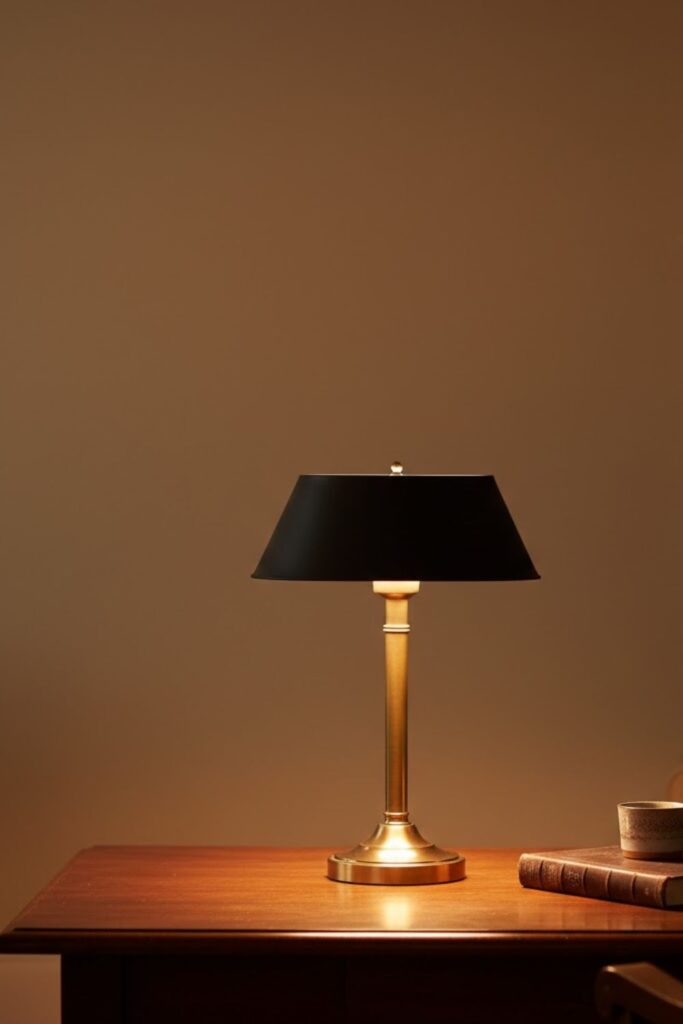
Swap out plain white lampshades for matte black paper shades. Black shades direct the light up and down, rather than diffusing it through the room, creating dramatic pools of light.
They also act as a strong visual punctuation mark in a room filled with neutrals.
11. The Drink Table
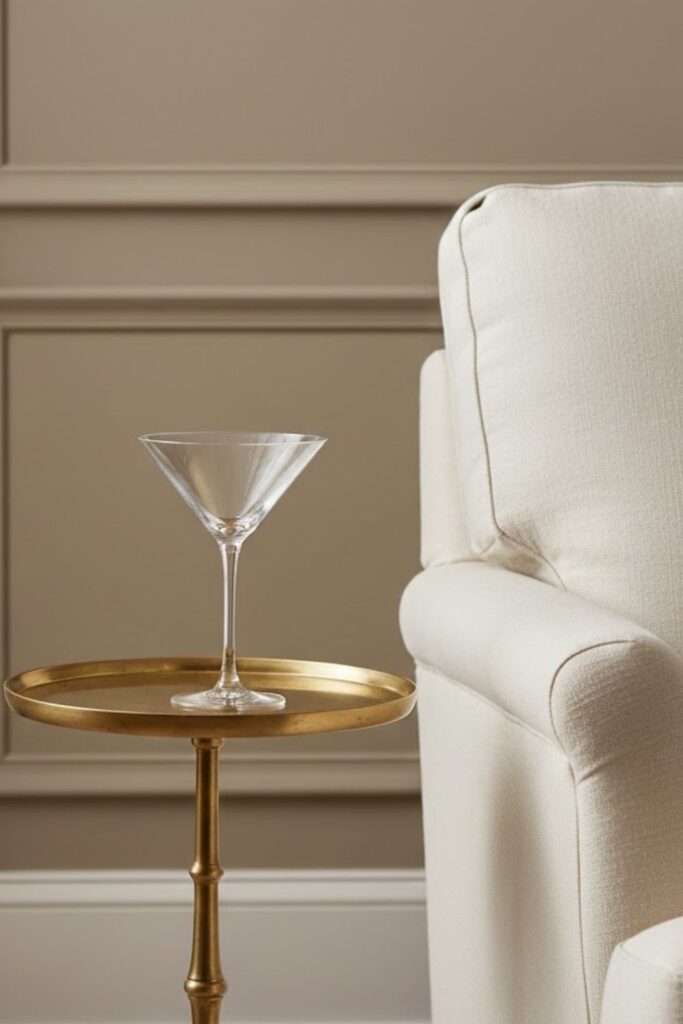
Every seat needs a surface within arm’s reach. Tuck small “cigarette” or “martini” tables next to armchairs that are floating away from the coffee table.
These tiny tables are just big enough for a glass of wine or a cup of tea. They ensure that a guest never has to hold their drink for the entire conversation.
12. Fireplace Tools
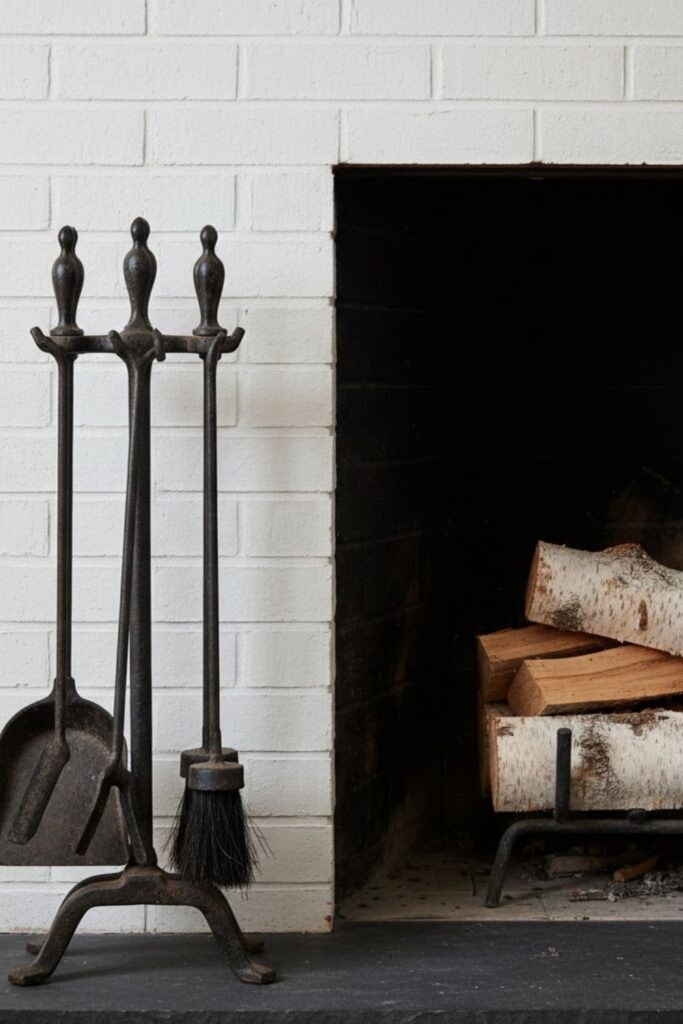
If you have a fireplace, the tools should be as beautiful as the furniture. Look for vintage iron or brass sets that have weight and character.
Keep a basket of birch logs nearby. Even when the fire is not lit, the white bark of the wood and the iron tools create a pleasing vignette.
13. Bringing the Outside In
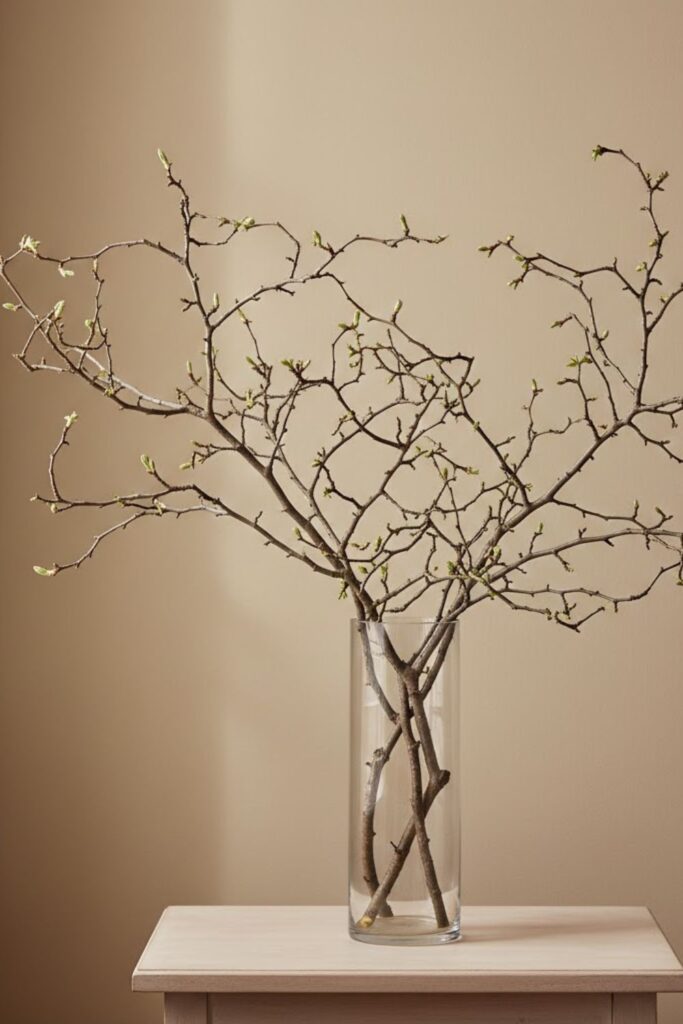
Cut large branches from the garden—dogwood, quince, or maple—and place them in a heavy vase. The scale should be dramatic, reaching up toward the ceiling.
This is a signature move that costs nothing but changes the feeling of the room completely. It connects the interior to the season outside.
14. The Secretary Desk
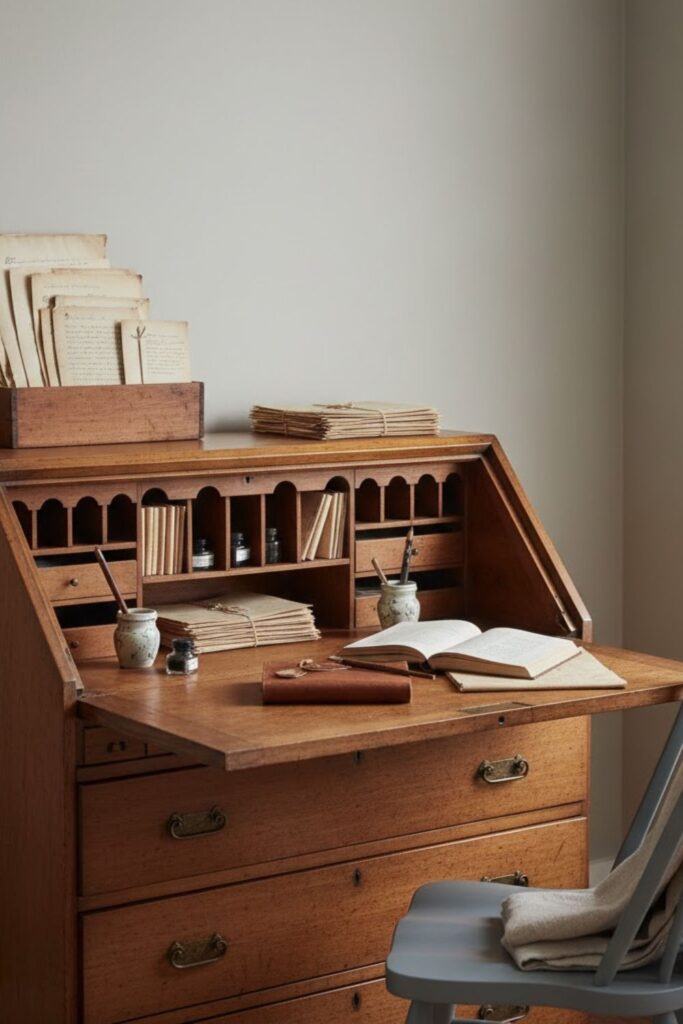
A living room often needs a spot for writing a note or opening mail. An antique secretary desk adds height to the room and provides hidden storage.
Leave the drop-front open with a lamp and some stationery visible. It suggests that the room is used for thoughtful work, not just television.
15. Dimmers on Everything
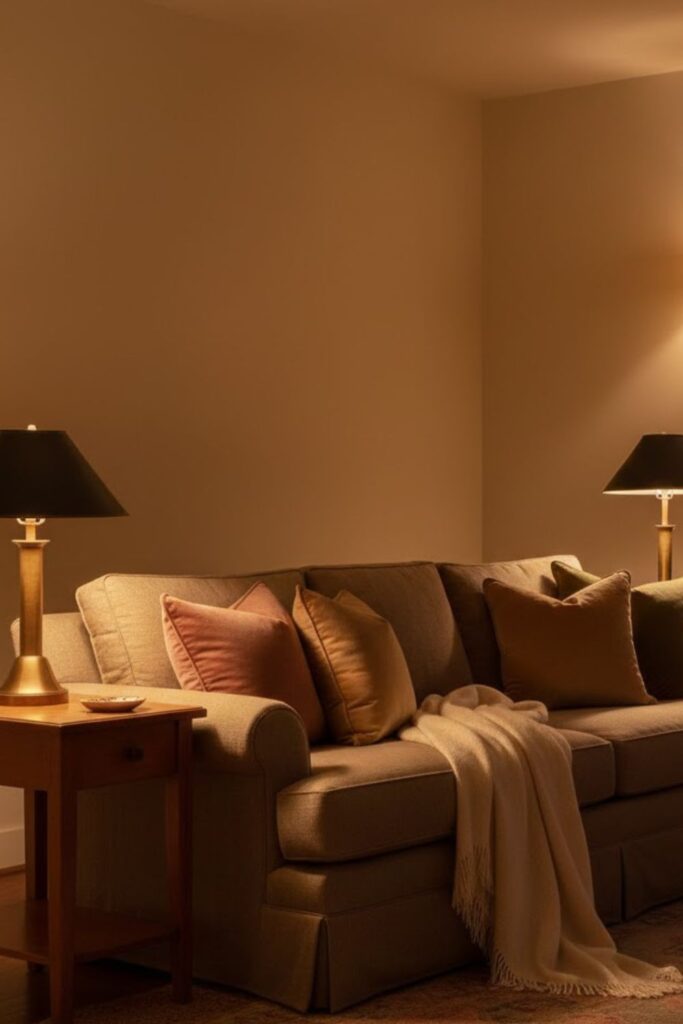
The mood of a room is defined by light. Install dimmers on every switch, including overhead lights and lamps.
In the evening, the light should be low and warm, mimicking the glow of a fire. This softens the edges of the room and makes everyone look and feel better.
A living room should be more than just a pass-through space. It should be the room where you most want to be.
By mixing textures, respecting history, and paying attention to the light, you create a space that feels held and safe. It becomes the room where people want to stay long after the coffee is finished.