
Morning light crosses a kitchen counter where a copper bowl of lemons sits beside a jadeite cake stand. In the next room, a linen sofa faces a mantel lined with mercury glass. Beeswax tapers glow in a row of tarnished silver candlesticks.
The Martha Stewart aesthetic home is not defined by any single room. It is an approach that moves through every doorway, every surface, and every shelf. The same principles that guide the kitchen guide the bedroom, the garden gate, and the entry hall.
What makes this aesthetic different from generic “elegant” is consistency of intention. A Martha home does not have one styled room and five neglected ones. Every space receives the same quiet attention to materials, light, and the objects that have earned their place.
Here are 17 principles that hold true in every room. Start with the one that fits where you are right now and let the rest follow over time.
1. Bedford Gray as the Unifying Color
Martha painted every building on her 153-acre Bedford farm the same warm gray with a brown undertone. She created the color in 2013 and named it Bedford Gray. “Lay down a thick blanket of fog,” she wrote, “and the entire farm becomes Bedford Gray.”
A single exterior color across every structure creates a sense of calm and intention. Inside, Bedford Gray works on walls, trim, and cabinetry as a neutral that warms rather than chills. It pairs with cream, sage, copper, and navy without competing with any of them.

2. Collected, Not Decorated
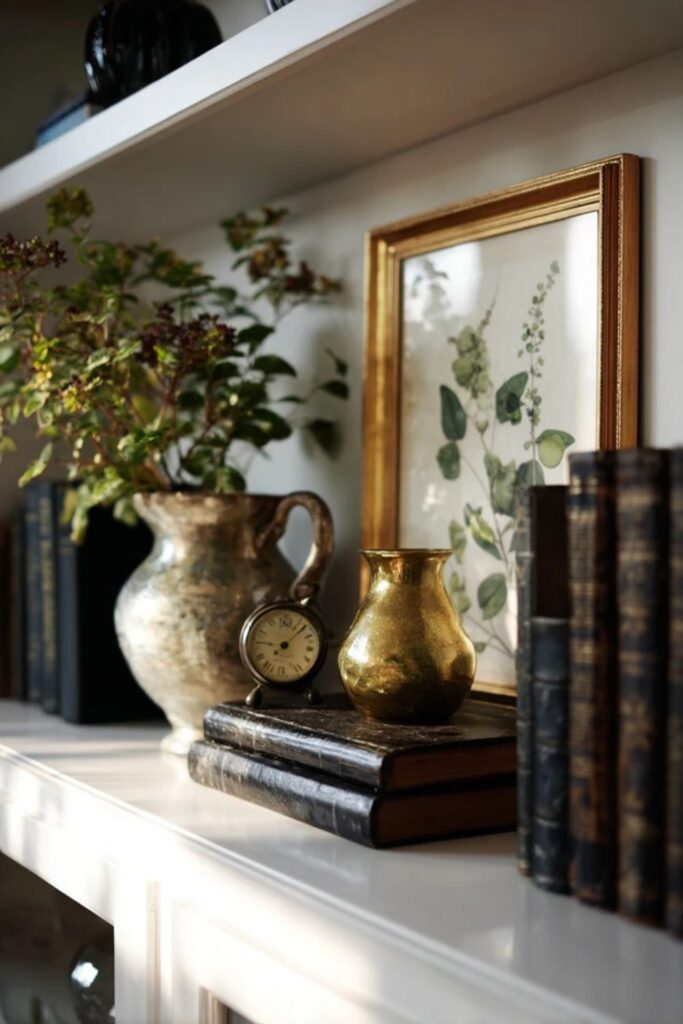
A Martha home looks like it was gathered over a lifetime, not purchased in a single weekend. The ironstone on the kitchen shelf came from a different decade than the pressed glass in the dining room. The candlesticks on the mantel arrived one at a time from separate cities.
This principle requires patience. Buy one piece at a time and only when it speaks to you. A room furnished this way feels lived in from the first day because every object already carries a history before it enters the house.
3. Natural Materials in Every Room
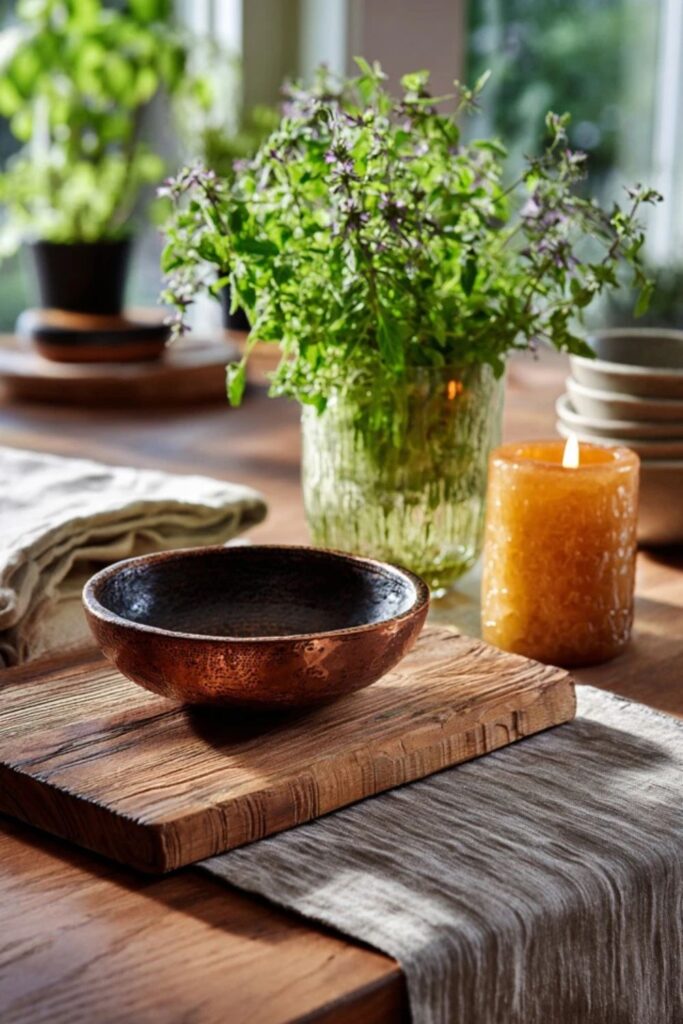
Linen on the sofa. Wood on the table. Copper in the kitchen. Beeswax on the mantel. A Martha home never introduces a material that does not occur in nature. The textures of real things interact with light and air differently than their synthetic counterparts.
Run your hand across the objects in any room. If everything feels smooth and manufactured, something is missing. Linen wrinkles, wood shows grain, copper develops patina, and beeswax softens. These are features, not flaws.
4. Display What You Collect
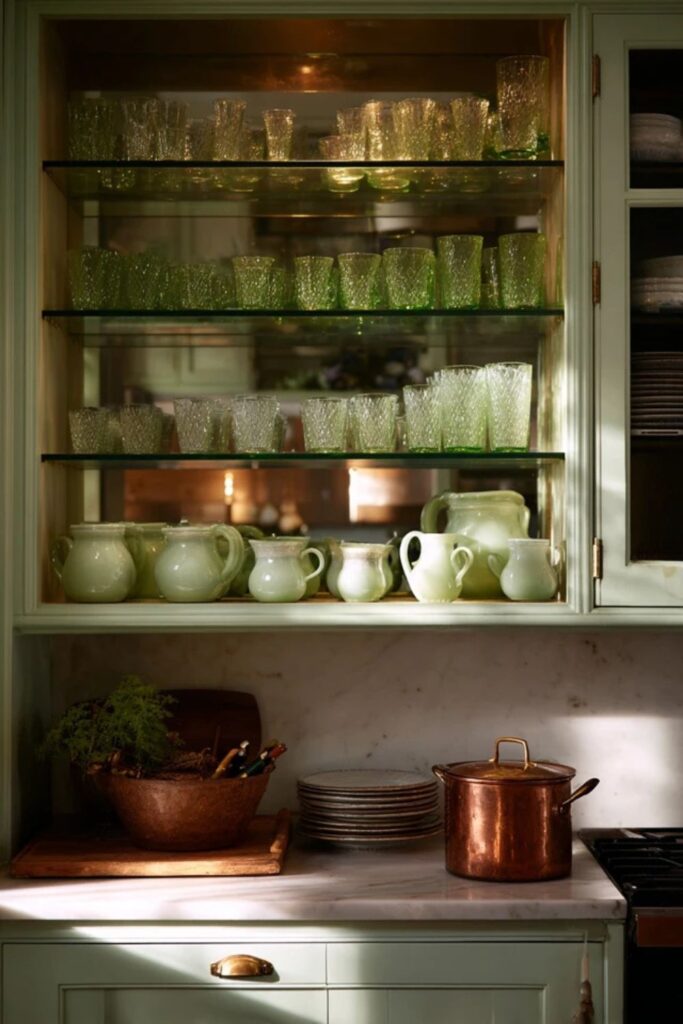
Martha never hides her collections behind closed doors. Ironstone lines open shelves. Jadeite fills glass-front cabinets. Copper pots hang from a rack above the stove. The things you love and use daily deserve to be seen.
A displayed collection becomes part of the room’s character. Six jadeite bowls on a shelf create a rhythm of color that no painting could replicate. A row of ironstone pitchers tells the story of years of flea markets. Show the collection, and the room decorates itself.
The foundations are set. What follows builds the texture and light that make a Martha home feel alive in every room.
5. Symmetry on Every Mantel
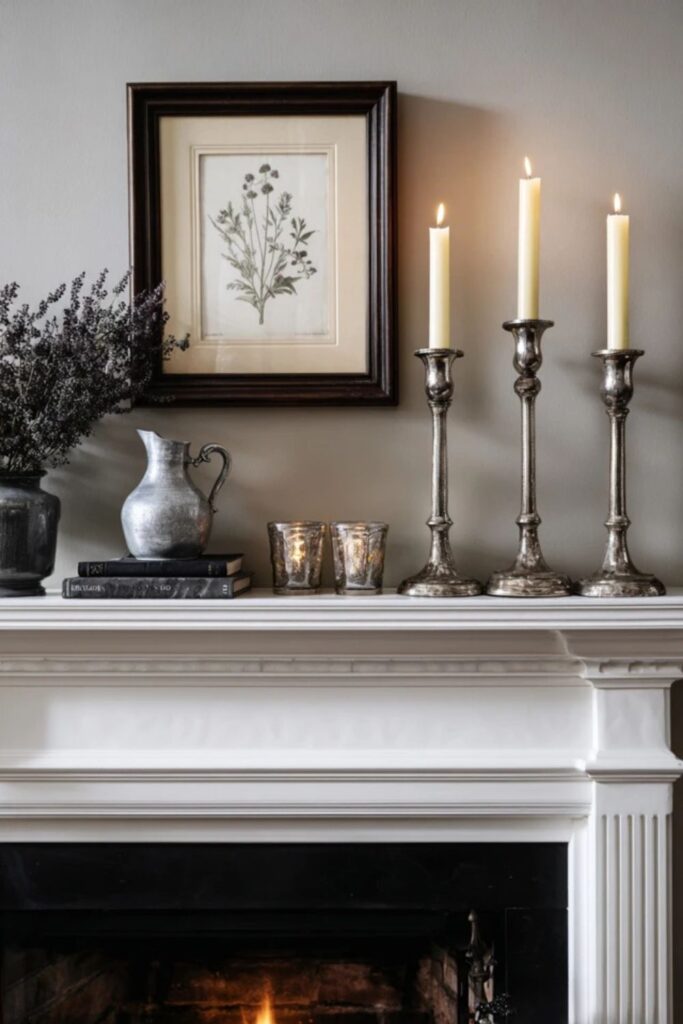
Martha arranges mantels with intentional symmetry. Two matching candlesticks at each end. A mirror or painting centered above. Objects balanced in weight and height on either side. The symmetry creates visual calm in a room.
This does not mean rigid, mathematical pairing. A silver candlestick on the left and a brass one on the right still read as symmetrical if they match in height. The balance is felt more than measured, and it anchors the room around the fireplace.
6. Beeswax Candles in Every Room
Beeswax is not reserved for the dining table in a Martha home. Tapers on the mantel, pillars on the bedroom dresser, votives on the bathroom ledge. The warm honey color and faint clean scent create continuity from room to room.
Light candles even when you are home alone on a Tuesday. Martha’s philosophy of the “elevated everyday” means using the beautiful things daily, not saving them for guests. A lit beeswax candle turns any room into a place worth being.

7. Linen Over Polyester, Always
Linen tablecloths, linen napkins, linen curtains, linen slipcovers. Martha chooses linen for its texture, its honesty, and the way it softens with each washing. A linen sofa cover that wrinkles after sitting looks lived in, not ruined.
Replace one synthetic textile at a time. Start in the kitchen with linen napkins, then add a linen runner in the dining room and linen pillowcases in the bedroom. The texture changes the feeling of every room it enters.

Replace one synthetic textile at a time. Start in the kitchen with linen napkins, then add a linen runner in the dining room and linen pillowcases in the bedroom. The texture changes the feeling of every room it enters.
8. Fresh Flowers or Greenery, Never Fake
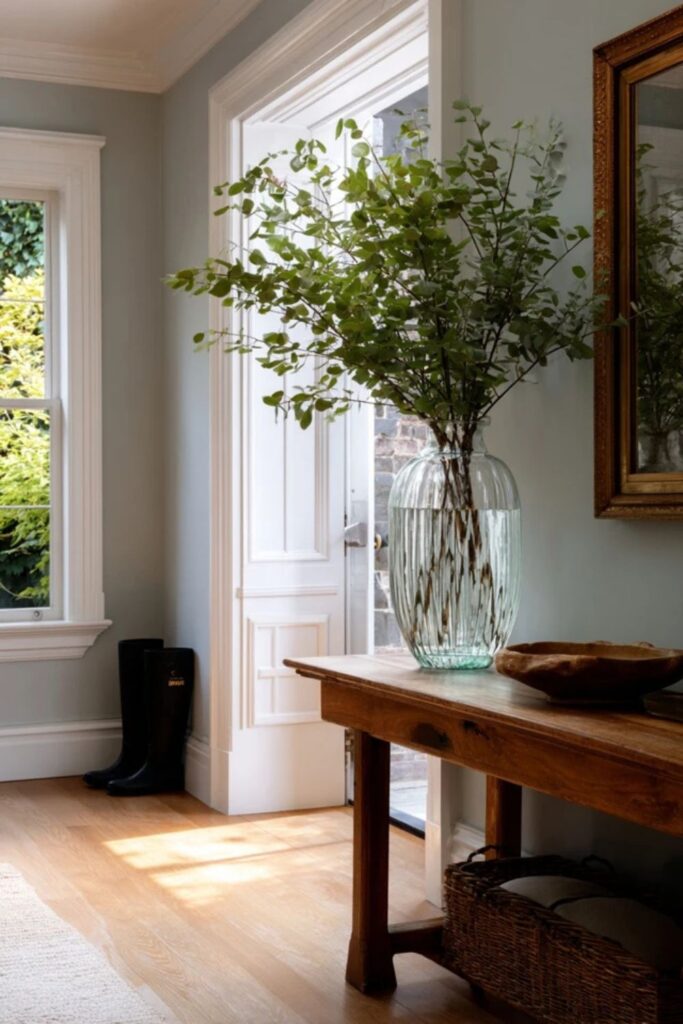
Every room in a Martha home has something living in it. A pitcher of hydrangeas on the kitchen counter. A small potted herb on the bathroom window sill. A branch of eucalyptus in a tall pressed glass vase in the entry hall.
The arrangement does not need to be large or expensive. A single stem cut from the garden that morning carries more life than a shelf of silk flowers. Fresh greenery connects the indoors to the outdoors and grounds the home in nature.
9. The Kitchen as the Center of Everything
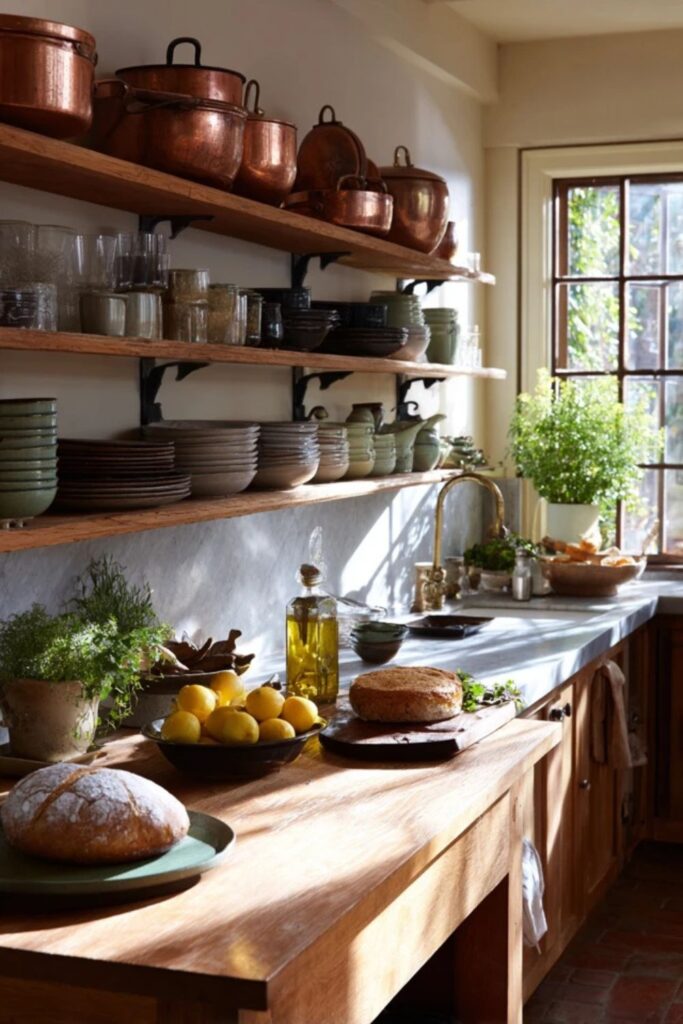
Martha’s kitchen is not separate from the rest of the house. It is the room everything orbits. Copper pots hang where they can be reached. Ironstone platters stand upright on shelves. A wooden counter holds evidence of meals in progress.
A Martha kitchen never looks finished. Flour dusts the cutting board. A knife rests beside half-sliced bread. The jadeite cake stand holds a pound cake with a wedge already cut. A kitchen should look like a place where real work happens.
The rooms are taking shape. What comes next adds the smaller touches that make a Martha home feel personal rather than styled.
10. One Color Family per Room
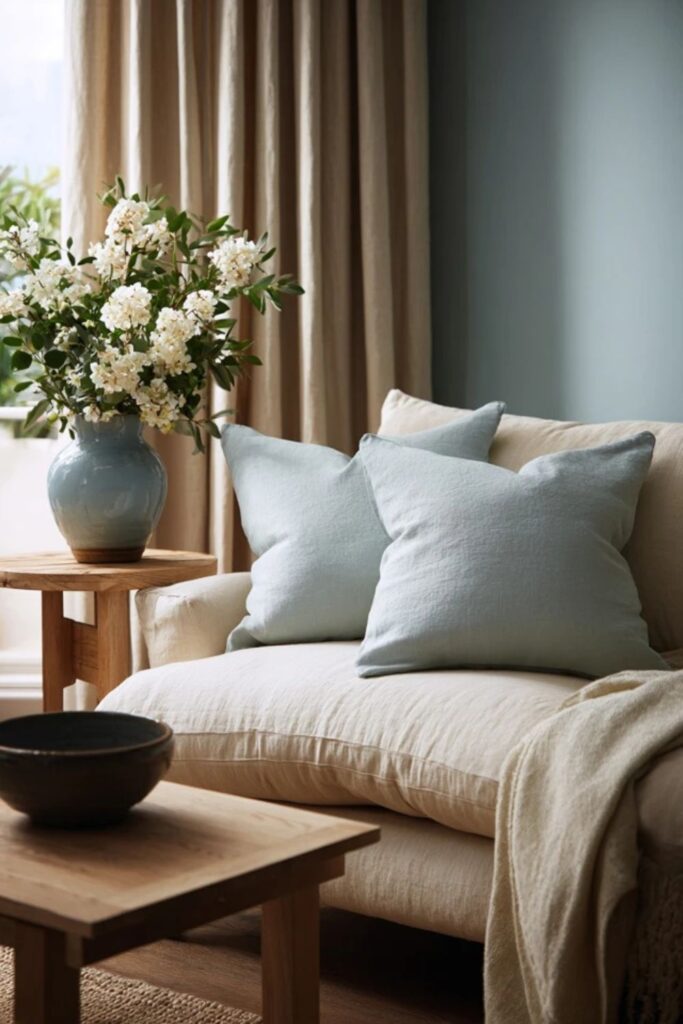
Martha commits fully to a color palette in each room and does not stray. The Brown Room at Bedford is warm amber and sycamore. The living room is pale blue and cream. The kitchen is cream, jadeite green, and copper.
Discipline with color creates visual rest. A room with three related tones feels calm and intentional. A room with eight unrelated colors feels chaotic, no matter how beautiful each one is individually. Pick your three and hold the line.
11. Open Shelving That Earns Its Place
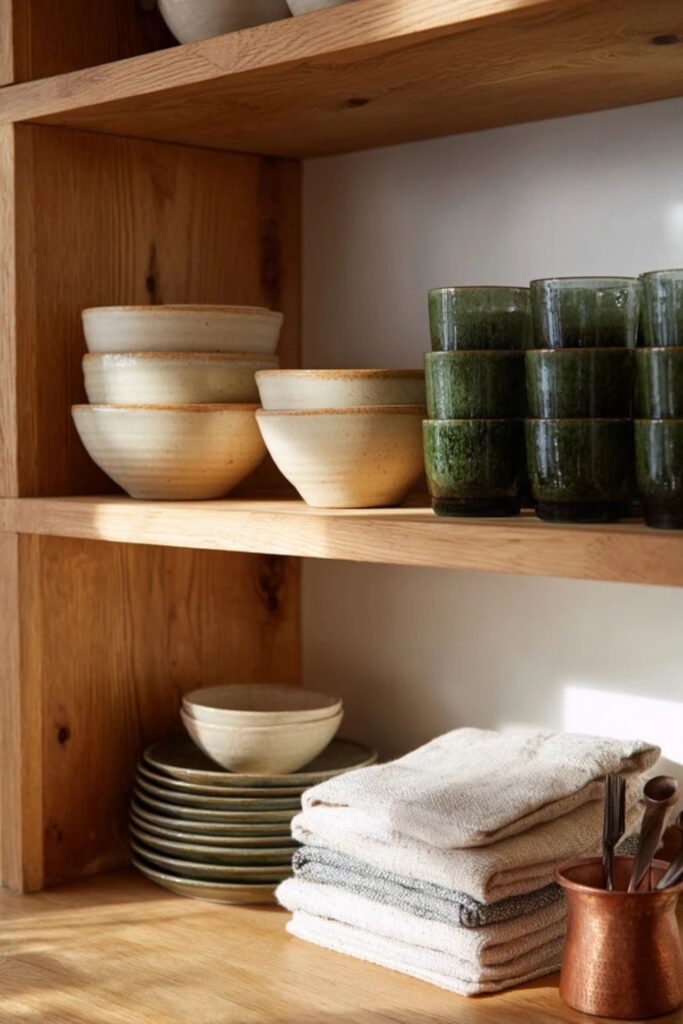
Martha’s homes feature open shelving in kitchens, pantries, and bathrooms. The contents are edited: only what is used regularly and beautiful enough to be seen. No clutter, no overflow, no items stored just because there is space.
Open shelves require discipline. They are not for everyone and not for every room. But where they work, they turn storage into display and display into character. A shelf of ironstone bowls does more for a kitchen than any painting.
12. Silver Trays for Daily Rituals
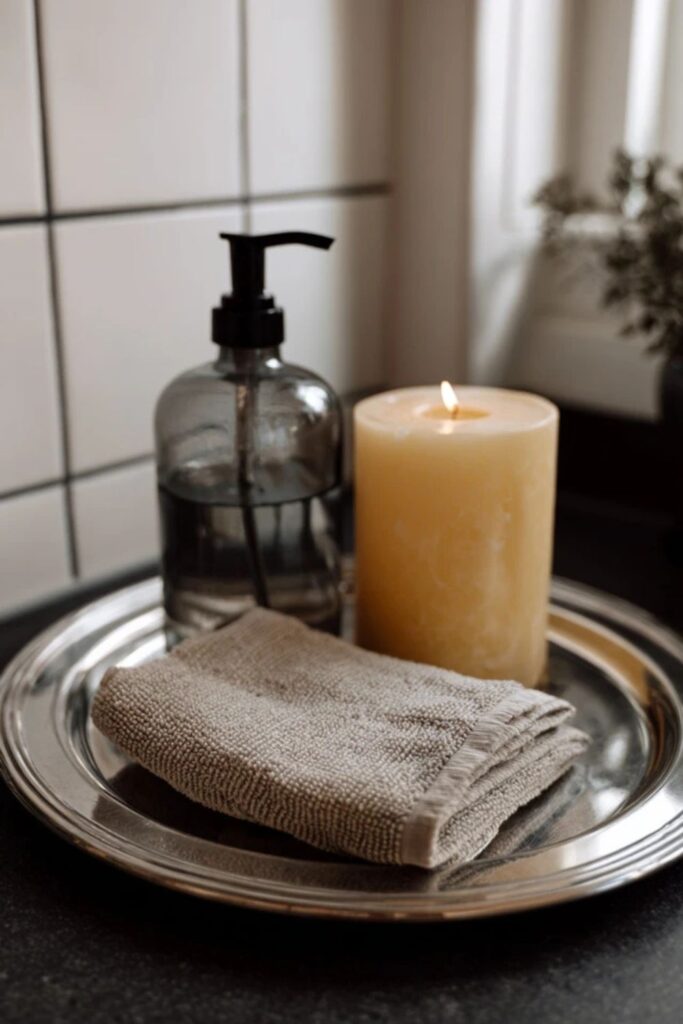
A silver tray holds the morning coffee service: a pot, a small pitcher of cream, a sugar bowl, and a cup. Another holds bathroom needs: hand soap in a glass bottle, a small towel, and a candle. The tray corrals small items and gives them purpose.
Martha uses silver trays throughout her home to organize daily necessities. The tray turns a scatter of objects into a composed still life. It is one of the simplest ways to make any surface look intentional.
13. Pressed Glass Where Light Can Reach It
Pressed glass pitchers, goblets, and vases belong near windows and candles. Each tiny cut in the surface catches light and scatters it in shifting patterns across walls and tables. The effect is quiet and constant.
Place a pressed glass pitcher on a windowsill where morning light will find it. Set pressed glass goblets near beeswax candles at dinner. The glass does not need to hold anything; the light it throws is the point.
14. A Mud Room That Works as Hard as You Do
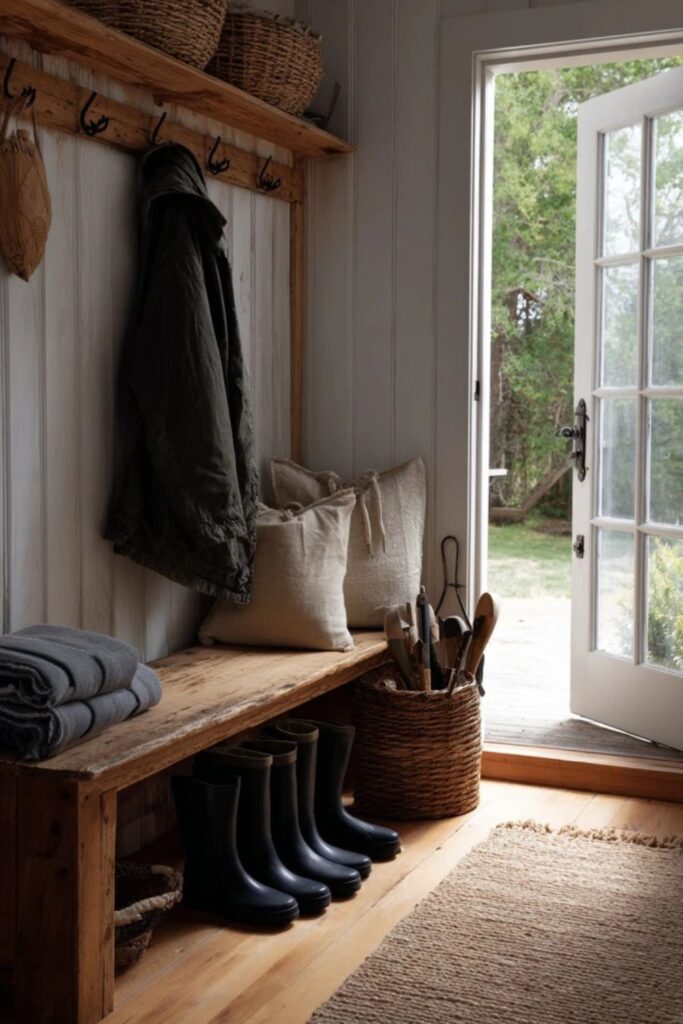
Martha’s entry areas are practical and organized. Hooks for jackets and scarves. A bench for pulling off boots. A basket for garden gloves and shears. Everything has a place, and the place is visible.
A mud room does not need to be large. A single bench, three hooks, and a boot tray beside the back door is enough. The transition from outdoors to indoors should be managed with intention, not scattered across the hallway floor.

The details are almost complete. These final principles are what give a Martha home its soul.
15. Seasonal Shifts in Every Room
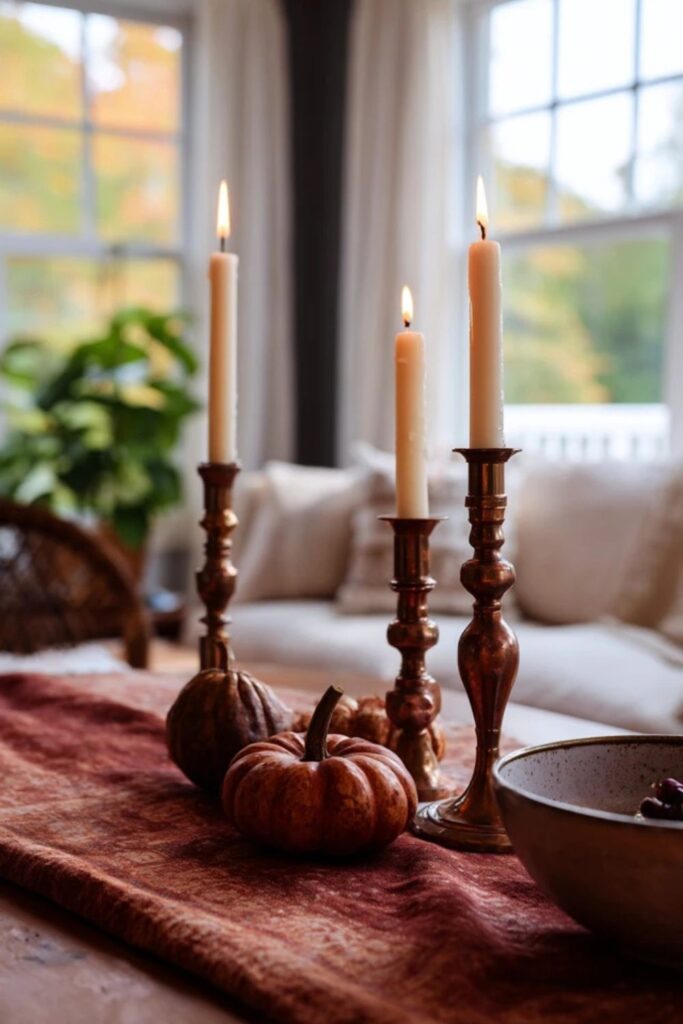
A Martha home changes with the seasons. Spring brings tulips and linen curtains. Summer fills the table with dahlias and the counter with tomatoes. Autumn arrives with copper, gourds, and velvet. Winter layers the mantel with cedar, mercury glass, and beeswax.
These shifts do not require a full redecoration. Swap the flowers, change the throw, and rotate one collection for another. The house should feel like it breathes with the calendar, not like it was frozen in one season forever.
16. The Garden as the First Room
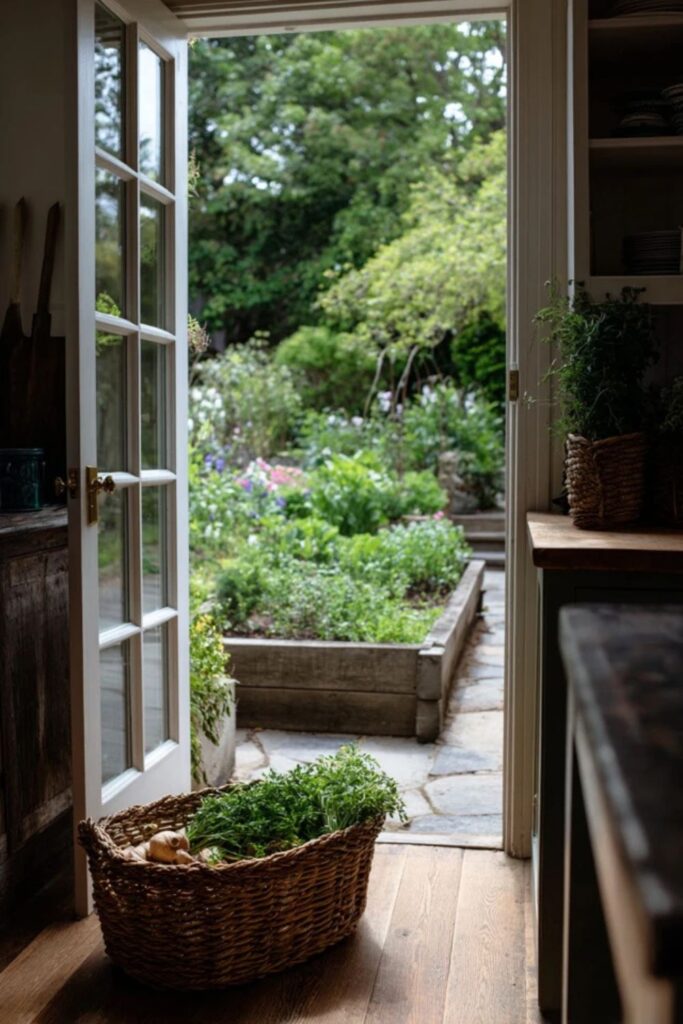
Martha’s garden is not separate from the house. It is the first room guests enter and the source of everything on the table. Cut flowers, fresh herbs, vegetables, and branches all travel from garden to interior daily.
Even a small container garden on a balcony connects your home to the natural world. Grow rosemary, basil, and a single hydrangea in pots. Cut something fresh each morning and bring it inside. The house feels different when part of it is still growing.
17. A Home That Feels Like It Was Earned
The Martha Stewart aesthetic home is not bought in a weekend. It is built over years of choosing one ironstone platter, one linen runner, one beeswax candle at a time. Each object enters the house because it was sought out, not because it was on sale.
This patience is the real secret. A home that looks collected over decades was collected over decades. There is no shortcut, and the absence of shortcuts is exactly what gives the rooms their depth.
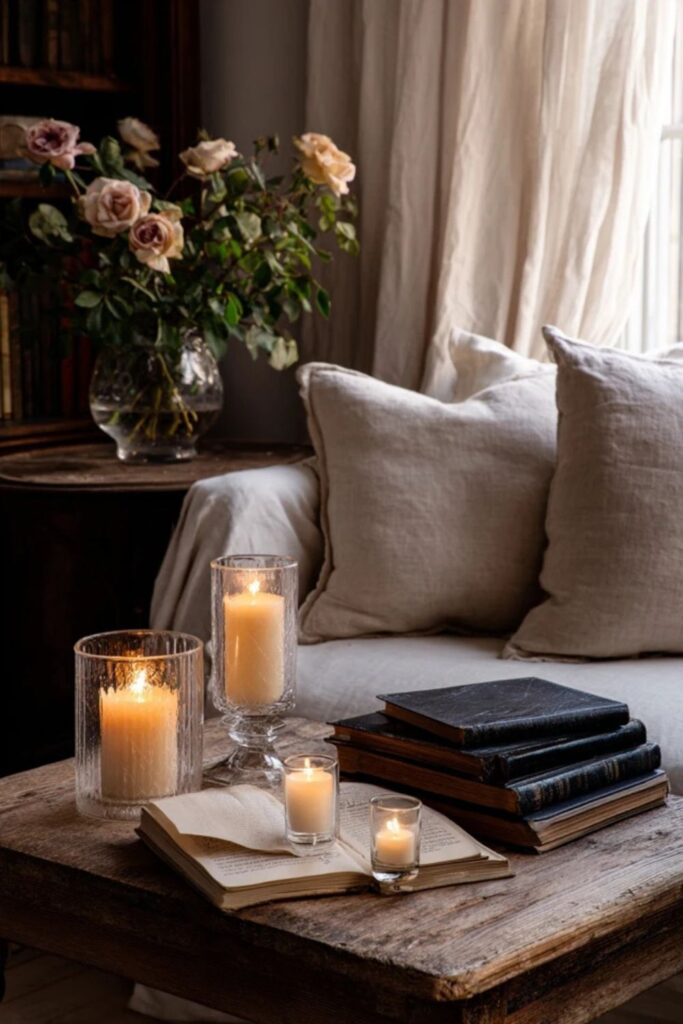
The Martha Stewart aesthetic home is not about any single object or any single room. It is about the decision to treat your daily surroundings with the same care you would give a guest. Linen on the everyday table. Beeswax on a Tuesday. The good ironstone for breakfast.
Start with the room you use most. Replace one synthetic with one natural material. Display one collection instead of hiding it. Light one beeswax candle tonight and see how the room changes.
A home that looks like a life was built the way a life is built. One careful choice at a time, repeated until the rooms carry your story.
You might also like: