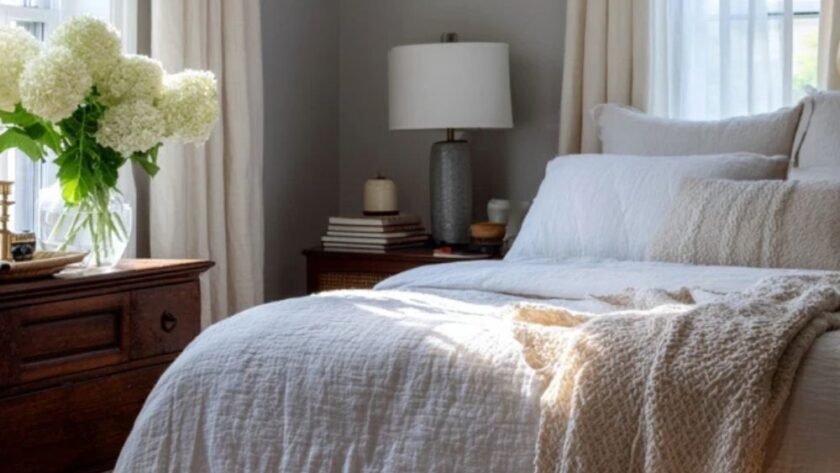
A glass of water catches the last hour of daylight on a nightstand. The bed behind it is layered in white cotton, slightly rumpled, with a single hydrangea bloom in a pressed glass vase.
That quiet scene is the Martha Stewart aesthetic bedroom in a single frame. It is a room built on intention, natural materials, and the kind of softness that comes from real fabric washed a hundred times.
Most “elegant” bedrooms look like hotel lobbies. They match too much, try too hard, and feel like nobody sleeps in them. Martha’s approach is the opposite: collected over time, functional first, and full of small imperfections that make a space feel human.
These 15 ideas will help you build that feeling in your own room.
1. Bedford Gray Walls as Your Foundation
Every Martha bedroom starts with the walls. Her signature Bedford Gray, a warm gray with brown undertones, makes the whole room feel like a cashmere blanket. It reads neutral without turning cold or sterile.
Paint the walls, the trim, and even the ceiling in the same shade. This single commitment sets the tone for everything that follows. White linens pop against it, copper glows beside it, and greenery looks fresh all year.
2. Linen Bedding That Gets Better With Age
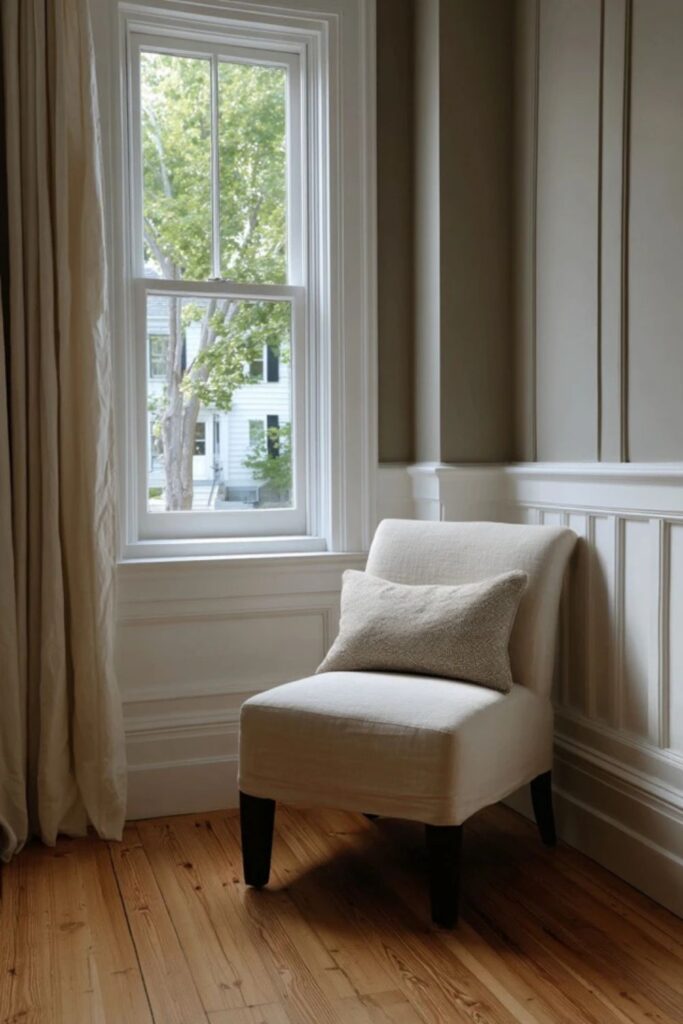
Martha has said her mother’s vintage linens inspired her own bedding collections. Those hand-embroidered pillow slips and crochet-hemmed towels from her grandmother’s dowry shaped her entire philosophy. Real linen does what synthetic fabric never can: it softens with every single wash.
Layer a linen duvet cover over cotton sheets in cream or white. Let the edges stay slightly wrinkled. Pressed linen looks too formal for a bedroom, while soft, washed linen looks like you belong there.
3. A Headboard With History
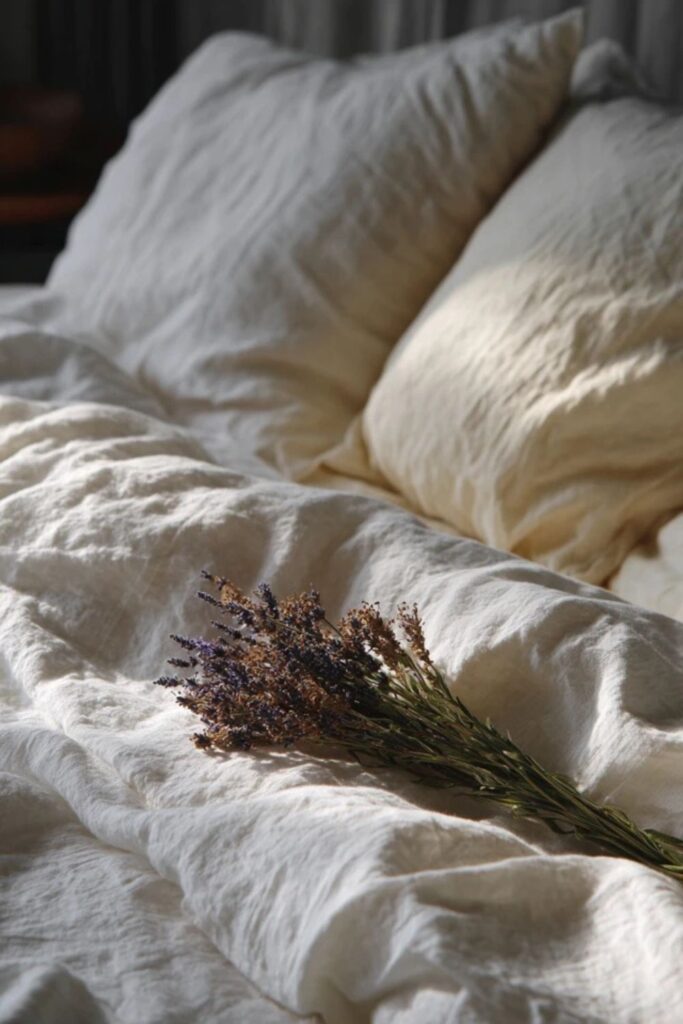
Skip the catalog headboard in matching fabric. Martha’s rooms favor pieces that look inherited: a carved wooden frame from an estate sale, an upholstered panel in faded velvet, or a simple iron bed with patina.
The headboard anchors the entire room. Choose one with visible grain, hand-turned posts, or nail-head trim that has aged to a dull brass. New pieces work too, as long as the material is honest.
4. Symmetry on the Nightstands
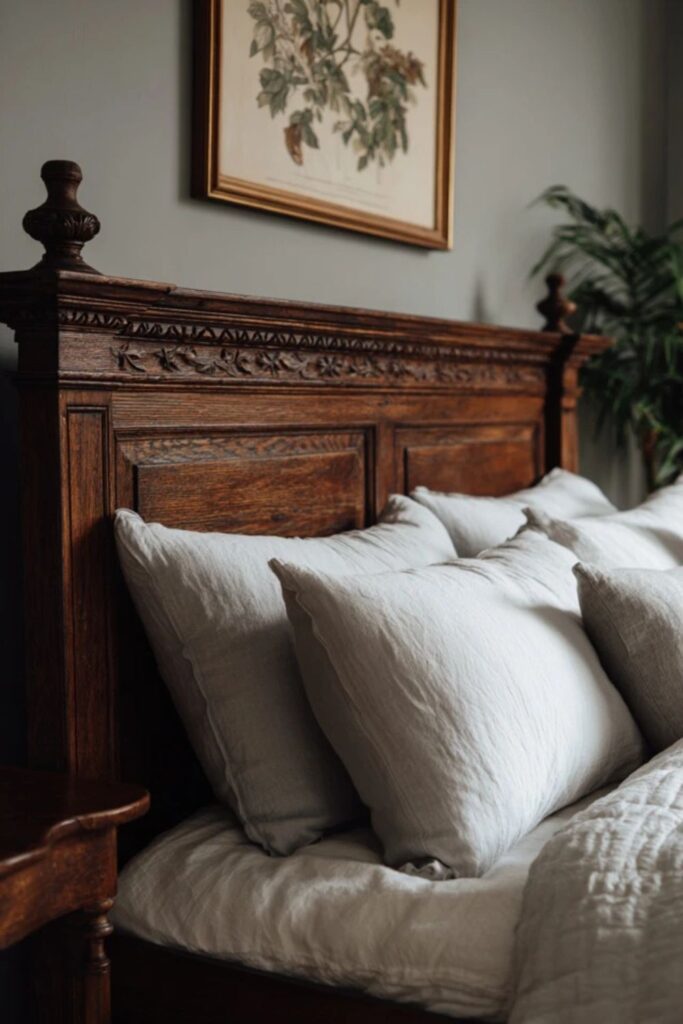
Two matching lamps. Two small stacks of books. Two pressed glass tumblers. Martha’s rooms rely on symmetry to create calm, and the nightstand pair is where that principle matters most.
Each nightstand should hold no more than three or four things: a lamp, a small vase, a book, and a candle. Keep the surfaces edited. A cluttered nightstand makes the whole room feel uneasy, even if the bed is composed.
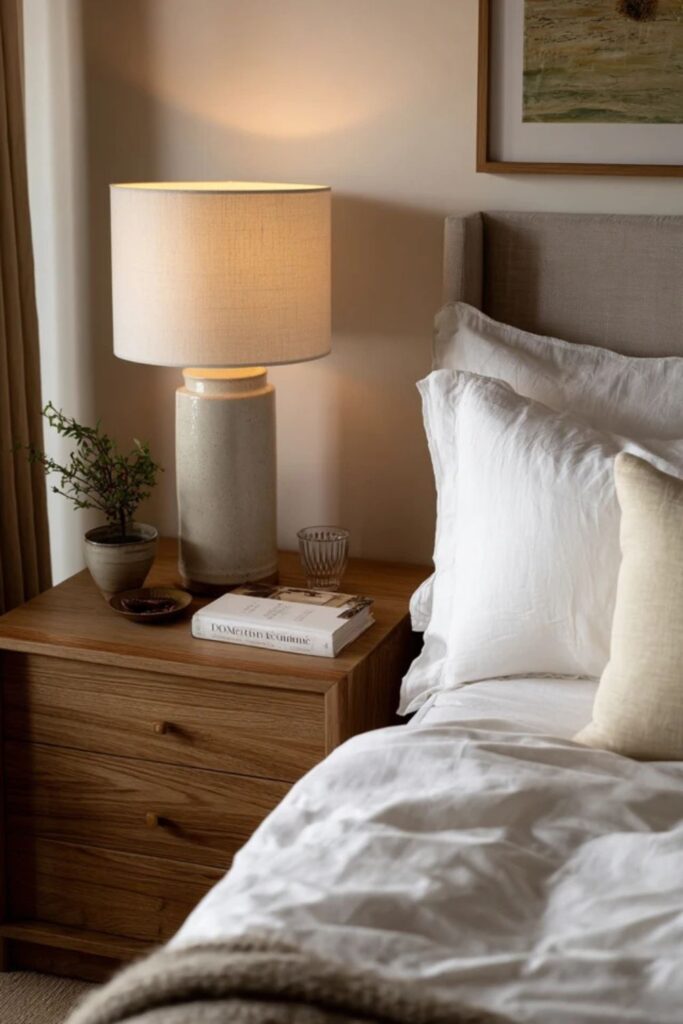
Those anchors, the walls, the bedding, the headboard, the nightstands, carry the room on their own. What comes next is the texture that makes it feel rich and layered.
5. A Cotton Blanket at the Foot of the Bed
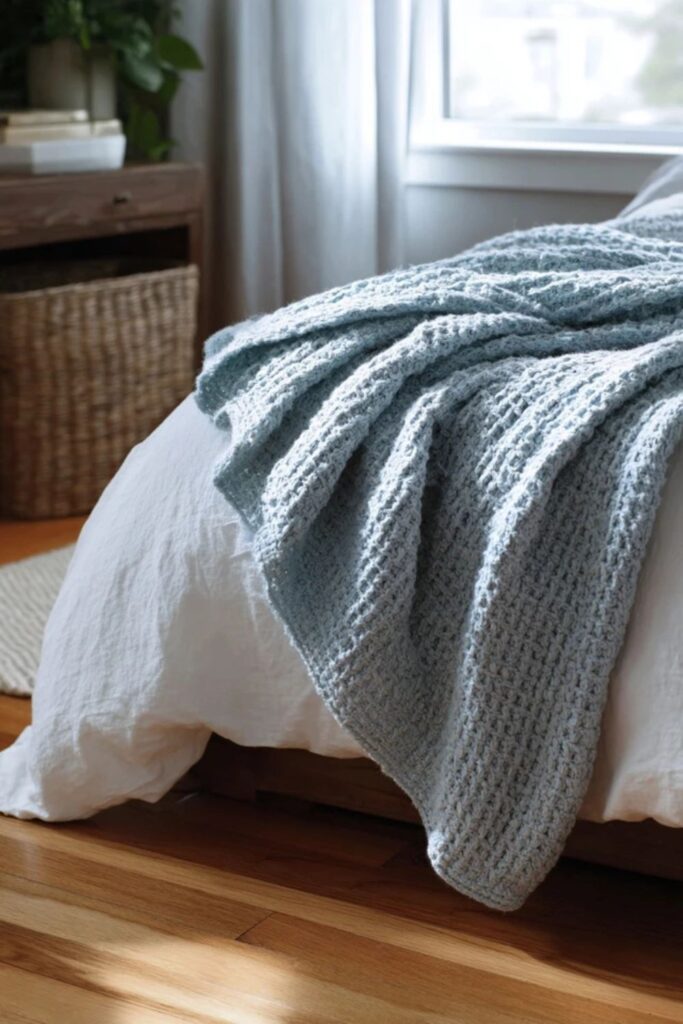
Martha layers her beds the way a good cook layers flavor: each piece adds something the last one didn’t. A basket-weave cotton blanket folded at the foot gives weight and structure without bulk. Her own Bedford Tile collection uses this exact approach: 100% cotton, textured weave, a few honest colors.
Fold the blanket in thirds so it sits like a band across the lower quarter of the bed. Choose cream, soft blue, or putty. This layer invites you to reach for it on a cool evening without pulling back the whole duvet.
6. Flannel Sheets for Winter
Martha switches her sheets by season. She skips linen and cotton entirely in cold months, reaching for flannel instead. Beneath the flannel, she adds a padded cotton mattress layer for warmth and protection. This seasonal rotation is how a bedroom stays comfortable all year.
Invest in two sets: crisp cotton percale for warm months and brushed flannel for cold ones. Rotating them extends the life of both. The texture difference alone changes how the room feels when you climb in at night.

7. Beeswax Candles on a Silver Tray
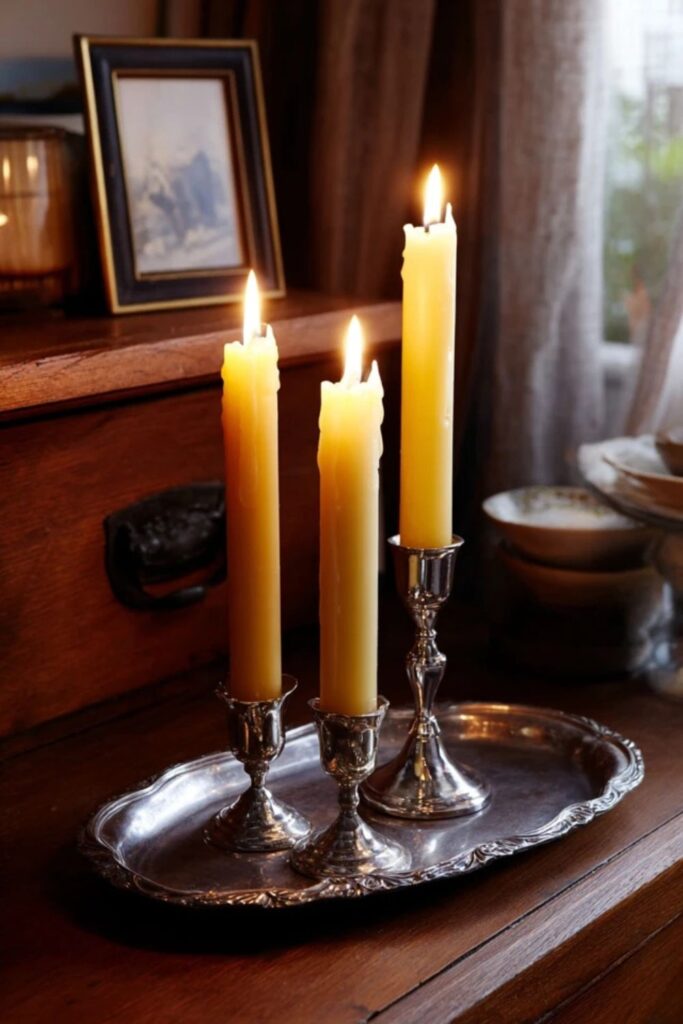
A bedroom needs candlelight. Not a scented candle from a chain store, but real beeswax tapers in simple holders on a small silver tray. Beeswax burns with a warm honey tone and a faint, natural scent that synthetic wax cannot replicate.
Place the tray on a dresser or a wide windowsill. Light them while you read or wind down. The glow from beeswax is softer than paraffin, and the color of the wax adds warmth even when unlit.
8. A Collected Dresser Top
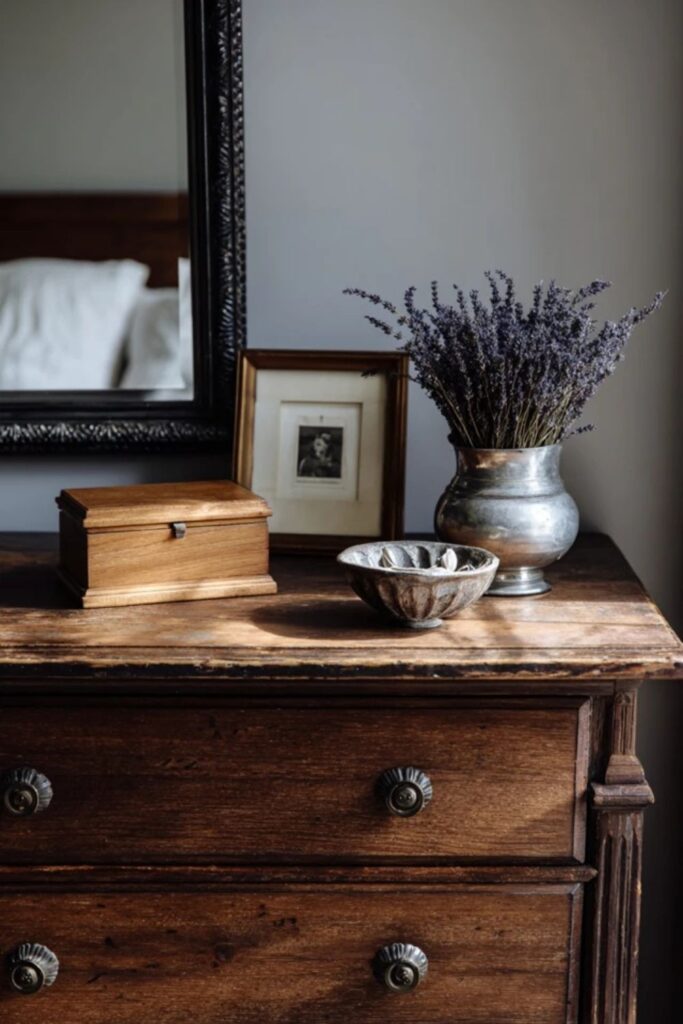
The top of a dresser is a stage. Martha treats it the way she treats a mantel: a few chosen objects arranged with intention. A wooden jewelry box, a framed black-and-white photograph, a small bowl of dried lavender, and a hand mirror with a tarnished silver back.
Group items in odd numbers. Three objects together look arranged, while four look accidental. Leave breathing room between each piece. The empty space between objects matters as much as the objects themselves.
9. Curtains That Touch the Floor
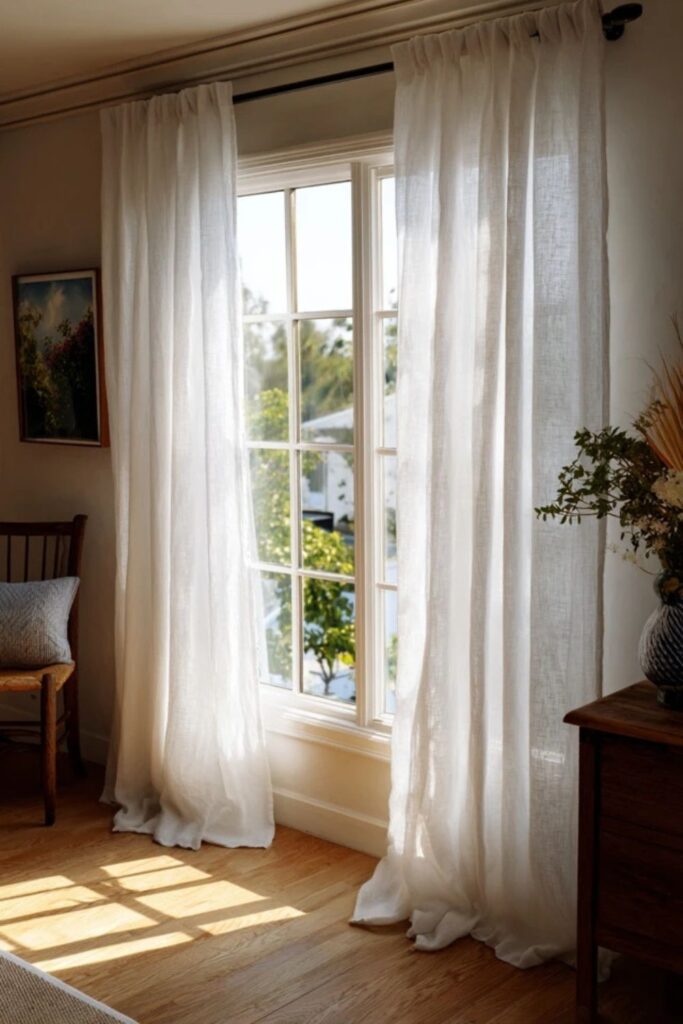
Curtains in a Martha bedroom are never short. They pool slightly on the floor or just barely kiss it. The fabric is always natural: washed linen, cotton canvas, or a lightweight wool. White or cream, hung from simple iron rods with plain rings.
Avoid anything sheer and synthetic. The curtains should filter light without looking flimsy. When morning light comes through washed linen, the room fills with a glow that feels like waking up inside a cloud.
All those layers, the blankets, the seasonal sheets, the candlelight, the curtains, build a room with depth. The smaller touches that follow are what refine it into something personal.
10. Fresh Flowers, One Variety at a Time
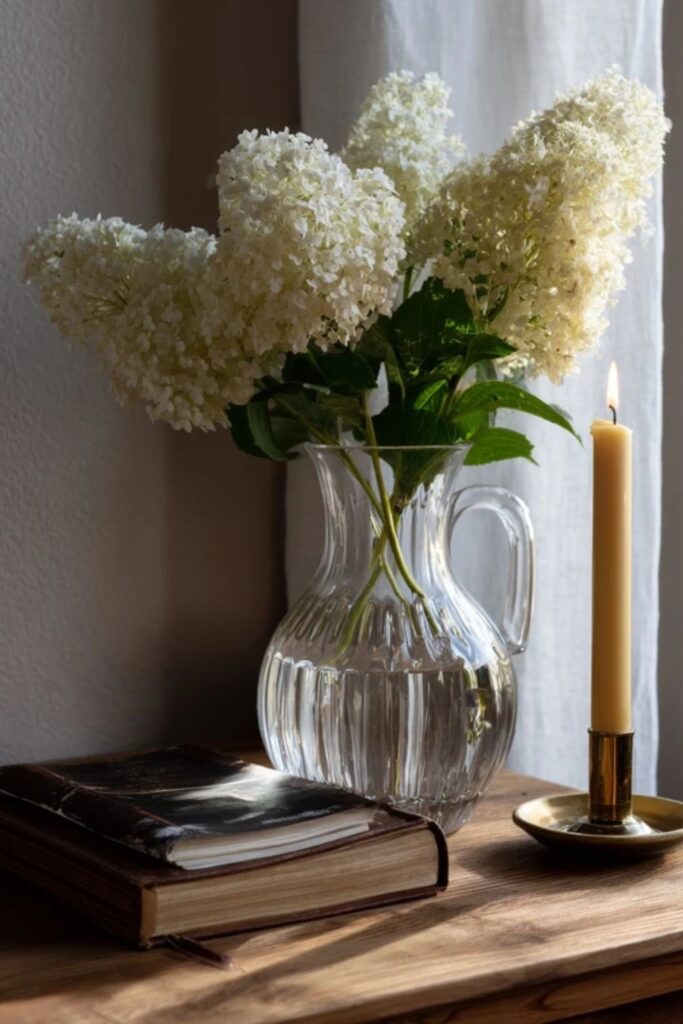
Martha never mixes a dozen flower types in a bedroom arrangement. One variety in abundance is her signature move. A tight cluster of white Annabelle hydrangeas in a pressed glass pitcher. A single branch of flowering quince in a copper bud vase. Mass planting applies indoors too.
Place the arrangement on the nightstand or dresser. Change it weekly with whatever is in season: tulips in spring, dahlias in fall, paperwhites forced in winter. The ritual of refreshing them becomes part of how the room stays alive.
11. Bare Hardwood Floors
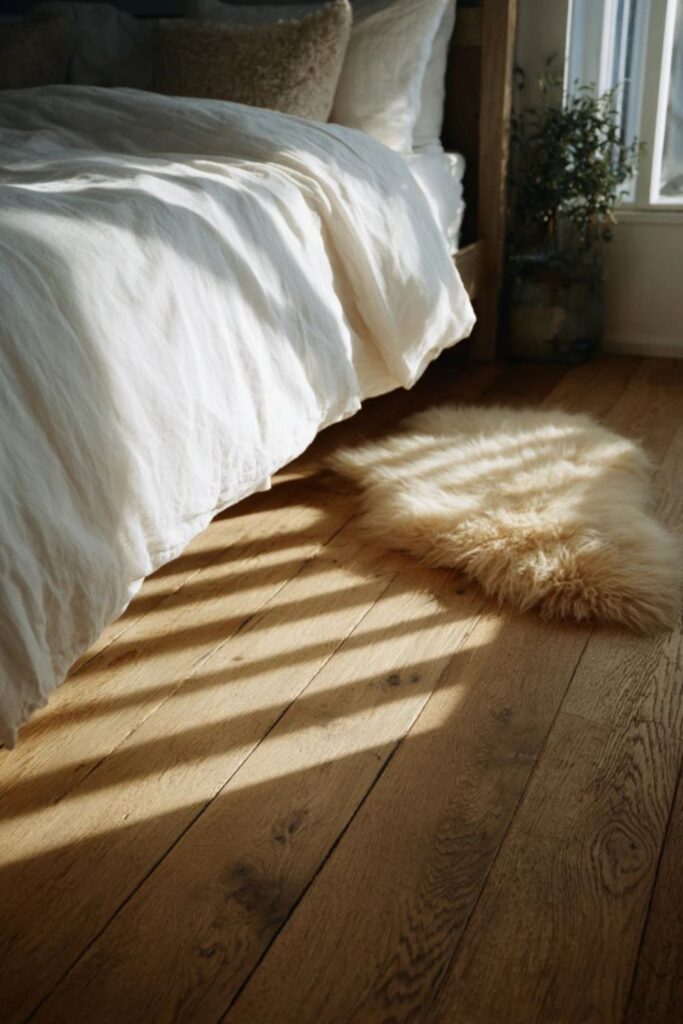
Martha recently declared that she prefers bedroom floors without rugs. Clean, bare hardwood lets the architecture of the room breathe. It also shows off the quality of the floor itself, whether it is wide plank oak, painted pine, or old-growth walnut.
If the floor is cold, place a single sheepskin beside the bed for your feet in the morning. One small, honest textile beats a wall-to-wall carpet that hides the bones of the room.
12. Ironstone on the Nightstand
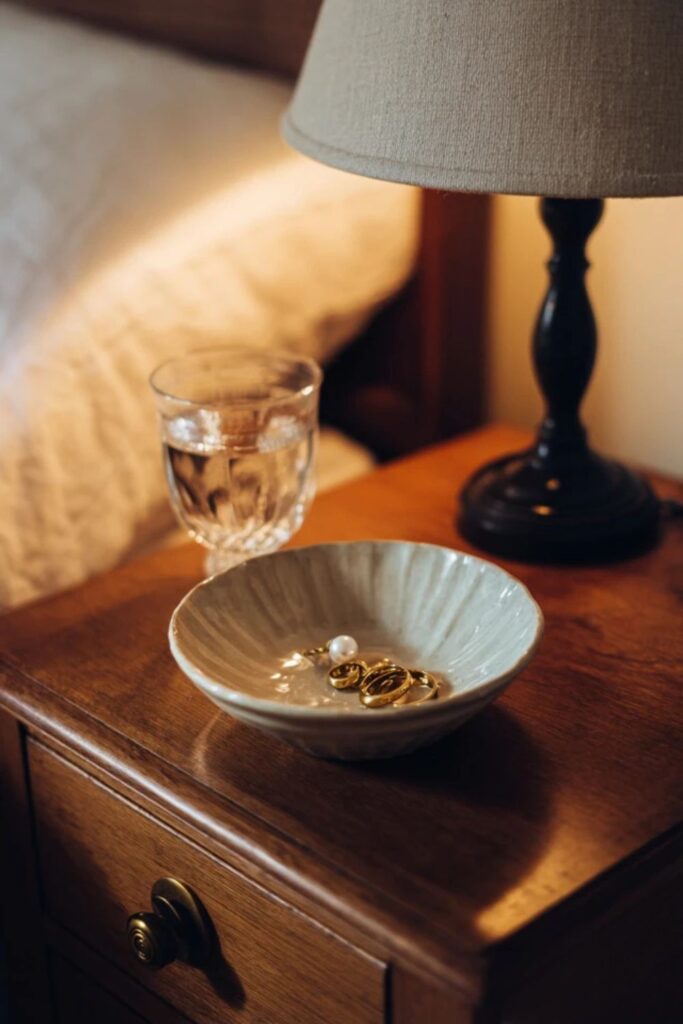
A small ironstone bowl or pitcher on the nightstand is a Martha signature. These heavy, cream-colored pottery pieces have an English antique quality. They hold jewelry overnight, a few hairpins, or a single bloom without looking fussy.
Hunt for ironstone at flea markets and estate sales. The slight variations in glaze and weight make each piece distinct. A nightstand with an ironstone dish on it immediately looks collected rather than decorated.
13. Pressed Glass for Water
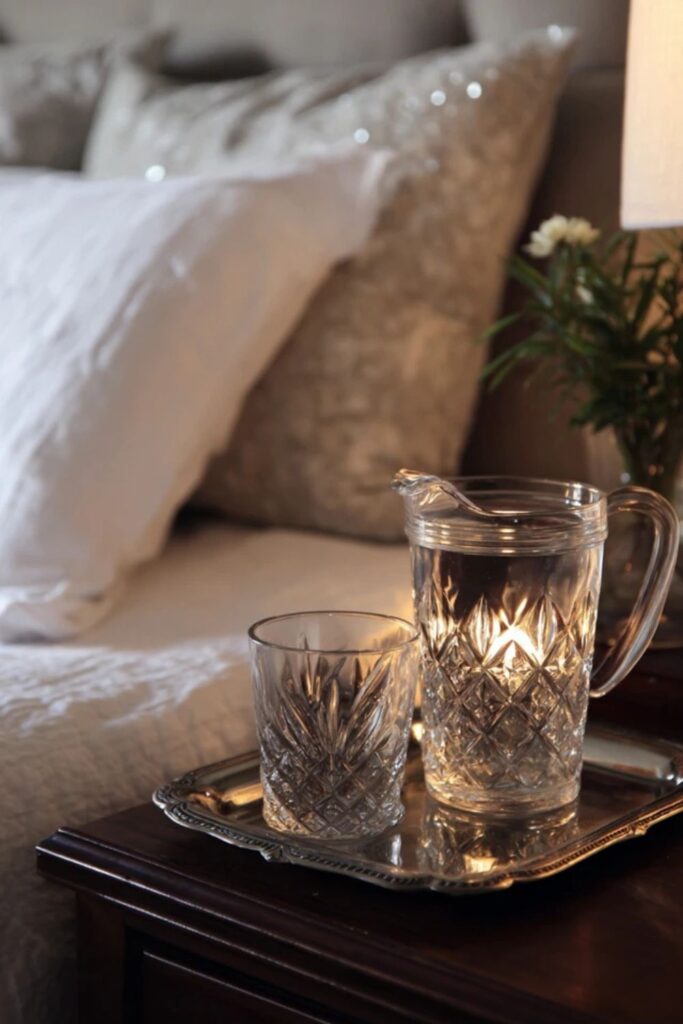
Forget the plastic tumbler. A pressed glass water glass on each nightstand catches light like a tiny chandelier. Vintage pressed glass has patterns cut into it that refract candlelight and morning sun in equal measure.
Keep a small pressed glass pitcher on a tray beside the glass. Fill it before bed. This one small ritual makes even a Tuesday night feel considered and intentional.
14. Natural Fiber Throws
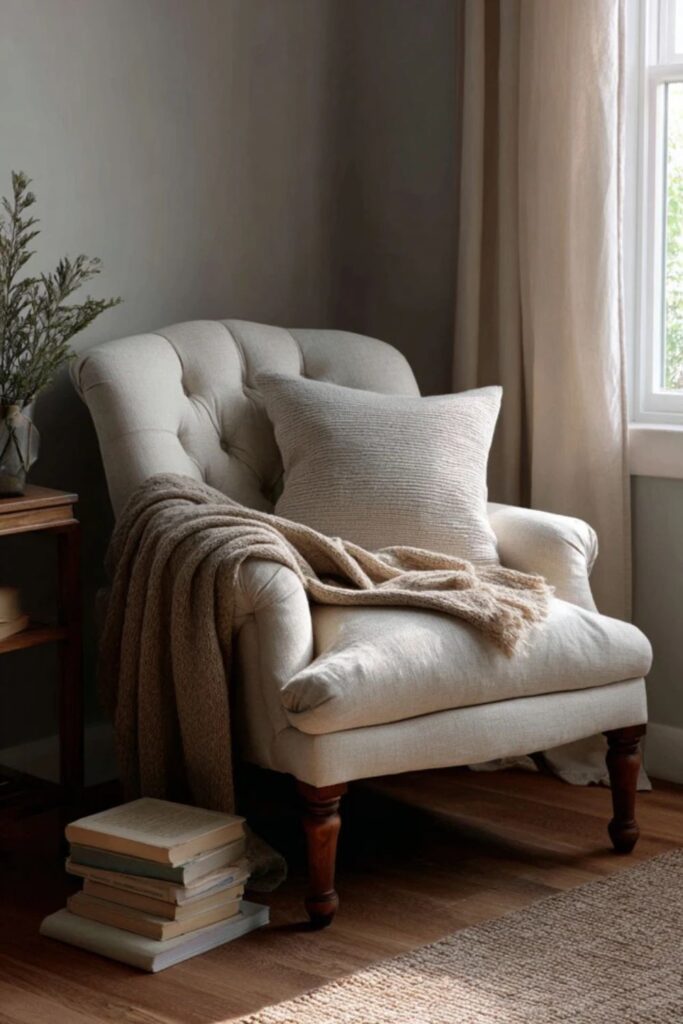
A throw draped over a reading chair or across the foot of the bed should be wool, cashmere, or cotton. Martha avoids synthetics entirely. The weight and drape of natural fiber tells your hand it is real before you even pick it up.
Choose muted tones: cream, oatmeal, Bedford Gray, or soft sage. A throw is not a statement piece. It is a quiet invitation to sit down, stay, and read one more chapter.
Each detail has earned its place in the room by this point. The final idea is the one most people overlook, and it changes everything.
15. The Scent of the Room Itself
Martha’s bedrooms are not scented with plug-in fresheners. The scent comes from real sources: dried lavender tucked into a linen closet, beeswax candles, a sachet of cedar chips in a drawer, fresh eucalyptus on a windowsill.
Layer these scents quietly. No single one should overpower the room. The goal is a faint, natural fragrance you notice only when you first walk in, something that smells like clean linen and cut herbs.

A Martha Stewart aesthetic bedroom is not about spending a fortune or following a rigid set of rules. It is about paying attention. It is about choosing real over fake, soft over stiff, collected over catalog.
Start with one change. Swap your pillowcases for linen. Put a beeswax candle on a tray. Set a single bloom in a glass you found at a flea market. Each small choice compounds into something that feels genuinely yours.
The best bedrooms do not impress you when you walk in. They make you exhale.
You might also like: