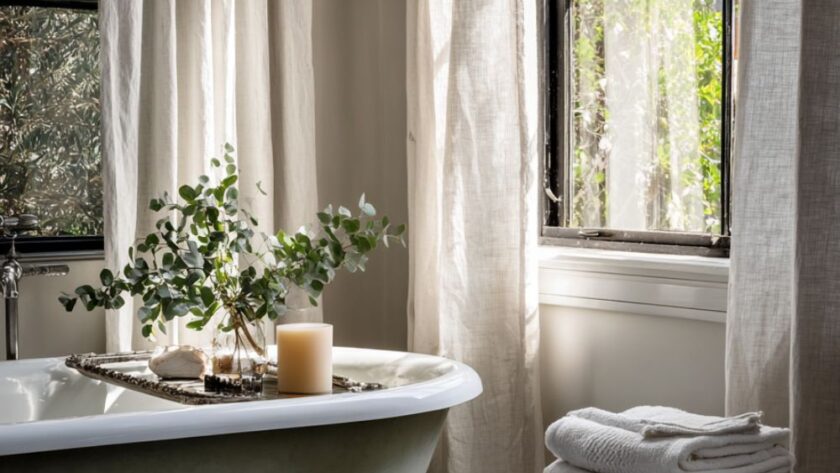
A clawfoot tub holds heat the way cast iron always does: slowly, stubbornly, long after the water should have cooled. Steam rises in a room tiled floor to ceiling in white marble. The only scent comes from eucalyptus tied to the showerhead.
That is a Martha Stewart aesthetic bathroom. It is a room stripped down to materials that tell the truth. The marble is real stone. The towels are real cotton. The tub is real cast iron, and nothing pretends to be something else.
Martha visited the Kohler foundry in Wisconsin in early 2026. She filmed the next phase of her work as their first Cast Iron Ambassador. She has called enamelled cast iron a material she uses every day throughout her home. Her Bedford Post Inn bathrooms pair Carrara marble, nickel fixtures, and woven baskets. The restraint in those rooms is what most bathroom design ignores entirely.
These 15 ideas follow her lead. Each one chooses the real thing over the convenient one.
1. White Marble Subway Tile From Floor to Ceiling
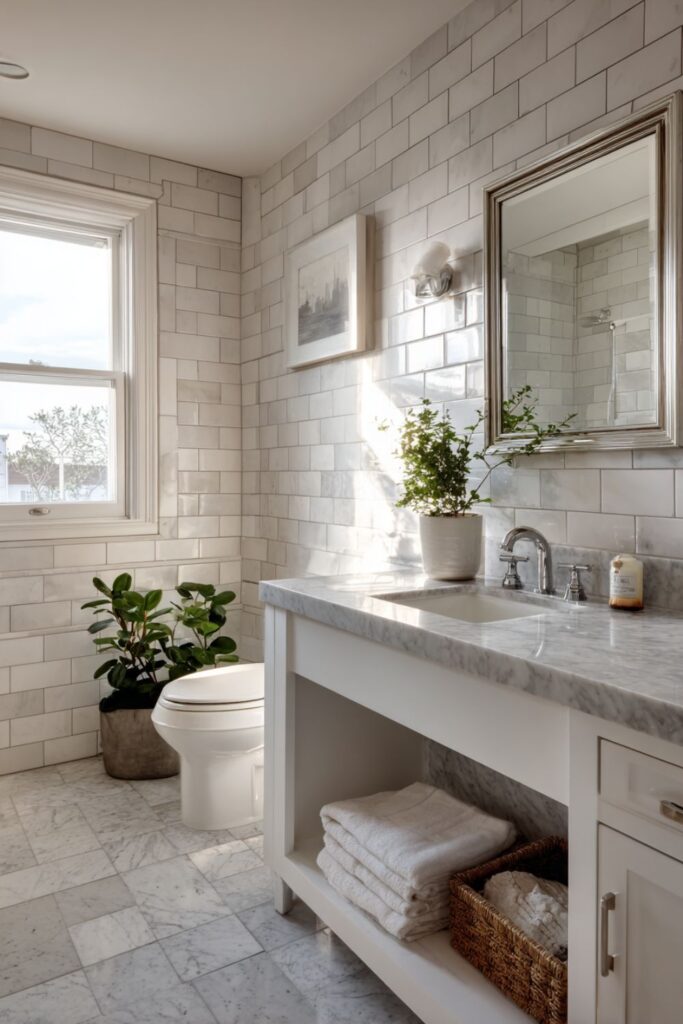
Martha’s bathroom walls are almost always white marble subway tile. Not ceramic printed to mimic marble, but real stone. Each tile has soft grey veining that shifts slightly from piece to piece. That variation is the whole point of using natural material.
Run the tile all the way up to the ceiling. The eye should read the wall as one continuous surface, not a grid. Use a thin grout line in matching soft grey to keep the joints quiet. Carrara marble catches light differently at every hour. The wall glows warm at sunrise and turns cool at dusk, giving the room a subtle, shifting life that paint cannot replicate.
2. A Cast Iron Clawfoot Tub in a Real Colour
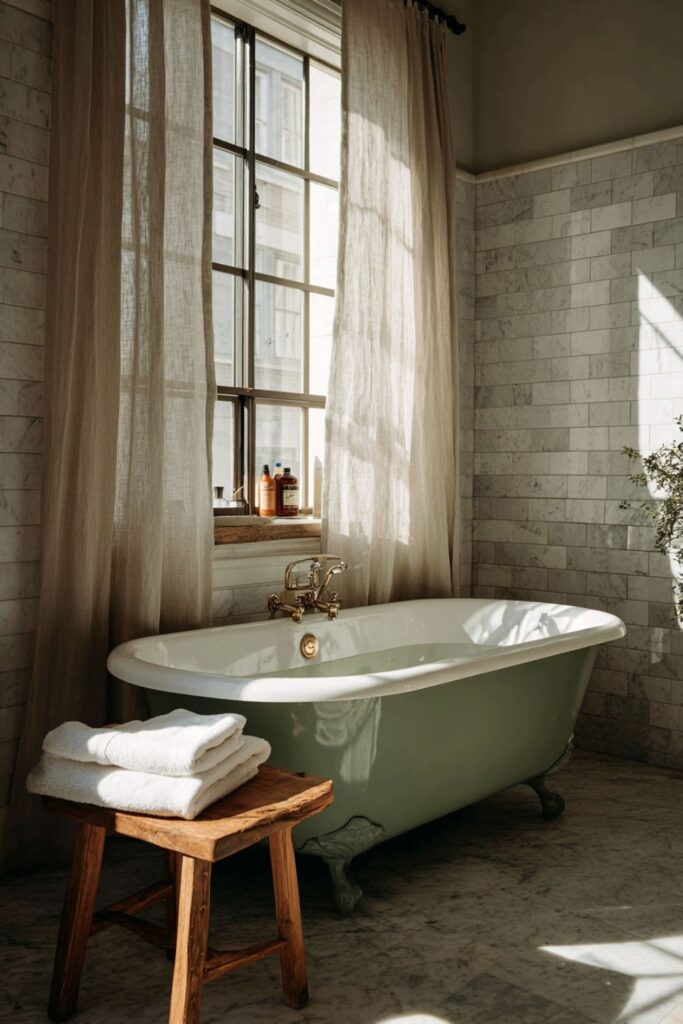
The clawfoot tub is the centrepiece of a Martha bathroom. Cast iron holds heat far longer than acrylic. The enamel resists chipping and cracking for decades. Kohler’s cast iron is made from at least 80% recycled material, and the company has been crafting it since 1883.
Martha’s Kohler collaboration offers tubs in Aspen Green, Thunder Gray, Truffle, Black, and White. An Aspen Green tub in a white marble room becomes the single unexpected detail that makes the space memorable. Position it beneath a window. A clawfoot tub in morning light, with a linen curtain filtering the glare, is the only focal point the room needs.
3. Hexagonal Marble Floor Tiles With Mosaic Insets
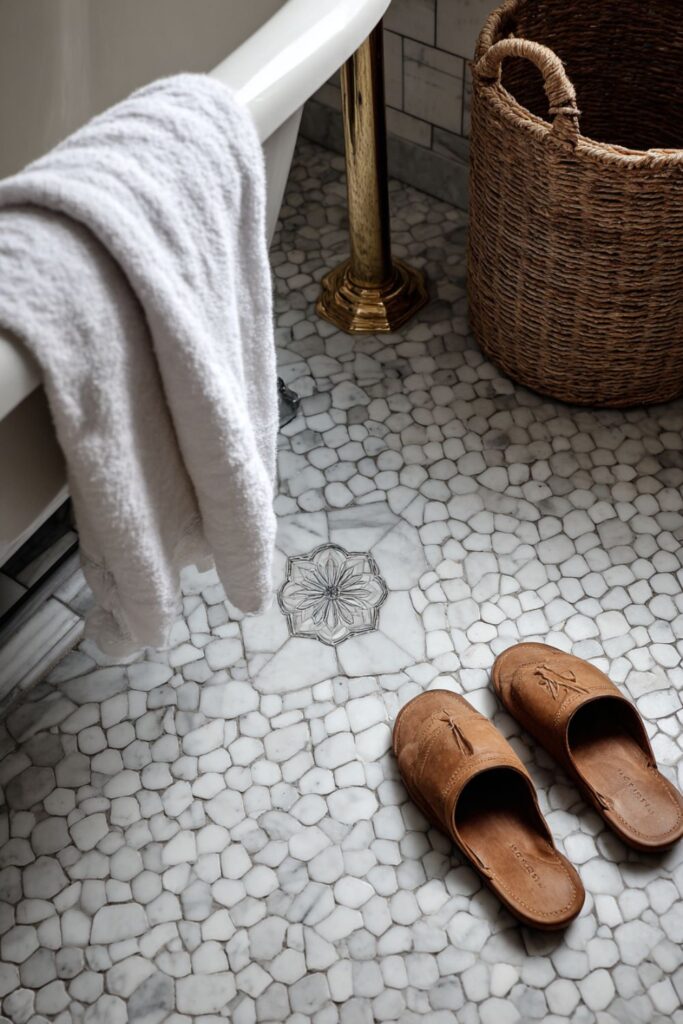
Martha’s Bedford Post Inn bathrooms have marble floors with small mosaic motifs in grey. White hexagonal tiles with a diamond or flower inset create a floor that looks a century old. The pattern adds detail without wallpaper or paint.
The mosaic should stay subtle. It is not the star of the room. It is the quiet detail you notice when you step out of the bath. That moment of discovery separates a Martha bathroom from one that stops at the walls and forgets the floor. The handmade quality of marble mosaic means no two flowers come out identical, and that imperfection is deliberate.
4. A Furniture-Style Vanity in Sharkey Grey
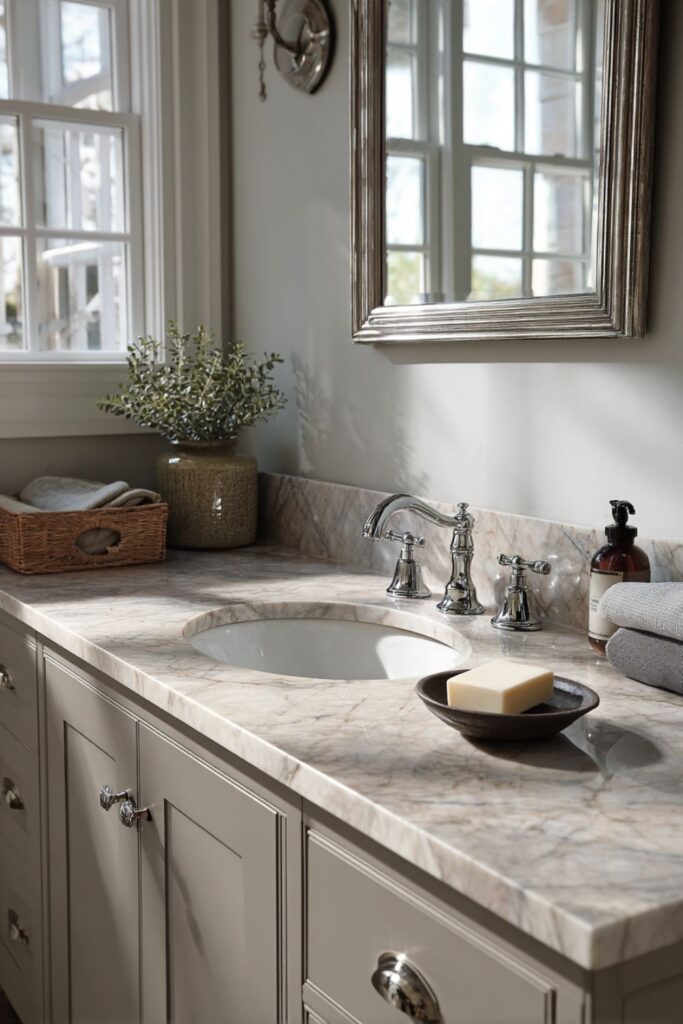
Martha’s bathroom vanities look like bedroom dressers that happen to hold a sink. Her Seal Harbor vanity comes in Sharkey Grey, a soft warm grey. It has a thick marble countertop and Bedford Nickel hardware. The legs show the floor beneath, keeping the room open.
Choose a vanity with visible wood grain, nickel pulls, and a marble top. An undermount sink keeps the counter surface unbroken. The vanity should look like it could have come from a different decade than the tile. That mismatch in age is what Martha means by “collected, not decorated.” It tells visitors the room was built over time.
Those four elements are the bones: the walls, the tub, the floor, and the vanity. They are the decisions you make once and live with for years. Everything that follows layers warmth, texture, and the daily details that make a tiled room feel like a place worth lingering.
5. Polished Nickel on Every Fixture
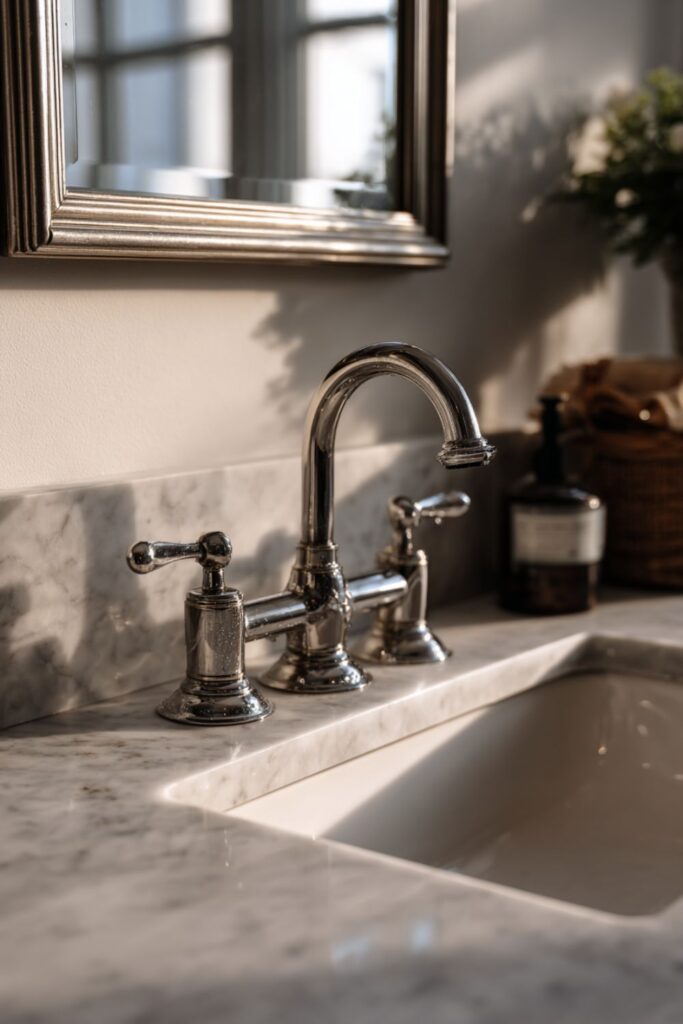
Martha chooses polished nickel over chrome. The difference is visible side by side. Nickel has a warmer sheen than the blue-white flash of chrome. It also develops a soft patina over time that makes it richer.
Match the metal on every fixture in the room. Faucets, towel bars, cabinet pulls, and mirror frames should all agree. One metal committed to fully reads as intentional. Mixing metals is a trend Martha avoids entirely. The cohesion between matched nickel and warm marble creates a room that feels like a single, resolved thought.
6. White Cotton Towels Stacked in Fives
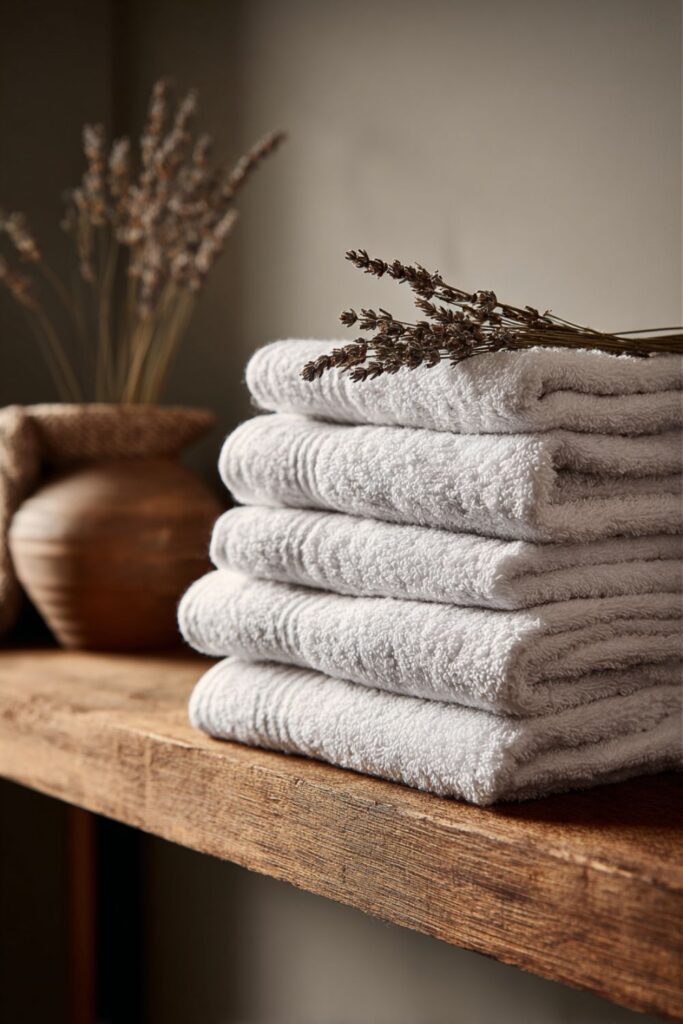
Martha’s towels are always white and always cotton. No patterns, no contrast stitching, no visible monograms. Thick, heavyweight cotton stacked in neat thirds on open shelves looks like a spa without trying. The fabric also gets softer and more absorbent with every wash.
Stack towels in groups of three or five. The repetition of identical white towels is mass planting for the bathroom. One colour in abundance creates more visual calm than variety. Invest in weight over quantity. Thin towels read as cheap no matter how carefully you fold them. Three thick towels always beat six thin ones.
7. A Silver Tray to Corral the Vanity
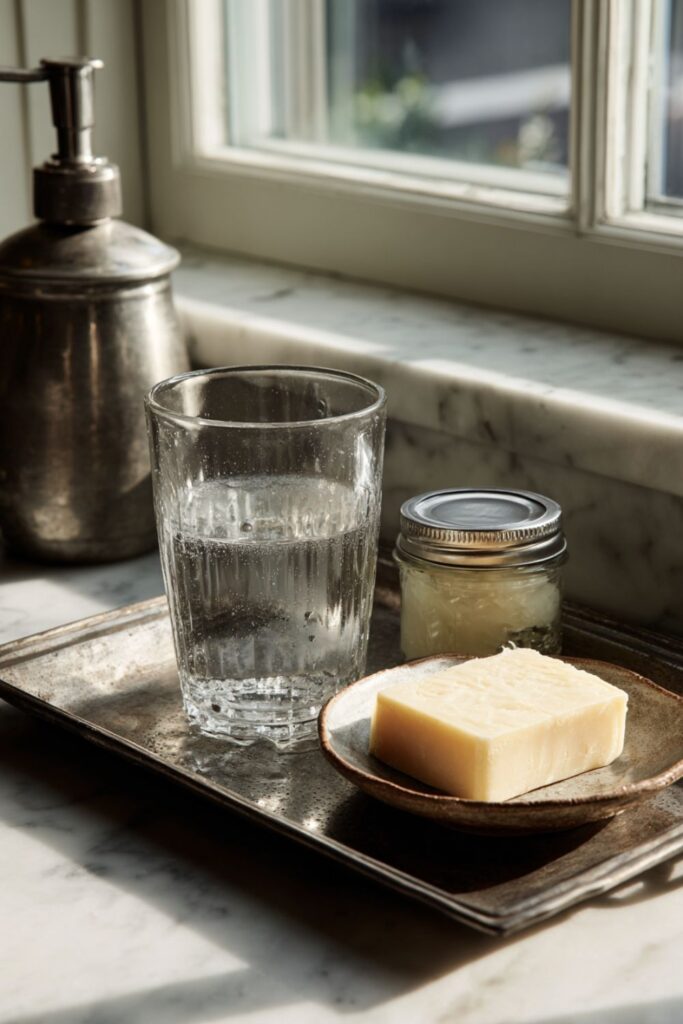
Every Martha vanity has a tray. A small tarnished silver tray corrals the daily objects that would otherwise scatter. A soap dish, a pressed glass tumbler, and a jar of hand cream become a still life instead of clutter.
Choose a tray with a low lip and some age to it. A tarnished one from an estate sale has more character than a polished new piece. Hold the tray to four items at most. Anything beyond that defeats its purpose. The tray teaches you to edit your counter the way Martha edits a room: keep only what belongs.
8. Fresh Eucalyptus on the Showerhead
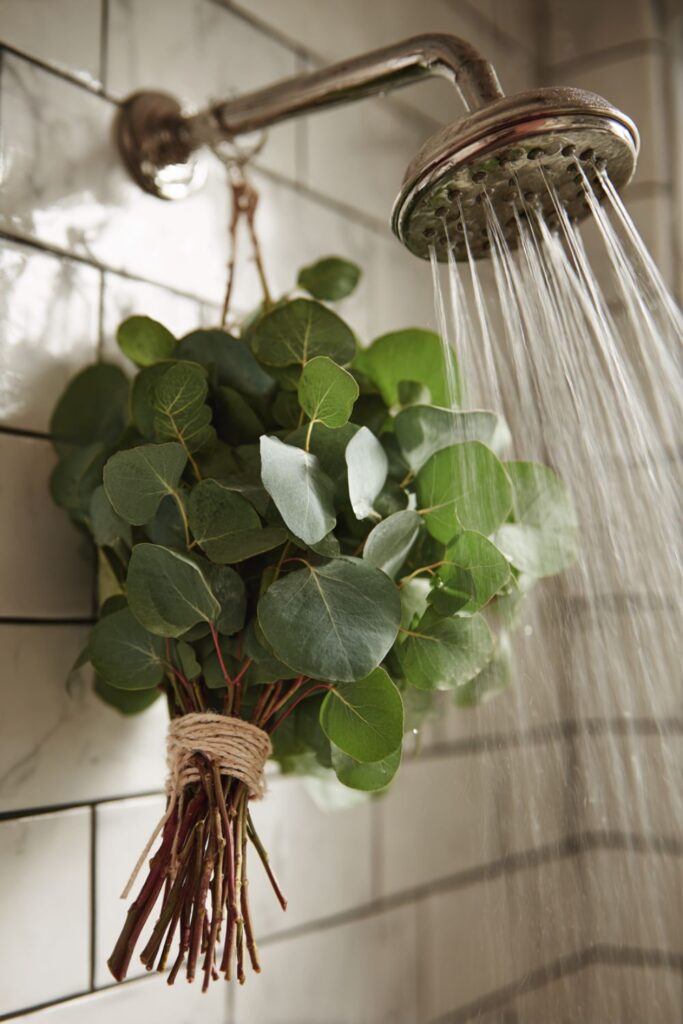
Fresh eucalyptus tied with cotton string and hung from the showerhead is the simplest botanical detail in a Martha bathroom. Steam activates the oils in the leaves. A clean, herbal scent fills the room with no product needed.
Replace the bundle every two weeks. The leaves shift from bright green to muted sage as they dry. The scent mellows from sharp to soft over those days. This small rotation connects the bathroom to the outdoor world. It does the same work that fresh flowers do on a dining room table: it proves the room is tended and alive.
9. A Wooden Stool Beside the Tub
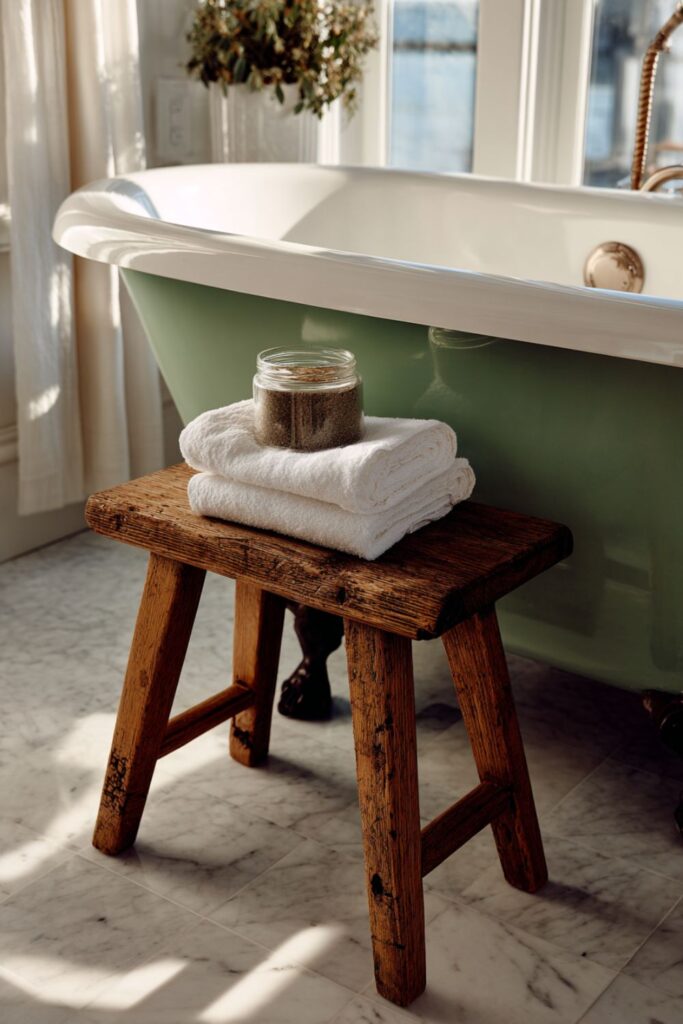
A small wooden stool beside the bathtub holds towels, a candle, a book, or a glass of water. It brings warmth and natural grain into a room of stone and metal. Martha favours weathered teak or simple unfinished oak for this role.
The stool should look at home in a garden or a kitchen too. Over time, the wood darkens slightly from moisture. That patina is the point, not a problem. A brand-new stool looks fine, but a seasoned one tells a story. Function first and beauty second is how Martha chooses every object in a room.
The room has its bones and its texture now. Marble, cast iron, nickel, cotton, wood, and greenery form a complete palette. What follows are the finishing details that most people skip. They are the ones that separate a tiled room from one assembled with real care.
10. An Ironstone Soap Dish With a Real Bar
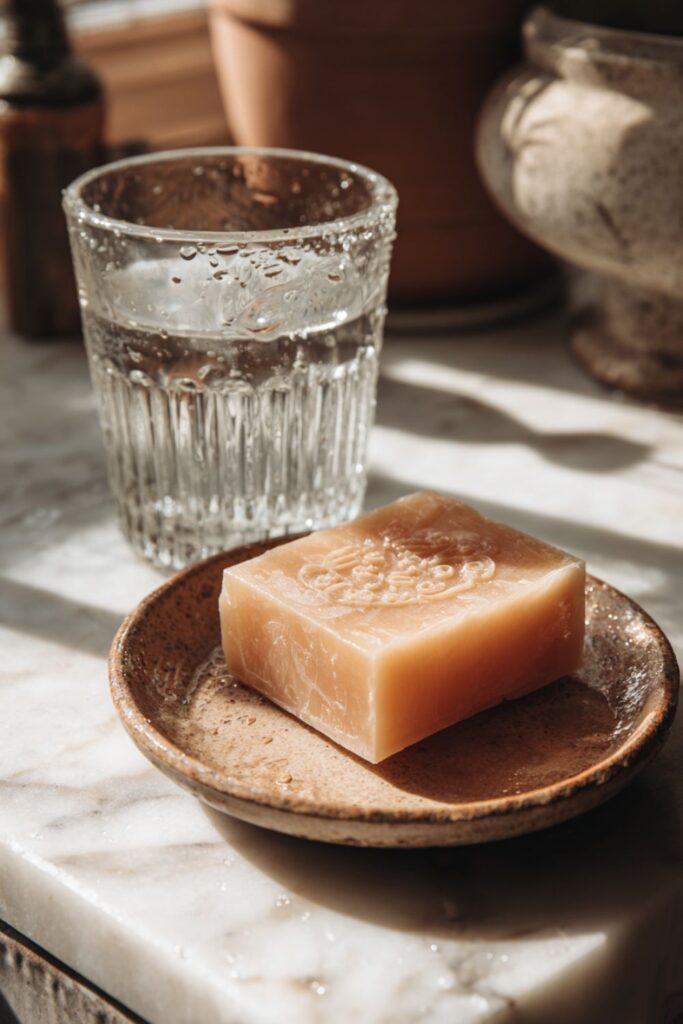
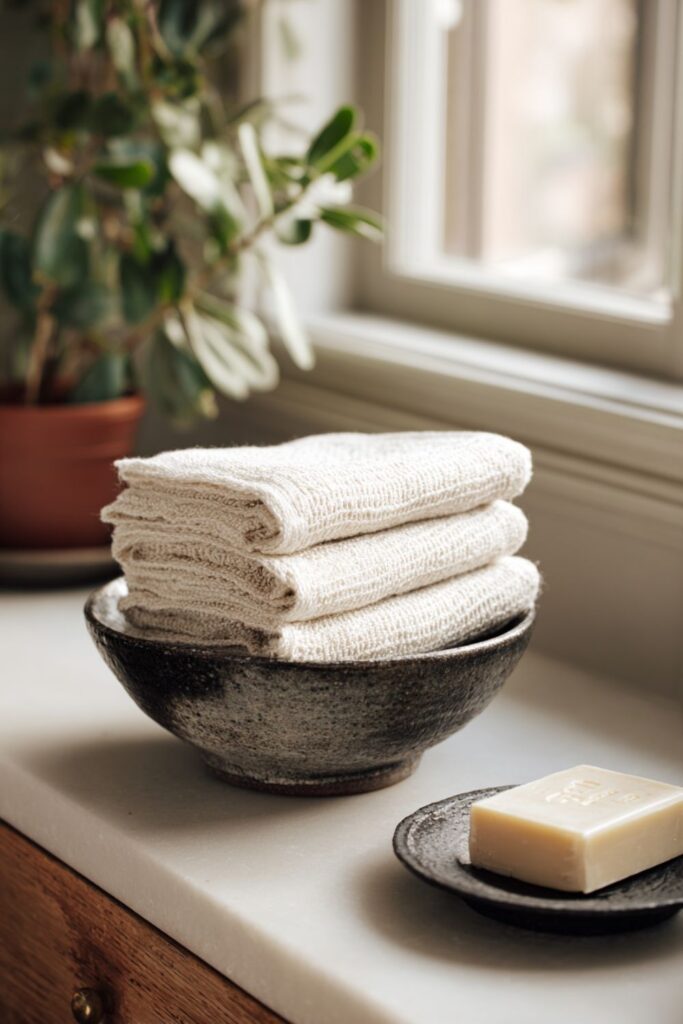
A bar of French milled soap on a small ironstone dish is one of the cheapest Martha details you can add. It is also one of the most visible. The heavy cream pottery looks antique and holds up to daily water without complaint.
Choose a shallow ironstone dish in a round or oval shape. Let the soap sit out, visible and proud. When the bar shrinks, replace it with a new one in a similar shade. This small act of care is the “elevated everyday” in practice. An ordinary moment, washing your hands, gets treated with attention because you decided it mattered.
11. Pressed Glass Jars Instead of Plastic
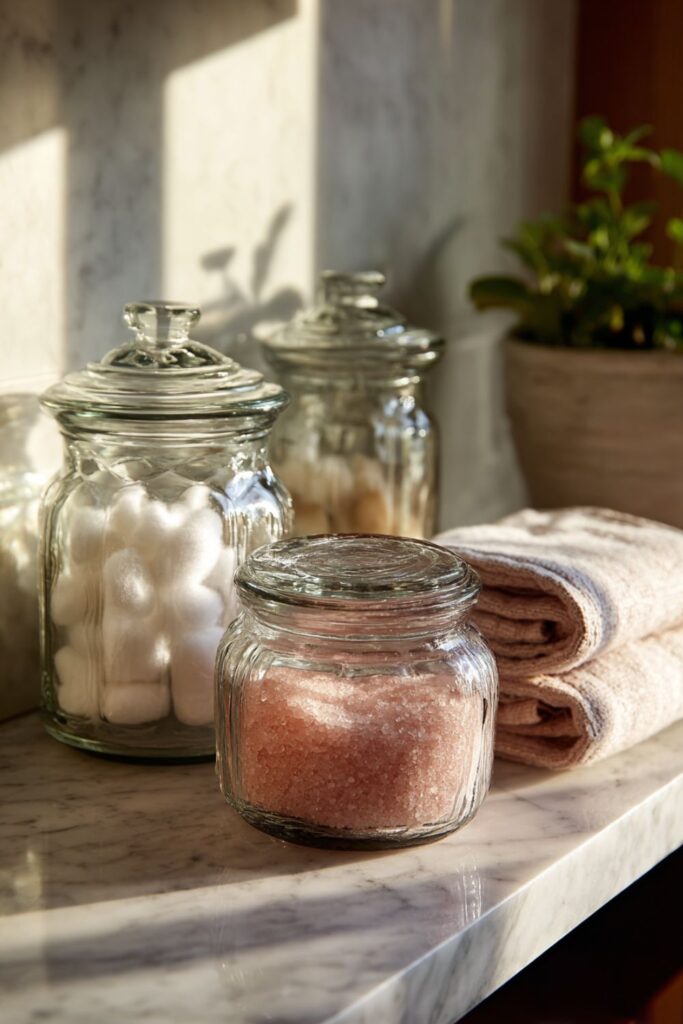
Cotton balls, bath salts, and swabs deserve better than a plastic tub from a chemist. Pressed glass jars with simple lids turn storage into quiet decoration. The cut patterns refract bathroom light, and the visible contents encourage tidiness.
Choose jars in three different heights. Group them on the vanity tray or an open shelf. Pressed glass belongs to the same vocabulary as Martha’s kitchen and living room accessories. Using it in the bathroom connects this room to the rest of the house with a single material. The continuity is subtle, but your eye registers it.
12. Linen Hand Towels for Guests
Martha never uses paper towels in a guest bathroom. Small linen hand towels folded in thirds go in an ironstone bowl beside the sink. Linen absorbs water fast, dries quickly, and gets softer with each laundering cycle.
Keep a small basket underneath for used towels so guests know where to place them. This one swap changes the feel of the whole room. It tells visitors the bathroom was prepared for them specifically. The effort of real cloth over disposable paper says more about how you host than any centrepiece ever could.
13. A Beeswax Candle for Evening Light
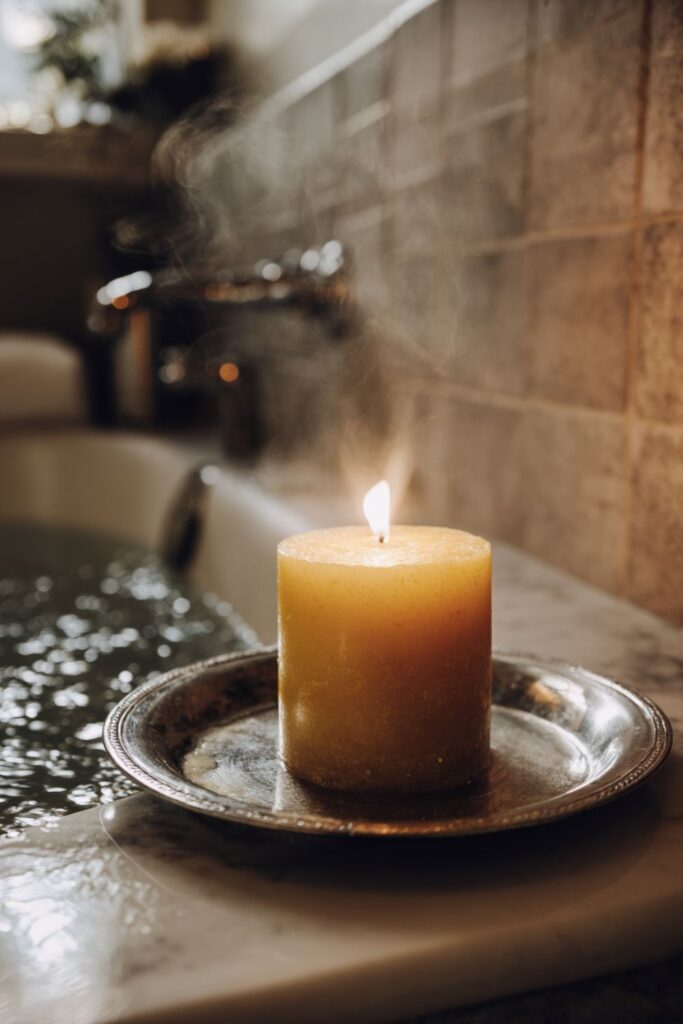
A bathroom after dark without candlelight is just a utility room with a dimmer. One beeswax pillar on the tub ledge or a silver tray beside the sink changes everything. Beeswax burns with a warm honey glow. Its faint natural scent blends with steam.
Light it while you run the bath. The flame flickers on marble and water, creating a softness that no overhead fixture can touch. One candle is enough. Martha’s rooms rely on restraint. A single flame in a quiet room carries more presence than a cluster of scented candles from a chain store ever could.
14. Woven Baskets on the Lower Shelf
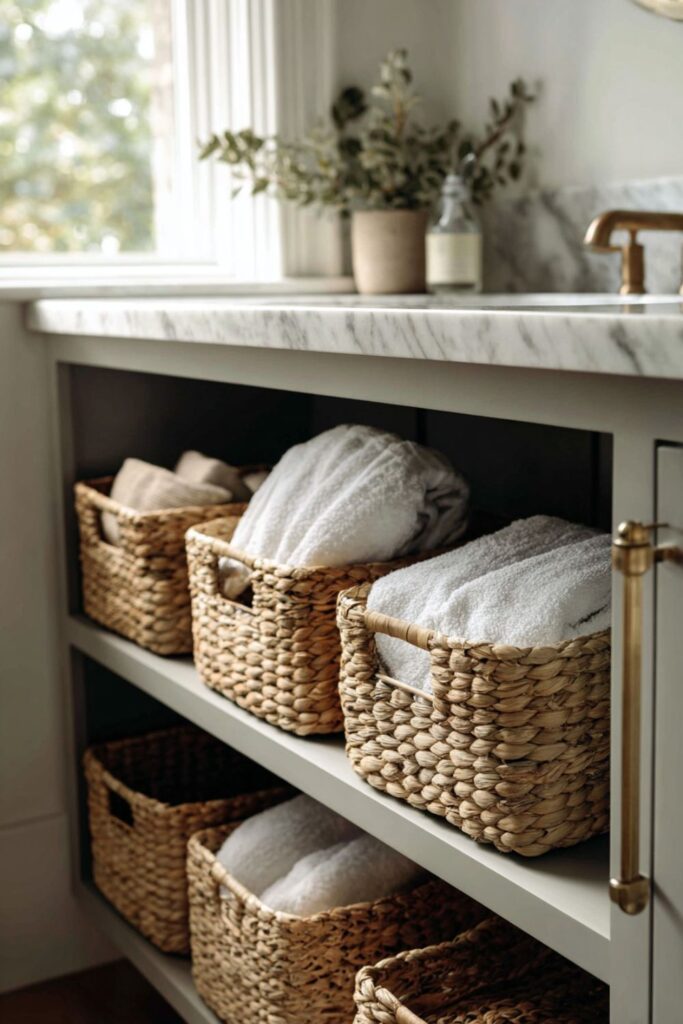
Open shelving needs something to contain the things that are not pretty on their own. Woven seagrass or rattan baskets hold extra towels, cleaning supplies, and toiletries behind a wall of natural texture. Martha’s Bedford Post Inn bathrooms use baskets on vanity shelves as a deliberate styling choice.
Choose baskets in matching sizes and a single natural tone. The weave of the fibre against cool marble creates a contrast between warm and cool. That balance keeps a Martha bathroom from tipping into clinical territory. Without something organic like wicker or wood, an all-white marble room feels like a dentist’s office.
Every detail so far addresses what you see and touch. The final idea shapes the invisible quality that stays with you and your guests long after the towels are folded and the candle is blown out.
15. Dried Lavender Hidden in the Linen Closet
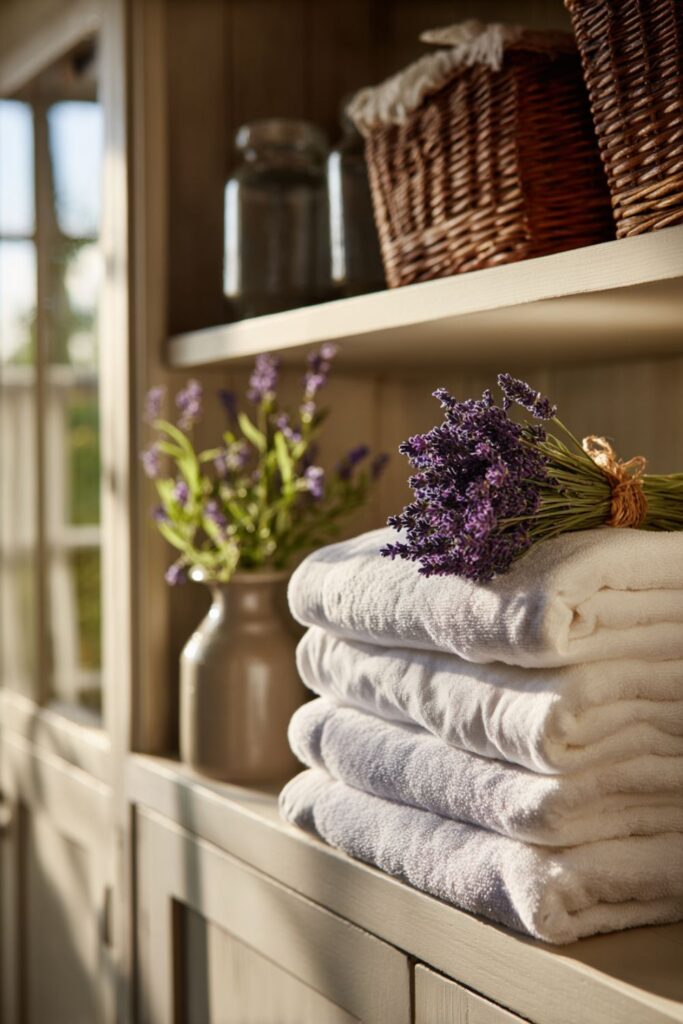
The scent of a Martha bathroom is never synthetic. It comes from real sources: a lavender sachet tucked between folded towels, dried eucalyptus on a shelf, cedar shavings in a drawer. These scents are private. You notice them only when you open the closet or reach for a fresh towel.
Dry your own lavender or buy bundles from a farmers’ market. Tie them with cotton string. Slip them between layers of folded linen and close the door. The fragrance lasts for months and grows slightly stronger in a closed space. This is the detail your guests remember most. It is the quiet proof that someone cared about a room nobody else would think to scent.
The Martha Stewart aesthetic bathroom is not a renovation budget. It is a set of choices about what is real and what is not. Marble instead of laminate. Cast iron instead of acrylic. Linen instead of paper. Beeswax instead of paraffin.
Start with one swap. Put a bar of soap on an ironstone dish. Hang eucalyptus from the showerhead. Stack five white cotton towels where you can see them. Each replacement compounds until the room no longer feels like a bathroom. It feels like a quiet place you chose to be.
The best bathrooms do not need to be big. They need to be honest.
You might also like: