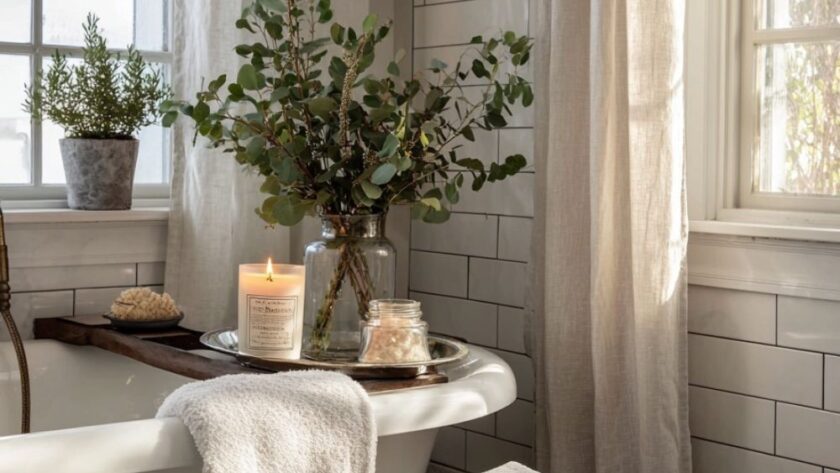
Steam curls off the surface of a clawfoot tub in a room lined with white marble subway tile. A beeswax candle burns on the tub ledge, and a single branch of eucalyptus hangs from the showerhead, releasing its scent into the warm air.
That scene is the Martha Stewart aesthetic bathroom at its core. It is a room where every surface is honest and every object earns its place. The daily act of bathing becomes something worth slowing down for.
Most bathroom design leans on chrome fixtures, synthetic counters, and matching accessory sets bought in one trip. Martha’s version is the opposite. Her bathrooms at Bedford favour Carrara marble, cast iron, and real cotton. The small collected details make a functional room feel human.
These 17 ideas will help you build that feeling in your own bathroom. Each one starts with an honest material and ends with a room that rewards attention.
1. White Marble Subway Tile on Every Wall
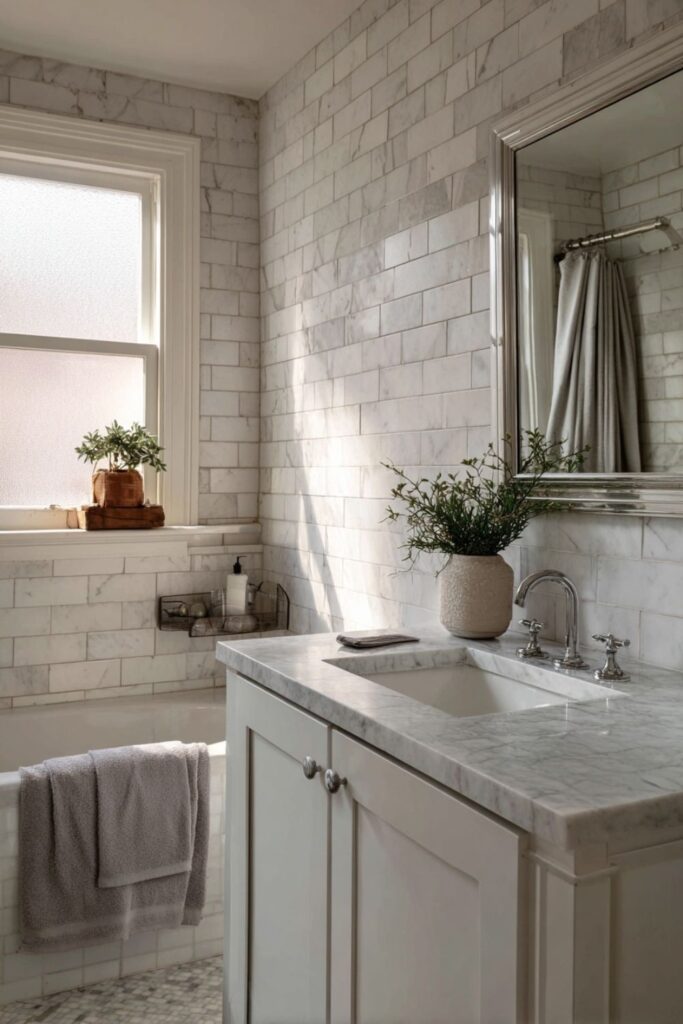
Martha’s bathrooms start with the walls. The answer is almost always white marble subway tile. Not ceramic that mimics marble, but real stone with soft grey veining and slight variations from tile to tile.
Run the tile from floor to ceiling for a clean effect. Use a thin grout line in matching soft grey. The eye should read the wall as one continuous surface. Carrara veining catches light differently throughout the day, giving the room a subtle, shifting life.
2. A Cast Iron Clawfoot Tub
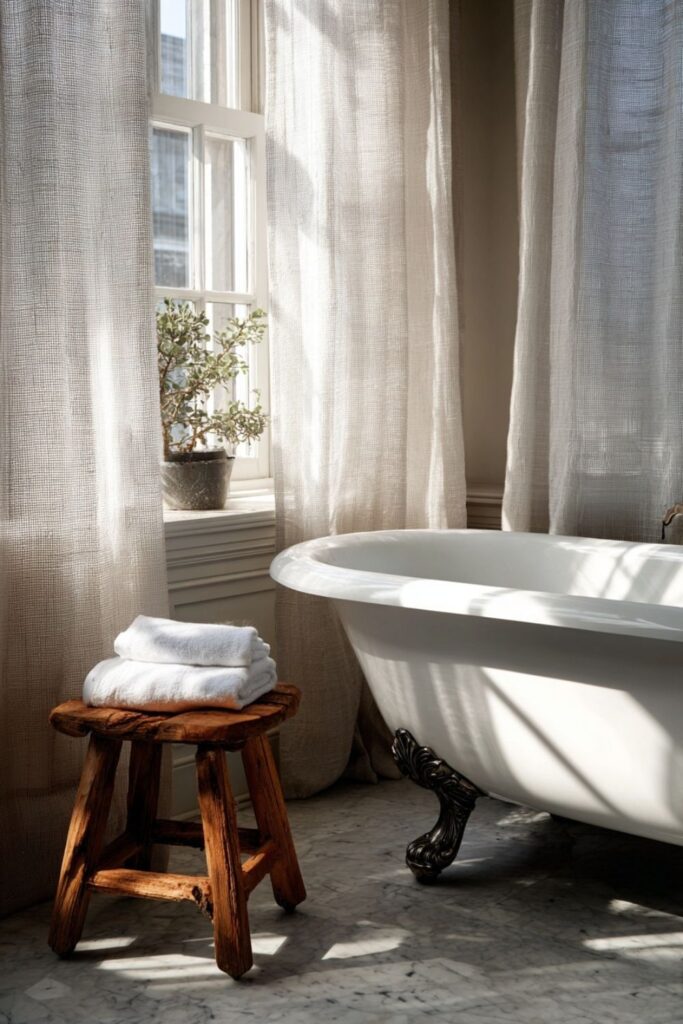
The clawfoot tub is the centrepiece of a Martha bathroom. She recently partnered with Kohler as their first Cast Iron Ambassador. Her preference for enamelled cast iron goes back decades. The material holds heat longer than acrylic, so the water stays warm.
Position the tub beneath a window if you can. A clawfoot tub sitting in morning light, with a linen curtain filtering the glare, becomes the room’s anchor. Choose white enamel for a classic look. Or consider a muted colour like Aspen Green from Martha’s Kohler collaboration for one unexpected detail.
3. Carrara Marble Floors With Mosaic Insets
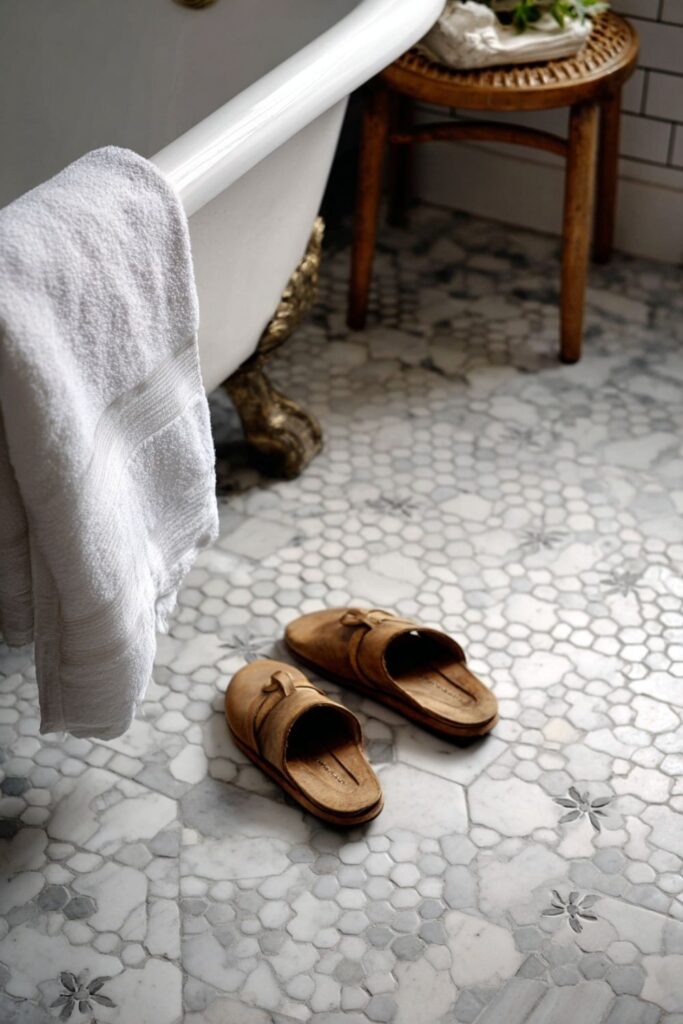
Martha’s Bedford Post Inn bathrooms feature marble floors with small mosaic insets. White hexagonal marble with a diamond or flower motif in grey creates a floor that looks a century old. The detail adds pattern without wallpaper or paint.
The mosaic should stay subtle. It is not the star of the room. It is the quiet detail you notice when you step out of the bath and look down. This kind of considered work underfoot separates a Martha bathroom from one that stops at the walls.
4. A Vanity That Looks Like Furniture
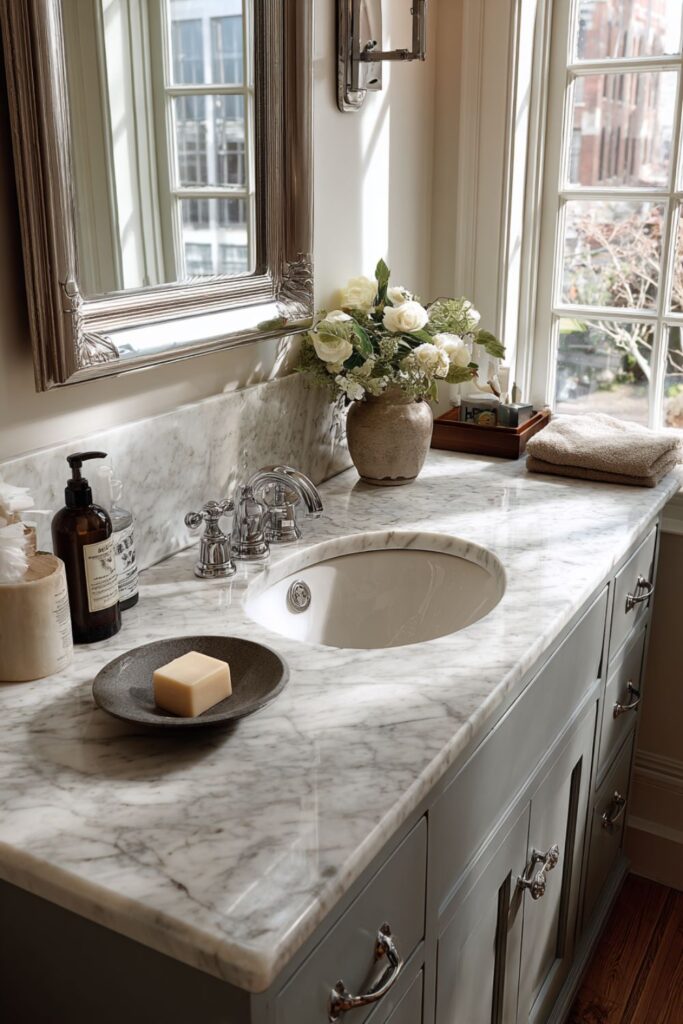
Martha’s bathroom vanities look like dressers that happen to hold a sink. Her own line features pieces in Sharkey Grey, a soft warm grey. They come with marble countertops, nickel hardware, and the proportions of real furniture.
Choose a vanity with legs that show the floor beneath it. This keeps the room feeling open and airy. Visible wood grain, brass or nickel pulls, and a thick marble top read as collected. Pair it with a simple undermount sink so the counter stays unbroken and clean.
Those four anchors, the walls, the tub, the floor, and the vanity, set the bones of the room. Everything that follows layers texture, warmth, and the small details that make a bathroom feel like it belongs to someone.
5. White Cotton Towels Folded With Intention
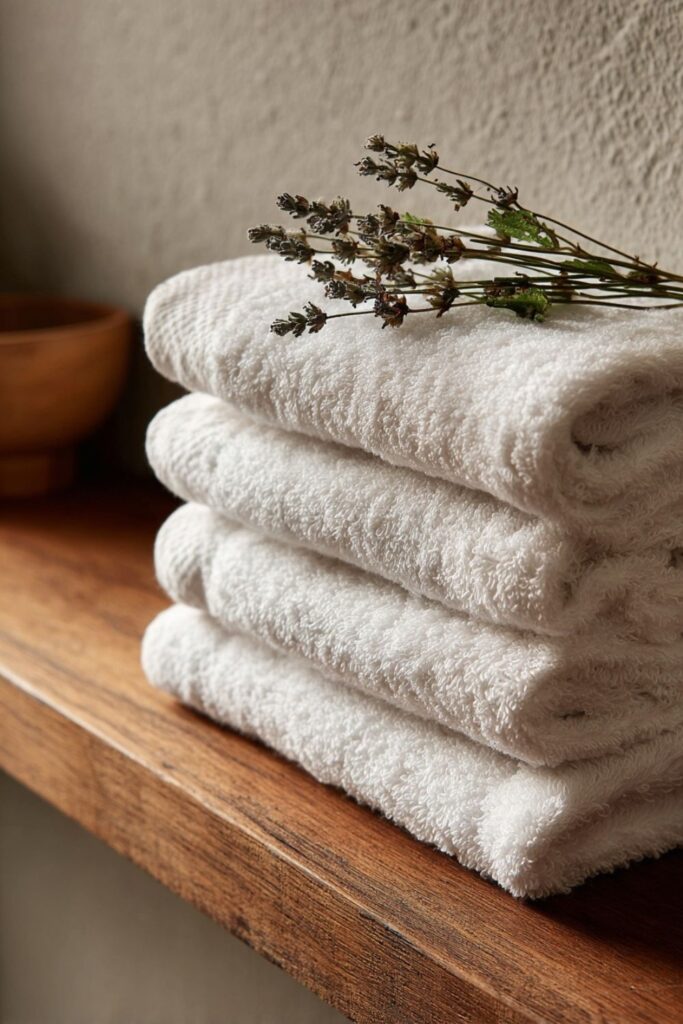
Martha’s towels are always white and always cotton. No patterns, no contrast stitching, no monograms visible from across the room. Stack them in neat thirds on open shelves or a wooden ladder rack. They look like a spa without trying.
Invest in thick, heavyweight cotton. Thin towels read as cheap no matter how you fold them. Stack them in groups of three or five. Identical white towels repeated on a shelf are mass planting for the bathroom. The abundance of one thing creates more impact than variety.
6. A Silver Tray on the Vanity
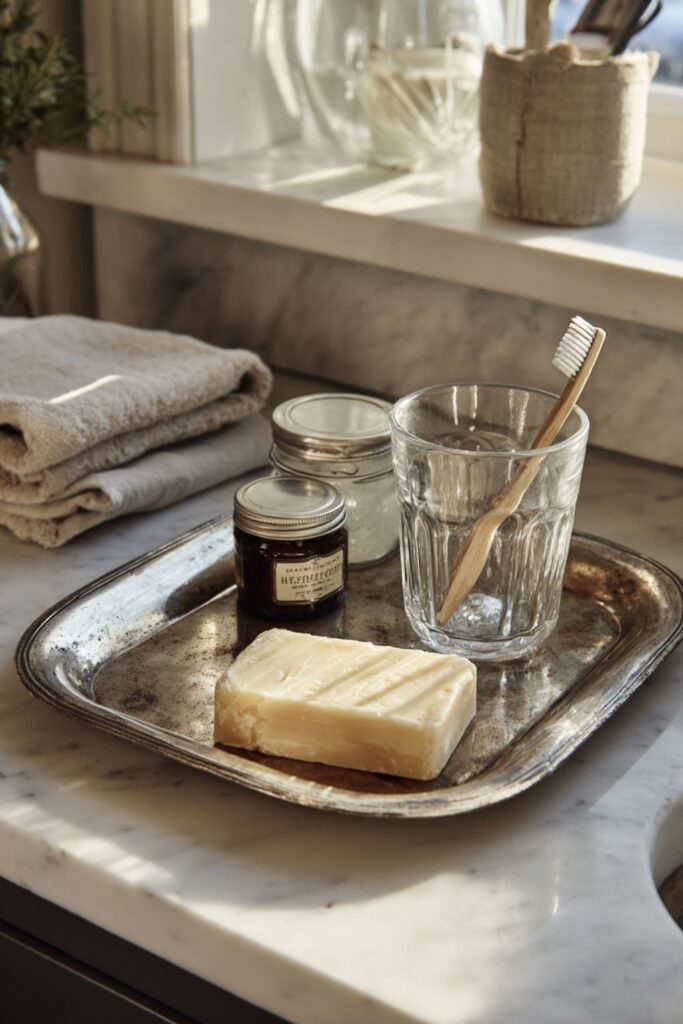
Every Martha vanity has a tray. A small silver or nickel tray corrals the daily objects that scatter across the counter. A soap dish, a pressed glass tumbler, and a jar of hand cream become a composed still life instead of clutter.
Choose a tray with a low lip and some age to it. A slightly tarnished silver tray from an estate sale has more character than a polished new one. The tray should hold no more than three or four items. Anything beyond that starts to look crowded rather than curated.
7. Polished Nickel Fixtures Throughout
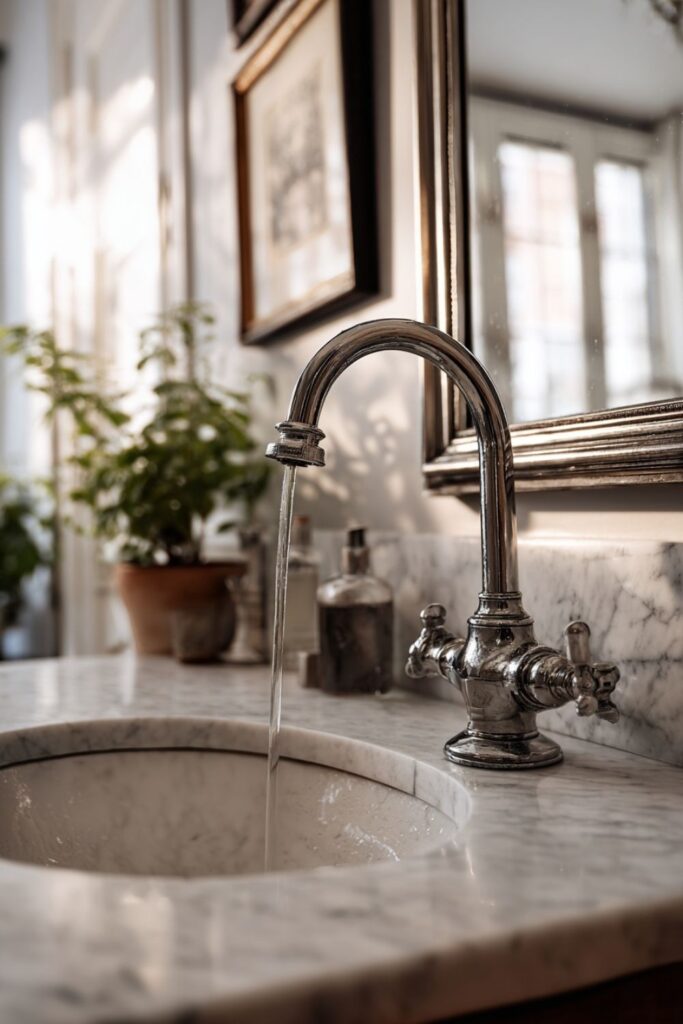
Martha’s hardware preference is polished nickel, not chrome. The difference is subtle but real. Nickel has a warmer, softer sheen than the blue-white glare of chrome. Over time, it develops a faint patina that makes it richer.
Choose nickel for every fixture in the room. Faucets, towel bars, cabinet pulls, shower handles, and mirror frames should all match. One metal committed to fully reads as intentional. Mixing metals is a trend Martha avoids, and the cohesion shows.
8. A Wooden Stool Beside the Tub
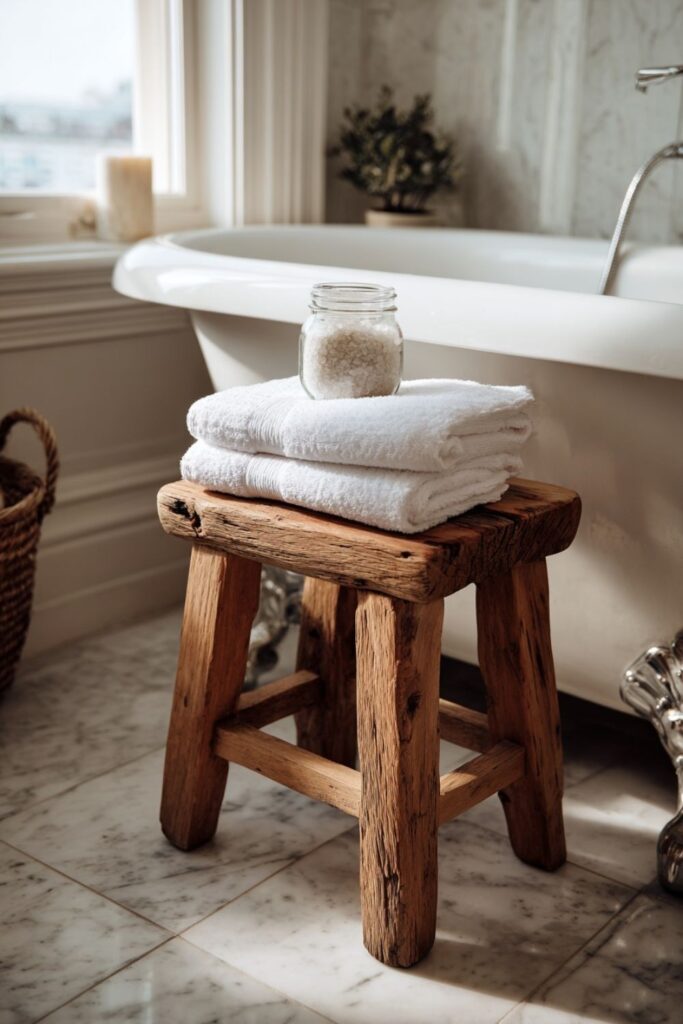
A small wooden stool beside the bathtub is one of Martha’s most practical bathroom details. It holds a stack of towels, a candle, a book, or a glass of water. The wood brings warmth and natural grain into a room dominated by stone and tile.
Choose a stool in weathered teak, walnut, or simple unfinished oak. It should look at home in a garden or a kitchen. The wood darkens slightly over time from moisture, and that patina is part of the appeal. Function first and beauty second is exactly how Martha thinks.
9. Eucalyptus Hung From the Showerhead
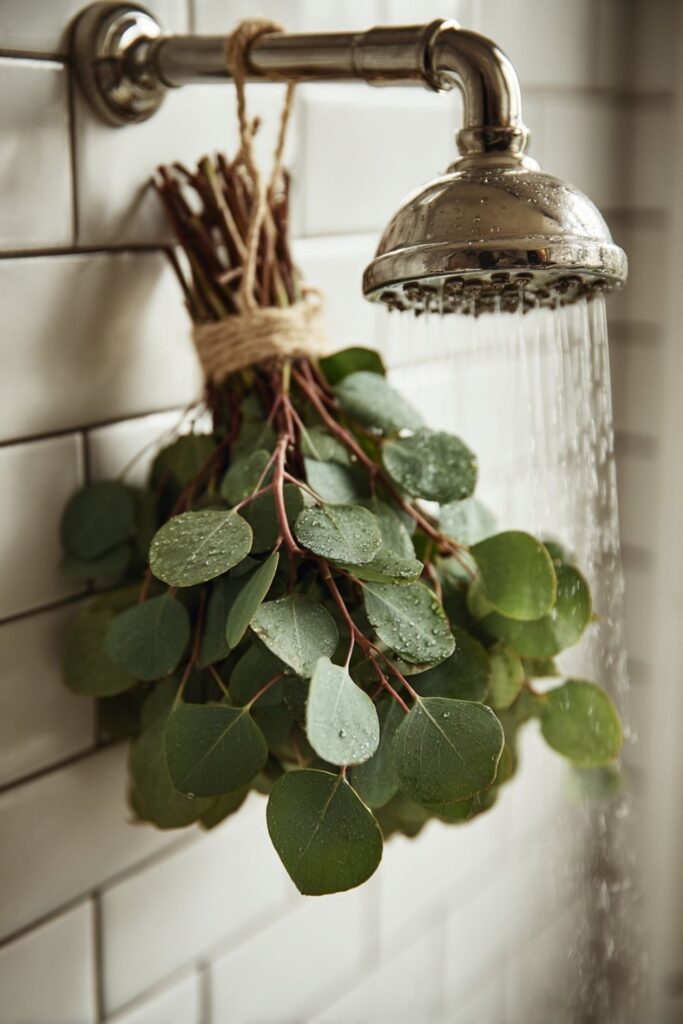
Fresh eucalyptus tied with cotton string and hung from the showerhead brings Martha’s botanical sensibility into the bathroom. The steam activates the oils in the leaves. A clean, herbal scent fills the room without any artificial product involved.
Replace the bundle every two weeks. As the leaves dry, they shift from bright green to muted sage. The scent mellows from sharp to soft. This small ritual connects the bathroom to the garden, the same way fresh flowers on a dining room table connect a meal to its season.
Those layers, the towels, the tray, the matched fixtures, the wood, the greenery, build warmth on top of the room’s marble bones. The next set of ideas refines the space with smaller details that make it feel personal.
10. Pressed Glass Jars for Storage
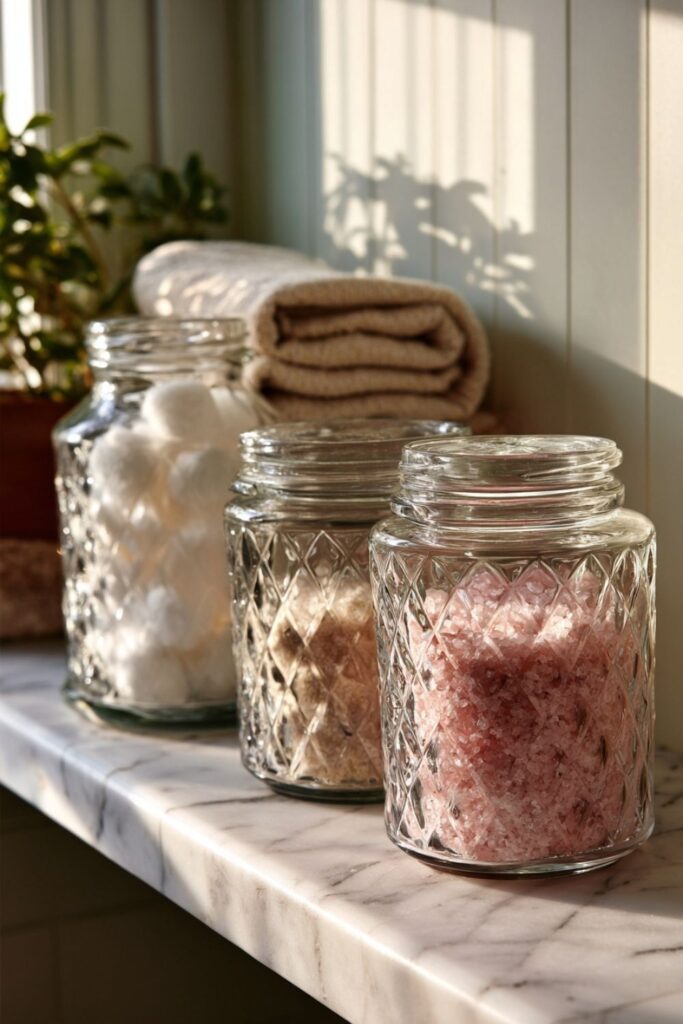
Cotton balls, bath salts, and cotton swabs deserve better than plastic containers. Pressed glass jars with simple lids turn storage into quiet decoration. The patterned glass refracts bathroom light. The visible contents encourage you to keep them tidy and full.
Choose jars in three different heights for variety. Group them on the vanity tray or on an open shelf. Pressed glass belongs to the same vocabulary as Martha’s kitchen and living room accessories. These jars connect the bathroom to the rest of the house without effort.
11. Woven Baskets for Hidden Storage
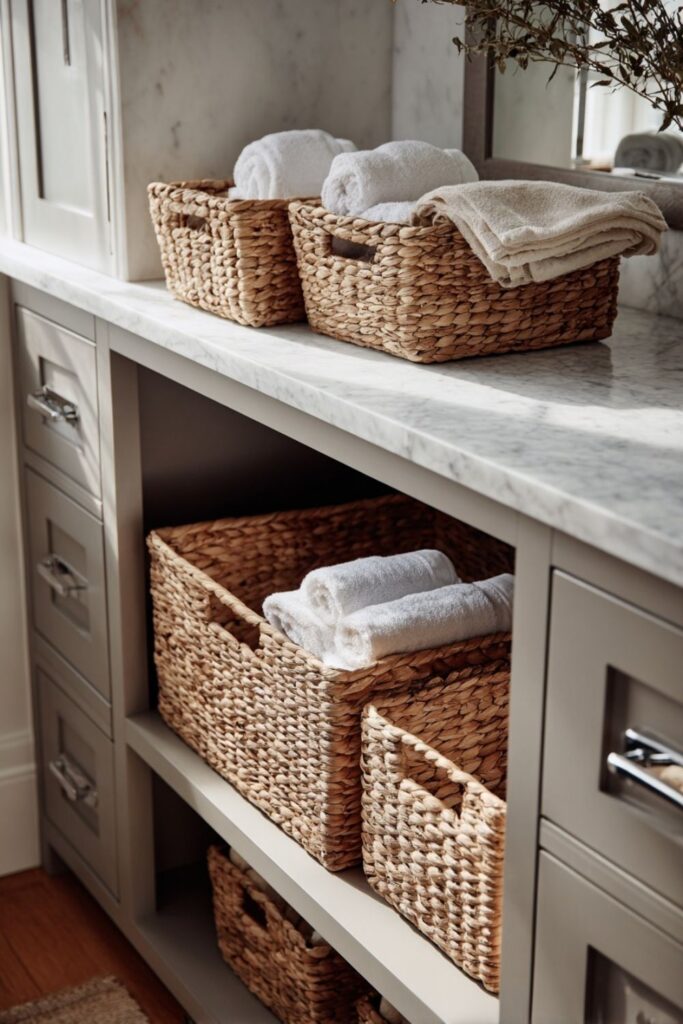
Open shelving needs something to contain the items that are not pretty on their own. Woven baskets in natural seagrass or rattan hold extra towels, cleaning supplies, and toiletries. Martha’s Bedford Post Inn bathrooms use woven baskets on vanity shelves as a deliberate design choice.
Choose baskets in matching sizes and a single natural tone. Line them up on a lower shelf or tuck them beneath the vanity. The texture of woven fibre against cool marble creates a contrast between warm and cool. That balance keeps a Martha bathroom from ever feeling clinical.
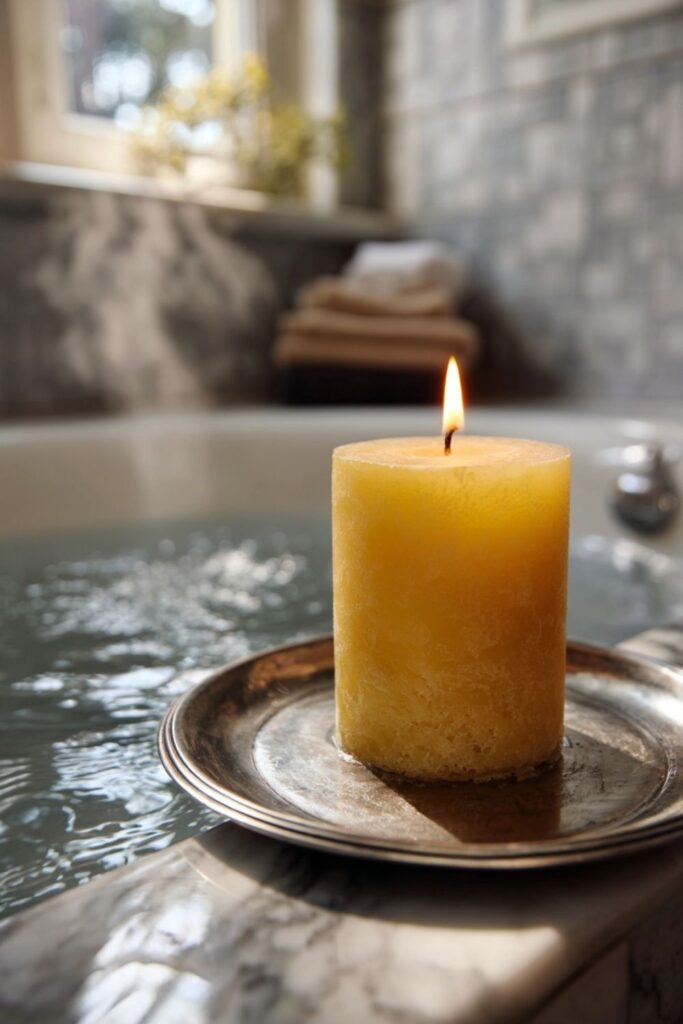
12. A Beeswax Candle on the Tub Ledge
A bathroom without candlelight is just a utility room. One beeswax pillar candle on the tub ledge or a silver tray beside the sink changes the atmosphere of an evening bath completely. Beeswax burns with a warm honey glow and a faint natural scent that blends with steam.
Light the candle while you run the bath. The flicker on marble and water creates a softness that overhead lighting cannot touch. One candle is enough. Martha’s rooms rely on restraint, and a single flame in a quiet room has more presence than a cluster of scented candles ever will.
13. An Ironstone Soap Dish
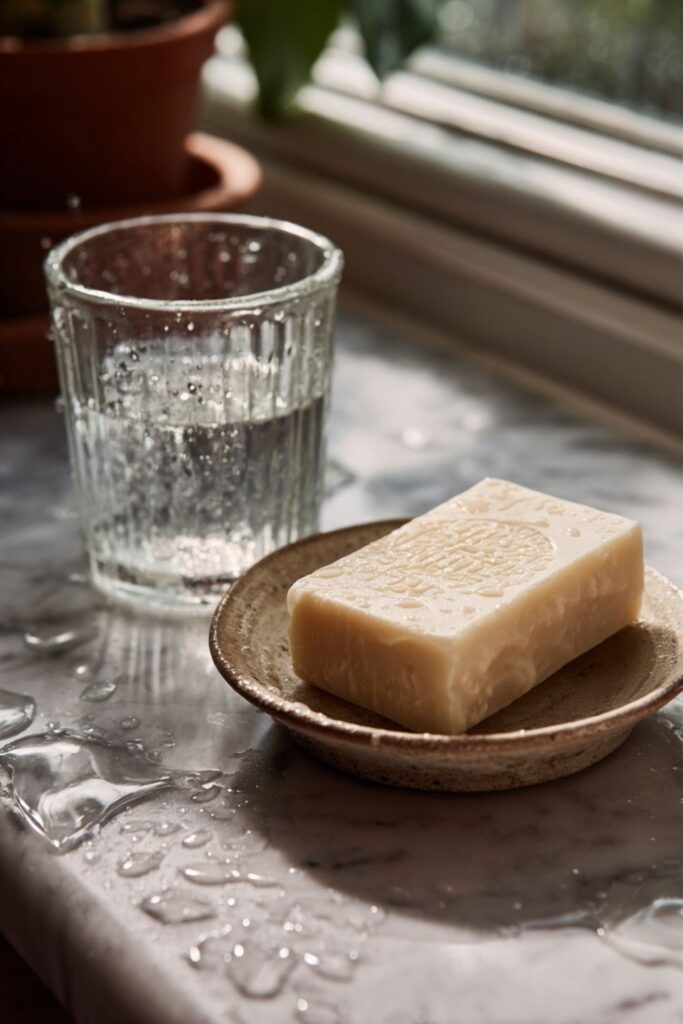
A bar of French milled soap on a small ironstone dish is one of the cheapest Martha details you can add. It is also one of the most effective. The heavy cream pottery looks antique and gives the vanity a sense of history that a plastic pump never will.
Choose a shallow ironstone dish in a round or oval shape. Let the soap sit proudly, visible and beautiful. When the bar shrinks, replace it with a new one in a similar colour. This small act of care is what Martha means by the “elevated everyday”: ordinary moments treated with real attention.
14. Linen Hand Towels Instead of Paper
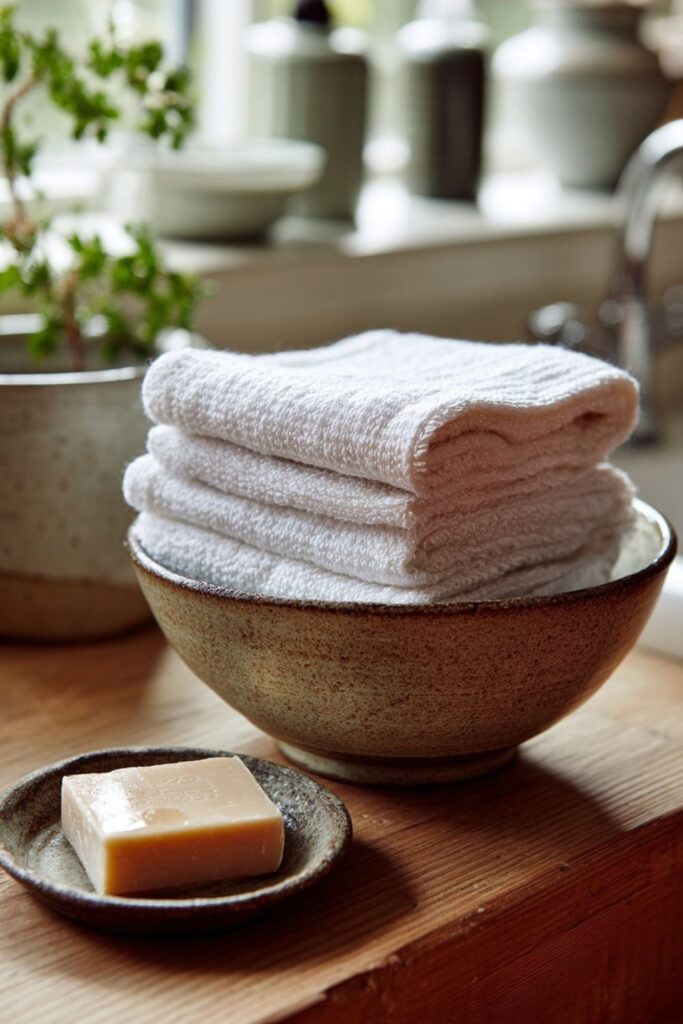
Martha never uses paper towels in a guest bathroom. A stack of small linen hand towels, folded in thirds, goes in an ironstone bowl or a woven basket beside the sink. Linen absorbs water quickly, dries fast, and gets softer with each wash.
Keep a small basket underneath for used towels. Guests should know where to place them without guessing. This one switch, from paper to linen, changes the feel of the entire room. It signals that the space is cared for and that visitors are worth real cloth.
Every detail so far addresses what you see and touch. The final three ideas shape the invisible qualities, scent, light, and living energy, that turn a Martha bathroom into a place you want to linger.
15. A Window With Sheer Linen Curtains
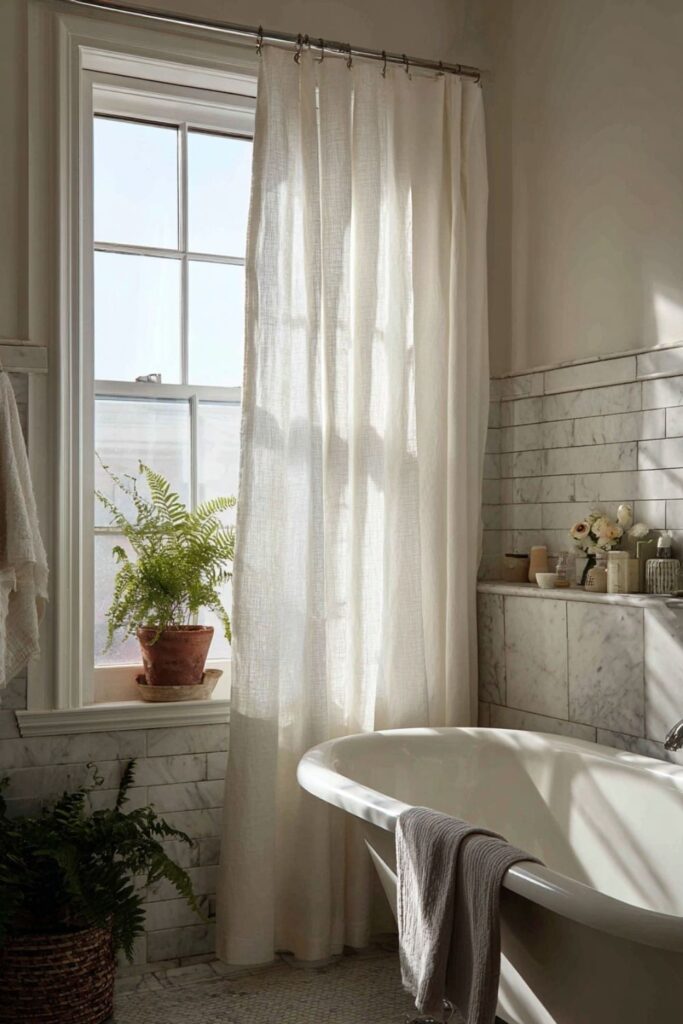
Natural light in a bathroom makes marble glow and warms nickel fixtures. It turns a white room from stark to serene. If you have a bathroom window, dress it in a simple sheer linen curtain that filters light without blocking it.
Hang the curtain from a thin nickel rod. Let the linen puddle slightly on the sill or just brush its edge. Sheer linen diffuses direct sun into a soft wash that flatters everything in the room. Even a small frosted window benefits from a linen panel for the added texture and movement.
16. Dried Lavender in the Linen Closet
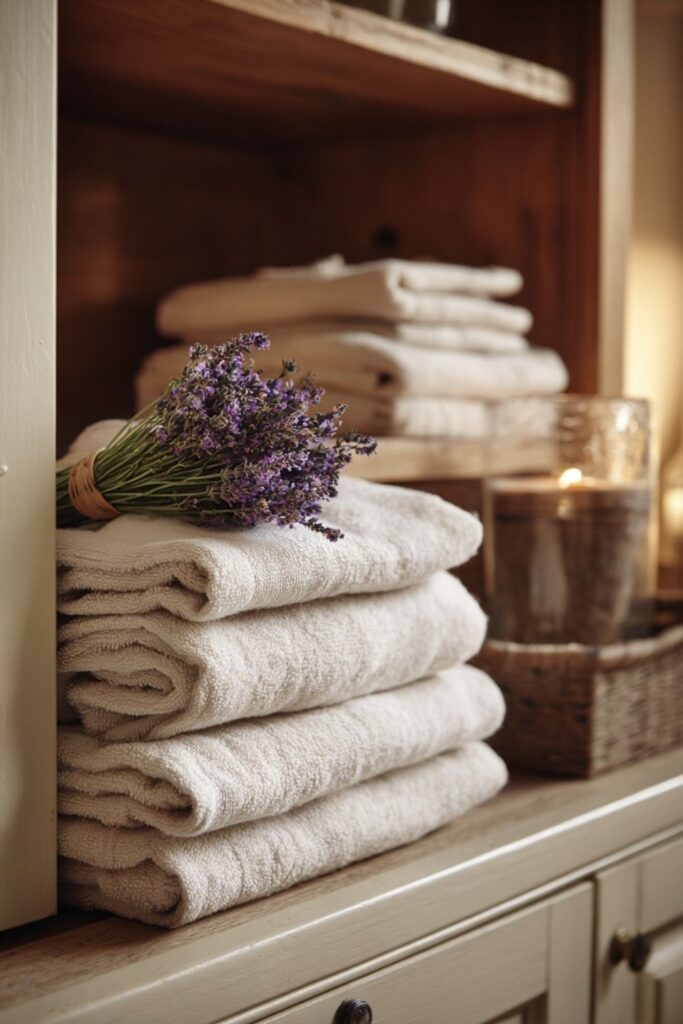
The scent of a Martha bathroom is never synthetic. It comes from real sources: a lavender sachet tucked between folded towels, dried eucalyptus on a shelf, or cedar shavings in a drawer. These scents are subtle and private. You notice them only when you open the closet or pull a fresh towel.
Dry your own lavender or buy small bundles from a farmers’ market. Tie them with cotton string and slip them between layers of folded linen. The fragrance lasts for months and grows slightly stronger when the closet stays closed. This invisible detail is the one your guests will remember longest.
17. One Living Plant in a Simple Pot
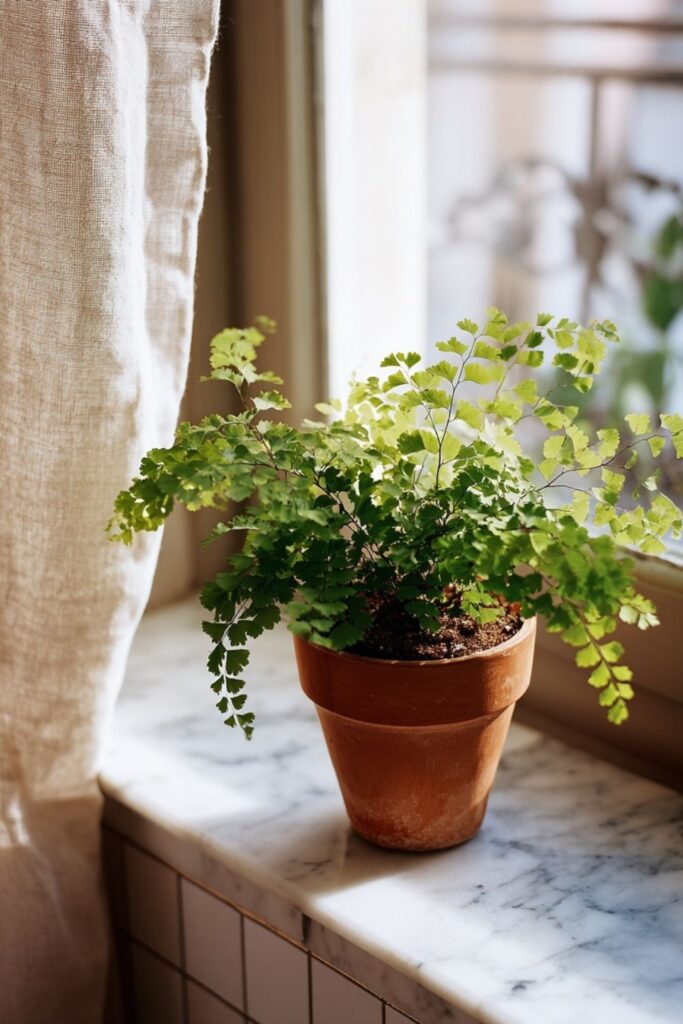
A single plant brings life into a room of stone and metal. A maidenhair fern in a terracotta pot, a potted orchid in white, or a trailing pothos on a high shelf all thrive in humidity. The bathroom is one of the best rooms in the house for greenery.
Choose one plant and give it a proper vessel. Terracotta, a simple white ceramic pot, or a copper cachepot all work. Avoid plastic nursery pots left visible. The plant does the same work here that fresh flowers do on the dining table: it proves the room is tended, alive, and part of a home where things grow.
The Martha Stewart aesthetic bathroom is not a renovation project. It is a philosophy applied to the smallest room in the house. Real materials, natural scent, honest light, and the discipline to leave out everything that does not belong.
Start with one change. Swap the plastic soap pump for a bar on ironstone. Hang eucalyptus from the showerhead. Stack white cotton towels where you can see them. Each small replacement compounds until the room feels less like a bathroom and more like a quiet place you chose to be.
The best bathrooms are not the biggest ones. They are the ones that make you want to stay a little longer.
You might also like: