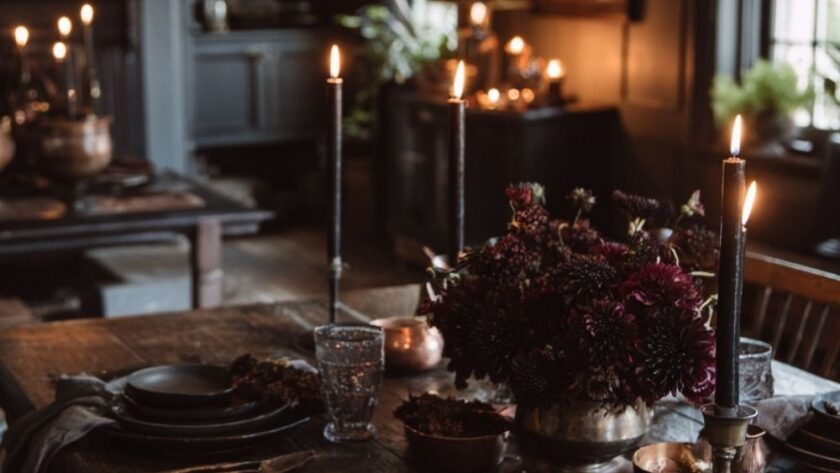
A room painted the colour of charcoal disappears at the edges when the sun goes down. What remains is what the candlelight touches: the copper rim of a pot, the cream of an ironstone plate, the honey glow of a beeswax taper burning in a tarnished holder.
That is the black Martha Stewart aesthetic. It takes every principle Martha has built her world on, collected objects, natural materials, real candles, disciplined editing, and shifts the colour temperature from warm cream to deep dark. The rules do not change. The palette does.
Martha uses black sparingly in her own rooms. She saves it for evening, for accents, for a single velvet ribbon. But her principles work in a dark room better than almost anyone else’s. A room with dark walls needs fewer objects to feel complete. It needs better light. It needs real materials that catch and hold a flame’s glow. That is disciplined editing at its most powerful.
These 15 ideas apply Martha’s exact methods to a moody palette. Each one proves that dark does not mean cold.
1. Charcoal Walls Instead of Bedford Gray
Bedford Gray is Martha’s signature. Charcoal is its evening counterpart. A deep, warm charcoal with brown undertones creates a room that recedes at the edges and pushes everything on the walls forward. Art glows. Copper glows. White objects float.
Paint the walls, the trim, and the ceiling the same charcoal for a full colour-drenching effect. This technique blurs the boundaries of the room and makes it feel both larger and more intimate at once. The trick is choosing a charcoal that leans warm, not blue. A warm charcoal reads as a dark version of Bedford Gray rather than a cold, industrial grey.
2. Beeswax Candles as the Only Light
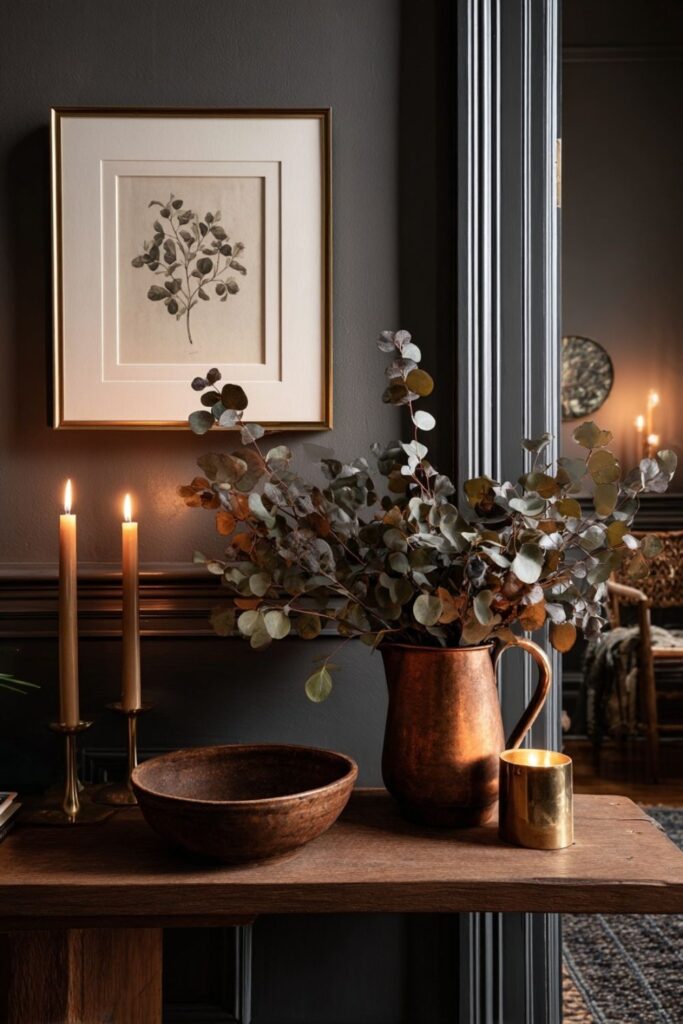
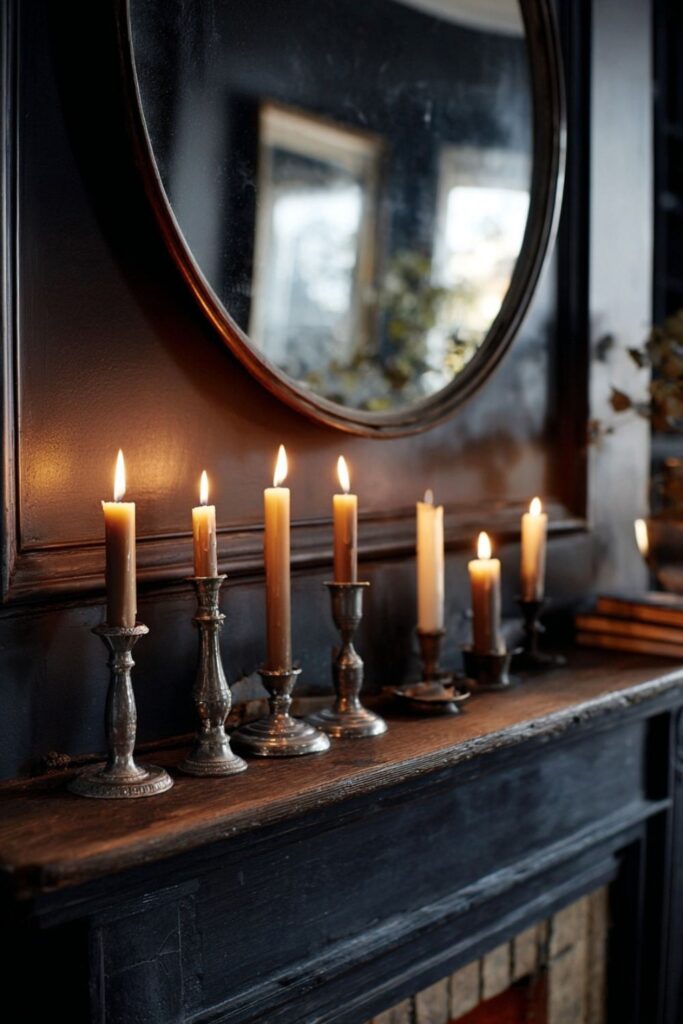
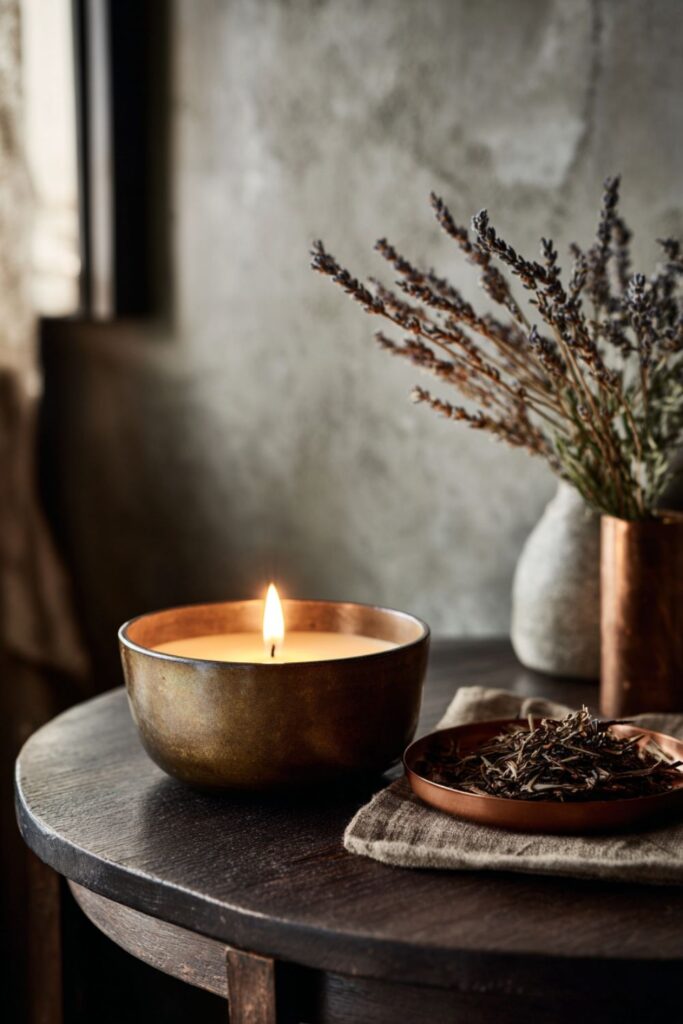
Candlelight is important in every Martha room. In a dark room, it is the entire atmosphere. Beeswax tapers in tarnished silver or brass holders become the primary light source after sunset. The warm honey glow bounces off dark walls differently than off cream walls. It creates pools of light surrounded by shadow.
Group five to seven candles on a mantel or down the centre of a table. The flames create moving light that makes a still room feel alive. Turn off every overhead fixture. Let the candles do the work. A dark room lit only by beeswax has a warmth that no lamp or dimmer can replicate.
3. Copper That Burns Against Dark Walls
Copper on a cream wall looks warm. Copper on a charcoal wall looks like fire. The dark background amplifies the metal’s warmth and makes every surface it touches glow. A copper pot on a dark shelf. Copper candlesticks on a black table. A copper tray holding dark linen napkins.
Use copper the same way Martha uses it in her regular palette: as the accent metal throughout the room. Pots, trays, frames, hardware. The patina that develops on copper reads even richer against a dark background. The green oxidation that appears at the edges contrasts with charcoal the way it never does against cream.

4. Black Ironstone for a Darker Table
Martha’s ironstone is always cream. The dark version is black ironstone: heavy, matte pottery in a deep charcoal or true black. It holds the same weight and substance as its cream counterpart. Food looks more vivid against a dark plate. Greens are greener. Bread is more golden.
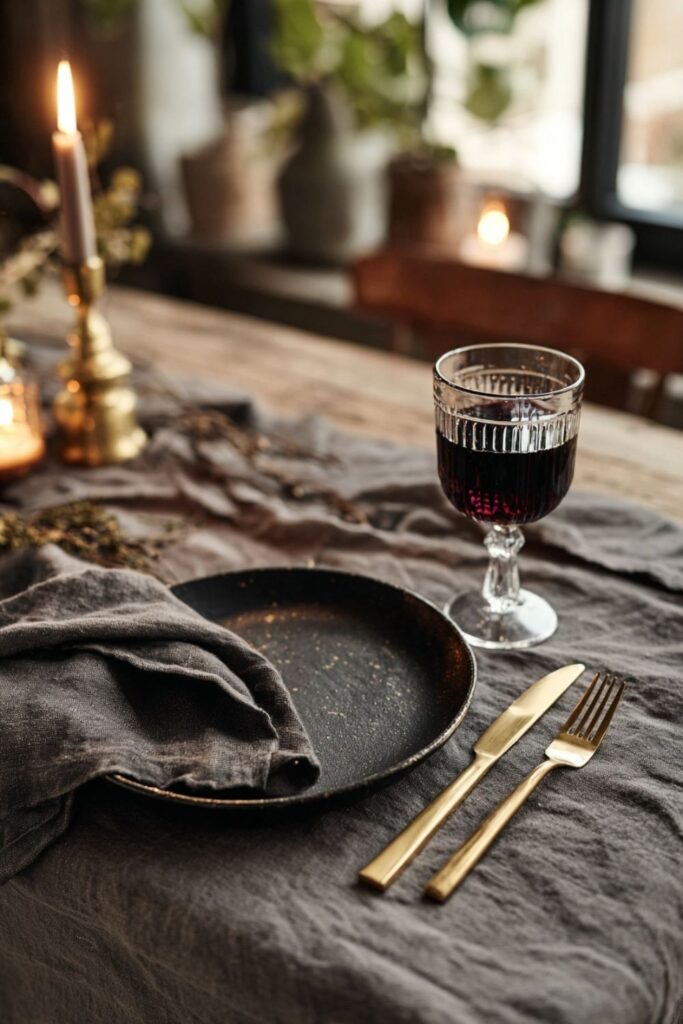
Set a dark table with black ironstone, charcoal linen napkins, brass flatware, and pressed glass goblets. The glass refracts candlelight the same way it always does, but the dark plates anchor the table with gravity. The effect is a dinner that feels like an occasion, even on a weeknight.
The anchors are set. Charcoal walls, beeswax candles, copper, and black ironstone form the dark foundation. Everything that follows layers texture, botanicals, and the collected details that keep a moody room from feeling empty or cold.
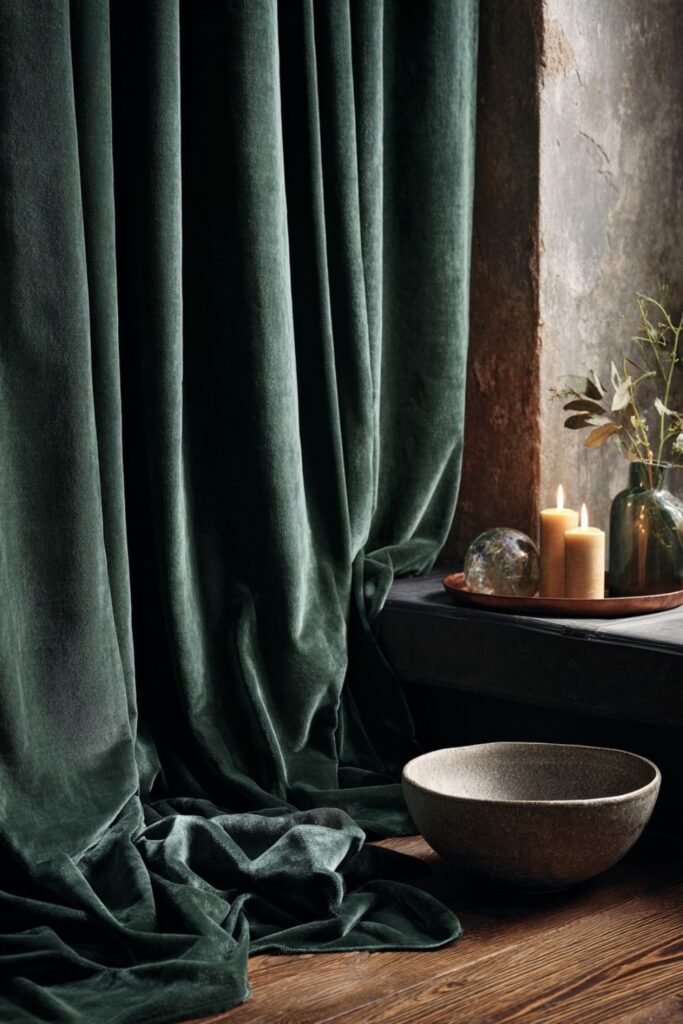
5. Dark Velvet Where Martha Uses Linen
Martha’s signature textile is linen. In a dark room, velvet does what linen does in a light room: it absorbs light softly and adds a depth of texture your eye can follow. Deep forest green velvet, navy velvet, or charcoal velvet on a pillow, a curtain, or a chair catches candlelight with a subtle sheen.
Use velvet for curtains that pool on the floor. Choose a throw in deep Turkey Red velvet for the back of a chair. Line a tray with a scrap of black velvet before placing objects on it. The fabric adds warmth and weight in a room where lighter textiles would disappear against the dark walls.
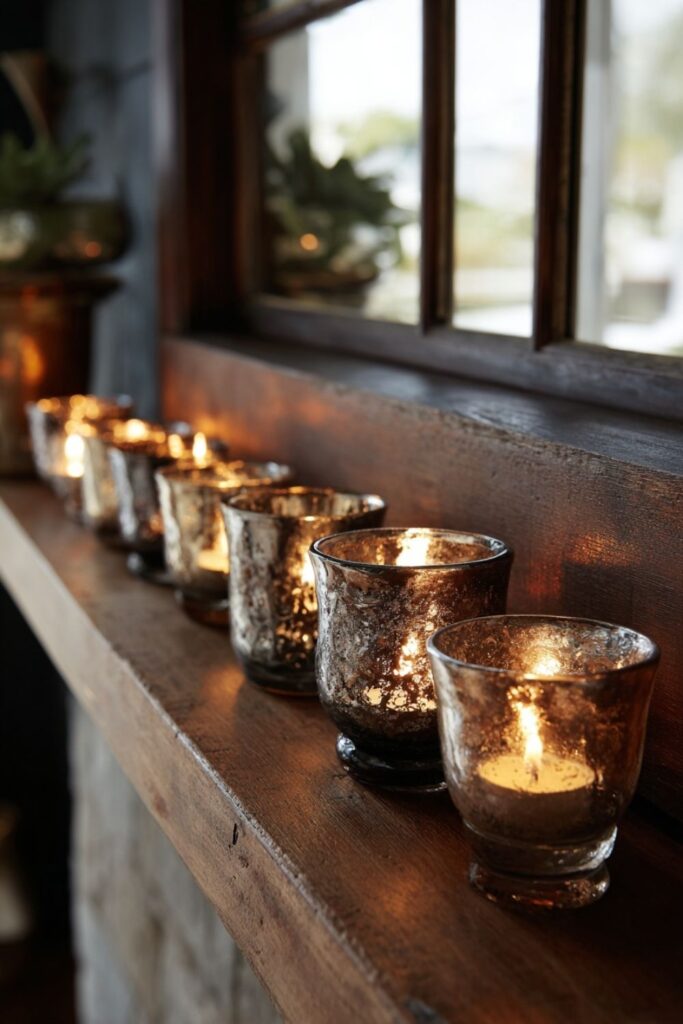
6. Mercury Glass That Multiplies the Light
Mercury glass is already part of Martha’s vocabulary. In a dark room, its mottled silver surface becomes a light source. It catches every candle flame and reflects it back in a soft, broken pattern. A row of mercury glass votives on a dark shelf creates a constellation of warm, scattered light.
Group mercury glass on a mantel, a windowsill, or a dinner table. The vintage patina, uneven and clouded, looks more alive against charcoal than it does against cream. The imperfections in the glass become visible in candlelight, and each piece reflects the flame differently. Mass them for the Martha effect: ten votives, not two.
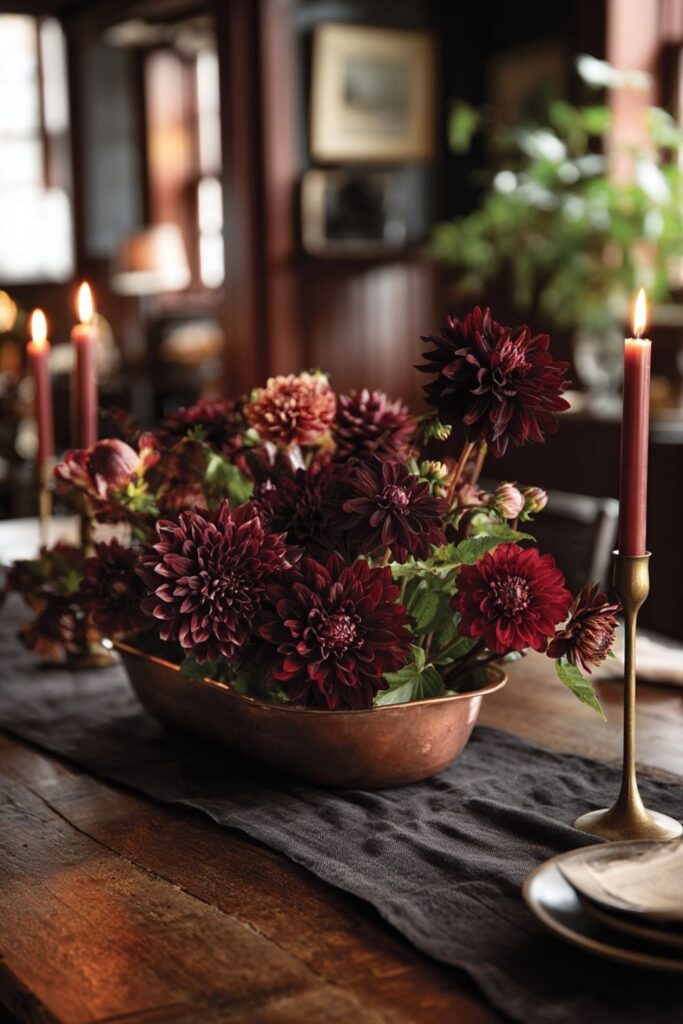
7. Dark Botanicals Instead of White Flowers
Martha arranges white flowers in light rooms. In a dark room, shift to deep-toned botanicals. Burgundy dahlias. Dark purple tulips. Dried seed pods in brown and black. Branches with dark berries. The arrangement should blend with the wall and reveal itself slowly as your eyes adjust.
Place dark flowers in copper or brass vessels. The metal warms the arrangement. A copper trough of burgundy dahlias on a charcoal linen runner is the dark-palette version of Martha’s white roses on a cream cloth. The principle of one colour, one variety, massed together still applies.
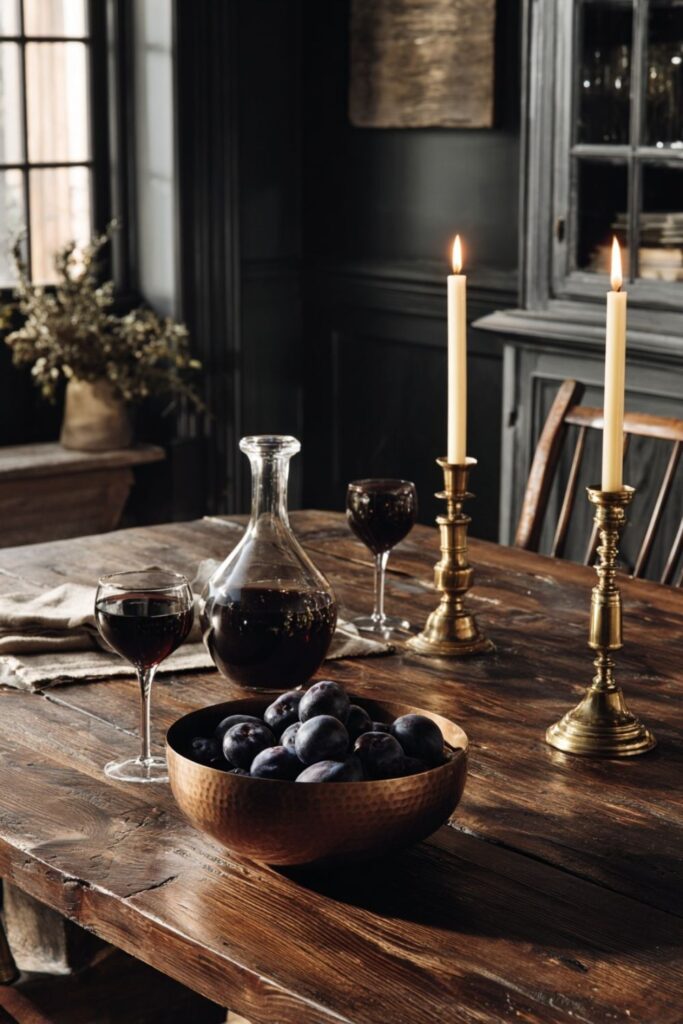
8. Dark Wood Furniture With Visible Grain
Martha’s rooms use light and medium woods. The dark version favours walnut, ebony-stained oak, and dark mahogany. The wood grain should still be visible. A dark room needs the warmth and organic pattern that real wood provides. A smooth black lacquer surface reads as modern. A dark walnut surface with visible grain reads as collected.
Choose a dark dining table, a dark bookshelf, or a dark desk. The furniture should look like it has been in the room for decades. Dark wood develops a depth of colour over time that new furniture cannot fake. Pair it with brass hardware for warmth.
9. Charcoal Linen for the Dark Table
Where Martha uses cream linen, the dark version uses charcoal. Charcoal linen napkins, a charcoal table runner, and charcoal curtains replace the whites and creams. The texture of linen is still visible. The weave still catches side light. The colour simply shifts the entire room’s temperature.
Charcoal linen softens the contrast between dark walls and pale objects. It bridges the gap between the black ironstone and the brass flatware. Wash charcoal linen the same way you wash cream linen: often, with no fabric softener. The fabric gets softer and the colour gets richer with every wash.
Dark velvet, mercury glass, botanical drama, aged wood, and charcoal linen create the room’s texture. These layers keep a dark space from feeling flat or stark. The final group of ideas adds the personal touches and unexpected details that make a moody room feel lived in.

10. A Dark Bookshelf as a Gallery Wall
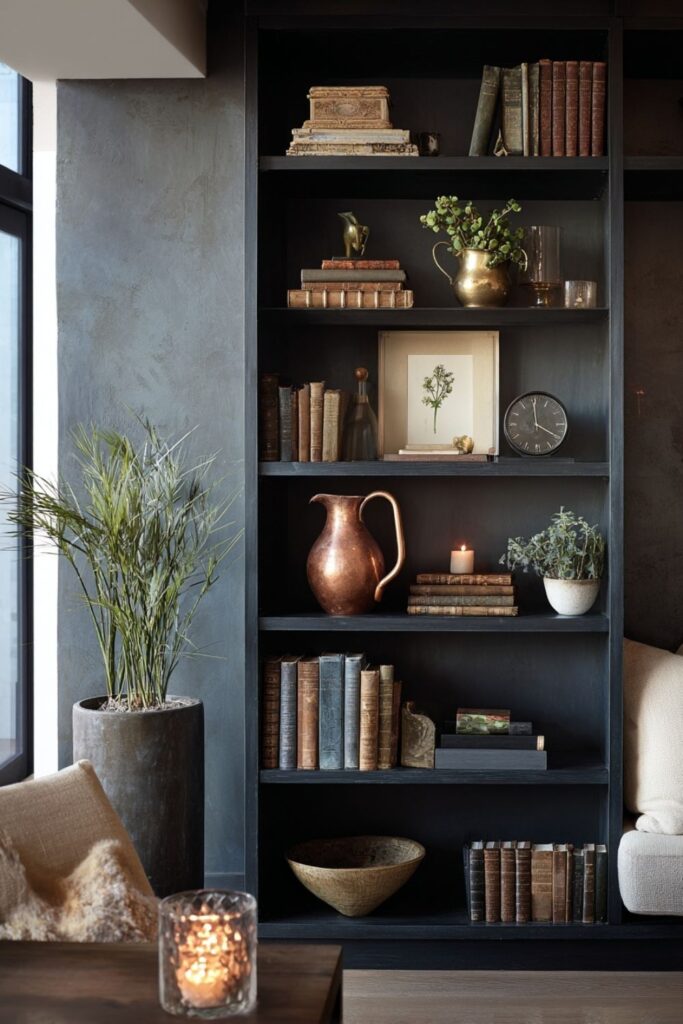
A floor-to-ceiling bookshelf painted the same charcoal as the walls becomes a shadow box for collected objects. Leather-bound books, brass bookends, a copper pot, a small framed print, and a mercury glass vase all pop against the dark background. The shelf disappears. The objects float.
Style the shelf the way Martha styles any display: with breathing room between objects and items grouped in odd numbers. Leave some shelves half-empty. The negative space matters more in a dark room because the eye searches for light. Every object you place on a dark shelf receives more attention than it would on a white one.
11. Pressed Glass That Refracts in the Dark
Pressed glass works harder in a dark room than in a light one. Every cut in the glass catches a candle flame and throws it outward as a tiny prism on the dark table or wall. A pressed glass goblet on a charcoal tablecloth becomes a small lamp. A pressed glass pitcher on a dark shelf sends light in five directions.
Use pressed glass for water, wine, and display. The transparent glass is the one bright material in a dark room, and it earns its brightness by multiplying whatever light you give it. Collect mismatched pieces the Martha way. The variety in cut patterns means each piece refracts light differently.

12. A Dark Powder Room as the First Commitment
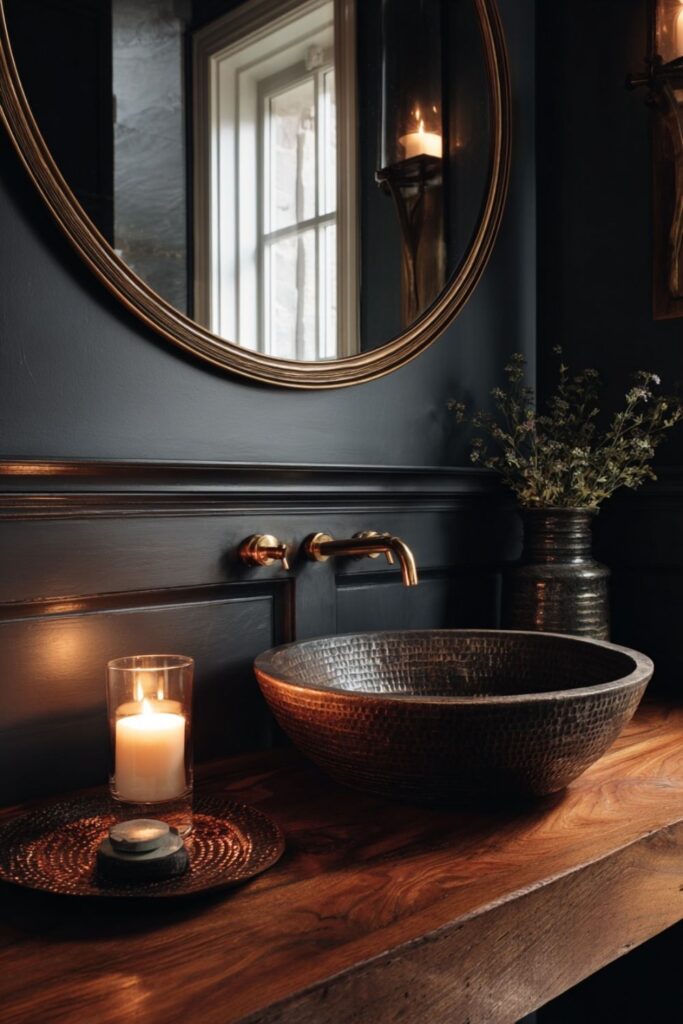
If painting an entire living room charcoal feels like too much, start with the powder room. A small, enclosed room with dark walls, a brass-framed mirror, a beeswax candle, and one copper accent is the safest place to test the dark Martha aesthetic. The scale is manageable and the impact is immediate.
Paint the walls and the ceiling the same charcoal. Hang a brass-framed mirror. Place a single beeswax pillar on a small copper tray beside the sink. Add a bar of soap on a dark ironstone dish. The room will feel like a jewel box: small, dark, warm, and glowing from within.
13. A Turkey Red Accent in a Dark Room
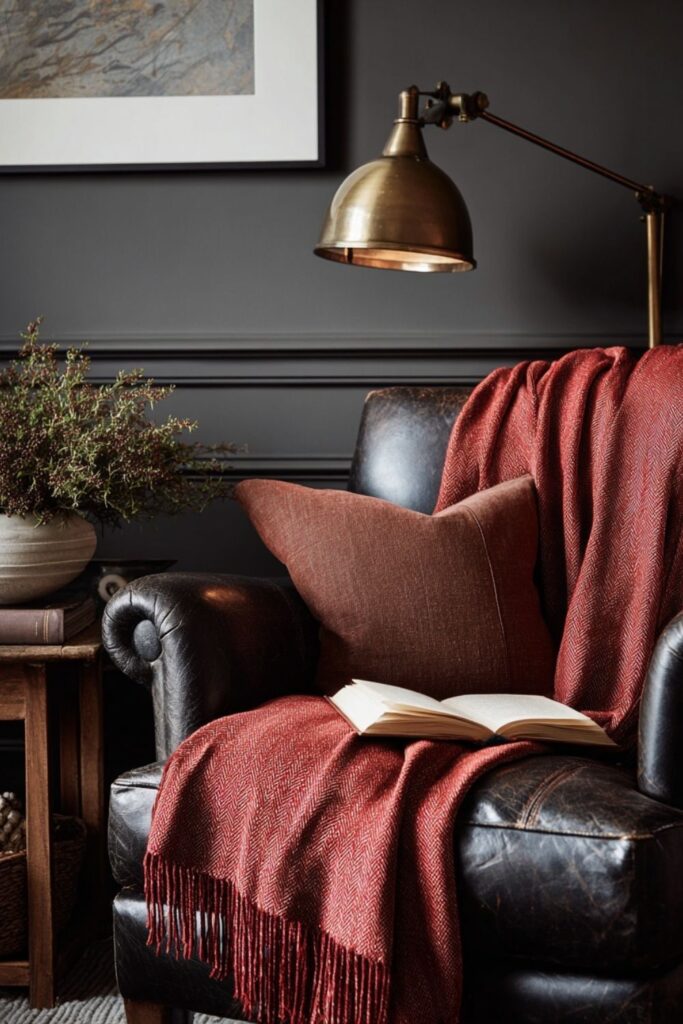
Martha’s Turkey Red is a deep, muted, historical red. Against charcoal walls, it reads as the single warm anchor in the room. A Turkey Red velvet throw on a dark chair. A Turkey Red linen napkin at each place setting. A Turkey Red binding on a book displayed on the shelf.
Use Turkey Red sparingly. One or two accents per room. The red should glow against the dark background the way embers glow in a fireplace. It is the colour equivalent of candlelight: warm, deep, and alive. Too much red in a dark room becomes gothic. A single, restrained touch of it becomes Martha.
14. Dark Floors Left Bare
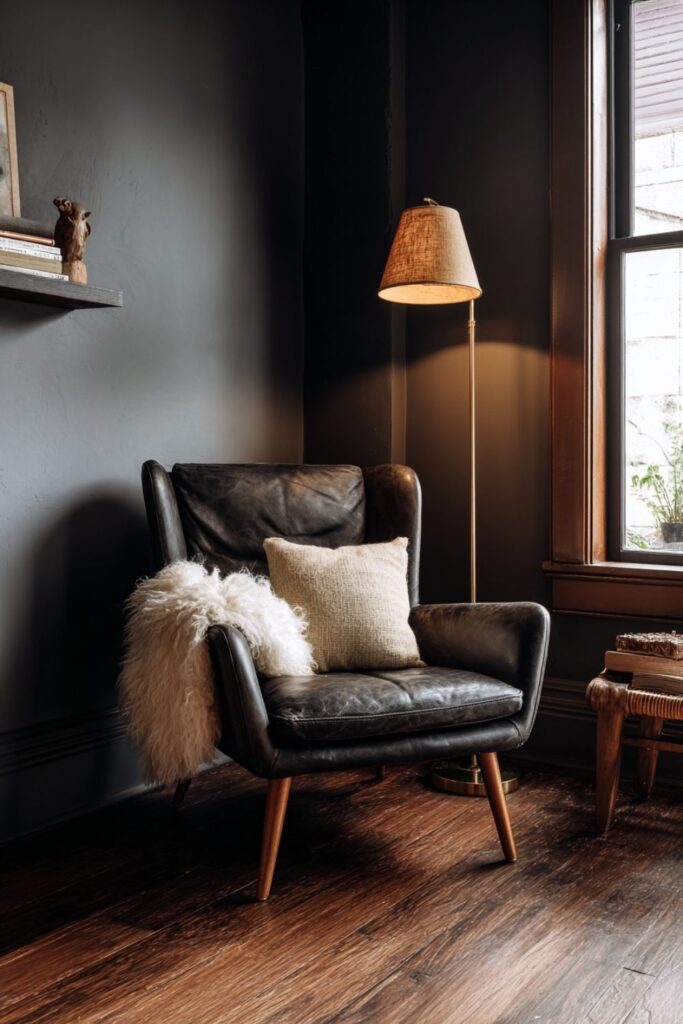
Martha recently said she prefers bedroom floors without rugs. In a dark room, bare hardwood floors in a deep walnut or ebony stain extend the moody palette downward. The wood grain catches side light and candlelight in long, warm streaks.
A dark floor with a dark wall creates a seamless envelope. The room’s edges dissolve. What remains are the objects, the candles, and the people inside. If you need warmth underfoot, place one small sheepskin beside a chair or the bed. The single white accent against the dark floor creates the same contrast Martha achieves with white linen on a cream table.
Every detail is in place: the walls, the metals, the glass, the botanicals, the textiles, and the floors. The final idea ties the room together with the invisible quality that makes any dark space feel like a home rather than a stage set.
15. The Scent of Beeswax and Cedar
A dark room heightens your other senses. When the visual field narrows to what the candles illuminate, you notice scent and sound more. Beeswax candles fill a dark room with a faint honey warmth. Cedar shavings in a drawer add a woody base note. Dried lavender in a bowl contributes a herbal middle.
Layer these scents quietly. No single one should overpower. The goal is a room that smells like the inside of an old library: wax, wood, and something growing. A dark room with the right scent does not feel gloomy. It feels like the inside of a box made of very good materials that someone assembled with care.
The black Martha Stewart aesthetic is not a departure from her world. It is her world after sunset. The same copper, the same ironstone, the same linen, the same candles. The only difference is that the walls have gone dark and the light has to earn its place in the room.
Start with one candle in a dark corner. Paint one small room charcoal. Replace cream napkins with charcoal. Each change shifts the temperature without breaking any of the rules. A dark room built on Martha’s principles does not feel moody for the sake of mood. It feels like a home where someone decided the evening deserved its own palette.
The best dark rooms do not look dramatic. They look like they are lit from within.
You might also like: